- Company Articles
- Products and Technology
- Technology Sharing
- How Are Four Way Straight Lean Pipe Joints Chrome Plated? Manufacturing Process Breakdown

How Are Four Way Straight Lean Pipe Joints Chrome Plated? Manufacturing Process Breakdown
Related Product
Four Way Straight Lean Pipe Joint
Four way lean pipe joint for 4 pcs 28MM lean pipe connection in straight angle, which used widely in workbench, flow rack, hand trolley frame connection.
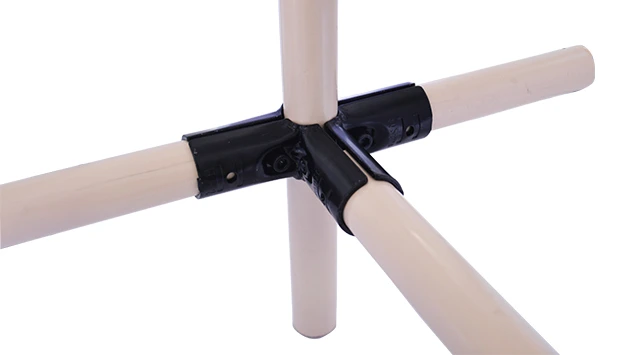
In the world of lean manufacturing, every component plays a silent but critical role in keeping production lines moving smoothly. Among these unsung heroes are four way straight lean pipe joint chrome components—small yet mighty connectors that hold together the backbone of lean systems, from workbenches to material racks. But have you ever wondered how these unassuming joints transform from raw metal into shiny, durable parts that withstand the rigors of daily factory use? Chrome plating isn't just about aesthetics; it's a (precision process) that boosts corrosion resistance, wearability, and longevity. Let's pull back the curtain and explore the step-by-step journey of how these essential lean pipe joint pieces get their signature chrome finish.
1. Starting with the Right Foundation: Material Selection
Before any plating can begin, the journey starts with choosing the right base material. Most four way straight lean pipe joint chrome components are crafted from metals that balance strength and malleability—often carbon steel or, in higher-end cases, members of the stainless steel pipe series . Stainless steel is prized for its natural resistance to rust, but even it benefits from chrome plating to enhance durability further. Why not skip the base material and go straight for chrome? Because chrome alone is too brittle to handle the torque and weight of lean system structures. The base metal provides the "muscle," while the chrome layer acts as a protective "shield."
Once the material is selected, it's cut into precise lengths and shaped into the joint's iconic four-way design using CNC machining. This step ensures the threads, holes, and angles are exact—critical for a snug fit when assembling lean pipes later. Any rough edges or burrs are smoothed out with grinders or sandpaper; even the tiniest imperfection could trap plating solution later, leading to uneven finishes.
2. Cleaning: The "Prep School" for Metal
Imagine trying to paint a dirty wall—the paint would peel, bubble, and look uneven. The same logic applies to chrome plating. For the chrome layer to bond tightly to the metal, the joint must be immaculately clean. This pre-plating cleaning phase is often called the "make or break" step, and it involves three key stages:
| Cleaning Stage | Purpose | Common Methods | Duration |
|---|---|---|---|
| Degreasing | Remove oils, greases, and machining fluids left from manufacturing | Soaking in alkaline solutions or ultrasonic baths | 10–20 minutes |
| Pickling | Eliminate rust, oxides, and scale from the metal surface | Immersion in dilute acids (e.g., hydrochloric or sulfuric acid) | 5–15 minutes (varies by metal type) |
| Rinsing | Wash away residual chemicals to prevent contamination | Multiple stages of cold and hot water rinsing | 5–10 minutes per rinse |
Degreasing is usually done first. Think of it as giving the joint a "deep clean"—industrial degreasers break down stubborn machine oils that even soap and water can't touch. Next comes pickling, where the joint is dipped in a mild acid bath. This step etches the surface slightly, creating tiny pores that help the chrome plating "grab on" later. Finally, multiple rinses ensure no acid or degreaser remains; any leftover chemical could react with the plating solution, ruining the finish.

3. The Star of the Show: Chrome Plating via Electroplating
Now comes the magic: turning a dull metal joint into a glossy chrome one. Chrome plating is an electroplating process, which means it uses electricity to deposit a thin layer of chromium onto the metal surface. Here's how it works:
Setting Up the Plating Bath
The heart of the process is the plating bath—a large tank filled with a solution of chromium trioxide (CrO₃), sulfuric acid (H₂SO₄), and distilled water. This mixture is carefully balanced: too much sulfuric acid can cause pitting, while too little leads to uneven plating. The bath is heated to a specific temperature, usually between 45°C and 55°C (113°F–131°F), to keep the chemicals reactive.
Anodes, Cathodes, and the Flow of Electricity
The cleaned lean pipe joint is hung from a metal rack and submerged in the bath, acting as the cathode (negative electrode). On the opposite side of the tank, lead or lead-antimony anodes (positive electrodes) are suspended. When an electric current is applied, chromium ions in the bath are drawn to the negatively charged joint. As the current flows, these ions gain electrons, forming a solid chromium layer that sticks to the joint's surface.
The key here is precision. Platers monitor three critical factors: current density (measured in amps per square decimeter), temperature, and plating time. Too much current can burn the surface, leaving a dark, uneven coat; too little results in a thin, weak layer. Most four way straight lean pipe joint chrome pieces spend 20–40 minutes in the bath, depending on the desired thickness (typically 5–20 microns for industrial use).

4. Post-Plating: Polishing and Quality Checks
Once the plating time is up, the joint is removed from the bath—but the process isn't over yet. First, it's rinsed again to remove any leftover plating solution, then dried with compressed air or ovens to prevent water spots. Now, the joint has a matte, dull chromium layer—hardly the shiny finish we expect. That's where polishing comes in.
Polishing wheels fitted with abrasive compounds (like aluminum oxide) buff the surface to a mirror-like shine. This step not only enhances appearance but also smooths out any minor imperfections in the plating. For four way straight lean pipe joint chrome components used in visible areas (like customer-facing workbenches), a high-gloss finish is a must; for hidden joints, a satin polish may suffice to save time.
Finally, quality control takes center stage. Inspectors check for: adhesion (using a tool to scratch the surface—no flaking allowed), thickness (with a magnetic gauge), and uniformity (no pits, cracks, or discoloration). Any joint that fails these tests is either re-plated or scrapped. After all, in lean systems, a weak joint could lead to wobbly racks or collapsed workbenches—risks no lean pipe supplier is willing to take.
5. Why Chrome Plating Matters for Lean Systems
You might be thinking, "Why go through all this trouble for a simple joint?" The answer lies in the demands of modern manufacturing. Chrome-plated lean pipe joint components resist corrosion from oils, coolants, and humidity—common in factory environments. They also stand up to repeated assembly and disassembly (a hallmark of lean flexibility) without wearing down. Plus, that shiny surface is easy to clean, helping maintain hygienic conditions in food or pharmaceutical production lines.
For lean pipe supplier companies, consistent chrome plating is a mark of quality. When customers order a four way straight lean pipe joint chrome part, they expect it to match the performance of the entire system—durable, reliable, and long-lasting. A well-plated joint reduces replacement costs, minimizes downtime, and keeps lean systems running at peak efficiency.
Conclusion: The Art and Science of Chrome Plating
From raw metal to polished chrome, the journey of a four way straight lean pipe joint chrome component is a blend of science, skill, and attention to detail. Each step—from material selection to final inspection—ensures these small but vital parts can keep up with the demands of lean manufacturing. The next time you walk past a production line, take a moment to appreciate the shiny joints holding everything together—they're not just metal and chrome; they're the result of a process that turns ordinary parts into extraordinary tools for efficiency.
So, whether you're a lean pipe supplier crafting these components or a manufacturer relying on them daily, remember: great lean systems start with great joints. And great joints? They start with great chrome plating.