- Company Articles
- Products and Technology
- Product knowledge
- How Castor Fixed Plates Improve Productivity in Medical Device Plants

How Castor Fixed Plates Improve Productivity in Medical Device Plants
Related Product
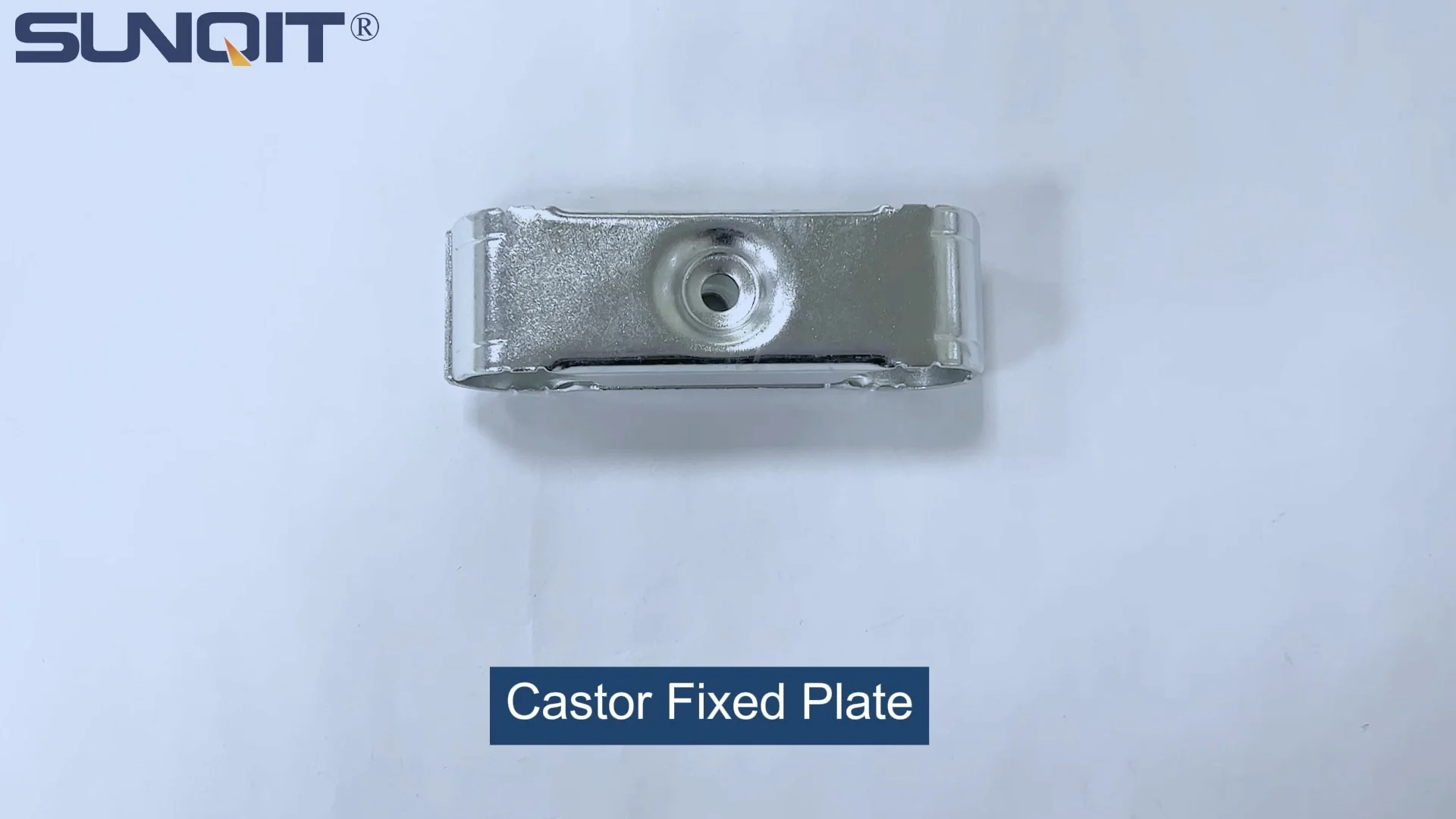
Castor Fixed Plate
Castor fixed plate, used for castor installation, one castor need two pcs castor plate to fix under the workbench, flow rack, and hand trolley.
1. Introduction: The Critical Role of Workflow Efficiency in Medical Device Manufacturing
In the high-stakes world of medical device manufacturing, where precision can mean the difference between patient safety and regulatory non-compliance, every aspect of the production process is under scrutiny. From the assembly of intricate surgical tools to the packaging of life-saving diagnostic equipment, efficiency isn't just about speed—it's about consistency, adaptability, and minimizing waste. Yet, for all the focus on advanced machinery and cutting-edge automation, one often-overlooked component quietly shapes the backbone of daily operations: the humble workstation.
Medical device plants face unique challenges. Production runs are frequently small-batch, driven by varying demand for specialized devices. Workflows must adhere to strict FDA and ISO standards, requiring frequent sanitization and documentation. Ergonomics, too, is paramount—workers spend hours at a time hunched over delicate assemblies, and even minor discomfort can lead to errors or reduced output. Add to this the pressure to reduce costs while maintaining quality, and it's clear: the flexibility and reliability of workstations and material handling systems are make-or-break factors for productivity.
Enter the unsung hero of modular workstation design: the castor fixed plate. Though small in size, this component plays a pivotal role in balancing two seemingly conflicting needs: mobility and stability. In an industry where workbenches, turnover trolleys, and material racks must be repositioned to adapt to shifting production schedules, yet remain rock-solid during precision tasks, castor fixed plates bridge the gap. By securing casters to equipment with unwavering stability when locked, and enabling smooth movement when needed, they transform static workspaces into dynamic, lean environments. In this article, we'll explore how these unassuming plates enhance productivity, support lean manufacturing principles, and become a cornerstone of efficient medical device production.
2. Understanding Castor Fixed Plates: Design and Functionality
2.1 What Are Castor Fixed Plates?
At its core, a castor fixed plate is a mounting component designed to attach casters (wheeled components) to equipment such as workbenches, trolleys, or material racks. Unlike basic caster mounts, which may prioritize either mobility or stability but rarely both, castor fixed plates are engineered to provide a dual function: they lock securely to keep equipment stationary during critical tasks and release smoothly to allow repositioning. Think of them as the "brains" behind a workstation's ability to switch between "fixed mode" and "mobile mode"—a versatility that's invaluable in fast-paced medical device plants.
2.2 Material Composition: Built for Medical Environments
Medical device manufacturing demands components that meet stringent hygiene and durability standards. Castor fixed plates are typically crafted from materials chosen for their resistance to corrosion, ease of sanitization, and load-bearing capacity. Aluminum and stainless steel are the most common choices:
- Aluminum: Lightweight yet strong, aluminum castor fixed plates are ideal for equipment that needs frequent repositioning. Their natural resistance to rust makes them suitable for cleanrooms, where moisture and sanitizing agents are common. Many are anodized to scratch resistance, ensuring they maintain their integrity even after repeated cleaning.
- Stainless Steel: For heavy-duty applications—such as workbenches loaded with precision tools or turnover trolleys carrying bulk materials—stainless steel castor fixed plates are preferred. Their high tensile strength and immunity to corrosion make them a staple in environments where durability is non-negotiable, such as surgical instrument assembly lines.
Some manufacturers also offer plastic composites for lightweight, cost-sensitive setups, though these are less common in medical settings due to lower load capacities and potential for wear in high-use scenarios.
2.3 Key Features: Beyond Basic Mounting
What sets castor fixed plates apart from generic mounts is their attention to detail, tailored to the needs of medical device production. Key features include:
- Integrated Locking Mechanisms: Most castor fixed plates work with caster accessories like brake pedals or swivel locks. When engaged, these mechanisms anchor the plate (and thus the caster) to the floor, preventing even minor shifts during tasks like microsurgery tool assembly. Some advanced models include dual-locking systems—locking both the wheel rotation and swivel motion—to maximize stability.
- Load Capacity Ratings: Plates are rated for specific weights, ranging from 200 lbs for lightweight workbenches to over 1,000 lbs for heavy material racks. Medical plants often opt for plates with a safety margin (e.g., a 500-lb rated plate for a 300-lb workstation) to account for sudden shifts in load, such as when a worker leans on the bench.
- Compatibility with Caster Types: Whether paired with rigid casters (fixed direction), swivel casters (360° movement), or brake casters, castor fixed plates are designed to fit standard caster stem sizes and mounting patterns. This modularity allows plants to mix and match components based on specific needs—for example, using swivel casters with brake plates on workbenches for maximum maneuverability.
- Low-Profile Design: To maintain ergonomic heights, castor fixed plates are often slim, adding minimal height to equipment. This is critical in medical settings, where workbench surfaces must align with worker waistlines to reduce strain during long assembly sessions.

3. Integrating Castor Fixed Plates into Lean Manufacturing Systems
3.1 Lean Principles in Medical Device Production
Lean manufacturing—rooted in eliminating waste (muda) and continuous improvement (kaizen)—has become a cornerstone of medical device manufacturing. In an industry where profit margins are tight and compliance costs are high, lean systems focus on streamlining workflows, reducing unnecessary movement, and optimizing resource use. Key lean goals include:
- Minimizing transport waste (moving materials or equipment unnecessarily).
- Reducing waiting time (ensuring tools and materials are "just-in-time").
- Enhancing flexibility (adapting quickly to batch changes or design updates).
At the heart of these goals is the concept of modular workstations—setups that can be reconfigured on demand. This is where castor fixed plates shine: they turn static equipment into dynamic assets that support lean's "flow" principle, ensuring work moves to the worker, not the other way around.
3.2 Enabling "Just-In-Time" Material Handling
In traditional medical device plants, workers often spend 20-30% of their shift walking to retrieve tools, components, or finished products—a classic example of transport waste. With castor fixed plates, lean pipe workbenches and turnover trolleys become mobile hubs. A worker assembling pacemakers, for instance, can have a trolley loaded with capacitors, wires, and testing tools locked beside their workstation. When the batch is complete, the trolley (secured by castor fixed plates) is moved to the next station, eliminating the need for multiple trips.
This "just-in-time" material delivery reduces walking time by up to 40% in some cases, according to lean manufacturing studies. More importantly, it keeps workers focused on value-added tasks—like inspecting component tolerances—rather than logistics. Castor fixed plates ensure the trolley stays put during assembly, preventing spills or misplacements that could lead to costly rework.
3.3 Supporting Dual Foundation Lean Management
Dual foundation lean management—a strategy that combines stable core processes with flexible adaptation—relies on equipment that can serve as both a fixed "foundation" for routine tasks and a mobile asset for change. Castor fixed plates embody this duality. For example, a workbench used for daily quality control checks can be locked in place (stable foundation) during inspections, ensuring precise measurements. When a new product line is introduced, the same workbench can be unlocked, moved to a new location, and reconnected to roller tracks for material flow—all without disrupting other operations.
This adaptability is crucial for medical device plants, where product mixes change frequently. A single workbench might be used for catheter assembly in the morning and syringe packaging in the afternoon; castor fixed plates make switching between these tasks seamless, reducing setup time from hours to minutes.

4. Productivity Drivers: How Castor Fixed Plates Transform Operations
4.1 Mobility Without Compromise: The Stability-Mobility Balance
The biggest productivity gain from castor fixed plates lies in their ability to resolve the age-old conflict between mobility and stability. Traditional fixed workstations offer stability but no flexibility—reconfiguring a production line could require disassembling and rebuilding benches, a process that takes days. Standard mobile workstations, on the other hand, often sacrifice stability; even minor vibrations can misalign delicate components during assembly, leading to defects.
Castor fixed plates eliminate this trade-off. When locked, their robust locking mechanisms (often engaged via foot pedals for hands-free operation) anchor equipment to the floor with minimal play—typically less than 0.5mm of movement, which is negligible for most medical device assembly tasks. When unlocked, precision bearings in the casters allow smooth movement, even across uneven factory floors. This means a workstation can go from "rock-solid inspection table" to "mobile assembly unit" in seconds, adapting to whatever the day's schedule demands.
4.2 Ergonomic Benefits: Reducing Strain, Boosting Focus
Worker fatigue is a silent productivity killer in manufacturing. In medical device plants, where tasks require fine motor control (e.g., soldering tiny electrical connections), even mild discomfort can lead to errors. Castor fixed plates indirectly reduce fatigue by enabling ergonomic workstation positioning. Workers can adjust the location of their benches to align with their body mechanics—for example, moving a bench closer to a material rack to avoid reaching, or repositioning it to take advantage of natural light.
A study by the Occupational Safety and Health Administration (OSHA) found that ergonomically optimized workstations reduce muscle strain by 35% and increase task accuracy by 18%. Castor fixed plates make such optimization possible by allowing workers to personalize their space without waiting for maintenance teams to relocate equipment. Over time, this leads to fewer sick days, lower turnover, and higher overall output.
4.3 Quick Reconfiguration for Batch Production
Medical device manufacturers often produce small batches of specialized products—for example, 50 units of a custom orthopedic implant for a specific hospital. Traditional production lines struggle with this, as retooling for small runs is time-consuming. Castor fixed plates, however, enable "cellular manufacturing"—small, self-contained work cells that can be rearranged quickly for each batch.
Imagine a plant producing three types of surgical scissors: standard, micro-tip, and curved. With castor fixed plates, three work cells can be set up overnight: one with tools for standard scissors, one with microscopes for micro-tip models, and one with bending jigs for curved designs. The next morning, workers simply unlock the cells, move them into position, and lock them down. Changeover time, which might have taken 8 hours with fixed benches, now takes 45 minutes. This agility allows plants to take on more small-batch orders, increasing revenue without expanding floor space.

5. Comparative Analysis: Traditional vs. Castor Fixed Plate-Equipped Workstations
| Feature | Traditional Fixed Workstations | Standard Mobile Workstations (No Fixed Plates) | Castor Fixed Plate-Equipped Workstations |
|---|---|---|---|
| Mobility | None; requires disassembly to move | High; but difficult to control on uneven floors | High; smooth movement with precision casters |
| Stability During Tasks | Excellent (no movement) | Poor; often shifts during assembly | Excellent; locks down with <0.5mm movement |
| Reconfiguration Time | 8–12 hours (requires tools/team) | 1–2 hours (but risk of damage during movement) | 30–60 minutes (worker-operated, no tools) |
| Load Capacity | High (up to 2,000 lbs) | Low (typically <500 lbs) | High (up to 1,500 lbs with steel plates) |
| Ergonomic Flexibility | Low; fixed position | Medium; can be moved, but unstable | High; workers adjust position as needed |
| Lean Compatibility | Poor; creates transport waste | Medium; reduces transport but risks instability | Excellent; supports just-in-time and cellular manufacturing |
The table above illustrates why castor fixed plates are becoming a standard in medical device plants: they outperform traditional setups in flexibility and lean compatibility while matching or exceeding stability and load capacity. For plants prioritizing productivity, the choice is clear.
6. Real-World Impact: Case Studies in Medical Device Manufacturing
6.1 Case Study 1: Orthopedic Implant Manufacturer Cuts Setup Time by 70%
A mid-sized manufacturer of hip and knee implants was struggling with long setup times between product lines. Their traditional fixed workstations required 10 hours to reconfigure for each new implant model, leading to bottlenecks and missed deadlines. In 2023, they invested in castor fixed plates for 12 workbenches and 8 turnover trolleys.
The results were transformative: Setup time dropped to 3 hours, as workers could now move tools and materials directly to the assembly area. Transport waste was reduced by 55%, as trolleys with castor fixed plates delivered components to each workstation. Over six months, the plant increased production capacity by 22% without adding floor space, and customer lead times shortened from 14 days to 8 days. "We used to turn down small orders because retooling wasn't worth it," said the plant manager. "Now, we take every order—and still finish early."
6.2 Case Study 2: Diagnostic Device Plant Improves Quality Scores by 25%
A manufacturer of blood glucose monitors was facing high rejection rates (12%) due to assembly errors. Root-cause analysis revealed that workers were frequently distracted by having to walk to retrieve tools, leading to rushed inspections. The plant installed castor fixed plates on 15 quality control workbenches, allowing them to be positioned next to assembly lines.
Within three months, rejection rates fell to 9%, and by the end of the year, they hit 4.5%—a 25% improvement. Workers reported spending 60% less time walking and 40% more time focused on inspections. "The workbenches are now where we need them, when we need them," said a quality inspector. "I can check a monitor, set it aside, and grab the next one without missing a beat."
7. Conclusion: Investing in the Foundation of Efficient Manufacturing
In the fast-paced, precision-driven world of medical device manufacturing, productivity isn't just about big machines or fancy software—it's about the small, smart components that make daily operations smoother. Castor fixed plates are a prime example: unassuming in design, but transformative in impact. By balancing mobility and stability, they enable lean workflows, reduce waste, and empower workers to focus on what matters most: creating life-saving devices.
As medical device manufacturers face increasing pressure to deliver more with less, the case for castor fixed plates grows stronger. They're not just a tool for moving equipment—they're a foundation for continuous improvement, supporting dual foundation lean management, cellular manufacturing, and ergonomic excellence. For plants looking to boost efficiency, cut costs, and stay competitive, investing in castor fixed plates isn't just a choice—it's a necessity.
In the end, the true measure of a component's value isn't its price tag, but its ability to make workers' lives easier and production lines more agile. Castor fixed plates pass that test with flying colors, proving that sometimes, the smallest parts have the biggest impact.