- Company Articles
- Products and Technology
- Installation And Maintenance
- How Castor Install Bases Enable Quick Workstation Reconfiguration in Lean Factories

How Castor Install Bases Enable Quick Workstation Reconfiguration in Lean Factories
Related Product
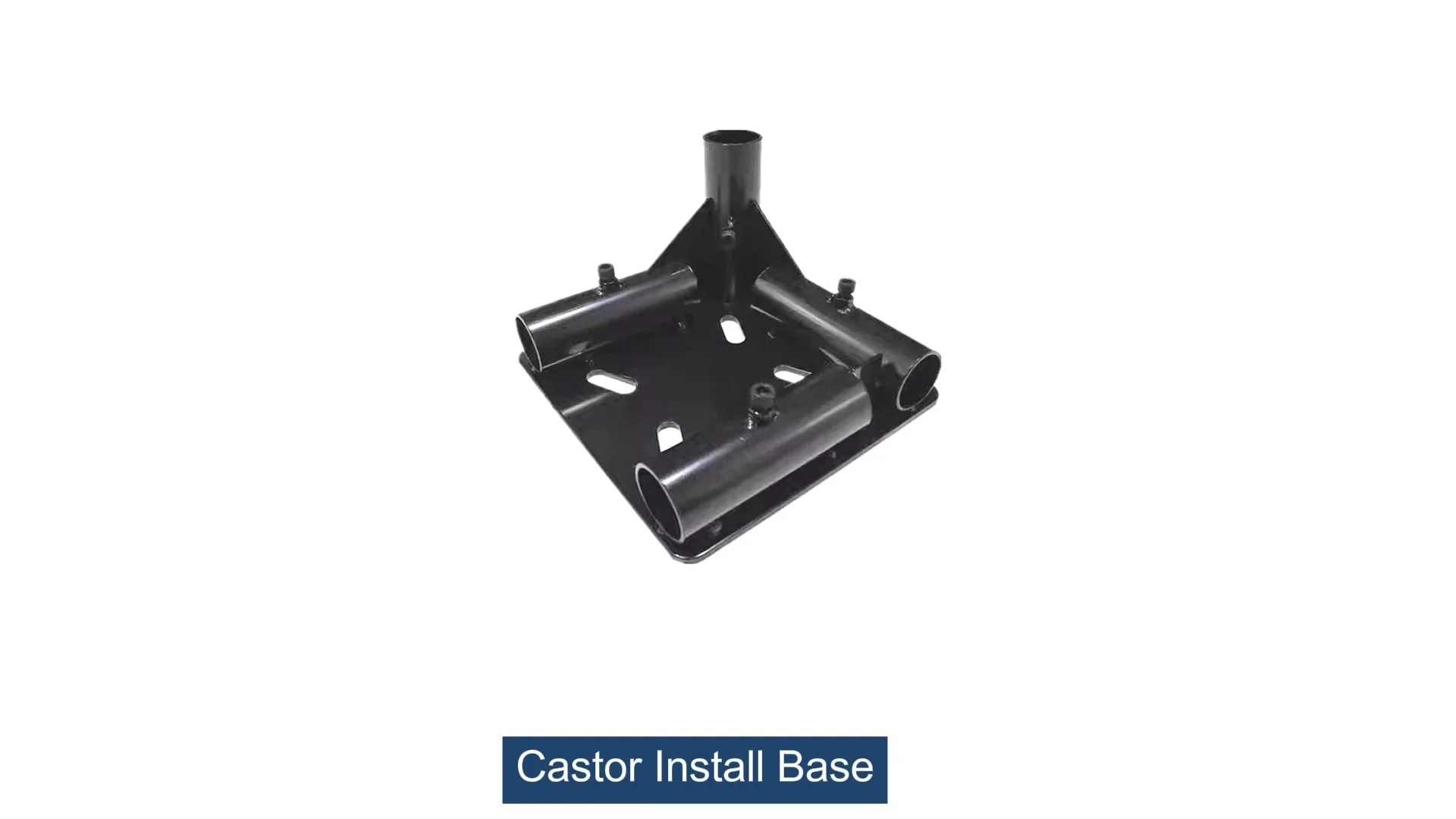
Castor Install Base
Castor install base, used for connection between pipe and castor, it can connect 4 pcs pipe by 1 pcs castor base, to make the structure strong and stable.
In the fast-paced world of manufacturing, where customer demands shift overnight and production lines need to pivot at a moment's notice, rigidity is the enemy of efficiency. Lean factories, in particular, thrive on adaptability—eliminating waste, streamlining processes, and responding swiftly to change. But here's the catch: many traditional workstations are built like fortresses, bolted to the floor and resistant to movement. Reconfiguring them to accommodate a new product line, adjust for seasonal demand, or optimize workflow can take hours, if not days, grinding productivity to a halt.
Enter the unsung hero of lean flexibility: the castor install base . These unassuming components might not grab headlines, but they're quietly revolutionizing how factories adapt. By turning fixed workbenches, material racks, and assembly stations into mobile, modular units, castor install bases are the backbone of a truly agile lean system. Let's dive into how they work, why they matter, and how they're changing the game for manufacturers worldwide.
The Problem with Fixed Workstations in Lean Manufacturing
Lean manufacturing is all about flow—ensuring materials, information, and workers move through the production process with minimal friction. But imagine a workstation that's been in the same spot for years. It might have been perfect for the product line it was designed for, but when the factory shifts to a new model with different assembly steps, that workstation becomes a bottleneck. Workers have to walk farther to access tools, materials get stuck in transit, and the once-optimized layout now feels like a maze.
Traditional fixed workstations often require heavy machinery, welding, or complex disassembly to move. For example, repositioning a large workbench might involve a team of workers, a forklift, and hours of downtime. In a lean environment, where every minute counts, this isn't just inefficient—it's wasteful. And waste, as any lean practitioner will tell you, is the opposite of progress.
Worse, fixed setups discourage experimentation. If rearranging a production line takes days, managers are less likely to try new layouts that could boost efficiency. Over time, the factory grows stagnant, stuck in outdated processes while competitors adapt and innovate. This is where the need for quick reconfiguration becomes critical—and where castor install bases step in.
What Are Castor Install Bases, Anyway?
Let's start with the basics. A castor install base is a mounting plate or bracket designed to attach casters (wheels) to the bottom of equipment like workbenches, material racks, or turnover trolleys. Think of it as the bridge between a stationary structure and a mobile one. But not all castor install bases are created equal. The best ones are engineered for durability, load capacity, and seamless integration with lean tools and components.
Most castor install bases are made from robust materials like steel or aluminum, chosen for their strength and resistance to wear. They're designed to bolt or clamp onto the legs or frame of a workstation, providing a stable platform for casters. Some models even include adjustable height features or locking mechanisms to ensure stability when the workstation is in use—so you get the best of both worlds: mobility when you need it, rigidity when you don't.
But why not just attach casters directly to the workstation? Because not all equipment is built to handle the stress of movement. A poorly attached caster can wobble, damage the floor, or even fail under heavy loads. Castor install bases distribute weight evenly, protect the workstation's frame, and ensure the casters align correctly—preventing uneven wear and ensuring smooth, safe movement.

How Castor Install Bases Enable Quick Reconfiguration
At their core, castor install bases solve one big problem: they make movement easy. But "easy" is a small word for a huge impact. Let's break down exactly how they enable the quick reconfiguration that lean factories depend on.
1. Instant Mobility, No Heavy Lifting Required
The most obvious benefit is mobility. With a castor install base, a single worker can move a heavy workbench or material rack with minimal effort. No forklifts, no team lifts, no downtime. Need to shift a roller track to align with a new assembly line? Unlock the casters, wheel it into place, and lock them again. Done. What once took hours now takes minutes.
This instant mobility is a game-changer for just-in-time (JIT) production. For example, if a sudden order for a high-demand product comes in, the factory can quickly reconfigure workstations to prioritize that line, bringing tools and materials closer to workers. When the order is fulfilled, the layout can be just as quickly reset for the next task. It's flexibility on demand.
2. Compatibility with Lean Systems and Components
A truly effective lean system isn't just about individual tools—it's about how those tools work together. Castor install bases are designed to play well with other lean components, like aluminum profiles , roller tracks, and modular workbenches. This compatibility turns standalone workstations into part of a cohesive, adaptable ecosystem.
For instance, aluminum profiles are lightweight, strong, and easy to assemble, making them ideal for building custom workstations. When paired with a castor install base, these aluminum profile workstations become mobile hubs that can be rearranged to form U-shaped cells, linear assembly lines, or whatever layout the job requires. Roller tracks, which facilitate the smooth flow of materials, can be mounted on mobile racks with castor install bases, ensuring materials always move to the worker—not the other way around.
3. Tool-Free Adjustments and Modular Design
Many castor install bases are designed with modularity in mind. They use standard fasteners and connectors, so workers don't need specialized tools to attach or remove casters. This means a single base can be swapped between different workstations, depending on the task at hand. For example, a castor install base used on a material rack today can be moved to a workbench tomorrow, maximizing resource utilization and reducing waste.
Modularity also extends to the casters themselves. Some bases are compatible with a range of caster types—swivel casters for easy maneuverability, locking casters for stability, or heavy-duty casters for load-heavy equipment. This versatility ensures the base can adapt to different environments, whether it's a smooth factory floor or a rough warehouse surface.

A Closer Look: How Castor Install Bases Transform Workflow
To understand the real impact of castor install bases, let's walk through a typical scenario in a lean factory. Imagine a small electronics manufacturer that produces both smartphones and tablets. The two product lines have different assembly steps: smartphones require more precise handwork, while tablets involve larger components and more automated processes. The factory's layout needs to switch between these two setups weekly.
Without castor install bases, the transition might look like this: On Monday, the team spends 4 hours disassembling the smartphone workstations, moving them to storage, and reassembling the tablet workstations. They use forklifts to reposition heavy material racks and roller tracks, and by the time they're done, half the workday is gone. By Friday, when it's time to switch back, the process repeats—wasting another 4 hours.
Now, with castor install bases: Each workstation, material rack, and roller track is mounted on a castor install base with locking casters. On Monday morning, two workers spend 30 minutes unlocking the smartphone workstations, rolling them to the side, and positioning the tablet workstations in their place. They lock the casters, connect the roller tracks to the new layout, and start production by 9:30 AM. Friday's transition is just as quick. Over a week, that's 7 hours saved—time that can be spent on actual production, not rearranging.
This isn't just about saving time. It's about empowering workers. When reconfiguration is easy, teams are more likely to experiment with layouts to find what works best. Maybe they notice that placing the soldering station closer to the testing bench reduces errors, or that arranging workstations in a circle cuts down on walking time. With castor install bases, these experiments can be tested in minutes, not days—driving continuous improvement, a cornerstone of lean manufacturing.

The Numbers Speak: Comparing Fixed vs. Mobile Workstations
Still not convinced? Let's look at the data. Below is a comparison of fixed workstations versus those equipped with castor install bases, based on industry studies and real-world case examples:
| Metric | Fixed Workstations | Castor Install Base Workstations |
|---|---|---|
| Time to reconfigure a production line | 8–16 hours | 30 minutes–2 hours |
| Number of workers needed for reconfiguration | 4–6 workers | 1–2 workers |
| Downtime during reconfiguration | Full shift or more | Minimal (often during breaks) |
| Cost per reconfiguration (labor + equipment) | $500–$1,500 | $50–$200 |
| Number of layout changes per year | 2–4 (due to high effort) | 12–24 (due to low effort) |
| Worker satisfaction with workflow | Low (frustration with inefficiencies) | High (ability to optimize their space) |
The difference is clear: castor install bases drastically reduce the time, labor, and cost of reconfiguration while enabling more frequent, impactful layout changes. For a lean factory, this translates to higher productivity, lower waste, and a more engaged workforce.
Integration with Key Lean Components
Castor install bases don't work in isolation—they're part of a larger lean ecosystem. Let's explore how they integrate with other essential components to create a fully adaptable workspace:
1. Workbenches: From Static to Dynamic
Workbenches are the heart of any assembly line, where workers spend most of their time. A fixed workbench ties workers to a single spot, but a workbench mounted on a castor install base becomes a mobile command center. Need to collaborate with a teammate? Roll the workbench next to theirs. Short on space for a new machine? Move the workbench to a temporary location. Even better, many modern workbenches are built with aluminum profiles, which are lightweight and easy to customize—pairing perfectly with castor install bases for maximum flexibility.
2. Aluminum Profiles: Lightweight Strength for Mobile Structures
Aluminum profiles are a staple in lean manufacturing for good reason. They're strong yet lightweight, corrosion-resistant, and compatible with a wide range of accessories like brackets, shelves, and tool holders. When combined with castor install bases, aluminum profile structures become incredibly versatile. For example, a mobile aluminum profile rack can carry materials directly to the assembly line, reducing the need for workers to walk to a distant storage area. The lightweight nature of aluminum also makes these mobile structures easy to maneuver, even when fully loaded.
3. Roller Tracks: Keeping Materials Flowing, Even on the Move
Roller tracks are designed to move materials smoothly from one station to the next, but they're only effective if they're in the right place. With castor install bases, roller track-equipped racks can be positioned exactly where materials are needed. For instance, during peak production, a roller track rack can be rolled between two workstations to create a continuous flow. When demand slows, it can be moved to a storage area to free up floor space. This adaptability ensures material flow never stops, even as the factory layout changes.
Real-World Success Stories: Castor Install Bases in Action
It's one thing to talk about the benefits of castor install bases, but it's another to see them in action. Let's look at two real-world examples of factories that transformed their operations with these simple yet powerful components.
Case Study 1: Automotive Parts Manufacturer
A mid-sized automotive parts manufacturer was struggling to keep up with changing orders from major car brands. Their production lines were fixed, and reconfiguring to produce a new part often took a full weekend, leading to missed deadlines. The factory implemented castor install bases on all their workbenches and material racks, paired with aluminum profiles for modularity.
The results were staggering: Reconfiguration time dropped from 48 hours to just 2 hours. The factory could now switch between part models daily, meeting tight deadlines and reducing overtime costs. Workers reported higher job satisfaction, as they could adjust their workstations to fit their needs, and material waste decreased by 15% due to more efficient flow. Within six months, the investment in castor install bases paid for itself through increased productivity.
Case Study 2: Electronics Assembly Plant
An electronics plant producing smartphones and tablets faced frequent changes in assembly steps as new models were released. Their fixed workstations meant workers often had to reach across long distances for tools, leading to fatigue and errors. The plant installed castor install bases on their workbenches and paired them with mobile roller track racks.
Almost immediately, error rates dropped by 20% as tools and materials were now within arm's reach. The plant also saw a 25% increase in throughput, as they could quickly reconfigure lines to prioritize high-demand models. Perhaps most notably, the plant reduced its floor space usage by 10% by moving unused workstations to temporary storage, freeing up room for new equipment.
The Future of Lean Flexibility: What's Next for Castor Install Bases?
As lean manufacturing continues to evolve, so too will the tools that support it. Castor install bases are no exception. Here are a few trends to watch for in the coming years:
- Smart Casters and IoT Integration: Imagine castor install bases equipped with sensors that track movement, monitor load capacity, or alert maintenance when casters need lubrication. This data could help factories optimize workflows even further, predicting when reconfiguration might be needed or identifying bottlenecks before they slow production.
- Eco-Friendly Materials: As sustainability becomes a priority, manufacturers are exploring castor install bases made from recycled materials or biodegradable composites, without sacrificing strength or durability.
- Enhanced Ergonomics: Future castor install bases may include features like height adjustment or shock absorption, reducing worker strain and making mobile workstations even more comfortable to use.
Conclusion: Castor Install Bases—The Foundation of Agile Lean Factories
In the world of lean manufacturing, adaptability isn't just a buzzword—it's survival. Fixed workstations, once the norm, are now a liability, holding back productivity and innovation. Castor install bases, by turning static equipment into mobile, modular units, are the key to unlocking true flexibility.
From reducing reconfiguration time from days to hours, to integrating seamlessly with aluminum profiles, roller tracks, and workbenches, these unassuming components are transforming factories into agile ecosystems that can keep up with the demands of modern manufacturing. They empower workers, reduce waste, and drive continuous improvement—all while saving time and money.
So, if you're looking to take your lean system to the next level, don't overlook the power of the castor install base. It might just be the small change that leads to big results.