- Company Articles
- Products and Technology
- Installation And Maintenance
- How Castor Install Bases Enhance Flexibility in Warehouse Logistics Systems

How Castor Install Bases Enhance Flexibility in Warehouse Logistics Systems
Related Product
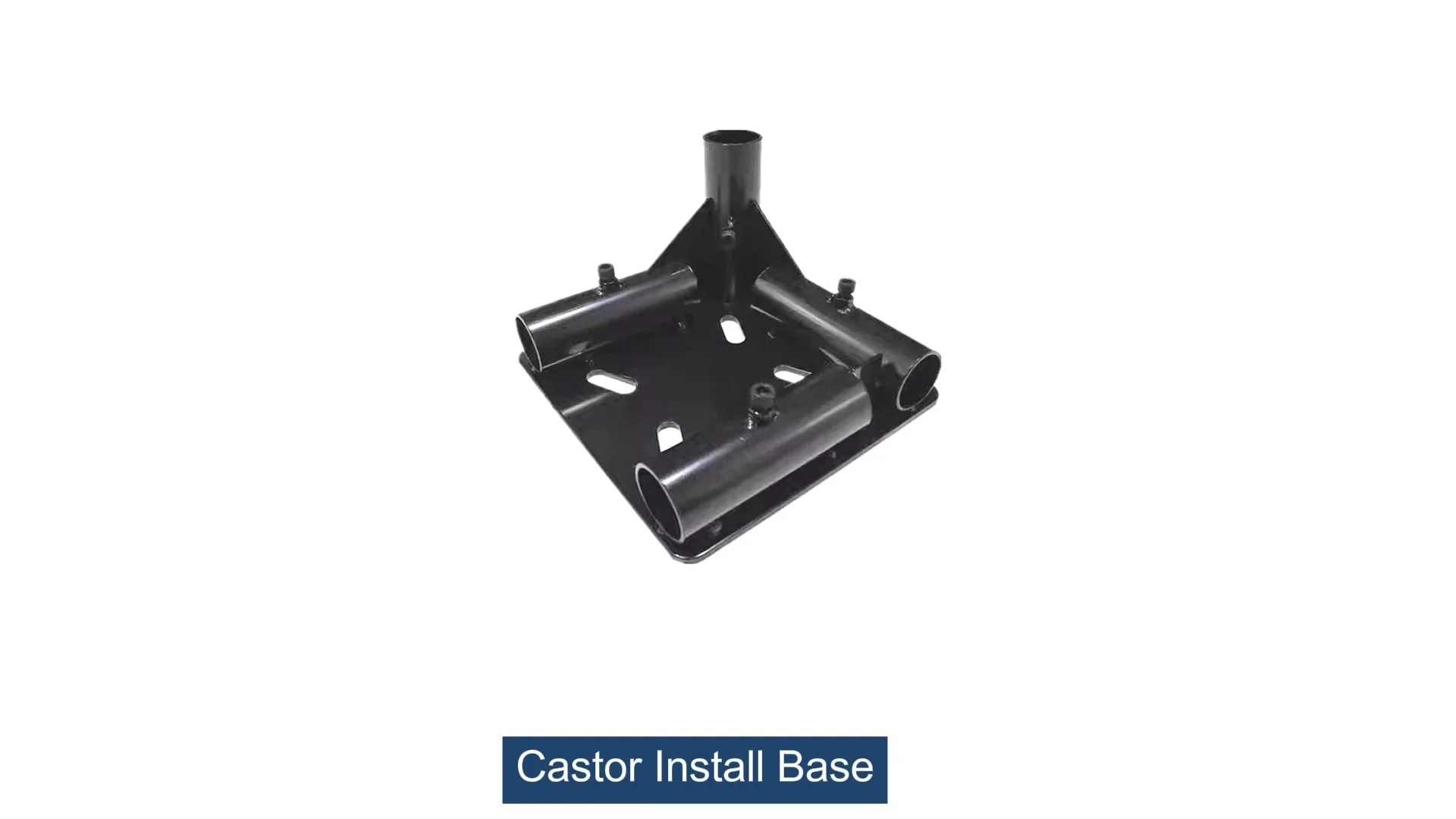
Castor Install Base
Castor install base, used for connection between pipe and castor, it can connect 4 pcs pipe by 1 pcs castor base, to make the structure strong and stable.
The Hidden Challenge of Rigid Warehouse Setups
Walk into any busy warehouse or distribution center, and you'll quickly notice a common theme: motion. Pallets glide across floors, workers hustle between stations, and orders zip through conveyor belts. Yet, beneath this apparent dynamism, many facilities grapple with a silent productivity killer: rigidity. Fixed workbenches bolted to the floor, immovable material racks, and static turnover trolleys—these once-standard fixtures are now holding back operations in an era where adaptability is key.
Consider a scenario: A manufacturing plant suddenly needs to reconfigure its assembly line to accommodate a rush order for a new product. The team scrambles to move workbenches, only to realize they're anchored in place. Hours are wasted unbolting, lifting, and repositioning heavy equipment, delaying production and increasing labor costs. Or picture a warehouse during peak season, where extra storage racks are needed in one corner but can't be moved because their wheels are locked or nonexistent. These are everyday struggles that eat into efficiency, and they often boil down to one overlooked component: how equipment interacts with the floor.
This is where castor install bases step in. Far more than just a "wheel holder," these unassuming components are the unsung heroes of flexible logistics. By serving as the critical link between equipment and caster wheels, they transform static tools into mobile assets, turning rigid floor plans into adaptable, responsive spaces. Let's dive into how these small but mighty parts are revolutionizing warehouse operations.
What Are Castor Install Bases, and Why Do They Matter?
At first glance, a castor install base might seem simple: a metal or plastic plate designed to attach caster wheels to equipment like workbenches, turnover trolleys, or material racks. But its role is far more nuanced. Think of it as the foundation of mobility—without a sturdy, well-designed base, even the best caster wheel becomes ineffective. A poorly fitted base can lead to wobbly equipment, uneven weight distribution, or wheels that lock up, defeating the purpose of mobility entirely.
Modern castor install bases are engineered with precision, often made from durable materials like steel or aluminum to withstand the heavy loads common in warehouses. They come in various designs to fit different equipment types: some are flat for workbenches, others have reinforced edges for turnover trolleys, and many include adjustable brackets to align with different caster wheel sizes. This versatility means they can be retrofitted onto existing equipment, making them a cost-effective upgrade for facilities looking to boost flexibility without replacing entire systems.
But their true value lies in what they enable: instant mobility . With a reliable castor install base, a 200-pound workbench can be moved by a single worker with minimal effort. A material rack that once took a team to reposition can now glide across the floor to where it's needed most. And turnover trolleys, long a staple of warehouse logistics, become even more efficient when their castor install bases ensure smooth, stable movement—even when loaded with heavy inventory.

From Static to Dynamic: Real-World Applications
To understand the impact of castor install bases, let's look at three key areas where they're transforming warehouse operations: workbenches, turnover trolleys and racks, and material handling systems. In each case, the addition of a quality castor install base turns a fixed tool into a flexible asset, unlocking new levels of productivity.
1. Workbenches: Adapting to the Task at Hand
Workbenches are the heart of assembly lines, packing stations, and quality control areas. Traditionally, they're built to be "permanent"—sturdy, immovable, and optimized for a single task. But in today's fast-paced facilities, tasks change daily. One day, a bench might be used for small-parts assembly; the next, it needs to serve as a packing station for oversized items. Without mobility, workers are forced to adapt to the bench's location, not the other way around.
Enter castor install bases. By retrofitting workbenches with these bases and pairing them with high-quality caster wheels (often with locking mechanisms for stability when in use), facilities gain a game-changing advantage. For example, a electronics manufacturer in Ohio recently upgraded 15 of its ESD workbenches with castor install bases and caster accessories like brake levers. The result? When switching between product lines, workers can now reposition benches in minutes instead of hours, reducing setup time by 65%. Quality control inspectors, who once had to carry heavy components to a fixed bench, now roll the bench to the components, cutting inspection time by 30%.
The key here is the castor install base's ability to distribute weight evenly. A well-designed base ensures the workbench remains stable even when loaded with tools and materials, preventing wobbling that could compromise precision work. And with options for corrosion-resistant materials, these bases hold up in harsh environments—from cold storage facilities to high-humidity warehouses—ensuring long-term reliability.
2. Turnover Trolleys and Racks: Moving Inventory, Not Just Storing It
Turnover trolleys and material racks are the workhorses of inventory management, used to transport parts between stations, store raw materials, and stage finished goods. But their effectiveness hinges on how easily they can move. A trolley with stuck wheels or a rack that's too heavy to push becomes a liability, slowing down material flow and increasing the risk of workplace injuries.
Castor install bases address this by providing a secure, low-friction connection between the trolley/rack frame and caster wheels. Take, for instance, a distribution center in Texas that handles seasonal spikes in apparel shipments. Each fall, the facility needs to double its storage capacity for winter coats. In the past, they'd use static racks that took days to assemble and couldn't be moved once filled. After adding castor install bases to 50 of their material racks (specifically Model B, 3-row, 3-floor units), the team can now wheel racks into place as needed, reconfiguring storage zones in hours instead of days. During peak season, they've reduced the time spent on inventory staging by 40%, simply by making racks mobile.
Another example is a food and beverage warehouse that uses turnover trolleys to transport perishable goods. By upgrading to castor install bases with swivel caster wheels, the trolleys now navigate tight aisles with ease, reducing collisions and product damage. Workers report less fatigue, too—pushing a trolley with smooth-rolling casters requires far less effort than wrestling with a stuck one, leading to fewer injuries and higher morale.
3. Material Handling Systems: Seamless Flow Across the Floor
Beyond individual workbenches and trolleys, castor install bases play a critical role in larger material handling systems. For instance, roller tracks—used to slide boxes and packages between stations—often need to be adjusted to align with changing conveyor heights or workflow patterns. When roller track sections are mounted on bases with casters, they become modular, allowing teams to reconfigure the track layout without disassembly.
A automotive parts supplier in Michigan recently used this approach to solve a bottleneck in its shipping department. Their roller track system was fixed, so if a conveyor jammed, the entire line would back up. By mounting key roller track segments on castor install bases, they created "detours"—when a jam occurs, workers can quickly roll a spare track section into place, diverting packages and keeping the line moving. This small change cut downtime by 70% during peak shipping periods.

The Benefits: More Than Just Mobility
The advantages of castor install bases extend far beyond "being able to move things." They ripple through every aspect of warehouse operations, from cost savings to worker satisfaction. Let's break down the key benefits:
| Aspect | Traditional Fixed Equipment | Equipment with Castor Install Bases |
|---|---|---|
| Setup/Reconfiguration Time | Hours to days (requires tools, multiple workers) | Minutes (single worker, no tools needed) |
| Floor Space Utilization | Static layout, underutilized "dead zones" | Dynamic layout, space repurposed as needed |
| Labor Costs | High (extra workers for moving/setup) | Low (reduced labor for reconfiguration) |
| Adaptability to Demand Spikes | Limited (fixed capacity, hard to scale quickly) | High (easily add/move equipment for peak demand) |
| Worker Ergonomics | Poor (workers lift/carry heavy items to fixed stations) | Excellent (equipment moves to workers, reducing strain) |
Cost Savings: The most immediate impact is on labor and operational costs. By reducing the time and effort needed to reconfigure workspaces, facilities save on hourly wages and minimize downtime. Over time, these savings compound—one study by the Material Handling Industry (MHI) found that facilities with mobile equipment saw a 25% average reduction in labor costs related to layout changes.
Space Optimization: Warehouses pay a premium for square footage, so wasted space is wasted money. Castor install bases turn unused corners into functional areas by making equipment movable. For example, a seasonal retailer can store extra racks in a back room during slow months, then roll them out to the sales floor when demand spikes—no more permanent storage taking up valuable space.
Worker Satisfaction and Safety: Heavy lifting and repetitive pushing/pulling are leading causes of workplace injuries. By making equipment mobile, castor install bases reduce physical strain, lowering injury rates and boosting morale. Workers report feeling more empowered when they can adjust their workspace to fit their needs, leading to higher retention and productivity.
Scalability: As businesses grow, their logistics needs change. A small warehouse might start with 10 workbenches but need 20 a year later. With castor install bases, adding or relocating equipment is as simple as rolling it into place—no need for expensive construction or new infrastructure.

Choosing the Right Castor Install Base: Key Considerations
Not all castor install bases are created equal. To maximize flexibility and durability, facilities need to choose the right base for their equipment and environment. Here are the top factors to consider:
Load Capacity: The base must support the total weight of the equipment plus its maximum load. A workbench used for heavy machinery might require a steel base with a 1,000-pound capacity, while a lightweight turnover trolley could use an aluminum base rated for 300 pounds. Always check the manufacturer's load ratings and factor in a safety margin.
Floor Type: Smooth concrete floors work well with most caster wheels, but uneven surfaces or carpet may require specialized bases with shock-absorbing features. For ESD-sensitive areas (like electronics manufacturing), look for bases with conductive materials to prevent static buildup.
Caster Wheel Compatibility: Bases come in standard sizes (e.g., 4-inch, 5-inch bolt patterns) to fit common caster wheels. Mixing and matching incompatible sizes can lead to instability, so ensure the base matches the wheel's mounting holes and axle diameter.
Environmental Resistance: In warehouses with moisture, chemicals, or extreme temperatures, opt for corrosion-resistant bases (stainless steel or powder-coated steel). For cleanrooms or food processing facilities, choose bases with smooth, easy-to-clean surfaces to meet hygiene standards.
Locking Mechanisms: Many caster wheels include brakes, but the base should complement this feature. Look for bases with reinforced mounting points for brake levers, ensuring the wheel locks securely when the bench or trolley is in use.
The Future of Warehouse Flexibility: Small Parts, Big Impact
As logistics systems grow more complex—driven by e-commerce, just-in-time manufacturing, and labor shortages—flexibility will only become more critical. Castor install bases, though small, are poised to play an even bigger role in this future. Imagine smart warehouses where equipment equipped with sensor-enabled castor install bases automatically adjusts its position based on real-time order data, or AI-powered systems that optimize floor layouts by tracking how mobile assets are used.
Already, innovators are pushing the boundaries: some manufacturers now offer modular castor install bases that can be linked together to create larger mobile platforms, while others are integrating ergonomic features like height-adjustable bases for workbenches. These advancements are turning warehouses into dynamic, self-optimizing ecosystems where every square foot and every minute is maximized.
In the end, the message is clear: flexibility in logistics isn't about overhauling entire systems—it's about upgrading the right components. Castor install bases may not grab headlines, but they're the quiet force driving the next wave of warehouse productivity. By turning static equipment into mobile assets, they're not just enhancing flexibility—they're redefining what's possible.