- Company Articles
- Products and Technology
- Product knowledge
- How Castor Install Bases Improve Ergonomics in Manual Material Handling

How Castor Install Bases Improve Ergonomics in Manual Material Handling
Related Product
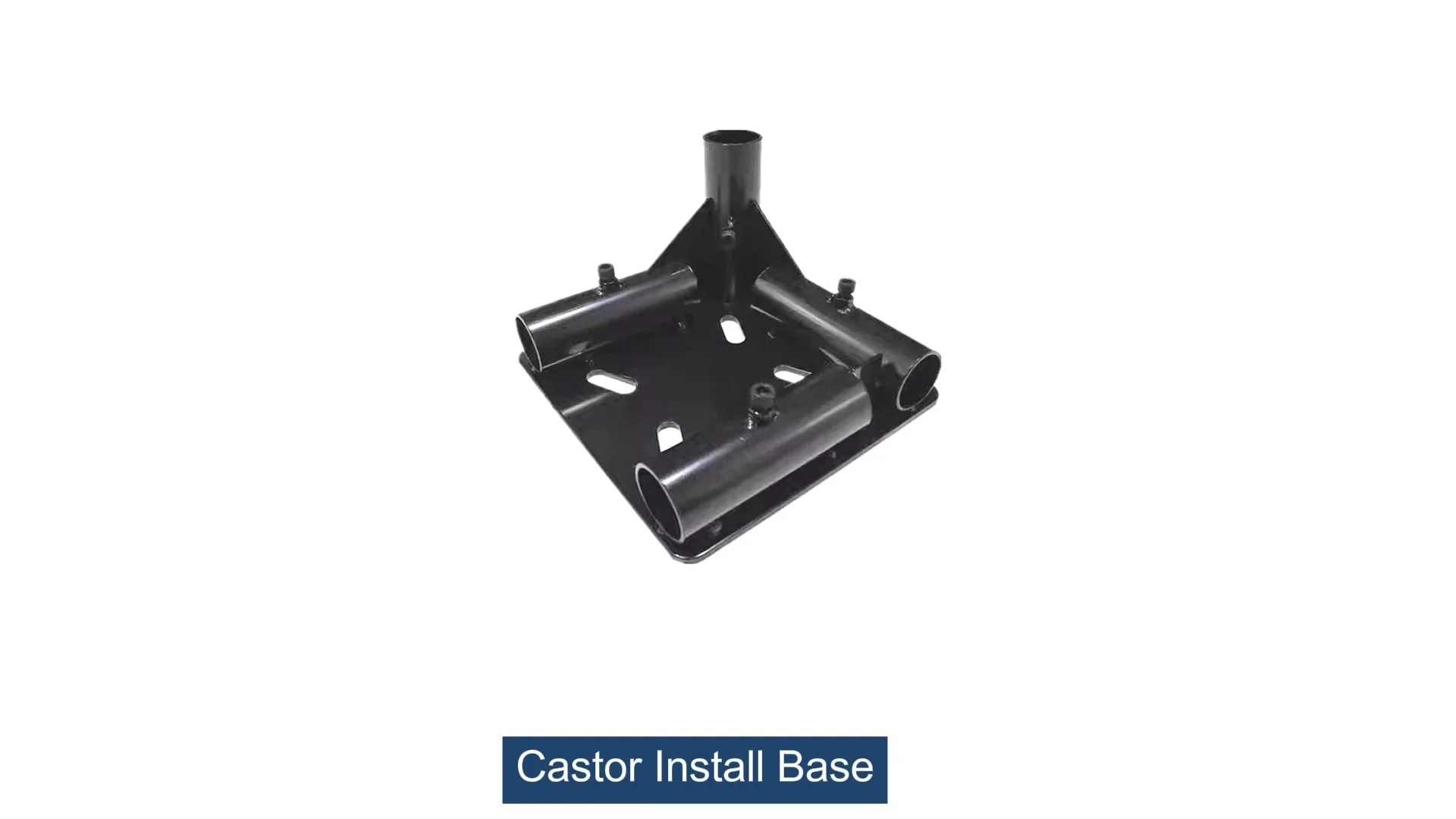
Castor Install Base
Castor install base, used for connection between pipe and castor, it can connect 4 pcs pipe by 1 pcs castor base, to make the structure strong and stable.
In the bustling environment of warehouses, factories, and distribution centers, where boxes are moved, parts are transported, and materials are shifted hour after hour, there's a quiet hero working behind the scenes: the castor install base. It's not the flashiest piece of equipment on the factory floor—you might not even notice it at first glance—but this small, unassuming component plays a pivotal role in keeping workers safe, comfortable, and productive. When paired with a well-designed caster wheel and integrated into tools like turnover trolleys and racks, castor install bases transform how we handle materials, turning strenuous tasks into smooth, efficient workflows. In this article, we'll dive into why these humble bases matter, how they solve common ergonomic headaches, and why investing in quality castor install bases is one of the smartest moves a business can make for its team.
The Ergonomic Crisis in Manual Material Handling: Why Small Changes Matter
Walk into any manufacturing plant or warehouse, and you'll see workers pushing, pulling, and maneuvering heavy loads dozens—if not hundreds—of times a day. From pallets stacked with components to bins of finished products, manual material handling is the backbone of these operations. But it's also a silent culprit behind workplace injuries. According to the Bureau of Labor Statistics, over 25% of non-fatal workplace injuries stem from overexertion or repetitive motion, with back pain, shoulder strains, and wrist injuries topping the list. These aren't just numbers; they're real people dealing with chronic pain, missed workdays, and reduced quality of life. For businesses, the costs add up too: medical bills, workers' compensation claims, and lost productivity can eat into profits and damage team morale.
So, what's driving these injuries? More often than not, it's the little things—the tools we use every day that weren't designed with ergonomics in mind. A trolley with stiff wheels that requires Herculean effort to push. A rack that wobbles when loaded, forcing workers to lean awkwardly to stabilize it. Or a caster that locks up mid-movement, jolting the load and straining muscles. These issues might seem minor, but over time, they compound. Imagine pushing a trolley with misaligned casters across a concrete floor for eight hours: each jarring movement, each extra pound of force, chips away at a worker's body. That's where castor install bases come in. By ensuring caster wheels are securely, smoothly attached to equipment, they turn clunky, injury-prone tools into extensions of the worker—tools that move with them, not against them.
What Are Castor Install Bases, Anyway? Breaking Down the Basics
Let's start with the basics: A castor install base is the component that bridges the gap between a caster wheel and the equipment it's attached to—think of it as the "middleman" that ensures everything stays connected and functional. Without a reliable install base, even the best caster wheel is useless. It might wobble, detach, or fail under load, turning a simple task into a safety hazard. But when designed well, a castor install base does much more than just hold things together. It absorbs shocks, distributes weight evenly, and allows the caster wheel to rotate or lock smoothly, depending on the job.
Castor install bases come in all shapes and sizes, tailored to different needs. There are fixed bases, which keep the caster wheel in a straight line—perfect for equipment that only moves forward and backward, like a conveyor. Then there are swivel bases, which let the wheel rotate 360 degrees, making tight turns and maneuvering in tight spaces a breeze (hello, warehouse aisles!). Some even come with built-in brakes, so you can lock the wheel in place when loading or unloading, preventing accidental rolling. The materials matter too: steel bases for heavy-duty loads, aluminum for lighter, corrosion-resistant applications, and reinforced plastic for environments where weight is a concern. No matter the type, the goal is the same: to create a stable, low-friction connection that makes moving materials feel effortless.
But here's the thing: Not all castor install bases are created equal. A cheap, poorly made base might save money upfront, but it'll cost you in the long run. Imagine a turnover trolley and rack used to transport fragile electronics. If the install base is flimsy, the trolley might sway, causing parts to shift or fall. Or worse, the base could crack under the weight, sending the load crashing to the floor—and potentially injuring a worker. On the flip side, a high-quality base, made with precision engineering and durable materials, becomes invisible in the best way: you don't notice it because it just works. It holds the caster wheel steady, distributes the load evenly, and lets you push or pull with minimal effort. That's the difference between a tool that fights you and one that supports you.

5 Ways Castor Install Bases Solve Big Ergonomic Problems
Now that we know what castor install bases are, let's get into the nitty-gritty: How exactly do they improve ergonomics? Let's break it down into five key benefits that make a tangible difference in the daily lives of workers.
1. Reducing Pushing and Pulling Force
Ever tried pushing a stuck shopping cart? It's frustrating, right? Now imagine doing that with a cart loaded with 500 pounds of parts. That's the reality for workers stuck with poorly designed castor install bases. A misaligned or stiff base creates friction, forcing workers to exert extra force to get the trolley moving. Over time, this leads to strained shoulders, tired arms, and even lower back pain from leaning into the push. A well-engineered castor install base, though, minimizes this friction. It ensures the caster wheel aligns perfectly with the direction of movement, reducing the force needed to push by up to 30%, according to ergonomic studies. That might not sound like much, but over an 8-hour shift, it adds up to hundreds of pounds of saved effort—and a lot less strain on muscles and joints.
2. Smoothing Out the Ride (and Reducing Vibration)
Warehouse floors aren't always smooth. Cracks, uneven concrete, and debris can turn a simple trolley ride into a bumpy adventure. Each jolt sends a shockwave up the handle, through the arms, and into the shoulders and back. Over time, this vibration can cause chronic pain and even nerve damage. Castor install bases with built-in shock absorption (think rubber gaskets or spring-loaded designs) act like mini suspension systems. They absorb those bumps, turning a jarring ride into a smooth glide. Workers notice the difference immediately: less fatigue, fewer headaches, and a lower risk of "white finger syndrome" (a condition caused by prolonged vibration). It's a small change that makes a big impact on daily comfort.
3. Stability That Prevents Awkward Postures
Nothing makes a task more dangerous than an unstable load. A wobbly trolley forces workers to lean to one side, twist their torso, or hunch over to keep it balanced—all awkward postures that strain the lower back and neck. Castor install bases solve this by distributing weight evenly across the caster wheels. A wide, sturdy base prevents tipping, even when the load is off-center. Some bases even come with adjustable leveling feet, which let you tweak the height to match uneven floors, ensuring the equipment stays flat and stable. No more leaning, no more twisting—just a straight, natural posture that keeps muscles relaxed and injuries at bay.
4. Easy Maneuverability in Tight Spaces
Warehouses and factories are often packed with equipment, leaving little room to maneuver. A trolley that can't make sharp turns or pivot in place forces workers to take longer routes, wasting time, or to strain to pull it around corners. Swivel castor install bases are game-changers here. They let the caster wheel rotate freely, so you can turn on a dime, navigate narrow aisles, and position the trolley exactly where it needs to be—without backtracking or overexerting. For workers, this means less time walking and more time focusing on the task at hand. For businesses, it means faster workflows and happier, more efficient teams.
5. Durability That Stands the Test of Time
A castor install base that wears out quickly is a ticking time bomb. As the base loosens, the caster wheel starts to wobble, creating all the ergonomic problems we've talked about. High-quality bases, made with robust materials like reinforced steel or aluminum, stand up to daily wear and tear. They resist rust in humid environments, don't crack under heavy loads, and stay tight even after thousands of movements. This durability means fewer replacements, less downtime, and a consistent level of ergonomic support for workers. It's an investment that pays off in both safety and savings.

Real-World Impact: How Castor Install Bases Transform Workplaces
Let's step out of the theory and into the real world. Meet Maria, a warehouse associate at a mid-sized electronics manufacturer. For years, she spent her shifts pushing a turnover trolley and rack loaded with circuit boards across the factory floor. The trolley's castor install bases were old and worn, so the wheels wobbled constantly. To keep it from tipping, Maria had to lean to the left, her shoulder hunched, her back twisted. By the end of her shift, her lower back ached, and her left arm felt numb. She'd come home exhausted, dreading the next day. Then, the company upgraded to new trolleys with heavy-duty steel castor install bases and swivel wheels. Overnight, everything changed. The trolley glided smoothly, even with a full load. Maria could turn it with one hand, no leaning required. "I used to feel like I'd run a marathon by 3 PM," she says. "Now, I go home and still have energy to play with my kids. It's like night and day."
Maria's story isn't unique. A study by the Ergonomics Research Institute found that companies that upgraded to ergonomic castor install bases saw a 40% reduction in workplace injuries related to manual material handling. Workers reported less fatigue, higher job satisfaction, and a 15% increase in productivity (because they spent less time struggling with equipment and more time getting work done). For businesses, the ROI was clear: lower workers' comp costs, fewer sick days, and a more engaged team. It's proof that investing in small components like castor install bases isn't just about "nice-to-haves"—it's about building a safer, more efficient workplace.

Choosing the Right Castor Install Base: A Buyer's Guide
So, you're convinced: castor install bases are worth the investment. But with so many options on the market, how do you choose the right one? Here's a quick guide to help you make an informed decision.
Start with the Load Capacity
First, figure out how much weight the equipment will carry. A base that's too weak will bend or break; one that's overkill will add unnecessary weight. Most bases list their maximum load capacity (e.g., 500 lbs, 1000 lbs). Err on the side of caution: if you regularly carry 300 lbs, choose a base rated for 450 lbs to account for unexpected heavy loads.
Consider the Environment
Where will the equipment be used? A warehouse with concrete floors needs a different base than a food processing plant with wet, slippery surfaces. For corrosive environments (like chemical labs), go with stainless steel or aluminum bases. For cleanrooms, choose bases with sealed bearings to prevent dust buildup. And if you're moving equipment outdoors, look for bases with weather-resistant coatings.
Maneuverability Needs
Do you need to make tight turns? Swivel bases are a must. If the equipment only moves in straight lines (like a conveyor), fixed bases will do. For equipment that needs to stay put during loading (like a workbench), look for bases with brake levers—they lock the wheels in place with a simple step.
Don't Forget Compatibility
Make sure the base fits both the caster wheel and the equipment. Check the mounting hole pattern (the distance between the bolts) to ensure it lines up with the trolley or rack. Mismatched bases will wobble, no matter how well they're made. When in doubt, ask the supplier for a compatibility chart—most reputable caster and accessories suppliers offer them.
| Castor Install Base Type | Best For | Ergonomic Benefit | Load Capacity (Typical) |
|---|---|---|---|
| Fixed Steel Base | Straight-line movement (conveyors, racks) | Stability, low maintenance | 500–2000 lbs |
| Swivel Aluminum Base | Tight spaces (warehouse trolleys, workbenches) | 360° maneuverability, corrosion resistance | 300–1000 lbs |
| Shock-Absorbing Rubber Base | Rough floors (construction sites, outdoor use) | Vibration reduction, smooth ride | 200–800 lbs |
| Brake-Equipped Swivel Base | Loading/unloading (turnover trolleys, material racks) | Safety, prevents rolling during use | 400–1500 lbs |
The Future of Ergonomics: What's Next for Castor Install Bases?
As workplaces evolve, so do the tools we use. The future of castor install bases is all about smart design, sustainability, and customization. Imagine bases with built-in sensors that alert you when a caster is wearing out or the load is too heavy—no more guesswork, just proactive maintenance. Or bases made from recycled materials, reducing environmental impact without sacrificing strength. Some manufacturers are even experimenting with "self-healing" coatings that repair small scratches, extending the base's life.
There's also a trend toward modular bases, which let you swap out components (like wheels or brakes) without replacing the entire base. Need a swivel base one day and a fixed base the next? Just switch the top plate. This flexibility saves money and reduces waste. And as more workplaces adopt "human-centered design," we'll see bases tailored to diverse body types—lower profiles for shorter workers, extended handles for taller ones—ensuring everyone can work comfortably, regardless of height or strength.
Conclusion: Small Parts, Big Change
At the end of the day, castor install bases are more than just metal or plastic parts. They're tools of empowerment. They turn tedious, painful tasks into manageable, even enjoyable ones. They let workers focus on what they do best—creating, building, and delivering—instead of fighting with equipment. They're a reminder that ergonomics isn't about luxury; it's about respect. Respect for the people who keep our businesses running, day in and day out.
So, the next time you walk through a warehouse or factory, take a closer look at the trolleys, racks, and workbenches. The ones that glide smoothly, stay stable, and make workers smile? Chances are, they're equipped with quality castor install bases. And if you're a business owner or manager, ask yourself: Are we investing in the tools that keep our team safe and healthy? The answer could be the difference between a workplace that drains people and one that lifts them up. After all, a company's greatest asset isn't its products or profits—it's the people behind them. And sometimes, it's the smallest components that make the biggest difference in their lives.