- Company Articles
- Products and Technology
- Installation And Maintenance
- How Castor Install Bases Reduce Downtime in 3C Assembly Line Repositioning

How Castor Install Bases Reduce Downtime in 3C Assembly Line Repositioning
Related Product
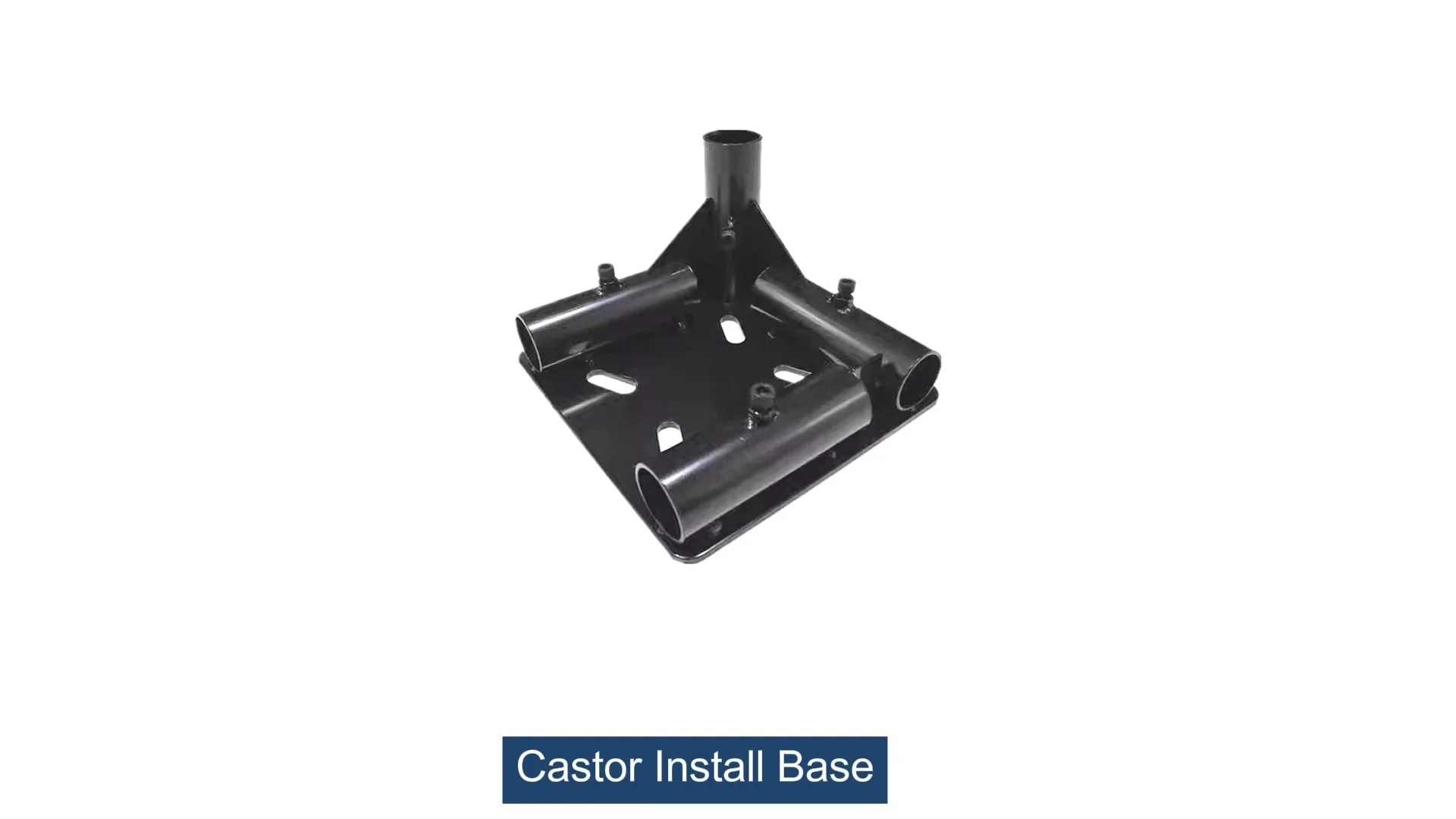
Castor Install Base
Castor install base, used for connection between pipe and castor, it can connect 4 pcs pipe by 1 pcs castor base, to make the structure strong and stable.
Walk into any 3C manufacturing plant—where smartphones, laptops, and wearables take shape—and you'll see a symphony of motion: robotic arms assembling microchips, conveyor belts ferrying circuit boards, and workers tending to workbenches stacked with components. But beneath this apparent harmony lies a hidden productivity killer: downtime. In an industry where new models launch every few months and production targets shift overnight, even a 30-minute delay can derail daily output by hundreds of units. While most manufacturers focus on big-ticket solutions like automated machinery or predictive maintenance, there's a quieter hero working behind the scenes: the castor install base . This unassuming component, often overlooked in favor of flashier tech, is revolutionizing how assembly lines handle repositioning—the frequent, necessary task of moving workbenches, material racks, and production stations to adapt to new layouts, product designs, or workflow changes. Let's unpack why repositioning downtime matters, and how castor install bases are slashing those losses for 3C manufacturers worldwide.
The Silent Drain: Why Repositioning Hurts 3C Assembly Lines
To understand the value of castor install bases, we first need to grasp how much repositioning costs your line. In 3C manufacturing, repositioning isn't a rare event—it's a weekly, sometimes daily, reality. Imagine your team needs to shift a workbench to accommodate a new testing station for a smartphone's camera module, or reconfigure a flow rack to stock components for a laptop's latest motherboard design. Without the right tools, this seemingly simple task becomes a logistical nightmare.
Consider the typical process without optimized components: Two workers spend 20 minutes emptying the workbench, another 15 detaching heavy casters (if they're even installed), 25 minutes manually lifting and shuffling the bench into place (risking injury), 10 minutes reattaching casters, and 15 minutes restocking tools and materials. That's 85 minutes per repositioning—for a single workbench. Multiply that by 5 workbenches per line, 3 lines per plant, and 48 weeks a year, and you're looking at over 2,500 hours of lost production annually. For a 3C plant churning out 500 smartphones per hour, that's 1.25 million units left unmade—all because of how you move furniture.
Worse, repositioning downtime isn't just about lost units. It disrupts workflow rhythm: workers stand idle, waiting for stations to be reset; adjacent lines slow down as material flow is interrupted; and overtime costs spike to meet deadlines. In an industry where profit margins hinge on efficiency, this "silent drain" can erode competitiveness faster than a delayed product launch.
What Is a Castor Install Base, Anyway? Breaking Down the Basics
At its core, a castor install base is the bridge between your caster wheel and the equipment it moves—whether that's a workbench, turnover trolley, or material rack. Think of it as a reinforced mounting plate, engineered to securely attach casters to the bottom of heavy structures while distributing weight evenly. Unlike generic brackets or ad-hoc solutions (we've all seen teams jury-rig casters with bolts and scrap metal), castor install bases are precision-designed for the unique demands of 3C assembly lines: frequent movement, heavy loads (think 200kg+ workbenches stacked with soldering tools and component bins), and the need for stability during both motion and stationary use.
Modern castor install bases are typically made from high-grade aluminum or steel, chosen for their strength-to-weight ratio. Aluminum variants, in particular, are popular in 3C plants because they resist corrosion from cleaning agents and coolants, while remaining lightweight enough for workers to handle safely. Many also feature pre-drilled holes and standardized sizing, ensuring compatibility with common caster models—no more hunting for matching bolts or modifying equipment to fit.
But their real genius lies in integration. A quality castor install base isn't just a "mount"—it's part of a system. It works with caster accessories like brake levers (to lock wheels in place once positioned), swivel locks (to keep heavy trolleys moving straight), and shock-absorbing pads (to protect sensitive components during transport). When paired with a well-designed workbench or flow rack, it transforms static furniture into a dynamic tool that adapts to your line's needs in minutes, not hours.

3 Ways Castor Install Bases Slash Repositioning Downtime
Now, let's get to the heart of the matter: how do these bases actually reduce downtime? It boils down to three key advantages that address the biggest pain points of repositioning in 3C lines.
1. No More "Caster Tetris": Quick, Secure Attachment
Traditional repositioning often involves a frustrating game of "caster tetris": workers struggle to align wobbly casters with ill-fitting holes, waste time searching for the right tools, or settle for loose attachments that risk tipping during movement. Castor install bases eliminate this chaos. With standardized mounting points and pre-threaded holes, attaching or detaching casters takes 2-3 minutes per wheel—no special skills or tools required. For example, a workbench E (single deck-without caster) can be retrofitted with casters in under 15 minutes using a compatible castor install base, compared to 45+ minutes with generic brackets. This speed alone cuts repositioning time by 50% or more.
2. Stability That Saves Time (and Nerves)
Ever tried moving a loaded workbench only to have it wobble so badly that components slide off? That's not just a safety hazard—it's a downtime multiplier. Workers slow down to avoid spills, stop to re-secure items, or even abandon the move entirely to restock fallen parts. Castor install bases solve this with engineered stability: their wide, flat design distributes weight evenly across the caster wheels, minimizing (:) and preventing tipping. Even when moving fully-loaded material rack B (3 row and 3 floor) —stocked with 30kg bins of circuit boards—workers can push with confidence, knowing the load won't shift. This stability reduces the need for pre-movement "stripping" (emptying the rack) and post-movement "restocking," shaving another 20-30 minutes off each repositioning task.
3. Compatibility with Lean Systems: Seamless Integration into Your Workflow
3C manufacturers live and die by lean system principles—eliminating waste, optimizing flow, and empowering workers to adapt quickly. Castor install bases align perfectly with this mindset by making repositioning a "pull" activity, not a "push" hassle. For instance, if a line supervisor notices a bottleneck at the soldering station, they can order a nearby workbench (equipped with a castor install base) to be moved in minutes to add capacity—no need to call maintenance or halt production. This agility turns repositioning from a disruptive event into a routine adjustment, keeping the line flowing and workers focused on value-adding tasks, not logistics.
| Repositioning Step | Without Castor Install Bases | With Castor Install Bases | Time Saved Per Task |
|---|---|---|---|
| Emptying the station | 25-30 minutes (to prevent spills) | 5-10 minutes (stable movement reduces need for full emptying) | 20-25 minutes |
| Attaching/detaching casters | 30-40 minutes (tools, misalignment, loose fittings) | 8-12 minutes (standardized, tool-free attachment) | 22-28 minutes |
| Moving and positioning | 15-20 minutes (slow, unsteady movement; readjustments) | 5-8 minutes (smooth rolling, precise placement) | 10-15 minutes |
| Restocking materials | 20-25 minutes (reloading tools, components) | 10-15 minutes (faster, safer restocking) | 10-15 minutes |
| Total Per Repositioning | 90-115 minutes | 28-45 minutes | 62-70 minutes |

Beyond Downtime: The Ripple Effects of Smarter Repositioning
The benefits of castor install bases extend far beyond cutting minutes off repositioning tasks. For 3C manufacturers, they create a cascade of positive impacts that boost overall line performance and worker satisfaction.
Ergonomics that Reduce Fatigue and Injury : In many plants, moving heavy workbenches means straining backs, twisting knees, or using clunky dollies—leading to worker fatigue and higher injury rates. Castor install bases make movement effortless: a single worker can glide a 200kg workbench across the floor with one hand, thanks to smooth-rolling casters and stable mounting. This reduces physical strain, lowers absenteeism, and keeps teams fresher throughout long shifts—all of which translate to higher productivity.
Agility to Meet Market Demands : 3C consumers crave novelty, and that means your line must pivot quickly. Last month, you were assembling 5.5-inch phone screens; this month, it's 6.7-inch models. With castor install bases, reconfiguring your line to accommodate new jigs, tools, or testing equipment becomes a 30-minute task, not a half-day project. This agility lets you ramp up production for hot-selling models faster, or shift to new designs without missing a beat.
Long-Term Cost Savings : While castor install bases require an initial investment, they pay for themselves quickly. Consider a mid-sized 3C plant with 10 workbenches, each repositioned twice weekly. Using the time savings from our earlier table (62-70 minutes per task), that's ~103-117 hours saved monthly—enough to add 2-3 full production days annually. At an average 3C labor cost of $25/hour, that's $2,575-$2,925 saved monthly, plus the value of increased output. Over a year, that's $30,900-$35,100 in hard savings—before factoring in reduced injury claims or faster time-to-market for new products.

Choosing the Right Castor Install Base for Your 3C Line
Not all castor install bases are created equal. To maximize downtime reduction, you'll need to match the base to your specific line's needs. Here are key factors to consider:
Load Capacity : 3C workbenches can carry everything from lightweight testing tools to heavy soldering stations. Check the base's weight rating—aim for 1.5x your typical load to account for occasional overloading. For example, a workbench holding 150kg of equipment should use a base rated for 225kg+.
Floor Compatibility : Is your line's floor smooth concrete, or does it have cracks, thresholds, or anti-fatigue mats? Bases paired with larger caster wheels (5-6 inches) handle uneven surfaces better, while smaller wheels (3-4 inches) work well on polished floors. If you use roller track systems, ensure the base's casters won't snag on track edges.
Environmental Resistance : 3C lines often use coolants, cleaning solvents, or static-control agents. Opt for bases made from corrosion-resistant materials like aluminum or stainless steel, and look for casters with non-marking, chemical-resistant wheels (rubber or polyurethane) to avoid floor damage.
Compatibility with Existing Equipment : Check if the base fits your current workbenches, flow racks, or trolleys. Many suppliers offer universal bases, but custom options are available for specialized furniture. If you're using aluminum profile workbenches (common in 3C plants for their modularity), look for bases designed to bolt directly into T-slot profiles for a seamless fit.
Final Thoughts: Small Component, Big Impact
In the high-stakes world of 3C manufacturing, downtime is the enemy—and repositioning is one of its most persistent allies. But it doesn't have to be that way. Castor install bases prove that sometimes, the most powerful solutions are the ones you don't notice—quietly turning hours of frustration into minutes of efficiency, and static lines into agile, adaptive systems. By investing in these unassuming components, you're not just saving time—you're unlocking the agility, ergonomics, and cost savings that keep your 3C plant competitive in a market that waits for no one.
So, the next time you walk your assembly line, take a closer look at those workbenches and racks. Are they holding your team back with slow, cumbersome repositioning? Or are they equipped with castor install bases, ready to move at a moment's notice? The answer could be the difference between meeting your quarterly targets and watching your competitors pull ahead.