- Company Articles
- Products and Technology
- Solution
- How Castor Install Bases Support Sustainable Lean Manufacturing Practices

How Castor Install Bases Support Sustainable Lean Manufacturing Practices
Related Product
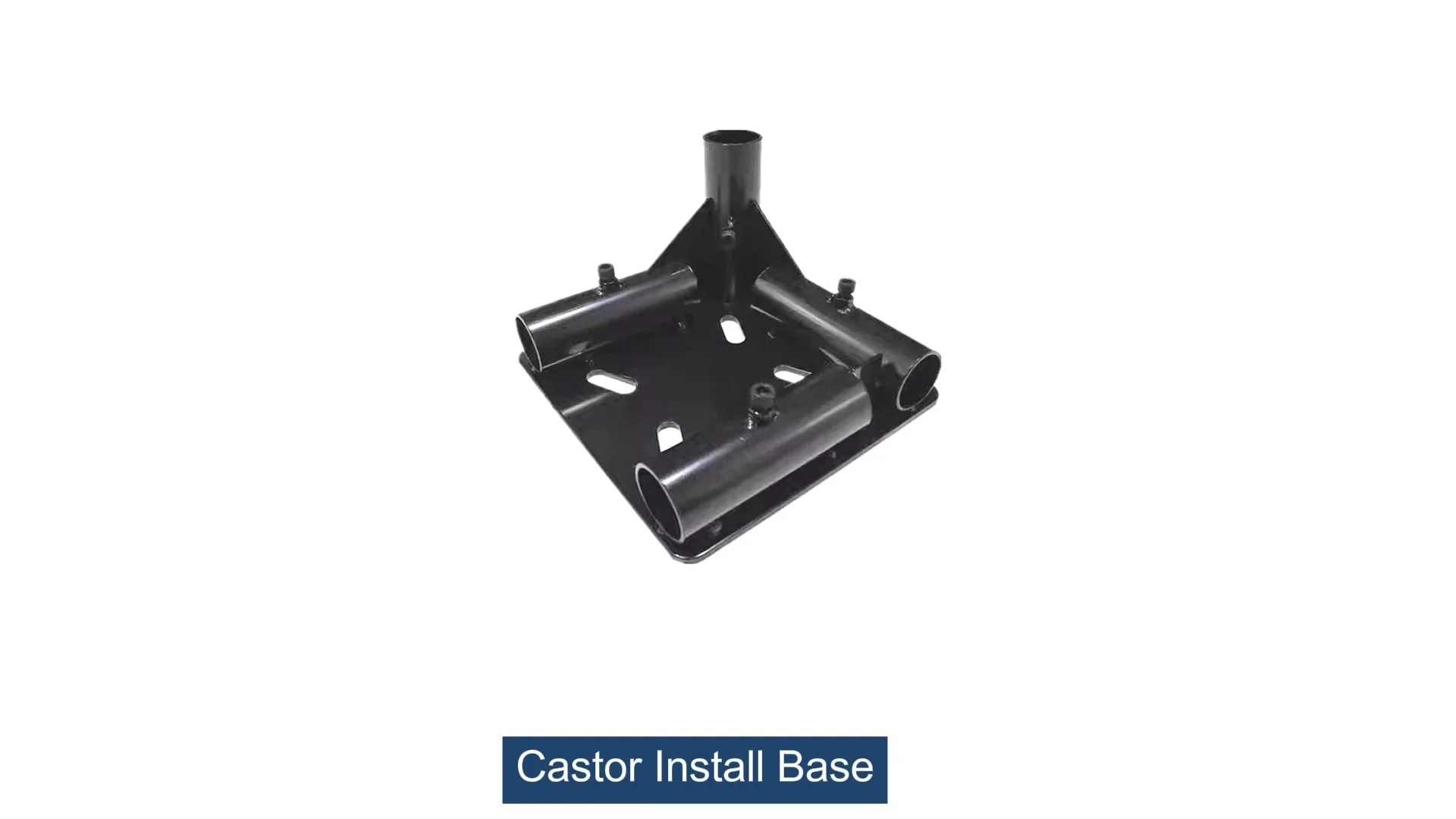
Castor Install Base
Castor install base, used for connection between pipe and castor, it can connect 4 pcs pipe by 1 pcs castor base, to make the structure strong and stable.
In today's fast-paced manufacturing landscape, two priorities stand out: efficiency and sustainability. For decades, lean manufacturing has been the gold standard for trimming waste, streamlining workflows, and boosting productivity. But as global pressures mount to reduce environmental impact, manufacturers are now asking: How can lean principles align with sustainability goals? The answer often lies in the smallest, most overlooked components of the production floor—like castor install bases. These unassuming parts, which anchor casters to equipment such as workbenches and turnover trolleys, play a quiet yet pivotal role in bridging lean efficiency with long-term sustainability. Let's dive into how these components empower factories to work smarter, waste less, and build a greener future.
Understanding Castor Install Bases: The Foundation of Mobility
Before we explore their impact, let's clarify what castor install bases are. Simply put, these are the mounting hardware that connects caster wheels to equipment. Whether it's a heavy-duty workbench, a turnover trolley, or a mobile material rack, castor install bases ensure that casters attach securely, supporting loads while allowing smooth movement. Think of them as the "glue" that turns static furniture into dynamic, movable assets. But their design isn't one-size-fits-all. Modern castor install bases are engineered with precision, considering factors like load capacity, compatibility with different caster types (swivel, rigid, brake-equipped), and material durability—all of which directly influence their role in lean and sustainable systems.
Materials matter here. Many castor install bases are made from aluminum or steel, chosen for their strength-to-weight ratio and resistance to wear. Aluminum, in particular, offers sustainability benefits: it's lightweight (reducing energy use during movement), corrosion-resistant (extending lifespan), and highly recyclable. This focus on material science isn't just about durability; it's about creating components that align with the "reduce, reuse, recycle" ethos of sustainable manufacturing.
Lean Manufacturing and the Need for Mobility
At its core, lean manufacturing is about eliminating waste—whether that's excess inventory, unnecessary movement, or idle time. One of the most critical lean principles is "flexibility": the ability to adapt production lines quickly to changing demand, new product designs, or process improvements. Traditional factories, with fixed workstations bolted to the floor, struggle with this. Reconfiguring a line might take days, involving heavy machinery and downtime. But when workbenches, trolleys, and racks are mobile—thanks to casters anchored by reliable install bases—change becomes seamless.
Consider a typical electronics assembly line. A sudden surge in demand for a new smartphone model might require rearranging workstations to prioritize certain tasks. With mobile workbenches (equipped with castor install bases), teams can reposition stations in hours, not days. This agility cuts down on "waiting waste"—the time lost when production stalls due to inflexible layouts. It also reduces "transportation waste": instead of workers carrying parts across the floor, materials can flow directly to workstations on mobile trolleys, minimizing unnecessary movement.
Case in Point: The Role of Turnover Trolleys and Racks
Turnover trolleys and racks are workhorses of the production floor, used to transport raw materials, semi-finished goods, and tools. When these trolleys are equipped with high-quality castor install bases, their utility skyrockets. For example, a food packaging plant using mobile turnover racks can easily adjust storage locations based on ingredient delivery schedules, reducing inventory waste by ensuring materials are used before expiration. In a lean system, this kind of adaptability isn't just efficient—it's essential.

Waste Reduction: The Sustainability Connection
Sustainable manufacturing isn't just about using eco-friendly materials; it's about minimizing resource consumption across the entire product lifecycle. Castor install bases contribute to this in three key ways: reducing energy use, extending equipment lifespan, and cutting down on material waste.
1. Energy Efficiency Through Reduced Effort
A well-designed castor install base ensures that casters roll smoothly, requiring less force to move equipment. This might seem trivial, but over time, the energy savings add up. For instance, a worker pushing a loaded trolley with a poorly designed base might exert 30% more effort than one with a high-quality base. Multiply that by hundreds of movements per day across dozens of workers, and the cumulative energy (and fatigue) saved is significant. Less physical strain also means fewer workplace injuries, which aligns with lean's focus on "people-centric" efficiency—happy, healthy workers are more productive.
2. Longevity: Reducing Replacement Waste
Sustainability thrives on durability. A castor install base that cracks or corrodes after a few months forces manufacturers to replace not just the base, but potentially the entire caster or even the equipment it's attached to. This creates waste—scrapped metal, lost time, and added costs. In contrast, a robust base made from corrosion-resistant aluminum or steel can last for years, even in harsh factory environments (think exposure to oils, chemicals, or humidity). By extending the lifespan of equipment, castor install bases reduce the need for frequent replacements, lowering the factory's carbon footprint.
3. Modularity: Reusing Assets Across Operations
Lean systems prioritize modularity—designing tools and equipment that can be repurposed for multiple tasks. Castor install bases support this by allowing casters to be swapped or repositioned. For example, a workbench used for assembly today might be converted into a mobile inspection station tomorrow by changing from rigid casters to swivel casters (thanks to compatible install bases). This reusability means fewer new tools need to be purchased, reducing material waste and the energy used in manufacturing new equipment.

Ergonomics: A Hidden Link Between Lean and Sustainability
Ergonomics—the science of designing work to fit the worker—might not seem directly related to sustainability, but it is. When workstations are ergonomically sound, workers are more efficient, make fewer mistakes, and stay healthier, reducing turnover and training costs. Castor install bases play a role here by enabling height-adjustable or movable workbenches. For example, a workbench with lockable casters (secured by sturdy install bases) can be positioned at the ideal height for each worker, reducing strain on backs and shoulders. This not only cuts down on "motion waste" (workers bending or stretching unnecessarily) but also reduces the need for medical leave and workers' compensation claims—both of which drain resources and hinder lean goals.
Consider a scenario where a team assembles small components. A fixed workbench at a standard height might force shorter workers to stand on stools and taller workers to hunch over. With a mobile workbench (thanks to castor install bases), each worker can adjust the station to their height, boosting focus and speed. The result? Faster production, fewer errors, and a workforce that's more likely to stay long-term—all of which contribute to sustainable operations.

Integration with Lean Systems: Workbenches, Trolleys, and Beyond
To truly see the impact of castor install bases, we need to look at their integration with other lean tools. Take the lean pipe workbench, a staple in modern factories. These workbenches are built using modular lean pipes and joints, allowing custom configurations. When paired with casters mounted on reliable install bases, they become mobile command centers. A lean pipe workbench with castors can be moved to where the action is—whether it's alongside a conveyor belt during peak production or to a maintenance area for repairs. This flexibility ensures that the workbench is never idle, maximizing its utility and aligning with lean's "maximize value" principle.
Turnover trolleys and racks are another example. These are used to transport materials between stations, and their mobility is critical for maintaining a smooth flow of goods (a key tenet of lean's "just-in-time" inventory system). A turnover trolley with poorly designed castor install bases might get stuck, causing delays in material delivery. But with high-quality bases, trolleys glide across the floor, ensuring that parts arrive exactly when needed—no earlier (reducing inventory waste) and no later (reducing waiting waste).
| Feature | Traditional Fixed Equipment | Mobile Equipment with Castor Install Bases |
|---|---|---|
| Flexibility | Requires days/weeks to reconfigure; high downtime. | Reconfigurable in hours; minimal downtime. |
| Transportation Waste | Workers carry materials long distances; high effort. | Materials move via mobile trolleys; reduced worker effort. |
| Motion Waste | Workers bend/stretch to reach tools/parts. | Workstations adjust to worker height/position; less strain. |
| Sustainability (Lifespan) | Fixed to floor; difficult to repair/replace; shorter lifespan. | Modular design; easy to repair/reuse; longer lifespan. |
| Cost Over Time | High initial setup + frequent replacement costs. | Moderate initial investment + lower long-term replacement costs. |
Real-World Impact: A Case Study
Let's bring this to life with a hypothetical but realistic example. Imagine a mid-sized automotive parts manufacturer struggling with two issues: slow production line reconfigurations and high worker turnover due to ergonomic strain. Their workstations were fixed, and turnover trolleys often jammed due to low-quality casters and install bases. After consulting with a lean system supplier, they upgraded to lean pipe workbenches and turnover trolleys equipped with aluminum castor install bases and high-performance casters.
The results were striking. First, reconfiguring the production line for a new part model, which previously took 3 days, now took 4 hours—a 90% reduction in downtime. This alone saved thousands in lost production. Second, worker feedback improved dramatically: mobile workbenches reduced bending and stretching, and trolleys moved smoothly, cutting physical fatigue. Turnover dropped by 25% in six months. Finally, the aluminum castor install bases proved durable; after two years, none had needed replacement, reducing waste from scrapped hardware. The factory's carbon footprint also shrank, thanks to lower energy use (from easier movement) and fewer replacements.
Future Trends: Smart Castor Install Bases and the Next Level of Lean Sustainability
As manufacturing evolves, so too will castor install bases. The next frontier? Smart integration. Imagine castor install bases equipped with sensors that track movement patterns, load weights, or wear and tear. This data could help factories optimize workflows further—for example, identifying bottlenecks where trolleys frequently get stuck—or predict when a base needs maintenance before it fails. Predictive maintenance reduces unexpected downtime, aligning with lean's "prevent waste" mindset and sustainability's focus on resource efficiency.
Another trend is the use of bio-based or recycled materials in castor install bases. While aluminum and steel will remain staples, manufacturers are experimenting with recycled plastics or composite materials for lighter, lower-impact bases in low-load applications. These innovations could further reduce the environmental footprint of these critical components.
Conclusion: Small Parts, Big Impact
In the grand scheme of manufacturing, castor install bases might seem insignificant. But as we've explored, they are foundational to building systems that are both lean and sustainable. By enabling mobility, they reduce waste—whether it's downtime, transportation, or excess inventory. By prioritizing durability and modularity, they extend equipment lifespans and reduce the need for replacements. And by supporting ergonomic designs, they create healthier, more productive workforces. In short, castor install bases are the unsung heroes that turn the ideals of lean and sustainability into tangible, everyday practice.
As manufacturers continue to balance efficiency and environmental responsibility, it's clear that success lies in the details. The next time you walk through a factory, take a moment to notice the mobile workbenches and trolleys gliding across the floor. Behind their smooth movement is a castor install base—quietly supporting a future where manufacturing is not just efficient, but sustainable too.