- Company Articles
- Products and Technology
- Application Cases
- How Castor Installation Base Enables Quick Workbench E Reconfiguration (3C Assembly)

How Castor Installation Base Enables Quick Workbench E Reconfiguration (3C Assembly)
Related Product
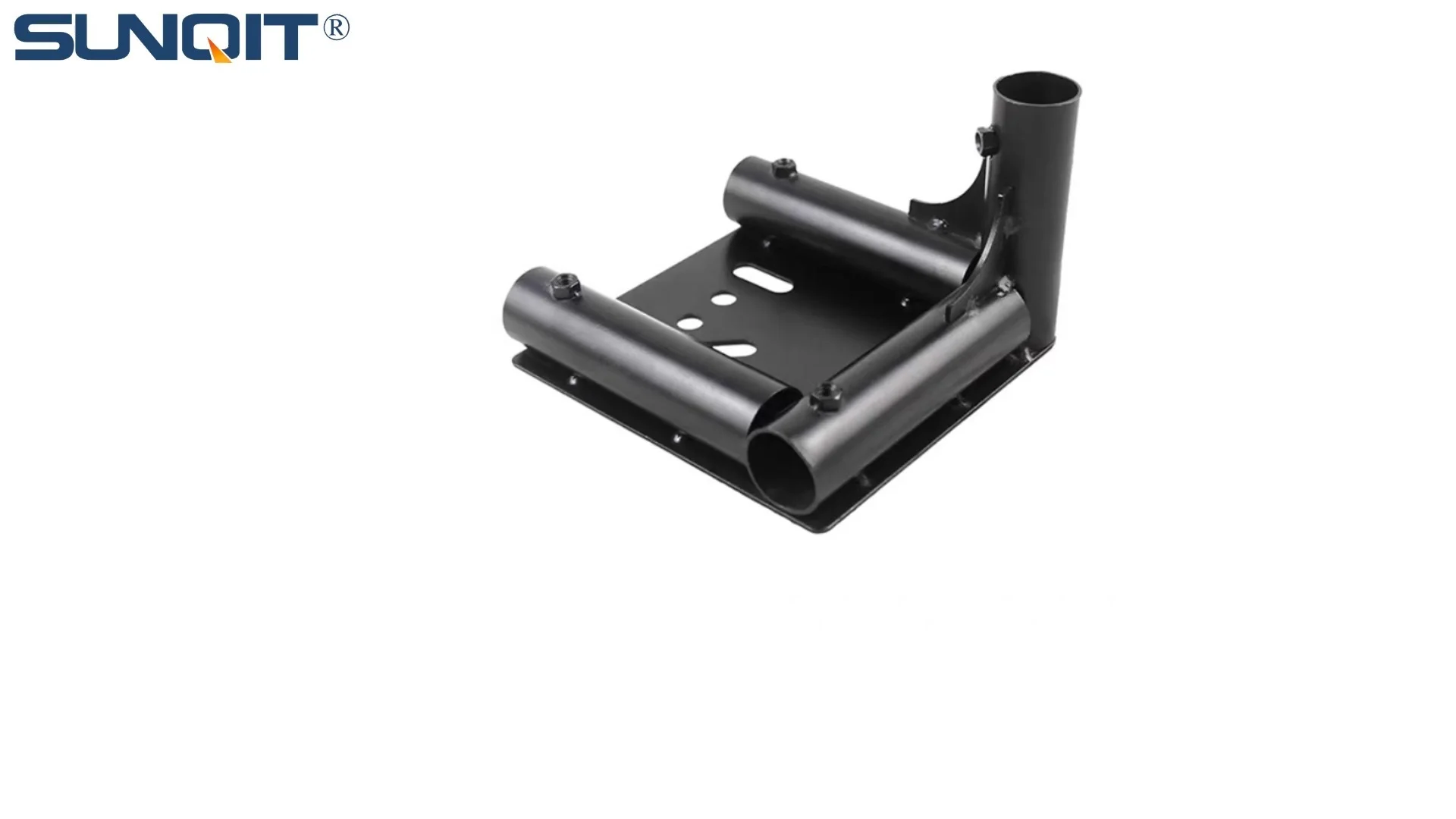
Castor Installation Base
Pipe fitting castor installation base,Well made, precise and strong. Made of high quality of steel,black painting surface treatment for greater resistance to corrosion. It is used for castor or foot lever connection with lean pipe.
The 3C Assembly Floor: Where Every Second Counts
Walk into any 3C (Computer, Communication, Consumer Electronics) assembly plant, and you'll feel it immediately—the hum of precision, the rhythm of deadlines, and the unspoken pressure to keep up with a market that changes faster than a smartphone's software update. In this world, where a single production line might switch from assembling smartwatches to wireless earbuds in a matter of days, rigidity is the enemy. Factories don't just need tools; they need partners that adapt as quickly as their blueprints do.
This is where the yet game-changing elements of workshop equipment step into the spotlight. Take workbenches, for example. They're not just tables—they're the command centers of assembly, where technicians spend hours piecing together components smaller than a fingernail. But what happens when a new product requires a different layout? Or when a sudden surge in demand means rearranging the entire floor to boost throughput? For years, the answer too often was: downtime . Disassembling fixed workbenches, hauling them across the floor, resecuring them—each step eating into precious production minutes.
Enter the Workbench E (single deck-without caster) and its unsung hero: the Castor Installation Base . Together, they're not just solving a problem—they're redefining how 3C assembly lines stay agile. In this article, we'll pull back the curtain on how this simple yet ingenious pairing turns "we can't" into "we can—right now," and why it's become a cornerstone of modern lean system implementation in electronics manufacturing.
Workbench E: The Blank Canvas of Assembly
Before we dive into the magic of castors, let's get to know Workbench E. Designed with the 3C industry's unique needs in mind, this single-deck workbench starts as a "blank canvas"—sturdy, reliable, and intentionally (without caster), which might sound counterintuitive at first. Why build a workbench without wheels if mobility is key? Because flexibility isn't just about moving; it's about choosing when to move and how to stay stable.
Workbench E's frame is crafted from high-grade aluminum profile —lightweight yet tough enough to support the weight of circuit boards, precision tools, and even automated assembly aids. Its single deck, typically made of anti-static melamine or aluminum honeycomb panel, provides a smooth, static-free surface critical for protecting sensitive electronics. But what truly sets it apart is its modularity. The aluminum profile structure isn't just for show; it's a grid of T-slots and pre-drilled holes, ready to accept accessories like tool hangers, LED task lights, or roller track attachments for material flow. It's a workbench designed to grow with your needs—except, originally, it couldn't go anywhere.
That's where the Castor Installation Base comes in. Think of it as a transformation kit: a set of heavy-duty brackets and mounting plates that bolt directly to Workbench E's base, turning it from a fixed fixture into a mobile workstation in minutes. No welding, no custom fabrication—just a few bolts, and suddenly, your "stationary" workbench is ready to roll. But why does this matter so much in 3C assembly? Let's break down the daily challenges it solves.

The Cost of Downtime: Why "Stuck" Workbenches Hurt the Bottom Line
In 3C manufacturing, downtime isn't just a delay—it's a domino effect. Let's say a factory needs to reconfigure its assembly line to accommodate a new smartwatch model. The old layout has Workbench E units bolted to the floor in a linear setup, each dedicated to a specific step: screen mounting, battery installation, software testing. The new model requires a U-shaped layout to reduce technician movement and enable better collaboration between quality control and assembly. Without mobile workbenches, here's what happens:
- Disassembly Time: Technicians must first remove all tools, fixtures, and ESD mats from each Workbench E to avoid damage during moving.
- Manual Labor: A team of 2-3 workers is needed to lift and carry each workbench (which, even aluminum, isn't light) to the new location—risking injury and damaging the floor.
- Reinstallation: Once in place, the workbench must be leveled, re-bolted to the floor, and reconnected to power/air lines—a process that can take 30+ minutes per unit.
- Testing: After setup, the team must verify stability, check for static discharge issues, and re-calibrate any mounted tools—another 15 minutes per bench.
Multiply that by 10 workbenches, and you're looking at 8+ hours of downtime. In a factory running two 12-hour shifts, that's a full shift's worth of lost production—costing tens of thousands of dollars in missed output. Worse, if the reconfiguration needs to happen again next month (which it often does in 3C), the cycle repeats. This isn't just inefficiency; it's a direct hit to competitiveness.
The Castor Installation Base eliminates nearly all of this. With the base attached, moving a Workbench E becomes a one-person job: unlock the caster brakes, push it to the new spot, lock the brakes, and you're done. No disassembly, no heavy lifting, no re-bolting. What once took hours now takes minutes. But mobility is just the start—its real power lies in how it enables dynamic reconfiguration .

How Castor Installation Base Works: The Mechanics of Mobility
Let's get technical—without getting boring. The Castor Installation Base isn't just a set of wheels bolted to a plate. It's engineered to address three critical challenges in mobile workbench design: stability, weight capacity, and compatibility with Workbench E's aluminum profile frame.
First, stability . In 3C assembly, even a tiny wobble can ruin a circuit board or misalign a component. The base uses four heavy-duty swivel casters (two with brake locks) mounted at the corners of a steel or aluminum plate, ensuring the workbench stays level and steady—even when fully loaded. The casters themselves are typically made of polyurethane, which grips the factory floor to prevent sliding during use and won't scratch or mark the surface when moving.
Second, weight capacity . Workbench E, when fully kitted out with tools, materials, and a technician leaning on it, can weigh upwards of 300kg. The Castor Installation Base is rated to handle this with ease, thanks to reinforced mounting brackets that distribute weight evenly across the frame. Each caster is tested for impact resistance too—because in a busy factory, accidental bumps happen, and the last thing you need is a bent caster rendering your workbench immobile.
Third, compatibility . Remember Workbench E's aluminum profile frame? The Castor Installation Base's mounting plate is pre-drilled to match the profile's hole pattern, so it bolts directly on without modifications. This is crucial for two reasons: it ensures a secure fit (no "custom hacks" that weaken the frame), and it maintains the workbench's original height. No more technicians stooping or reaching awkwardly because the casters raised the deck too high.
But perhaps the most underrated feature is the quick-release option available on some models. Need to switch back to a fixed setup for a long-running production run? Simply unbolt the Castor Installation Base and store it—Workbench E reverts to its original, stationary form. It's the best of both worlds: mobility when you need it, stability when you don't.

Real-World Impact: A Day in the Life with Mobile Workbench E
To understand why this matters, let's walk through a hypothetical (but all-too-real) day at a 3C factory that's adopted the Castor Installation Base-Workbench E combo. Meet Li Wei, a production supervisor at a mid-sized electronics plant in Shenzhen, responsible for a line assembling wireless earbuds.
7:00 AM: Li Wei arrives to find an urgent email: the client has accelerated the launch of their new earbud model, requiring a production run of 10,000 units—starting today. The current line is set up for the old model, with Workbench E units arranged in a straight line, each 6 feet apart. The new model's assembly process is more streamlined, requiring a U-shape to reduce technician movement between stations.
7:15 AM: In the "old days," Li Wei would have to call maintenance, schedule a 2-hour window to move the workbenches, and delay the first shift start. Today, he grabs a wrench and a helper. Each Workbench E has a Castor Installation Base already mounted (they keep them on permanently now, since the benefits outweigh the minor cost). They unlock the brakes, push each bench into the new U-shape, and lock the brakes. Total time: 15 minutes.
8:00 AM: First shift starts. The technicians immediately notice the difference: instead of walking 20 feet to grab a tool from the next station, they're steps away. The U-shape also lets two technicians collaborate on tricky soldering tasks without crowding. Plus, with the workbenches mobile, Li Wei can adjust the spacing between them mid-shift to accommodate a taller technician who joins the line.
1:00 PM: A quality control inspector flags an issue with the earbud's charging port alignment. Normally, this would require moving the inspection station to the end of the line—a 30-minute disruption. Today, Li Wei simply unlocks the inspection Workbench E (equipped with a roller track for moving units) and rolls it between the assembly stations. Now, inspectors can check units as they come off the line, catching issues immediately instead of after 500 units have been assembled.
5:00 PM: The line hits its target, producing 1,200 units by the end of the shift—30% more than the old layout would have allowed. Li Wei smiles, knowing that without the Castor Installation Base, they'd still be scrambling to rearrange workbenches at noon. This isn't just efficiency; it's peace of mind.
Beyond Mobility: Integrating with Lean Systems and Aluminum Profile Accessories
The Castor Installation Base's impact goes beyond moving workbenches—it's a catalyst for lean system principles. Lean manufacturing is all about eliminating waste, and one of the biggest wastes in 3C assembly is motion waste —the time technicians spend walking, reaching, or searching for tools. By making Workbench E mobile, factories can arrange workstations in "cells" tailored to specific tasks, minimizing movement and keeping everything a technician needs within arm's reach.
But mobility alone isn't enough. To truly optimize flow, Workbench E needs to connect with other lean tools—like roller track. Remember those T-slots on the aluminum profile frame? With the Castor Installation Base, you can add a roller track to the edge of the workbench, creating a mini-conveyor that feeds components directly to the assembly station. When the line reconfigures, the roller track moves with the workbench, ensuring material flow stays uninterrupted.
Take, for example, a "pick-to-light" system: small bins of components are placed on a roller track attached to Workbench E. As the technician assembles a unit, a light signals which bin to pick from next, and the roller track gently advances the bin into position. If the workbench needs to move, the roller track moves with it—no need to disassemble and rebuild the material feeding system. This integration of mobility and modular accessories is what makes Workbench E with Castor Installation Base a cornerstone of lean systems.
Aluminum profile accessories play another key role here. Need to add a shelf for extra tools? Bolt it to the T-slots. Want to mount a barcode scanner overhead? Use an aluminum profile arm. Even cable management—critical in 3C assembly, where a mess of wires can cause static or tripping hazards—becomes easier. Cable clips and channels snap into the T-slots, keeping everything organized, and when the workbench moves, the cables move with it, avoiding tangles or disconnections.
Fixed vs. Mobile: The Numbers Speak for Themselves
Still not convinced? Let's look at the data. A recent case study from a major 3C manufacturer in Dongguan compared two assembly lines: one using traditional fixed Workbench E units, and another using Workbench E with Castor Installation Bases. Over a 3-month period, they tracked key metrics:
| Metric | Fixed Workbenches | Mobile Workbenches (with Castor Installation Base) | Improvement |
|---|---|---|---|
| Reconfiguration Time per Line | 240 minutes | 25 minutes | 89.6% faster |
| Technician Movement (steps per shift) | 5,200 steps | 2,800 steps | 46.2% reduction |
| Downtime Due to Layout Changes | 12 hours/month | 1 hour/month | 91.7% reduction |
| Production Output (units/shift) | 850 units | 1,120 units | 31.8% increase |
| Worker Fatigue (reported via surveys) | High (6/10 rating) | Low (3/10 rating) | 50% reduction |
The results are clear: mobility isn't just a convenience—it's a profitability driver. The factory estimated that the Castor Installation Bases paid for themselves within 2 months, thanks to increased output and reduced labor costs from fewer reconfiguration hours.
Future-Proofing Your Line: Why This Matters for Tomorrow's 3C Challenges
The 3C industry isn't slowing down. As products get smaller, smarter, and more complex—think foldable screens, AI-powered sensors, or quantum computing components—assembly lines will need to be even more adaptable. Factories that cling to fixed workbenches and rigid layouts risk falling behind, while those that embrace tools like Workbench E with Castor Installation Base are positioning themselves to thrive.
Consider the rise of "lot size 1" manufacturing: producing a single customized unit as efficiently as a mass-produced one. This requires assembly lines that can reconfigure on the fly, with workbenches that move to the product, not the other way around. The Castor Installation Base makes this possible, turning static lines into dynamic, responsive ecosystems.
Then there's the human element. Modern workers—especially younger technicians—value workplaces that prioritize efficiency and ergonomics. A mobile workbench lets them adjust their station to their height, reduce walking, and even collaborate with teammates by simply rolling their bench over. Happy, less fatigued workers are more productive and less likely to make errors—critical in an industry where a single misplaced resistor can cost hundreds of dollars.
Conclusion: The Small Change That Makes a Big Difference
In the high-stakes world of 3C assembly, success often hinges on the smallest details. The Castor Installation Base might not look like a revolutionary technology, but when paired with Workbench E, it's transforming how factories adapt, produce, and compete. It's a testament to the power of lean system thinking: solving big problems with simple, elegant solutions.
So, the next time you walk through an electronics factory and see a workbench gliding across the floor, pause for a moment. That's not just a bench on wheels—it's a symbol of agility, a tool that turns "we'll do it tomorrow" into "we're doing it now." And in an industry where tomorrow is already yesterday, that's the difference between leading the pack and falling behind.
For 3C manufacturers ready to embrace the future, the message is clear: your workbenches shouldn't just support your products—they should support your ability to change. With Workbench E and the Castor Installation Base, you're not just building better electronics—you're building a better way to build.