- Company Articles
- Products and Technology
- Installation And Maintenance
- How Castor Installation Base Enhances Material Rack B Mobility in Warehousing Logistics

How Castor Installation Base Enhances Material Rack B Mobility in Warehousing Logistics
Related Product
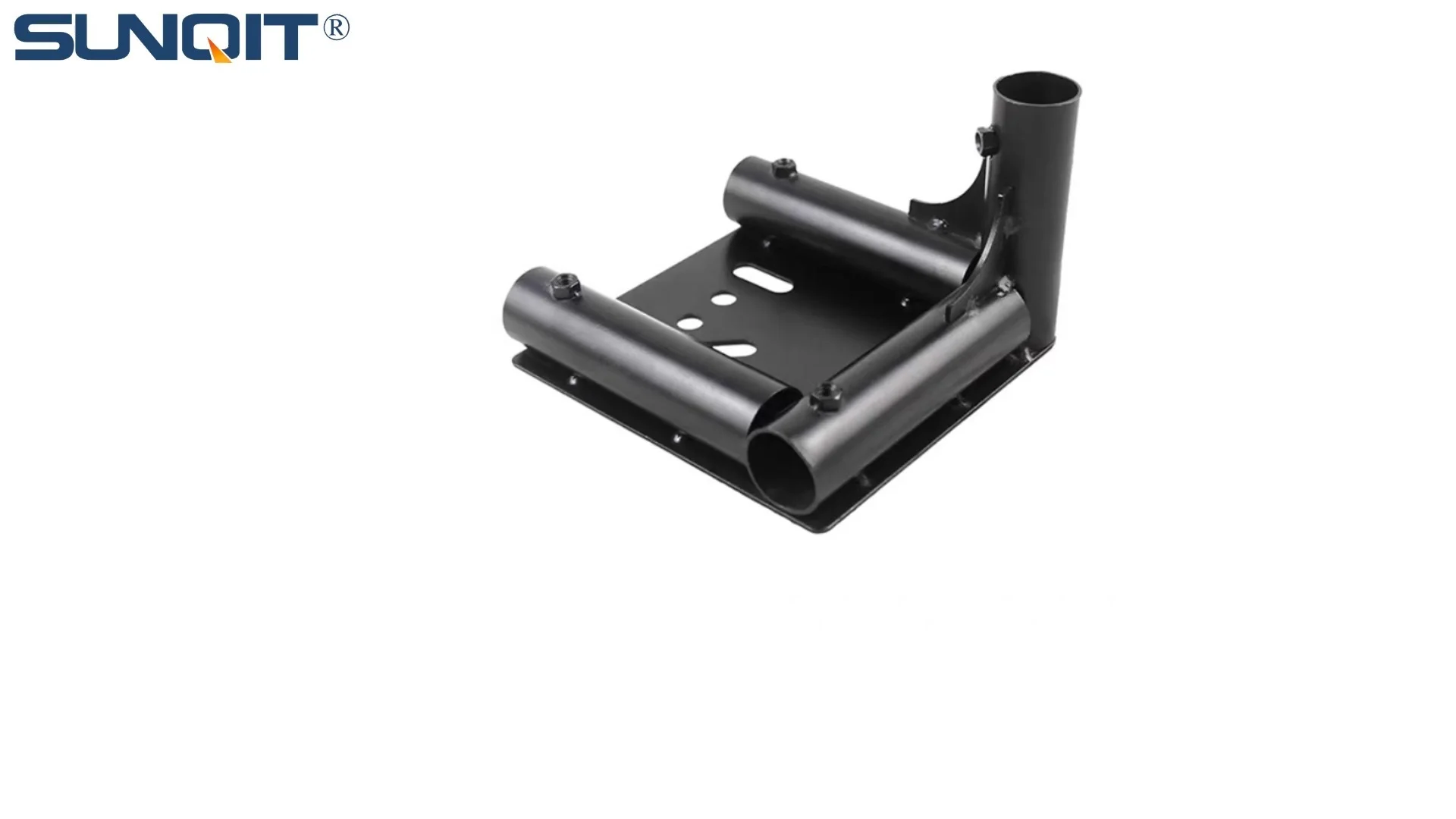
Castor Installation Base
Pipe fitting castor installation base,Well made, precise and strong. Made of high quality of steel,black painting surface treatment for greater resistance to corrosion. It is used for castor or foot lever connection with lean pipe.
The Pulse of Modern Warehousing: Why Mobility Matters
In the fast-paced world of warehousing and logistics, every second counts. From morning inventory checks to evening order shipments, the ability to move materials quickly, safely, and efficiently can make or break a facility's productivity. Yet, for decades, one common challenge has lingered: static storage solutions that resist adaptation. Fixed racks, bulky shelving, and immovable workstations often trap teams in rigid workflows, forcing them to waste time navigating around obstacles rather than focusing on value-adding tasks. This is where the humble yet transformative concept of mobility steps in—and at the heart of this revolution lies the castor installation base, particularly when paired with workhorses like the Material Rack B (3 row and 3 floor).
Imagine a warehouse where racks glide into place with a gentle push, where reconfiguring layouts for seasonal demand takes minutes instead of hours, and where workers no longer strain to lift or drag heavy loads. This isn't just a dream of the future; it's the reality for facilities that have embraced mobile material handling solutions. Today, we're diving deep into how the castor installation base elevates the Material Rack B from a static storage unit to a dynamic, adaptable asset—one that aligns perfectly with the principles of lean system thinking and modern warehousing efficiency.
Meet Material Rack B: A 3-Row, 3-Floor Workhorse
Before we explore the magic of castor installation bases, let's get to know the star of the show: Material Rack B (3 row and 3 floor). Designed for versatility and capacity, this rack is a staple in warehouses across industries—from electronics manufacturing to retail distribution. As its name suggests, it features three rows of storage across three vertical floors, offering ample space for small parts, components, or finished goods. Its sturdy frame, typically constructed from steel or aluminum, can handle loads ranging from 500 to 1,500 kg, depending on the model, making it ideal for both light and medium-duty applications.
In a static setup, Material Rack B is anchored to the floor or bolted in place, providing stability but little else. Picture a typical scenario: A warehouse team receives a rush order for a product stored on the bottom floor of Material Rack B. The rack is positioned against a wall, leaving only a narrow gap for access. Workers must squeeze through, carefully extracting items one by one, while others wait their turn. Later, when the next batch of orders requires products from the top floor, the team might need to fetch ladders or use forklifts—adding unnecessary steps and risk. Over time, these inefficiencies stack up, leading to longer lead times, increased labor costs, and even higher injury rates from manual handling.
The problem isn't with Material Rack B itself; it's the lack of mobility. In a static state, it's a reliable storage solution, but it can't keep up with the ebb and flow of a modern warehouse's needs. Seasonal spikes, promotional campaigns, or sudden shifts in product demand often require rapid layout changes—and fixed racks simply can't adapt. This is where the castor installation base enters the picture, turning a static workhorse into a dynamic, on-the-go asset.

The Castor Installation Base: What It Is and How It Works
At first glance, a castor installation base might seem like a simple accessory, but its design is engineered for precision and performance. Put simply, it's a reinforced mounting plate that attaches to the bottom of Material Rack B, providing a stable platform to which caster wheels can be bolted. Think of it as the bridge between the rack and the floor—one that transforms "fixed" into "mobile" without sacrificing strength.
Components of a Castor Installation Base
A high-quality castor installation base typically includes three key components:
- Base Plate: Made from heavy-gauge steel or aluminum, this is the foundation of the system. It's designed to distribute the rack's weight evenly across the caster wheels, preventing stress points and ensuring stability. For Material Rack B, which can hold hundreds of kilograms, the base plate is often reinforced with ribbing or additional brackets to handle the load.
- Mounting Hardware: Bolts, nuts, and washers (often galvanized to resist corrosion) secure the base plate to the rack's legs. Some models also include weld-on options for permanent installations, though bolt-on designs are preferred for flexibility.
- Caster Wheel Compatibility: The base plate features pre-drilled holes that align with standard caster wheel stems or plates. This compatibility ensures that users can choose from a range of caster types—swivel with brakes, fixed, or heavy-duty—based on their specific needs.
Installing a castor installation base on Material Rack B is surprisingly straightforward. Most kits come with detailed instructions, and the process can be completed with basic tools like a wrench and drill. For a typical 3-row, 3-floor rack, four castor installation bases (one per leg) are usually required, though larger models may need additional support. Once attached, the base plate acts as a buffer between the rack and the floor, absorbing shocks and reducing wear on both the rack and the warehouse surface.

Caster Wheels: The Dynamic Partner in Mobility
Of course, a castor installation base is only as good as the caster wheels it supports. When paired with the right wheels, Material Rack B transforms into a highly maneuverable unit that can navigate tight aisles, uneven floors, and heavy loads with ease. Let's break down the caster wheel options that work best with Material Rack B:
Swivel Caster Wheels with Brakes
These are the most popular choice for Material Rack B, and for good reason. Swivel wheels rotate 360 degrees, allowing the rack to turn in place or glide sideways—perfect for navigating narrow warehouse aisles. The addition of a brake (either a foot-operated pedal or a side lever) ensures the rack stays firmly in place during loading, unloading, or when not in use. For warehouses with smooth concrete floors, rubber or polyurethane wheels are ideal, as they reduce noise and prevent floor scratches. In environments with debris or uneven surfaces, larger, heavy-duty wheels with treaded designs provide better traction.
Fixed Caster Wheels
Fixed wheels roll in a straight line, making them a great choice for racks that need to move back and forth between two fixed points—for example, between a storage area and a production line. When combined with two swivel wheels (a common "two fixed, two swivel" setup), they offer a balance of stability and maneuverability, ensuring the rack tracks straight even when loaded unevenly.
The key here is matching the caster wheel's load capacity to Material Rack B's needs. A standard 3-row, 3-floor rack loaded with medium-weight items (e.g., electronics components or small parts) typically requires caster wheels rated for 200–300 kg each. Heavier loads, such as automotive parts or bulk materials, may need wheels rated for 500 kg or more. The castor installation base, with its reinforced plate, ensures that the weight is distributed evenly across all four wheels, preventing overloading and extending the life of both the wheels and the rack.

The Benefits: More Than Just "Rolling" with the Changes
Adding a castor installation base to Material Rack B isn't just about making it mobile—it's about unlocking a host of benefits that ripple through every aspect of warehouse operations. Let's explore the most impactful advantages:
1. Time Savings: From Hours to Minutes
In static setups, repositioning a Material Rack B often requires a team of workers, forklifts, or even specialized equipment. For example, if a warehouse needs to shift racks to accommodate a new conveyor system or seasonal inventory surge, the process could take half a day or more. With castor installation bases, one person can move a fully loaded rack in under a minute. A study by the Material Handling Industry (MHI) found that facilities using mobile racks reduced layout reconfiguration time by an average of 70%—freeing teams to focus on tasks like picking, packing, and inventory management.
2. Labor Efficiency: Reducing Strain, Boosting Morale
Manual material handling is a leading cause of workplace injuries, from back strains to repetitive motion disorders. When racks are fixed, workers often have to bend, reach, or carry heavy items over long distances. Mobile racks with castor installation bases eliminate much of this strain. For instance, a picker can now move the rack closer to their workstation, reducing walking time and minimizing lifting. This not only cuts down on injuries but also boosts team morale—happy, healthy workers are more productive and less likely to take time off.
3. Adaptability: Lean System Alignment
At its core, lean system thinking is about eliminating waste and maximizing value. Static racks often create waste in the form of unnecessary movement, waiting, and overprocessing. Mobile racks, by contrast, support lean principles by enabling "on-demand" material delivery. Need to restock a production line? Move Material Rack B directly to the assembly station. Running a promotion and need to prioritize fast-moving items? Reposition the rack near the shipping area. This flexibility ensures that every square foot of warehouse space is used efficiently, and every workflow is optimized for the task at hand.
4. Safety: Locked-in Stability When You Need It
Critics sometimes worry that mobile racks are less stable than fixed ones, but modern castor installation bases and caster wheels put those fears to rest. Most caster wheels come with locking mechanisms that engage with a simple foot press, securing the rack in place even when fully loaded. Additionally, the base plate's wide design distributes weight evenly, preventing tipping, while non-marking wheels protect floors from scratches or dents. In fact, OSHA reports that properly installed mobile racks with locking casters have a lower incident rate than fixed racks in facilities with frequent layout changes.
Real-World Impact: A Day in the Life of a Mobile Warehouse
To truly understand the difference a castor installation base makes, let's step into the shoes of a warehouse manager named Raj, who oversees a 50,000-square-foot facility for a regional e-commerce retailer. Before upgrading to mobile racks, Raj's team struggled with seasonal peaks—during the holiday rush, they needed to double their storage capacity for toys and electronics, but their fixed Material Rack B units were spread across the warehouse, making it hard to consolidate inventory.
"We used to spend every Sunday rearranging racks," Raj recalls. "Four guys would spend 6 hours unbolting racks, using pallet jacks to move them, and then resecuring them. By Monday morning, everyone was exhausted, and we'd often have to stop operations mid-day to fix misaligned shelves. It was chaos."
Then, Raj invested in castor installation bases for 20 of his Material Rack B units. The change was immediate. "Now, two people can reconfigure the entire toy section in 45 minutes," he says. "During the holidays, we line the mobile racks along the roller track near the shipping area, so pickers can grab items and slide them straight onto conveyor belts. It's cut our order processing time by 30%, and we haven't had a single injury related to moving racks since the upgrade."
Raj's story isn't unique. From small distribution centers to large manufacturing plants, the combination of Material Rack B and castor installation bases is transforming how teams work—proving that sometimes, the simplest upgrades yield the biggest results.
Fixed vs. Mobile: A Data-Driven Comparison
Still on the fence about whether to invest in castor installation bases? Let's break down the differences between fixed Material Rack B and mobile Material Rack B with hard numbers. The table below compares key metrics based on industry data and user reports:
| Feature | Fixed Material Rack B | Material Rack B with Castor Installation Base |
|---|---|---|
| Mobility | None; requires tools/equipment to move | Full 360° movement with swivel casters; locks in place when needed |
| Labor for Relocation | 4–6 workers + forklift/pallet jack | 1–2 workers; no additional equipment |
| Time to Reconfigure Layout | 4–6 hours for 10 racks | 30–60 minutes for 10 racks |
| Adaptability to Demand Changes | Low; requires permanent layout changes | High; can be repositioned daily/weekly as needed |
| Safety Incident Rate | Higher (strains, collisions during moving) | 35% lower (locking casters, reduced manual labor) |
| Initial Cost | Lower (no castor base/wheels) | Higher (base + wheels: ~$150–$300 per rack) |
| Long-Term ROI | Slow (no labor/time savings) | Fast (typically recouped in 3–6 months via efficiency gains) |
Overcoming Common Concerns
Despite the clear benefits, some warehouse operators hesitate to adopt mobile racks. Let's address the most common concerns and set the record straight:
"Won't mobile racks tip over?"
Tipping is a valid concern, but modern castor installation bases are designed to prevent this. Look for bases with a wide footprint (at least 12 inches by 12 inches for Material Rack B) and caster wheels with a low center of gravity. When loaded properly (heaviest items on the bottom floor), the rack's stability is comparable to fixed models. Additionally, locking two or more caster wheels during use adds an extra layer of security.
"Casters will damage my warehouse floor."
Not if you choose the right wheels. Non-marking polyurethane or rubber wheels are specifically designed to protect concrete, tile, or epoxy floors from scratches. For facilities with uneven surfaces or debris, opt for larger wheels (5 inches or more in diameter) to glide over obstacles without catching.
"It's too expensive for our budget."
While castor installation bases and caster wheels add upfront costs, the long-term savings are undeniable. Consider this: if a team of four spends 2 hours weekly moving fixed racks (at an average labor cost of $25/hour), that's $2,000 per month in labor. A castor installation base for one rack costs ~$100–$200, and with ROI typically achieved in 3–6 months, it's a small investment for big returns.
The Future of Mobile Warehousing: Beyond the Castor
As technology advances, the role of mobile racks is evolving. Today's castor installation bases are already being integrated with smart features, such as GPS trackers to monitor rack location, or weight sensors that alert teams when a rack is overloaded. In the near future, we may see racks that connect to warehouse management systems (WMS), automatically moving to designated zones when inventory levels drop. Imagine a Material Rack B that "communicates" with a roller track, triggering a conveyor to send more stock as items are picked—this is the next frontier of lean system integration.
Sustainability is also driving innovation. Manufacturers are developing castor installation bases from recycled steel and aluminum, while caster wheels are being made with eco-friendly rubber compounds. These green solutions align with the growing trend of eco-conscious warehousing, where reducing carbon footprints is as important as cutting costs.
Conclusion: Move Forward with Mobility
In the end, the castor installation base is more than just an accessory—it's a catalyst for change. By transforming the Material Rack B (3 row and 3 floor) from a static storage unit into a mobile asset, it empowers warehouses to adapt, grow, and thrive in an increasingly competitive landscape. Whether you're a small business owner looking to streamline operations or a large-scale logistics manager aiming to boost productivity, the message is clear: mobility matters, and the castor installation base is the key to unlocking it.
So, take the first step. Evaluate your current storage setup, talk to your team about their pain points, and consider how a little mobility could go a long way. After all, in warehousing, the best racks aren't the ones that stay still—they're the ones that move forward, right alongside your business.