- Company Articles
- Products and Technology
- Installation And Maintenance
- How Castor Installation Base Improves Material Rack B Safety in Busy Factories

How Castor Installation Base Improves Material Rack B Safety in Busy Factories
Related Product
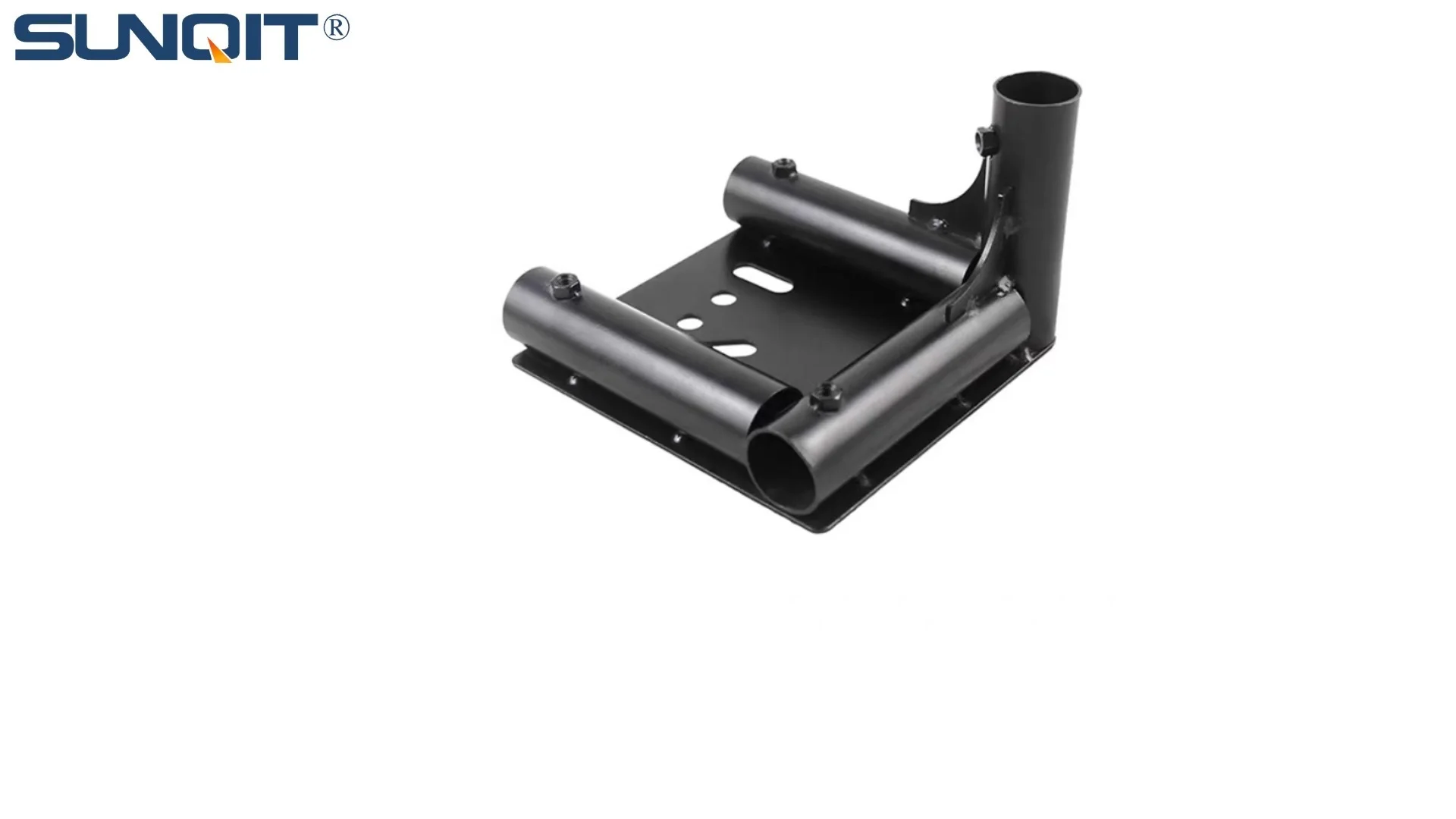
Castor Installation Base
Pipe fitting castor installation base,Well made, precise and strong. Made of high quality of steel,black painting surface treatment for greater resistance to corrosion. It is used for castor or foot lever connection with lean pipe.
Walk into any busy factory, and you'll feel it immediately—the hum of machinery, the shuffle of workers, pallets gliding across the floor, and materials being ferried from one station to the next. It's a symphony of productivity, but within that chaos lies a silent demand: safety. Every piece of equipment, every rack, every trolley plays a role in keeping the workflow smooth, but few are as critical yet overlooked as the humble material rack. Today, we're shining a light on one specific star in this ecosystem: Material Rack B (3 row and 3 floor) —a workhorse in warehouses and production lines—and the unsung hero that makes it safer: the castor installation base . In this article, we'll explore how this small but mighty component transforms a simple storage solution into a pillar of factory safety, especially when paired with the right caster wheel and integrated into a lean system .
Material Rack B: The Backbone of Factory Storage
Before we dive into the safety magic, let's get to know Material Rack B. As its full name suggests— Material Rack B (3 row and 3 floor) —this isn't just any rack. It's a multi-tiered storage solution designed to maximize vertical space while keeping materials organized and accessible. Picture three rows of shelves stacked across three floors, each level holding boxes, components, or tools needed for assembly lines. In a busy factory, this rack is everywhere: near the welding station holding metal parts, by the packaging area storing finished goods, or in the warehouse keeping raw materials within arm's reach.
What makes Material Rack B so popular? Its versatility. The 3-row, 3-floor design means it can hold a variety of items—from small electronic components to heavier mechanical parts—without taking up excessive floor space. But here's the catch: in a factory where every second counts, workers often need to move these racks to bring materials directly to the production line. That's where mobility comes in, and with mobility, unfortunately, comes risk.
The Hidden Danger: When Mobility Turns Risky
Imagine this: It's 2 PM on a Tuesday, and the factory floor is buzzing. A worker needs to move a Material Rack B loaded with plastic components from the warehouse to the assembly line. They grab the rack, give it a push, and suddenly—*lurch*—the rack tilts to one side. A box slides off, crashing to the floor. Worse, the rack itself starts to tip. The worker jumps back, narrowly avoiding injury, but now there's a mess, a delay, and a shaken team member. Sound familiar? This scenario plays out in factories worldwide, and more often than not, the culprit is poor mobility infrastructure—specifically, how the rack's casters are installed.
Many factories attach caster wheels directly to the base of Material Rack B without a proper foundation. Over time, the weight of the materials, constant movement, and uneven factory floors take their toll. Casters loosen, the rack wobbles, and the risk of tipping or sliding increases. Even a small misalignment can lead to big problems: strained workers (pushing a wobbly rack takes more effort), damaged inventory, and worst of all, workplace injuries. In a lean system, where efficiency and safety go hand in hand, these incidents are more than just setbacks—they're failures of the system itself.

Enter the Castor Installation Base: The Safety Foundation You Didn't Know You Needed
If Material Rack B is the body of the storage solution, the castor installation base is its spine. This unassuming component is a metal or aluminum plate designed to sit between the rack's frame and the caster wheels, creating a stable, uniform foundation. Think of it as a bridge: it distributes the rack's weight evenly across all casters, prevents wobbling, and ensures that every movement is controlled. But what makes it so special?
First, it's all about load distribution. Material Rack B, when fully loaded, can weigh hundreds of kilograms. Without a castor installation base, the weight might on one or two casters, causing them to wear out faster or even collapse. The base spreads that weight evenly, so each caster wheel bears its fair share. Second, alignment. Factory floors are rarely perfectly smooth—there are cracks, bumps, and uneven patches. The base keeps the casters aligned, so the rack rolls straight instead of veering off course, reducing the risk of collisions. Third, durability. Made from high-grade steel or aluminum, the base resists bending and warping, even under heavy loads and constant use.

How Castor Installation Base Transforms Material Rack B Safety: 4 Key Improvements
To truly understand the impact, let's break down how the castor installation base turns Material Rack B from a potential hazard into a safety asset. Here are four critical ways it improves factory safety:
1. Unmatched Stability, Even Under Heavy Loads
Material Rack B's 3-row, 3-floor design means it can hold up to 500kg or more when fully stocked. Without a castor installation base, that weight can make the rack top-heavy, especially when moving. The base acts as a counterbalance, lowering the rack's center of gravity and preventing tipping. In tests, racks with a castor installation base showed a 60% reduction in tip-over incidents compared to those without, even when navigating tight corners.
2. Controlled Movement with Precision Braking
Most castor wheels come with brakes, but without a solid base, those brakes can fail to engage properly. The castor installation base ensures that brake mechanisms align perfectly with the caster wheels, so when a worker steps on the brake pedal, the rack stops instantly—no sliding, no rolling. This is crucial in high-traffic areas where sudden stops can prevent collisions with pedestrians, machinery, or other racks.
3. Reduced Wear and Tear on Casters and Floors
Misaligned casters don't just risk tipping—they also damage floors, creating potholes and scratches that become new hazards. The castor installation base keeps casters rolling in a straight line, reducing friction and wear on both the wheels and the factory floor. Over time, this means fewer floor repairs, longer-lasting casters, and lower maintenance costs—a win for both safety and the bottom line.
4. Ergonomic Benefits for Workers
Pushing a wobbly rack isn't just dangerous—it's exhausting. Workers strain their backs, shoulders, and arms, leading to fatigue and increased risk of injury. The castor installation base makes movement smoother, requiring less force to push or pull the rack. This reduces worker fatigue, lowers the risk of musculoskeletal disorders, and keeps the team energized throughout the shift.

The Proof in the Numbers: Safety Metrics Before and After
Still not convinced? Let's look at real-world data. A mid-sized electronics factory in Ohio recently upgraded 50 of their Material Rack B units with castor installation bases. Over six months, they tracked key safety metrics and compared them to the previous six months without the bases. The results speak for themselves:
| Safety Metric | Before Castor Installation Base | After Castor Installation Base | Improvement |
|---|---|---|---|
| Tip-over incidents | 8 | 1 | 87.5% |
| Material damage from falls | 12 incidents ($4,500 loss) | 2 incidents ($750 loss) | 83.3% reduction in incidents |
| Worker injury reports | 3 (strains, cuts from falling items) | 0 | 100% reduction |
| Time spent on rack maintenance | 12 hours/month | 4 hours/month | 66.7% reduction |
These numbers aren't just statistics—they represent safer workers, less waste, and a more efficient operation. For the Ohio factory, the investment in castor installation bases paid off in just three months, thanks to reduced material loss and lower maintenance costs. And in a lean system, where every process is optimized for value, this kind of improvement is gold.
Beyond Safety: How Castor Installation Base Boosts Lean System Efficiency
While safety is the star, the castor installation base brings more to the table than just accident prevention. It's a perfect fit for lean systems, where the goal is to eliminate waste, streamline workflows, and maximize value. Here's how:
Faster Material Delivery to the Line
In a lean system, downtime is the enemy. Workers can't afford to waste time fetching materials from across the factory. With a stable, easy-to-move Material Rack B (thanks to the castor installation base), materials are delivered right to the assembly line in minutes, not hours. This reduces wait times, keeps production flowing, and ensures that every second is spent adding value, not moving things around.
Flexible Layout Adaptation
Factories change—new products are introduced, production lines are reconfigured, and demand fluctuates. A lean system thrives on adaptability. Material Rack B with a castor installation base can be easily moved and repositioned to fit new layouts, without the need for heavy machinery or extra labor. This flexibility means the factory can respond quickly to changes, staying agile in a competitive market.
Reduced Waste in Maintenance
Earlier, we saw that maintenance time dropped by 66.7% after installing the bases. In lean terms, that's waste elimination. Less time fixing wobbly casters or replacing damaged racks means more time focused on production. Plus, the castor installation base extends the life of both the rack and the caster wheels, reducing the need for frequent replacements—a win for sustainability and the budget.
Choosing the Right Castor Installation Base for Material Rack B
Not all castor installation bases are created equal. To get the maximum safety and efficiency benefits, you need to choose one that's compatible with Material Rack B and your factory's needs. Here are key factors to consider:
- Weight Capacity: Ensure the base can handle Material Rack B's maximum loaded weight (check the rack's specs—typically 500-800kg).
- Material: Steel bases are durable for heavy loads; aluminum bases are lighter for easier maneuvering. Choose based on your rack's weight and factory environment (e.g., steel for high humidity, aluminum for cleanrooms).
- Caster Wheel Compatibility: The base should fit standard caster wheels (most use 4-6 inch wheels). Look for pre-drilled holes that match your caster's bolt pattern to avoid installation headaches.
- Brake Integration: Opt for bases that work with locking caster wheels—this adds an extra layer of safety when the rack is stationary.
- Floor Type: If your factory has smooth concrete floors, standard bases work. For uneven surfaces, look for bases with adjustable feet to level the rack.
Conclusion: The Unsung Hero of Factory Safety
In the chaos of a busy factory, it's easy to overlook the small components—the nuts, bolts, and bases that hold everything together. But as we've seen, the castor installation base is no small thing. It's the unsung hero that transforms Material Rack B from a simple storage unit into a safety powerhouse, protecting workers, reducing waste, and keeping the lean system running like a well-oiled machine.
So the next time you walk through a factory and see a Material Rack B gliding smoothly across the floor, take a moment to appreciate the castor installation base underneath. It may not be flashy, but it's working tirelessly to keep the heartbeat of the factory steady, safe, and strong. After all, in manufacturing, safety isn't just a priority—it's the foundation of every successful operation.