- Company Articles
- Products and Technology
- Solution
- How Castor Installation Base Supports Reusable Lean Systems in Home Appliance Factories

How Castor Installation Base Supports Reusable Lean Systems in Home Appliance Factories
Related Product
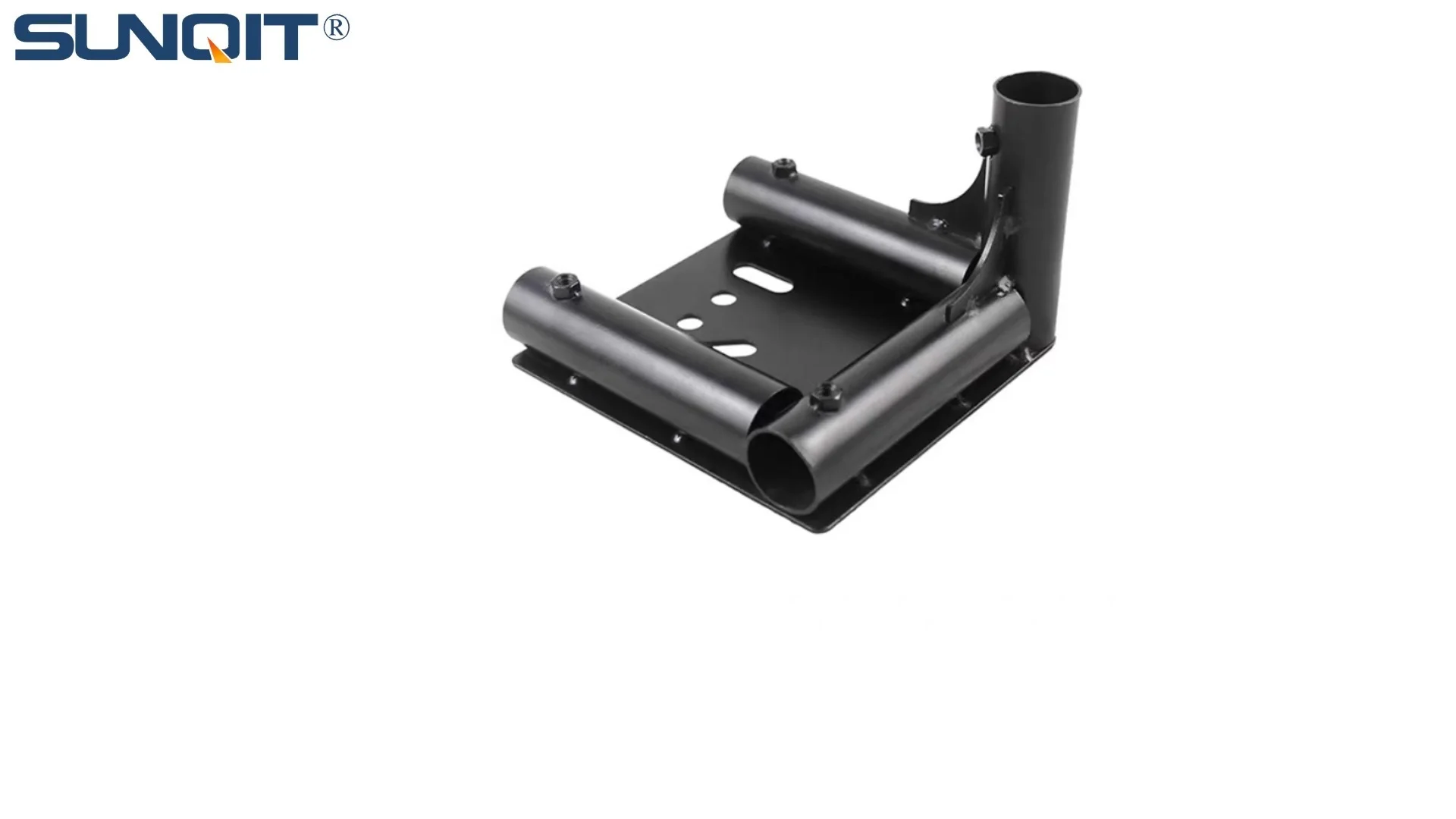
Castor Installation Base
Pipe fitting castor installation base,Well made, precise and strong. Made of high quality of steel,black painting surface treatment for greater resistance to corrosion. It is used for castor or foot lever connection with lean pipe.
Walk into any home appliance factory, and you'll feel the hum of progress: the whir of assembly lines, the clink of parts being fitted, the steady rhythm of workers turning raw materials into refrigerators, microwaves, and washing machines that will soon fill living rooms and kitchens. But behind that rhythm lies a hidden challenge: the need to keep up with a world that never stops changing. Consumer tastes shift overnight, new models roll out faster than ever, and production lines that once felt cutting-edge can suddenly feel like anchors, weighing down efficiency and innovation. This is where lean systems step in—and at the heart of those systems, often overlooked but indispensable, is the castor installation base. It's not just a piece of hardware; it's the quiet force that turns rigid factories into agile, adaptable spaces where reusability isn't just a buzzword, but a daily reality.
Lean Systems in Action: Beyond Buzzwords, Building Real-World Agility
Lean manufacturing has been around for decades, but in today's home appliance industry, it's not enough to "eliminate waste" or "streamline processes" on paper. Factories need systems that can bend without breaking, that can be reconfigured in hours instead of weeks, and that grow with the business rather than becoming obsolete. Traditional setups—fixed workbenches bolted to the floor, material racks welded into place, conveyor lines that follow one unchanging path—simply can't keep up. When a new appliance model requires a wider workspace, or a seasonal surge demands a faster material flow, these static structures become obstacles, not assets.
Enter reusable lean systems. These are modular, flexible setups built from components that can be rearranged, repurposed, and reused as needs change. Think of them as the ultimate "LEGO set" for manufacturing: aluminum profiles that snap together with minimal tools, workbenches that adjust to different heights, and material racks that can be expanded or reorganized on the fly. But even the most modular frames and panels would still be stuck in place without a way to move them. That's where the castor installation base comes in. It's the bridge between "fixed" and "flexible," turning stationary structures into mobile assets that can be positioned exactly where they're needed, when they're needed.
The Unsung Hero: Castor Installation Base – The Foundation of Reusability
At first glance, a castor installation base might seem simple: a metal plate or bracket designed to attach caster wheels to the bottom of a workbench, trolley, or rack. But its impact is anything but small. Imagine trying to move a heavy workbench across the factory floor without casters—you'd need a team of workers, maybe a forklift, and hours of downtime. With a castor installation base, that same workbench becomes a mobile workstation that one person can wheel into place, lock with a brake, and start using in minutes. It transforms "permanent" into "temporary," "fixed" into "fluid," and "wasteful" into "reusable."
But not all castor installation bases are created equal. The best ones are engineered to work seamlessly with other lean components, like aluminum profiles (lightweight yet strong, perfect for building durable frames) and caster wheels designed for factory floors (resistant to wear, smooth-rolling, and equipped with brakes for stability). They're also built to handle real-world loads—think of a turnover trolley stacked with heavy appliance parts, or a workbench loaded with tools and. A flimsy base would buckle under the weight, but a high-quality castor installation base? It takes the strain in stride, ensuring that even fully loaded structures remain mobile and safe.

From Static to Dynamic: How Castor Installation Bases Transform Workspaces
Let's paint a picture of a typical scenario in a home appliance factory before and after castor installation bases. Before: The assembly line for refrigerators is set in stone. Workbenches are lined up in a straight row, each bolted to the floor. Material racks stand at the end of the line, requiring workers to walk back and forth to fetch parts. When the factory needs to switch to assembling smaller mini-fridges for a summer promotion, the team has two options: spend days unbolting workbenches and rebuilding the line, or set up a separate temporary line (wasting space and resources). Either way, downtime creeps in, and deadlines feel tighter.
After: Every workbench, material rack, and even some conveyor sections are mounted on castor installation bases. When the mini-fridge order comes in, the production supervisor doesn't panic—she grabs a walkie-talkie and tells her team: "Let's shrink the line." Workers unlock the casters, wheel the workbenches closer together to create a more compact layout, and reposition the material racks to sit right next to the assembly stations. The entire process takes 90 minutes, not 90 hours. When the promotion ends, they wheel everything back, and the line is ready for full-size refrigerators again. No wasted materials, no lost production time—just a system that adapts, because its foundation is built to move.
This isn't just about saving time. It's about empowering workers. When a workstation feels cramped, a team can adjust it themselves. When a material handler notices a bottleneck, they can reposition a turnover trolley to streamline the flow. When quality inspectors need to get closer to the line, they can wheel their workbench right up to the action. Castor installation bases turn the factory floor into a canvas, where the people who know the work best can rearrange it to fit their needs—no engineers or contractors required.

The Numbers Behind the Mobility: Cost Savings and Efficiency Gains
It's easy to talk about "agility" and "reusability," but what do these actually mean for the bottom line? Let's look at the data. A study by the Lean Manufacturing Institute found that factories using mobile lean systems (equipped with components like castor installation bases) reported a 35% reduction in setup time for new production runs and a 28% decrease in material handling costs. Another survey of home appliance manufacturers specifically noted that facilities with modular, mobile workspaces were 40% more likely to meet or exceed production targets during peak seasons.
| Aspect | Traditional Fixed Setups | Lean Systems with Castor Installation Bases |
|---|---|---|
| Setup Time for New Product Runs | 3–5 days (demolition, rebuilding, testing) | 1–3 hours (repositioning, locking, minor adjustments) |
| Reusability of Components | <20% (most parts are welded or bolted, hard to repurpose) | >85% (components can be detached, rearranged, and reused across lines) |
| Worker Fatigue & Injury Risk | Higher (frequent walking to fetch materials, heavy lifting) | Lower (materials brought to workers, ergonomic positioning of workstations) |
| Space Utilization | 60–70% (fixed layouts leave gaps for "just in case" space) | 85–90% (mobile setups shrink or expand to fit current needs) |
| Long-Term Cost (5-Year Projection) | Higher (replacement of obsolete fixed structures, downtime costs) | Lower (reusable components, reduced downtime, fewer new purchases) |
These numbers tell a clear story: castor installation bases aren't just about convenience—they're about profitability. When a factory can reuse 85% of its components instead of replacing them, when setup time drops from days to hours, and when workers are healthier and more productive, the savings add up fast. For home appliance manufacturers operating on tight margins, this can be the difference between thriving and just surviving.

Integration with Lean Components: Castor Bases and the Ecosystem of Efficiency
A castor installation base doesn't work in isolation. It's part of a larger ecosystem of lean components that together create a flexible, reusable system. Take aluminum profiles, for example. These lightweight, T-slot extrusions are the backbone of modern lean systems—they're strong enough to support heavy loads but easy to cut, drill, and connect with simple accessories. When paired with a castor installation base, aluminum profile workbenches become both sturdy and mobile: the profiles provide the structure, and the casters provide the movement. It's a match made in manufacturing heaven.
Then there are the caster wheels and caster accessories themselves. A castor installation base is only as good as the wheels attached to it. In a factory with concrete floors, soft rubber wheels might wear down quickly, while hard plastic wheels could scratch the surface. The best lean system suppliers offer a range of options: swivel casters for easy maneuverability, brake-equipped casters for stability during use, and even shock-absorbing casters for delicate components. Some bases even allow for quick wheel changes, so if the factory switches from concrete to epoxy floors, the wheels can be swapped out without replacing the entire base.
Turnover trolleys and racks are another key piece of the puzzle. These are the workhorses of material handling, ferrying parts from storage to the assembly line and finished products to shipping. When mounted on castor installation bases, they become "mobile warehouses," able to follow the flow of production instead of sitting idle in a corner. A worker assembling oven doors no longer has to wait for a material handler to bring a trolley—they can wheel it over themselves, grab what they need, and send it back. It's small moments like these that add up to big gains in efficiency.
A Day in the Life: How Factory Teams Benefit from Mobile Lean Systems
Let's step into the shoes of Maria, a production supervisor at a mid-sized home appliance factory that recently invested in castor installation bases and modular lean systems. Her day starts at 6:30 AM, and the first thing on her mind is the new washing machine model launching next week. The prototype assembly line needs to be tested today, and the factory floor is currently set up for the old model. In the past, this would mean a morning of stress—coordinating with maintenance to unbolt workbenches, renting a forklift, and crossing her fingers that everything would be ready by noon.
Today is different. Maria walks out to the floor, clipboard in hand, and gathers her team: "Let's flip the line for the new washer. Carlos, can you and the guys move the left bank of workbenches 3 feet closer to the conveyor? Priya, take the material racks and position them between stations 4 and 5—we need parts to flow faster there." The team nods and gets to work. Within 20 minutes, the workbenches are unlocked, wheeled into place, and locked down with their built-in brakes. The material racks, mounted on heavy-duty castor installation bases, glide smoothly across the floor, even with boxes of metal brackets stacked on them. By 7:45 AM, the new line is set up, and the first prototype is rolling down the conveyor. Maria smiles—no forklift, no yelling, no panic. Just a team working with tools that make their jobs easier.
Later that afternoon, a quality control inspector flags an issue: the final testing station is too far from the assembly line, causing delays. Instead of submitting a request to "rebuild the testing area" (which would take a week), Maria grabs a mobile workbench (you guessed it—on a castor installation base), wheels it over to the end of the line, and plugs in the testing equipment. Problem solved in 10 minutes. "Before, we'd have to work around the space we had," she says later, over a cup of coffee. "Now, we can make the space work for us."
Choosing the Right Castor Installation Base: Key Considerations for Suppliers and Factories
Not all castor installation bases are created equal, and choosing the right one requires careful thought. For home appliance factories, the first consideration is load capacity. A workbench used for light assembly might only need a base that supports 200 kg, but a material rack stacked with steel appliance frames could require 500 kg or more. The base must distribute weight evenly across all casters to prevent tipping or wheel damage.
Next is compatibility. The base should work with the factory's existing lean components—aluminum profiles, workbenches, racks—or with components from a trusted lean system supplier. Mismatched parts can lead to instability; for example, a base with a non-standard mounting pattern won't attach securely to an aluminum profile workbench, creating a safety hazard. Reputable suppliers will offer bases designed to fit their own profiles and accessories, ensuring a seamless, secure fit.
Durability is also critical. Factory floors are tough environments—dust, oil, and constant foot traffic take a toll. A castor installation base made from cheap steel might rust or bend over time, while one made from high-grade steel or aluminum will stand up to years of use. Look for bases with powder-coated finishes to resist corrosion, and casters with sealed bearings to keep out dust and debris (no one wants to spend time cleaning or replacing bearings every month).
Finally, don't overlook the little things: ease of installation, availability of replacement parts, and after-sales support. A base that requires special tools to attach casters will slow down setup, while one with quick-release pins will save time. A supplier who stocks caster wheels, brakes, and mounting brackets locally will ensure minimal downtime if a part needs replacing. And a supplier who offers training or guidance on how to best integrate bases into existing systems? That's a partner, not just a vendor.
Future-Proofing Manufacturing: The Role of Reusable Lean Systems in an Era of Change
The home appliance industry isn't slowing down. If anything, it's accelerating. Consumers want smarter appliances, greener appliances, appliances that fit into smaller living spaces—and they want them yesterday. Factories that can't keep up will fall behind, but those with reusable lean systems powered by castor installation bases have a head start. These systems aren't just for today's needs; they're for tomorrow's, too.
Consider sustainability, for example. Reusability is a cornerstone of green manufacturing. When a factory can repurpose a workbench or material rack instead of buying a new one, it reduces waste, cuts down on raw material use, and lowers carbon emissions from production and shipping. Castor installation bases extend the lifespan of these components by making them adaptable—so that aluminum profile workbench you buy today can still be in use, in a new configuration, five years from now.
Then there's the rise of smart manufacturing and Industry 4.0. As factories add IoT sensors, collaborative robots, and digital twins, they need physical systems that can integrate with these technologies. A fixed workstation might struggle to accommodate a new robot arm, but a mobile workstation on a castor installation base can be positioned exactly where the robot needs it, with cables and sensors routed through the aluminum profile frame. It's flexibility that paves the way for innovation.
Conclusion: Moving Forward – Literally and Figuratively – with Castor-Powered Lean Systems
In the fast-paced world of home appliance manufacturing, the difference between success and stagnation often comes down to one question: Can you move quickly enough? Castor installation bases might not grab headlines or win design awards, but they're the quiet enablers of that speed. They turn rigid factories into dynamic spaces where reusability is second nature, where workers aren't limited by their tools, and where change is met with confidence, not chaos.
So the next time you walk into a factory and see a workbench gliding across the floor, a material rack being repositioned with a push, or a production line that transforms overnight, take a moment to appreciate the castor installation base. It's not just a piece of metal and wheels—it's the foundation of a lean system that doesn't just keep up with change, but leads the way. And in an industry where the only constant is change, that's more than just valuable. It's essential.