- Company Articles
- Products and Technology
- Product knowledge
- How Chrome Coating Improves Five Way Straight Lean Pipe Joint Corrosion Resistance

How Chrome Coating Improves Five Way Straight Lean Pipe Joint Corrosion Resistance
Related Product
Five Way Straight Lean Pipe Joint
Five way straight lean pipe joint, for 5 pcs 28mm lean pipe connect in straight angle,which used widely in workbench, flow rack, hand trolley frame connection.
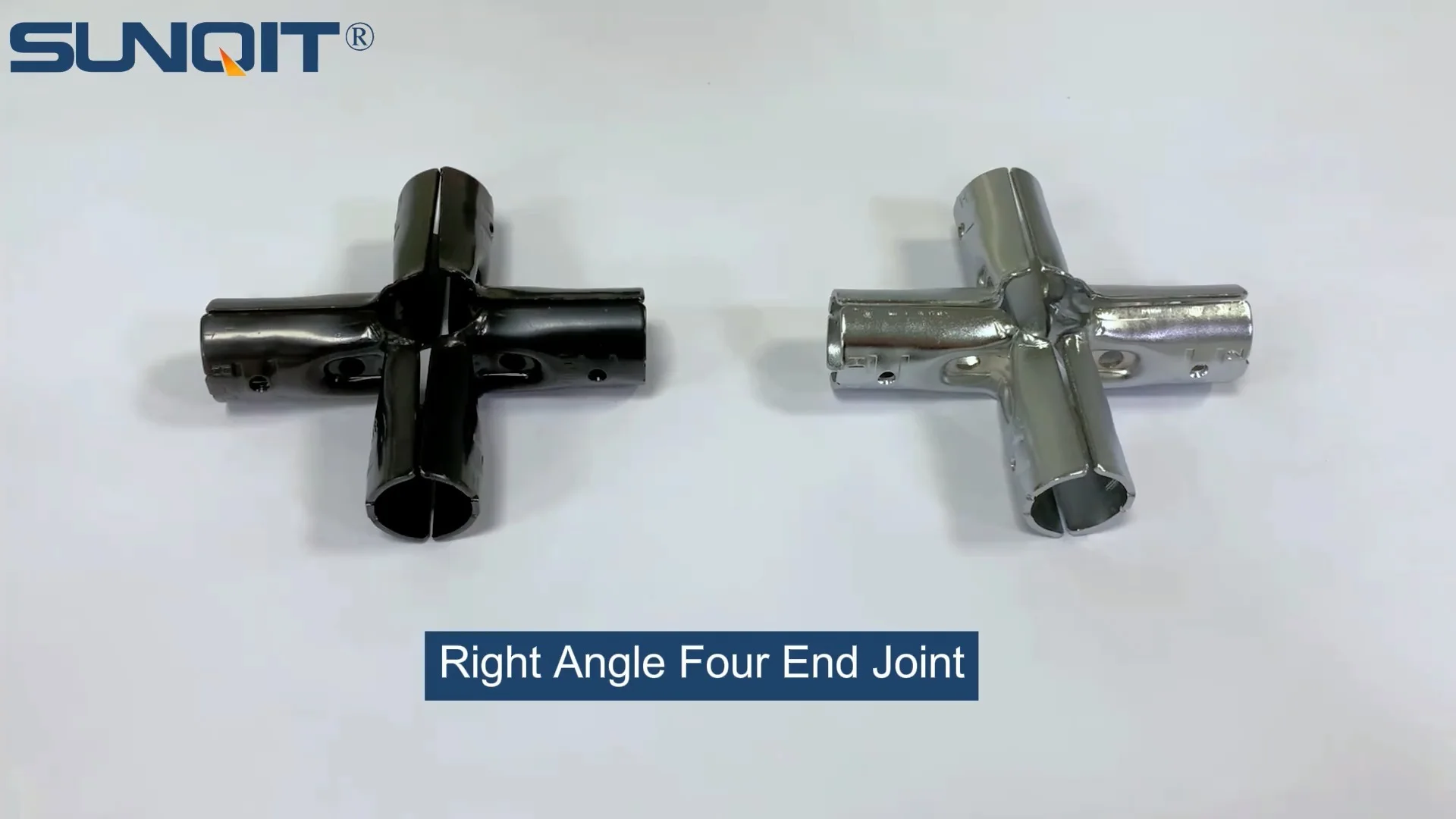
In the fast-paced world of manufacturing and production, where every second counts and efficiency is king, the reliability of equipment and components can make or break a company's success. At the heart of many production lines—from automotive assembly plants to electronics manufacturing facilities—lies a network of lean systems, designed to minimize waste, streamline workflows, and keep operations running like well-oiled machines. Central to these systems are lean pipe joints, the unsung heroes that hold together workbenches, flow racks, conveyors, and material handling structures. Among these, the five way straight lean pipe joint stands out for its versatility, connecting multiple pipes at once to create complex, customized layouts. But like any component exposed to the harsh conditions of industrial environments—moisture, chemicals, and constant wear—these joints face a silent enemy: corrosion. Left unchecked, corrosion can weaken joints, compromise structural integrity, and lead to costly downtime. Enter chrome coating: a tried-and-true solution that not only protects these critical components but also extends their lifespan, ensuring lean systems remain robust and efficient. In this article, we'll explore how chrome coating works to enhance the corrosion resistance of five way straight lean pipe joints, why this matters for production assemble lines, and the broader impact on lean system performance.
Understanding the Five Way Straight Lean Pipe Joint: A Backbone of Lean Systems
Before diving into the role of chrome coating, it's essential to understand what a five way straight lean pipe joint is and why it's so vital in modern manufacturing. Lean systems, which prioritize efficiency, flexibility, and continuous improvement, rely on modular structures that can be easily reconfigured to adapt to changing production needs. These structures—whether workbenches, flow racks, or material trolleys—are built using lean pipes (hollow tubes made of steel, aluminum, or stainless steel) connected by joints. The five way straight lean pipe joint is a specialized connector designed to join up to five pipes in a straight or perpendicular arrangement, allowing for the creation of multi-directional frameworks. Imagine a central hub with five ports, each accepting a lean pipe, enabling the construction of complex, three-dimensional structures that support tools, materials, and even heavy machinery on the production floor.
In production assemble lines, where precision and organization are paramount, these joints act as the "knees and elbows" of the workspace. A well-designed lean system might use five way straight joints to build a multi-tiered flow rack, where components slide down roller tracks to workers at assembly stations, or a workbench with overhead tool racks and side shelves for parts. The strength and durability of these joints directly impact the stability of the entire structure. A loose or weakened joint can lead to wobbling workbenches, misaligned roller tracks, or even collapsed racks—all of which disrupt workflow, risk damage to materials, and endanger workers. In short, the five way straight lean pipe joint is not just a component; it's a critical link in the chain of productivity.
The Corrosion Challenge: Why Even Strong Joints Struggle in Industrial Environments
Corrosion is the gradual degradation of metal by chemical or electrochemical reaction with its environment, and it's a persistent problem in industrial settings. Factories and production facilities are rife with conditions that corrosion: high humidity, exposure to oils, coolants, and cleaning agents, temperature fluctuations, and even airborne contaminants like dust and salt (in coastal areas). For lean pipe joints, which are often made of carbon steel (an affordable but corrosion-prone material), this environment is particularly harsh. Over time, unprotected steel joints develop rust—a reddish-brown oxide layer that weakens the metal, compromises the joint's grip on the pipes, and eventually leads to failure.
The consequences of corrosion in five way straight lean pipe joints are far-reaching. For starters, rust weakens the joint's structural integrity. A joint that once securely held five pipes may start to loosen, causing the entire structure to wobble. This instability can lead to materials falling off racks, tools slipping from overhead holders, or even the collapse of a workbench—posing serious safety risks to workers. Beyond safety, corrosion increases maintenance costs. Rusty joints require frequent inspection, cleaning, and replacement, diverting time and resources from actual production. In a lean system, where "waste" (including unnecessary downtime and material waste) is the enemy, this is a significant issue. A single corroded joint might take a technician an hour to replace, halting production in that area and disrupting the entire assembly line's rhythm.
In industries like automotive manufacturing, where production lines run 24/7, or electronics assembly, where precision is critical, even minor disruptions can lead to significant losses. For example, a corroded five way joint in a flow rack might cause components to jam as they slide down roller tracks, stopping the assembly line until the jam is cleared and the joint is repaired. Multiply this by dozens of joints across a factory, and the cumulative impact on productivity and profitability becomes clear. Corrosion isn't just a cosmetic issue—it's a threat to the very efficiency that lean systems aim to achieve.

Chrome Coating: A Shield Against Corrosion
So, how do manufacturers protect five way straight lean pipe joints from corrosion? Enter chrome coating—a process that deposits a thin layer of chromium onto the joint's surface, creating a barrier between the metal and its environment. Chromium is a naturally corrosion-resistant metal, and when applied as a coating, it acts like a suit of armor for the underlying steel. But chrome coating isn't just about slapping on a layer of metal; it's a precise electrochemical process that ensures durability, adhesion, and long-lasting protection.
The chrome plating process typically involves three steps: preparation, electroplating, and finishing. First, the five way straight lean pipe joint is thoroughly cleaned to remove any dirt, oil, or rust. This is crucial because contaminants can prevent the chromium from adhering properly to the surface. The joint is then dipped in an acid bath to etch the steel, creating a rough texture that helps the chromium bond. Next, the joint is placed in an electrolytic bath containing chromium ions. An electric current is passed through the bath, causing the chromium ions to be attracted to the joint (which acts as the cathode), where they deposit as a thin, uniform layer. The thickness of the chrome layer can be controlled—usually between 5 and 20 microns (μm)—depending on the level of protection needed. Finally, the coated joint is rinsed, dried, and inspected to ensure the coating is smooth, even, and free of defects.
What makes chrome coating so effective at preventing corrosion? For one, chromium is highly resistant to oxidation. Unlike steel, which reacts with oxygen and moisture to form rust, chromium forms a thin, stable oxide layer (Cr₂O₃) when exposed to air. This oxide layer acts as a barrier, preventing further oxygen or moisture from reaching the underlying steel. Additionally, the chrome layer itself is dense and impermeable, blocking corrosive substances like oils, coolants, and acids from seeping through. Even if the coating is scratched (a common occurrence in industrial settings), the chromium oxide layer self-heals to some extent, slowing down corrosion at the damage site.
Beyond corrosion resistance, chrome coating offers other benefits that make it ideal for five way straight lean pipe joints. Chromium is extremely hard—harder than steel—so the coating increases the joint's wear resistance. This is critical in production environments, where joints are often tightened, loosened, and reconfigured as lean systems are adjusted. A chrome-coated joint can withstand repeated assembly and disassembly without wearing down, maintaining its grip on the pipes over time. The smooth, shiny surface of chrome also makes the joint easier to clean; oil, grease, and dirt wipe off easily, reducing the buildup of contaminants that can corrosion. And let's not overlook aesthetics: a bright, chrome finish gives the joint a professional, high-quality look, which matters in facilities where cleanliness and organization are part of the company's brand.

Chrome Coating vs. Other Protective Coatings: A Comparative Analysis
Chrome coating isn't the only option for protecting lean pipe joints from corrosion. Manufacturers may also consider alternatives like zinc plating, powder coating, or anodizing (for aluminum joints). Each has its pros and cons, but when it comes to balancing corrosion resistance, durability, and cost, chrome coating often comes out on top—especially for steel five way straight lean pipe joints used in harsh industrial environments. To illustrate this, let's compare chrome coating with three common alternatives using a detailed table:
| Coating Type | Corrosion Resistance | Wear Resistance | Application Method | Cost (Per Joint) | Best For |
|---|---|---|---|---|---|
| Chrome Coating | High: Resists moisture, oils, and mild acids; self-healing oxide layer. | Very High: Hard chromium layer withstands friction and repeated assembly. | Electroplating: Requires specialized equipment and skilled labor. | Medium-High: ~$5–$8 per joint (varies by size and thickness). | Heavy industrial use, high-moisture environments, frequent reconfiguration. |
| Zinc Plating | Medium: Protects via sacrificial corrosion (zinc corrodes instead of steel), but less durable than chrome. | Low-Medium: Soft coating prone to wear with repeated use. | Electroplating: Simpler process than chrome, lower equipment costs. | Low: ~$2–$4 per joint. | Light-duty applications, dry environments, temporary structures. |
| Powder Coating | Medium: Thick polymer layer blocks moisture, but chips easily if scratched. | Medium: Resistant to impact but not to friction (e.g., pipe insertion/removal). | Electrostatic spraying + baking: Creates a thick, uniform layer. | Medium: ~$3–$6 per joint. | Aesthetic applications, low-wear environments, indoor use only. |
| Anodizing (Aluminum Only) | High for aluminum: Forms a porous oxide layer that can be sealed for added protection. | Medium: Oxide layer is hard but thinner than chrome. | Electrolytic process: Only works on aluminum, not steel. | Medium-High: ~$4–$7 per joint (for aluminum). | Aluminum lean pipe systems, electronics manufacturing (ESD-safe options). |
As the table shows, chrome coating excels in corrosion resistance and wear resistance, making it the best choice for five way straight lean pipe joints in demanding industrial settings. Zinc plating is cheaper but wears quickly, making it unsuitable for joints that are frequently adjusted. Powder coating is durable but prone to chipping, which exposes the steel to corrosion. Anodizing is effective for aluminum but doesn't work on steel, which is the most common material for heavy-duty lean pipe joints. For manufacturers invested in lean systems that need to last for years—even decades—chrome coating is a cost-effective investment in long-term reliability.

Real-World Impact: How Chrome-Coated Joints Improve Production Assemble Lines
To understand the practical benefits of chrome-coated five way straight lean pipe joints, let's look at a real-world example from the automotive industry. Consider a mid-sized auto parts manufacturer that produces brake components for major car brands. The company's production line relies on a lean system with dozens of flow racks, workbenches, and material trolleys—all built using lean pipes and five way straight joints. A few years ago, the manufacturer was struggling with frequent joint failures due to corrosion. The plant is located near the coast, so salt air accelerated rusting, and the use of water-based coolants on the production floor added to the moisture problem. Every three months, maintenance crews had to replace 10–15 corroded joints, each replacement taking 30–60 minutes and causing minor production delays.
Case Study: Automotive Parts Manufacturer
Before Chrome Coating: 10–15 joint replacements every 3 months, 5–8 hours of downtime annually, $2,000+ in replacement parts and labor costs.
After Switching to Chrome-Coated Joints: Zero joint replacements in 2 years, 0 downtime due to corrosion, estimated savings of $10,000+ (including reduced labor and parts costs).
Worker Feedback: "The chrome joints are so much easier to clean—grease wipes right off, and they never get stuck when we reconfigure the flow racks. We used to dread maintenance days, but now we barely think about the joints!" – Maintenance Supervisor, Auto Parts Plant
This case study highlights the tangible impact of chrome coating on lean system performance. By reducing joint failures and maintenance needs, the manufacturer was able to focus on production rather than repairs, improving overall efficiency. The chrome-coated joints also supported the company's lean goals by minimizing waste—specifically, the waste of time, labor, and materials associated with frequent replacements. In lean management terms, this is a classic example of "preventive maintenance" (a key pillar of Total Productive Maintenance, or TPM) that pays off in the long run.
Another industry where chrome-coated lean pipe joints shine is electronics manufacturing. In cleanrooms and assembly lines for devices like smartphones and laptops, precision is everything. Even a tiny amount of rust from a corroded joint could contaminate sensitive components, leading to product defects. Chrome-coated joints, with their smooth, non-porous surface, are easy to sanitize and resistant to the cleaning agents used in these environments. They also maintain their structural integrity, ensuring that workbenches and tool racks remain stable—critical for tasks like soldering and microchip assembly, where a shaky hand could ruin a $500 component.
Conclusion: Investing in Chrome Coating for Lean System Longevity
In the world of lean manufacturing, where every component is designed to add value and eliminate waste, the five way straight lean pipe joint plays a quiet but crucial role. It's the connector that holds the system together, enabling the flexibility and efficiency that make lean systems so powerful. But without proper protection, corrosion can turn this vital component into a liability—causing downtime, increasing costs, and undermining the very principles of lean management.
Chrome coating offers a solution that goes beyond simple protection: it enhances the joint's durability, wear resistance, and longevity, making it a smart investment for any manufacturer serious about maintaining efficient production assemble lines. By creating a barrier against moisture, chemicals, and wear, chrome-coated joints reduce maintenance needs, minimize downtime, and support the continuous improvement ethos of lean systems. Whether in automotive plants, electronics factories, or food processing facilities, these joints stand up to the toughest conditions, ensuring that lean systems deliver on their promise of efficiency and reliability.
So, the next time you walk through a production floor and admire the organized, efficient lean system at work, take a moment to appreciate the small but mighty five way straight lean pipe joint—and the chrome coating that keeps it (and the entire system) running strong. In the end, it's the attention to details like this that separates good manufacturers from great ones.