- Company Articles
- Products and Technology
- Solution
- How Chrome Four Way Straight Lean Pipe Joints Support 5S Workplace Organization

How Chrome Four Way Straight Lean Pipe Joints Support 5S Workplace Organization
Related Product
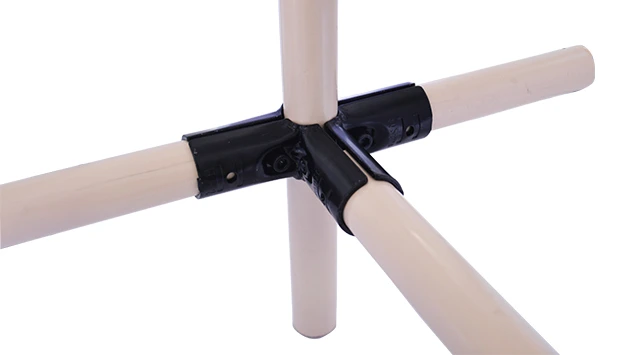
Four Way Straight Lean Pipe Joint
Four way lean pipe joint for 4 pcs 28MM lean pipe connection in straight angle, which used widely in workbench, flow rack, hand trolley frame connection.
Walk into any disorganized workplace, and you'll likely see the same frustrating scene: tools scattered across tables, materials stacked haphazardly in corners, and employees pausing mid-task to hunt for the right part or document. It's a scenario that drains productivity, increases stress, and even risks safety. For manufacturing, logistics, and assembly teams, this chaos isn't just a minor annoyance—it's a direct hit to the bottom line. Enter 5S workplace organization, a tried-and-true methodology designed to transform cluttered spaces into streamlined, efficient environments. And at the heart of many successful 5S implementations? but powerful components like the chrome four way straight lean pipe joint . These small, versatile connectors play a huge role in building the flexible, customizable lean systems that make 5S work. Let's dive into how they turn chaos into order, one joint at a time.
First Things First: What Are Chrome Four Way Straight Lean Pipe Joints?
Before we connect these joints to 5S, let's get clear on what they are. At their core, chrome four way straight lean pipe joints are metal connectors designed to link lean pipes (hollow tubes, often made of steel or aluminum) in four directions—up, down, left, and right. Their chrome plating isn't just for looks; it adds durability, resists rust, and makes cleaning a breeze. Unlike rigid, one-size-fits-all hardware, these joints are engineered for flexibility: twist them, lock them, and reconfigure them as your needs change. Think of them as the "building blocks" of lean systems—whether you're assembling a workbench, a flow rack, or a conveyor, these joints hold everything together while keeping the design adaptable.
What makes them stand out? Their simplicity. No welding, no complex tools—just slide a lean pipe into the joint, tighten the bolt, and you're done. This ease of use is key for 5S, where quick adjustments and standardization are critical. Now, let's see how this simplicity translates to supporting each step of the 5S framework.
Breaking Down 5S: How Chrome Four Way Straight Lean Pipe Joints Support Each Step
5S—Sort, Set in Order, Shine, Standardize, Sustain—isn't just a checklist. It's a mindset shift that turns "good enough" workspaces into high-performance ones. Let's explore how chrome four way straight lean pipe joints contribute to each phase.
1. Sort (Seiri): Separate "Necessary" from "Unnecessary"
The first step of 5S is all about decluttering: removing tools, materials, and equipment that aren't essential to daily operations. But how do you decide what's "necessary"? Without a clear system, it's easy to hold onto "just in case" items, which only adds to the mess. This is where lean systems built with chrome four way straight joints shine.
Imagine a production line where employees use three types of wrenches daily, but the toolbench also holds five outdated models "just in case." With a lean workbench assembled using these joints, you can design dedicated slots for the three essential wrenches. The outdated ones? They get moved to a centralized storage area (or discarded) because there's no "extra space" in the new, purpose-built setup. The joints make it easy to create custom compartments—no more vague "junk drawers" where unnecessary items hide. By giving necessary tools a defined home, these joints make it obvious what's missing (or what's), making the "Sort" step actionable and sustainable.
2. Set in Order (Seiton): "A Place for Everything, and Everything in Its Place"
Once you've sorted out the unnecessary, it's time to arrange the remaining items so they're easy to find and use. This is where the flexibility of chrome four way straight joints truly shines. Traditional workbenches or racks are fixed: if your workflow changes, you're stuck with a structure that no longer fits. But with these joints, you can build workbenches , flow racks, and material carts that adapt to how your team actually works.
Take a small electronics assembly team, for example. Their daily tasks involve handling tiny components, tools like soldering irons, and test equipment. Using chrome four way joints, they can build a workbench with: a lower shelf for component bins (connected via joints to keep bins secure), a middle platform for the soldering iron (adjusted to elbow height), and an upper rack for test cables (angled for easy grabbing). If next month they add a new tool, they don't need a whole new bench—just loosen a few bolts, add a new lean pipe section with a joint, and the bench evolves. This "set in order" isn't static; it's dynamic, which is exactly what 5S demands.
Another example: flow racks for material handling. In a warehouse, products often need to move from receiving to shipping via gravity-fed racks. Chrome four way joints let you adjust the angle of roller tracks, add dividers for different product sizes, or extend the rack length as inventory grows. No more "one rack fits all" frustration—each section is tailored to the items it holds, so pickers can grab what they need in seconds, not minutes.
3. Shine (Seiso): Keep the Workplace Clean and Functional
5S isn't just about organization—it's about maintaining a clean, safe environment. A cluttered space is hard to clean; a clean space is easier to keep organized. Chrome four way straight lean pipe joints support the "Shine" step in two big ways: their design and their material.
First, the chrome plating. Unlike painted or uncoated metal, chrome resists grease, dust, and spills. Wipe it down with a damp cloth, and it looks brand new—no scrubbing, no rust spots to tackle. This matters in environments like auto repair shops or food processing plants, where spills are common. Second, the modular design of lean systems means fewer nooks and crannies for dirt to hide. Traditional workbenches with welded corners or fixed shelves often have gaps where dust and debris accumulate. With lean systems, joints connect pipes cleanly, and shelves can be removed entirely for deep cleaning. Need to sanitize a workbench? Loosen the joints, take the shelves off, wipe everything down, and reassemble—all in 10 minutes. It's a small change, but it turns "cleaning day" from a dreaded chore into a quick, routine task.
4. Standardize (Seiketsu): Create Consistency Across Teams
5S works best when everyone follows the same rules. If one workbench in the factory is organized one way and another is a free-for-all, confusion sets in. Chrome four way straight lean pipe joints help standardize processes by making it easy to replicate successful setups across the workplace.
Let's say the morning shift builds a lean workbench that cuts their tool-retrieval time by 30%. Using the same joints, the afternoon shift can copy that exact design—same pipe lengths, same joint positions, same shelf heights. No guesswork, no "reinventing the wheel." Even better, because the joints are labeled (many suppliers stamp part numbers on them), you can create a "standard setup guide" with photos and measurements. New employees can assemble a workbench to spec in minutes, ensuring consistency from day one. This standardization isn't about stifling creativity; it's about eliminating variability that slows teams down.
5. Sustain (Shitsuke): Make 5S a Habit, Not a Project
The hardest part of 5S isn't implementing it—it's keeping it going. Too often, teams organize a space, then slip back into old habits when workflows change or new challenges arise. Chrome four way straight lean pipe joints help "Sustain" 5S by making adaptability easy. When your workspace can evolve with your needs, you're less likely to abandon organization for convenience.
Consider a manufacturing plant that adds a new product line. Suddenly, they need more storage for raw materials and a new assembly station. With traditional fixed racks, they might start piling materials on the floor "temporarily," which quickly becomes permanent. But with lean systems, they can repurpose existing joints and pipes to build a new material rack in a day. No extra cost for new equipment, no disruption to the existing 5S setup. Employees see that the system works for them, not against them, so they're more likely to keep maintaining it.

Traditional vs. Lean: A Quick Comparison
Still wondering how big of a difference these joints make? Let's look at a side-by-side comparison of traditional workplace setups and lean systems built with chrome four way straight joints:
| Aspect | Traditional Setup | Lean System with Chrome Four Way Joints |
|---|---|---|
| Flexibility | Fixed design; hard to reconfigure | Adjustable in minutes; adapts to new needs |
| Cleaning Ease | Welded corners trap dirt; hard to sanitize | Smooth chrome finish; modular parts for deep cleaning |
| Standardization | Inconsistent setups across teams | Easy to replicate standard designs |
| Cost Over Time | Need to replace entire structures when needs change | Reuse joints and pipes; lower long-term costs |

Beyond 5S: Additional Benefits of Chrome Four Way Straight Lean Pipe Joints
While their role in 5S is critical, these joints offer perks that extend beyond organization:
- Durability: Chrome plating and sturdy metal construction mean they hold up to heavy use. drop a tool on a joint, and it won't crack or bend.
- Cost-Effective: Compared to custom welding or expensive prefab furniture, lean systems with these joints are budget-friendly—especially since you can reuse parts.
- Safety: No sharp edges (thanks to smooth chrome plating) and stable connections reduce trip hazards and tool falls.
- Supplier Support: Working with a reliable lean pipe supplier ensures you have access to replacement joints, pipes, and accessories, so you're never stuck with a broken setup.
Final Thoughts: Small Joints, Big Impact
5S workplace organization is about more than tidying up—it's about creating a space where employees can do their best work without unnecessary obstacles. Chrome four way straight lean pipe joints might seem like small components, but they're the glue that holds this vision together. By enabling flexible, clean, and adaptable lean systems, they make "Sort, Set in Order, Shine, Standardize, Sustain" not just a but a daily reality.
So, the next time you walk into a well-organized workplace—where tools are at arm's reach, materials flow smoothly, and employees focus on work instead of searching—take a closer look. Chances are, there's a chrome four way straight lean pipe joint quietly keeping it all together. And that's the beauty of lean thinking: the smallest parts often make the biggest difference.