- Company Articles
- Products and Technology
- Product knowledge
- How Chrome Plating Enhances the Lifespan of One Side Rotatory Parallel Lean Pipe Joints

How Chrome Plating Enhances the Lifespan of One Side Rotatory Parallel Lean Pipe Joints
Related Product
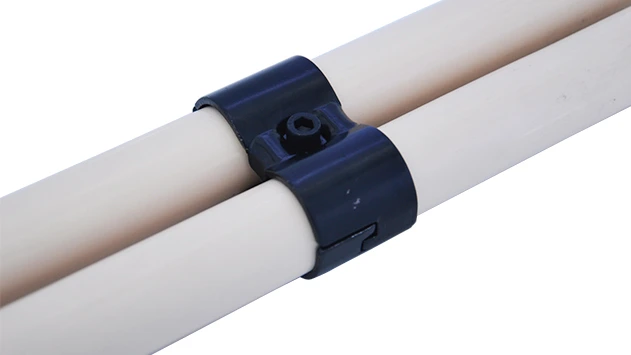
Parallel Lean Pipe Joint
Parallel lean pipe joint used for 2 pcs 28MM lean pipe connection in parallel direction to enhance frame structure, usually for heavy payload requirement for workbench. flow rack, hand trolley.
The Unsung Heroes of Lean Manufacturing: Lean Pipe Joints
Walk into any modern factory or assembly plant, and you'll notice a quiet efficiency humming in the background. Workbenches are organized, materials glide smoothly along roller tracks, and every tool seems to have its perfect spot. Much of this order owes itself to lean systems —frameworks designed to minimize waste and maximize productivity. But within these systems, there's a component so small it's easy to overlook: the lean pipe joint . These unassuming connectors are the backbone of everything from workbenches to material racks, holding together the aluminum or steel pipes that form the structure of lean setups. And among the many types of lean pipe joints, one stands out for its versatility: the one side rotatory parallel lean pipe joint.
Imagine a workbench where you need to adjust the height of a shelf, or a roller track that needs to angle slightly to guide materials downhill. That's where the one side rotatory parallel joint shines. It allows for smooth rotation on one axis while keeping pipes parallel, making it indispensable for setups that require flexibility. But here's the catch: in industrial environments—where moisture, chemicals, and constant movement are par for the course—these joints take a beating. Over time, wear and tear can turn a smooth-rotating joint into a stiff, corroded nuisance, leading to downtime, repair costs, and frustrated workers. So, how do manufacturers keep these critical components performing at their best? The answer often lies in a process as old as it is effective: chrome plating.
What Makes One Side Rotatory Parallel Lean Pipe Joints So Critical?
Before diving into chrome plating, let's take a closer look at the star of the show: the one side rotatory parallel lean pipe joint. Unlike fixed joints that lock pipes into place, this joint is engineered for movement. It features a rotating mechanism on one end, allowing pipes to pivot while staying aligned parallel to each other. This design is a game-changer in lean manufacturing, where adaptability is key. For example, on a production line, a workbench might need its side racks tilted to feed materials into the assembly process more efficiently. Or a turnover trolley might require adjustable handles to accommodate workers of different heights. In these cases, a joint that can rotate smoothly without compromising stability is worth its weight in gold.
But with great flexibility comes great responsibility—for the joint, that is. Every rotation introduces friction between metal surfaces. Every day, it's exposed to oils from machinery, cleaning agents used on the factory floor, and even humidity in the air. Over months (or sometimes weeks, in high-intensity environments), this exposure leads to two major issues: corrosion and wear. Corrosion eats away at the metal, causing rust that gums up the rotating parts. Wear, on the other hand, smooths down the joint's surfaces, leading to looseness and play in the connection. Both problems spell trouble: a joint that sticks or slips can throw off the entire flow of a production line, turning a minor annoyance into a major bottleneck.

The Enemy Within: Why Unprotected Joints Fail Prematurely
To understand why chrome plating is such a lifesaver, let's first examine what happens to an unprotected one side rotatory parallel lean pipe joint. Most lean pipe joints start as carbon steel—a strong, affordable material, but one with a Achilles' heel: it rusts. When exposed to moisture (even the slight humidity in a factory), carbon steel reacts with oxygen to form iron oxide, better known as rust. Rust isn't just unsightly; it's abrasive. As rust forms on the joint's rotating surfaces, it creates friction, making rotation stiffer. Over time, that stiffness can lead to the joint seizing up entirely.
Then there's wear. Every time the joint rotates, the metal surfaces rub against each other. Without a protective layer, tiny metal particles wear off, creating grooves and gaps. These gaps make the joint loose, so instead of rotating smoothly, it wobbles. A wobbly joint on a workbench might mean tools slide off shelves; on a roller track, it could cause materials to jam. In the worst cases, a worn joint might even fail completely, causing the entire structure to collapse. For manufacturers, this translates to more than just replacement costs—it means downtime while the joint is fixed, missed deadlines, and frustrated teams.
Some might argue, "Why not just use stainless steel? The stainless steel pipe series is corrosion-resistant, right?" It's true—stainless steel does resist rust better than carbon steel, thanks to its chromium content. But stainless steel joints are often pricier, and they're not immune to wear. The rotating parts still rub together, and over time, even stainless steel can wear thin. Plus, stainless steel is heavier, which can add unnecessary weight to lean setups that need to be mobile (like turnover trolleys). So, while stainless steel is a step up, it's not always the most cost-effective or practical solution—especially for high-volume manufacturers.

Chrome Plating: A Shield for the Hardworking Joint
Enter chrome plating. This process involves electroplating a thin layer of chromium onto the surface of the lean pipe joint, creating a barrier that protects against corrosion and wear. It's like giving the joint a suit of armor—one that's both tough and surprisingly smooth. But how exactly does it work?
The chrome plating process starts with cleaning the joint thoroughly. Any dirt, oil, or rust must be removed to ensure the chromium adheres properly. Then, the joint is dipped into a bath of chromium sulfate solution, along with a lead anode. When an electric current is applied, chromium ions in the solution are attracted to the joint (the cathode), bonding to its surface. The result is a thin layer of chromium—usually just 0.0005 to 0.002 inches thick, but dense enough to withstand industrial abuse.
There are two main types of chrome plating: decorative chrome and hard chrome. Decorative chrome is thin (about 0.0001 inches) and used for aesthetics, like car bumpers. But for lean pipe joints, we need hard chrome. Hard chrome plating is thicker (up to 0.02 inches) and much harder—with a hardness of 65-70 HRC (Rockwell Hardness Scale), compared to carbon steel's 20-30 HRC. That's harder than most knives! This hardness is what makes hard chrome plating ideal for joints that see constant movement.
Four Ways Chrome Plating Boosts Joint Lifespan
So, what exactly does that layer of chromium do for the one side rotatory parallel lean pipe joint? Let's break it down into four key benefits:
1. Corrosion Resistance: Say Goodbye to Rust
Chromium is naturally resistant to corrosion. When plated onto a carbon steel joint, it acts as a barrier, preventing moisture and oxygen from reaching the steel underneath. Even if the chromium layer gets a small scratch, the chromium oxidizes to form a thin, invisible layer of chromium oxide, which seals the scratch and stops rust from spreading. This means the joint stays rust-free for years, even in humid or damp environments. For factories that use water-based cleaning solutions or are located in coastal areas (where salt air accelerates rust), this is a game-changer.
2. Wear Resistance: Harder Than Steel
As mentioned earlier, hard chrome plating has a hardness of 65-70 HRC, making it much harder than carbon steel (20-30 HRC) or even stainless steel (30-40 HRC). This hardness means the joint's rotating surfaces can withstand friction without wearing down. Think of it like comparing a concrete road to a dirt road: the concrete (chrome plating) resists wear from traffic (rotation) much better. With chrome plating, the joint's moving parts stay smooth and intact, even after thousands of rotations. This drastically reduces the risk of the joint loosening or seizing up.
3. Reduced Friction: Smoother Rotation, Less Energy
Chrome plating isn't just hard—it's also smooth. The electroplating process creates a mirror-like finish, which reduces friction between the joint's moving parts. Less friction means the joint rotates more easily, requiring less force to adjust. For workers, this means less strain when adjusting a workbench or repositioning a roller track. For the joint itself, less friction means less heat buildup (friction generates heat, which can weaken metal over time) and less wear. It's a win-win: smoother operation for users and longer life for the joint.
4. Easy Maintenance: Wipe and Go
Chrome-plated joints are a breeze to clean. Unlike carbon steel, which traps dirt and oil in its porous surface, chrome plating is non-porous. A quick wipe with a damp cloth removes grime, and there's no need for harsh chemicals (which can damage unprotected steel). This ease of maintenance saves time for workers, who can focus on production instead of scrubbing rust off joints. Plus, the shiny finish of chrome plating makes it easy to spot cracks or damage—so you can catch issues early, before they turn into costly failures.
Chrome Plating vs. the Alternatives: A Side-by-Side Comparison
To truly see the value of chrome plating, let's compare it to two common alternatives: unplated carbon steel joints and stainless steel joints (from the stainless steel pipe series ). The table below breaks down key factors like lifespan, corrosion resistance, and cost:
| Factor | Unplated Carbon Steel Joint | Stainless Steel Joint (Stainless Steel Pipe Series) | Chrome-Plated Carbon Steel Joint |
|---|---|---|---|
| Average Lifespan (in Industrial Use) | 6-12 months (prone to rust/wear) | 2-3 years (resists rust, but still wears) | 5-7 years (corrosion and wear-resistant) |
| Corrosion Resistance | Poor (rusts quickly in moisture) | Good (resists rust, but not immune) | Excellent (chromium barrier prevents rust) |
| Wear Resistance | Low (metal wears down quickly) | Moderate (harder than carbon steel, but still wears) | High (hard chrome layer resists friction) |
| Initial Cost | Lowest | Highest (2-3x carbon steel) | Moderate (1.5x unplated carbon steel) |
| Maintenance Required | High (regular cleaning, rust removal) | Moderate (occasional cleaning) | Low (simple wiping, minimal upkeep) |
| Weight | Light | Heavy (stainless steel is denser) | Light (same as carbon steel, plus thin chrome layer) |
The numbers speak for themselves. While unplated carbon steel is cheap upfront, it costs more in the long run due to frequent replacements. Stainless steel is durable but heavy and pricey. Chrome-plated carbon steel hits the sweet spot: it's affordable, lightweight, and lasts 5-7 years—nearly twice as long as stainless steel. For manufacturers looking to balance cost and performance, chrome plating is the clear winner.
Real-World Impact: Chrome-Plated Joints in Action
To understand how chrome-plated one side rotatory parallel lean pipe joints perform in real life, let's look at two common applications: workbenches and roller tracks.
Case 1: The Busy Assembly Workbench
A mid-sized electronics manufacturer uses workbenches with adjustable shelves to assemble circuit boards. Each workbench has four one side rotatory parallel joints that allow workers to raise or lower shelves based on the task. Before switching to chrome-plated joints, the manufacturer used unplated carbon steel joints. Within six months, the joints began to rust, making shelf adjustments stiff. Workers had to use tools to force the joints to rotate, which sometimes led to stripped threads. The manufacturer was replacing joints every 8-10 months, at a cost of $50 per joint (plus $200 in downtime per replacement).
After switching to chrome-plated joints, the results were dramatic. Two years later, the joints still rotate smoothly—no rust, no stiffness. The manufacturer estimates they've saved over $3,000 in replacement costs and downtime, and workers report less frustration when adjusting shelves. "It's the little things," one assembly line supervisor noted. "A joint that works smoothly means we spend less time fighting equipment and more time building products."
Case 2: The High-Speed Roller Track
A food packaging plant uses roller tracks to move packages from the filling station to the sealing station. The roller track is angled slightly, so packages glide downhill—relying on one side rotatory parallel joints to maintain the track's slope. With unplated joints, the constant vibration from moving packages caused the joints to wear quickly, leading to the track wobbling. Packages would jam, requiring workers to stop the line and clear the jam. The plant was losing 2-3 hours of production per week to jams.
After upgrading to chrome-plated joints, the wobbling stopped. The hard chrome layer reduced friction, so the joints stayed tight, and the track maintained its slope. Jam frequency dropped by 90%, saving the plant over 100 hours of production per year. "We used to have a worker stationed by the roller track just to fix jams," the plant manager said. "Now, that worker is free to focus on quality control. Chrome plating didn't just extend the joint's life—it improved our entire workflow."
Caring for Chrome-Plated Joints: Tips for Maximum Lifespan
Chrome-plated joints are tough, but they're not invincible. With a little care, you can extend their lifespan even further. Here are some simple maintenance tips:
- Clean regularly: Wipe joints with a soft, damp cloth to remove dirt and oil. Avoid abrasive cleaners (like steel wool), which can scratch the chrome plating.
- Lubricate moving parts: Every 3-6 months, apply a small amount of machine oil to the joint's rotating surfaces. This reduces friction and keeps rotation smooth.
- Check for damage: Inspect joints periodically for chips in the chrome plating. If you spot a chip, apply a small amount of rust-inhibiting paint to the exposed area to prevent corrosion.
- Tighten when needed: Over time, the bolts holding the joint may loosen. Tighten them gently with a wrench to keep the joint secure (but don't overtighten—you could strip the threads).
These steps take just minutes per month, but they can add years to your chrome-plated joints' lifespan.
The Bottom Line: Chrome Plating = Smarter Lean Manufacturing
In the world of lean manufacturing, every component matters. The one side rotatory parallel lean pipe joint may be small, but its impact on efficiency, safety, and cost is huge. Unprotected joints wear out quickly, leading to downtime, repairs, and frustration. Stainless steel joints are better but come with higher costs and extra weight. Chrome-plated joints, however, offer the best of both worlds: the affordability of carbon steel, the durability of a protective chromium layer, and a lifespan that outperforms both alternatives.
By investing in chrome-plated lean pipe joints, manufacturers aren't just buying a component—they're investing in smoother operations, fewer headaches, and long-term savings. It's a small change that delivers big results: workbenches that stay adjustable, roller tracks that keep moving, and teams that can focus on what they do best—building great products.
So, the next time you walk through a factory and admire the efficiency of its lean system, take a moment to appreciate the little heroes holding it all together. Chances are, those smooth-rotating, rust-free joints owe their longevity to a thin layer of chromium—and the smart decision to choose chrome plating.