- Company Articles
- Products and Technology
- Product knowledge
- How Corrugated Aluminum Pipe Enhances Flexibility in Production Lines

How Corrugated Aluminum Pipe Enhances Flexibility in Production Lines
Related Product
Corrugated Aluminum Pipe
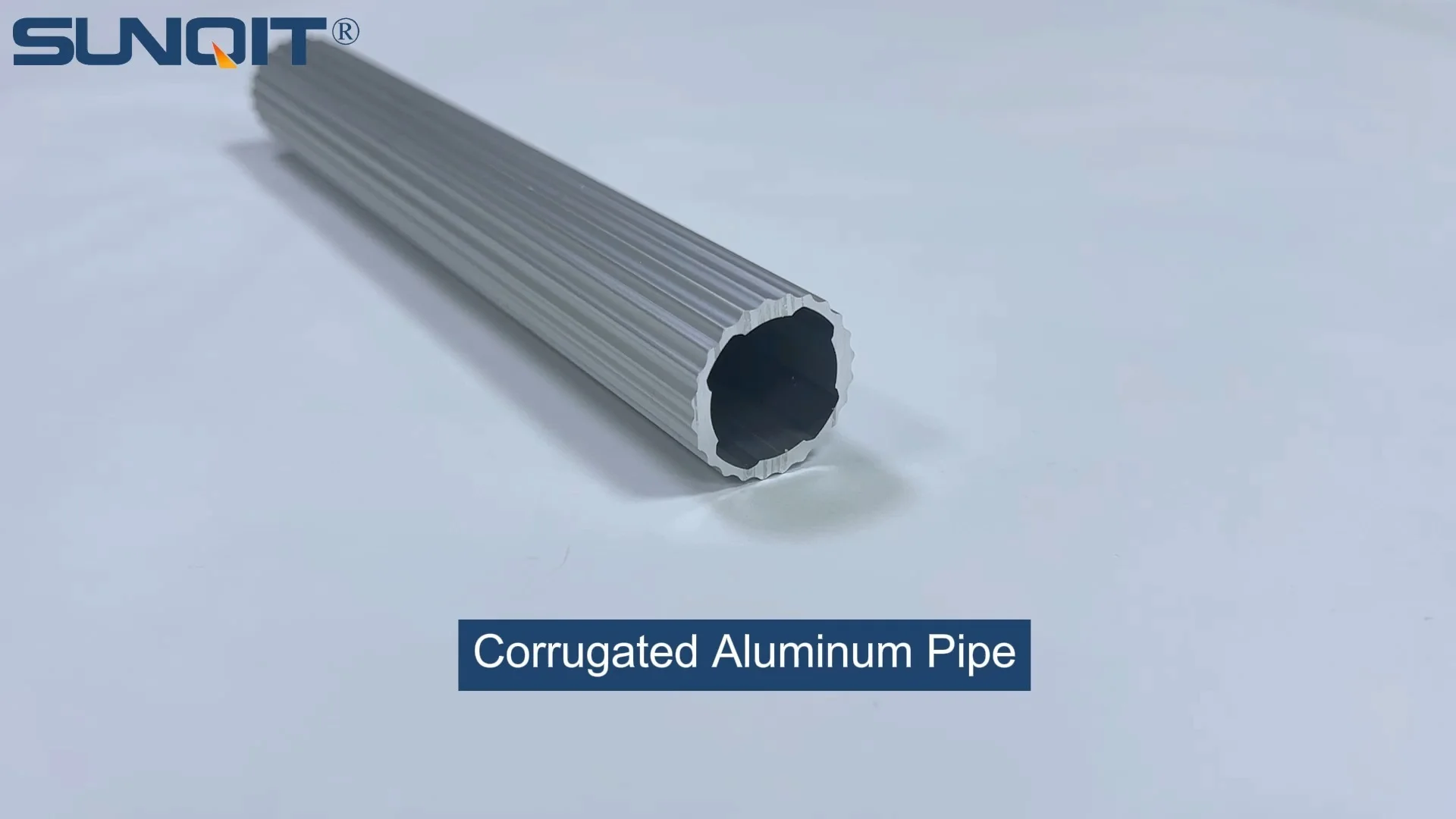
Product Description The slot side is 10mm which can work with a T sliding block for connection accessories Quick Detail Product name Corrugated Aluminum pipe model GLT28-T-3010A Material Science 6005-T6 thickness 1.7mm surface treatment anodic oxidat
Introduction: The Need for Agility in Modern Manufacturing
In today's fast-paced manufacturing landscape, production lines face a relentless demand: adapt or fall behind. Consumer preferences shift overnight, new product iterations roll out monthly, and global supply chains require constant fine-tuning. For factory managers and operations teams, the ability to reconfigure workflows, adjust material flow, and scale processes quickly isn't just a luxury—it's a survival skill. This is where flexibility becomes the cornerstone of efficiency, and surprisingly, one often-overlooked component is quietly revolutionizing how production lines adapt: the corrugated aluminum pipe.
Traditional production setups, built with rigid steel pipes or heavy wooden structures, were designed for stability but not change. Reconfiguring a workbench or adjusting a roller track to accommodate a new product could take days, involving welding, heavy lifting, and costly downtime. But corrugated aluminum pipe, with its unique blend of strength, lightness, and modularity, is changing that narrative. It's not just a material—it's a tool that empowers teams to build, modify, and optimize production lines on the fly, aligning perfectly with lean system principles that prioritize waste reduction and continuous improvement.
In this article, we'll explore how corrugated aluminum pipe transforms production line flexibility, from its structural advantages to real-world applications. We'll dive into why it's becoming the go-to choice for manufacturers aiming to stay agile, and how it integrates seamlessly with essential components like aluminum profile accessories, workbenches, and roller tracks. By the end, you'll understand why this unassuming component is quietly becoming the backbone of the modern, adaptable factory floor.
What Is Corrugated Aluminum Pipe? Breaking Down the Basics
At first glance, corrugated aluminum pipe might look like any other industrial tubing, but its design is engineered for a specific purpose: balancing strength and flexibility. Let's start with the basics. Corrugated aluminum pipe is exactly what its name suggests: a hollow aluminum tube with a series of parallel ridges (corrugations) running along its length. These ridges aren't just for aesthetics—they're a structural marvel. Unlike smooth-walled pipes, the corrugations distribute stress evenly across the pipe's surface, increasing its load-bearing capacity without adding extra weight. Think of it like the ridges on a cardboard box: they turn a flimsy sheet into a rigid container, but in this case, the material is high-grade aluminum, known for its durability and resistance to corrosion.
Aluminum itself is a key player here. Unlike steel, which is strong but heavy, aluminum offers an impressive strength-to-weight ratio. A corrugated aluminum pipe can support the same loads as a steel pipe but weighs up to 40% less, making it easier to handle during installation and reconfiguration. It's also naturally resistant to rust and corrosion, making it suitable for both indoor factory environments and outdoor storage areas—no need for expensive coatings or treatments. And because aluminum is recyclable, it aligns with the growing push for sustainable manufacturing practices, reducing the environmental footprint of production lines.
But what truly sets corrugated aluminum pipe apart is its modularity. Unlike welded steel structures or glued plastic pipes, corrugated aluminum pipe is designed to connect with a range of aluminum profile accessories—joints, brackets, clamps, and connectors—that snap or bolt into place without specialized tools. This means a single pipe can be part of a workbench one week, a roller track the next, and a material rack after that. It's a chameleon of the factory floor, adapting to whatever role the production line demands.

Key Features That Make Corrugated Aluminum Pipe a Game-Changer
To understand why corrugated aluminum pipe is transforming production flexibility, let's break down its standout features. These aren't just technical specs—they're the reasons factory managers are swapping out old steel pipes for this modern alternative.
1. Flexibility Without Compromise
The corrugated design isn't just about strength; it's about bendability. Unlike rigid steel pipes that crack under pressure or plastic pipes that warp, corrugated aluminum pipe can flex slightly under load, absorbing shocks and vibrations common in busy production lines. This flexibility also makes it easy to shape into curves or angles, allowing for custom configurations that traditional materials can't match. Need a roller track that bends around a corner to save floor space? Corrugated aluminum pipe can handle that without requiring custom-machined parts.
2. Lightning-Fast Assembly and Reconfiguration
Time is money on the factory floor, and corrugated aluminum pipe excels at saving both. Thanks to its compatibility with aluminum profile accessories like quick-connect joints and snap-on brackets, assembling a structure—whether a workbench, a material rack, or a conveyor system—takes a fraction of the time compared to welding or drilling steel. A team of two workers can set up a basic workbench in under an hour, and reconfiguring it to a new layout? Maybe 30 minutes. This speed is a game-changer during product launches or seasonal demand spikes, where every minute of downtime eats into profits.
3. Lightweight but Heavy-Duty
We've touched on aluminum's strength-to-weight ratio, but it's worth emphasizing: a 10-foot length of corrugated aluminum pipe weighs roughly 5 pounds, compared to 12 pounds for a steel pipe of the same diameter. This lightness makes it easy to transport around the factory, adjust by hand (no forklifts needed), and reposition without straining workers. Yet despite its lightness, it's surprisingly tough. Most corrugated aluminum pipes can support loads of up to 500 pounds per linear foot, depending on diameter and wall thickness—more than enough for typical production line needs like holding tools, parts bins, or even small machinery.
4. Compatibility with Lean System Principles
Lean manufacturing is all about eliminating waste—whether it's time, materials, or space. Corrugated aluminum pipe aligns perfectly with this philosophy. Its modular design means you only use what you need; no cutting excess material or storing bulky, unused components. When a production line is reconfigured, old pipes and accessories can be repurposed elsewhere instead of being scrapped, reducing waste. And because it's easy to adjust, it supports "just-in-time" workflows, where material racks and roller tracks are positioned exactly where workers need them, minimizing movement and maximizing efficiency. It's lean system-friendly by design.
How Corrugated Aluminum Pipe Boosts Production Line Flexibility: Real-World Scenarios
Theory is one thing, but seeing corrugated aluminum pipe in action is where its impact becomes clear. Let's walk through three common scenarios where it transforms production line adaptability, saving time, money, and headaches.
Scenario 1: Switching Between Product Sizes on an Electronics Assembly Line
Imagine an electronics manufacturer that produces both small smartwatches and larger tablets. Their assembly line uses a series of workbenches with roller tracks to move components from station to station. When switching from watches to tablets, the roller tracks need to widen by 6 inches to accommodate the larger cases, and the workbench shelves need to be adjusted to hold bigger parts bins. With traditional steel roller tracks, this would involve unbolting heavy sections, cutting new tracks to size, and welding them in place—taking 8–10 hours and requiring a maintenance crew. With corrugated aluminum pipe, the process is entirely different.
The team starts by releasing the aluminum profile accessories that hold the roller track in place—simple levers or thumb screws. They slide the corrugated aluminum pipes apart, add two 6-inch extension pipes (stored nearby), and reattach the roller track using new brackets. The workbench shelves, built with the same corrugated pipe, are adjusted by loosening joint connectors, sliding the vertical pipes up by 4 inches, and tightening them again. Total time? 45 minutes. No welding, no heavy lifting, no downtime stretching into the next shift. The line is back up and running, ready for tablet production, before lunch.
Scenario 2: Adapting a Material Rack for Seasonal Demand
A clothing manufacturer experiences a 300% spike in demand for winter coats every October. Their existing material rack, built with wooden shelves and steel supports, can only hold 50 coats per shelf. To keep up, they need to double the rack's capacity—but wooden shelves warp under the weight, and steel supports are too heavy to add more levels. Enter corrugated aluminum pipe. The team disassembles the old rack (recycling the wood and steel) and builds a new one using corrugated aluminum pipes and aluminum profile accessories like multi-angle joints and heavy-duty brackets. The new rack has 6 levels instead of 3, with each shelf supported by corrugated pipes that distribute weight evenly. Best of all, when winter ends and demand drops, they can remove 3 levels, fold the pipes flat, and store them until next year. No need for a separate "seasonal" rack taking up space in the warehouse.
Scenario 3: Creating a Mobile Workstation for Maintenance Teams
Maintenance crews in large factories often waste time moving tools and parts between repair sites. A stationary workbench in the maintenance shop means technicians have to carry heavy equipment across the floor, losing valuable minutes. With corrugated aluminum pipe, the solution is simple: a mobile workstation. The team builds a lightweight frame using corrugated aluminum pipes, adds a plywood top (secured with pipe clamps), and attaches caster wheels (via aluminum profile accessories) for mobility. The workstation has shelves for tools, hooks for cables, and a small roller track for holding replacement parts. It weighs less than 70 pounds, so one technician can push it anywhere on the factory floor. When not in use, it folds flat against the wall, saving space. It's a custom solution built in a day, at a fraction of the cost of a commercial mobile workbench.
Corrugated Aluminum Pipe vs. Traditional Materials: A Comparison
Still skeptical? Let's put corrugated aluminum pipe head-to-head with two common alternatives: steel pipe and plastic pipe. The table below breaks down how they stack up on key factors that matter most for production line flexibility.
| Factor | Corrugated Aluminum Pipe | Steel Pipe | Plastic Pipe (PVC/ABS) |
|---|---|---|---|
| Weight (per 10ft length) | 5–7 lbs | 12–15 lbs | 3–4 lbs |
| Load Capacity (per linear ft) | 400–500 lbs | 600–700 lbs | 150–200 lbs |
| Assembly Time (basic structure) | 30–60 minutes | 4–6 hours (welding required) | 1–2 hours (glue/drying time) |
| Reconfigurability | High (tool-free adjustments with aluminum profile accessories) | Low (requires cutting/welding to modify) | Medium (can be disassembled but glue weakens over time) |
| Corrosion Resistance | High (naturally rust-resistant) | Low (needs coating; rusts in humid environments) | High (resistant to moisture, but UV-sensitive) |
| Cost (initial investment) | Moderate ($20–$30 per 10ft pipe) | High ($35–$45 per 10ft pipe + welding costs) | Low ($10–$15 per 10ft pipe) |
| Long-Term Value | High (reusable, recyclable, low maintenance) | Medium (durable but hard to repurpose) | Low (prone to cracking, UV damage; not reusable) |
As the table shows, steel pipe offers higher load capacity, but at the cost of weight, assembly time, and reconfigurability—making it overkill for most production line needs. Plastic pipe is lightweight and cheap, but it lacks the strength to support heavy loads and becomes brittle over time, especially in factories with temperature fluctuations. Corrugated aluminum pipe strikes the perfect balance: strong enough for daily use, light enough to handle easily, and flexible enough to adapt to change—all at a reasonable cost.
Choosing the Right Corrugated Aluminum Pipe and Accessories
Not all corrugated aluminum pipes are created equal, and selecting the right one for your production line depends on a few key factors. Here's what to consider:
1. Load Requirements
Start by calculating the maximum weight the pipe will need to support. If you're building a workbench for small tools, a 1-inch diameter pipe with 0.8mm wall thickness will suffice. For heavier applications like material racks or roller tracks carrying metal parts, opt for a 1.5-inch diameter pipe with 1.2mm walls. Most suppliers provide load charts, so don't guess—consult the specs.
2. Environment
Will the pipe be used indoors, outdoors, or in a humid area (like a food processing plant)? Standard corrugated aluminum pipe works for most indoor settings, but if moisture or chemicals are present, look for anodized aluminum (a protective oxide layer) or add plastic coating. For outdoor use, ensure the aluminum profile accessories are also weather-resistant—stainless steel joints, for example, to prevent rust.
3. Compatibility with Existing Systems
If you're integrating corrugated aluminum pipe into an existing lean system or production line, check that the aluminum profile accessories (joints, brackets, clamps) are compatible with your current equipment. Most manufacturers follow standard sizing (e.g., 20mm, 30mm, 40mm pipe diameters), but double-checking avoids costly mismatches.
4. Future Flexibility Needs
Think ahead: Will you need to expand or reconfigure the structure in 6 months? If so, choose pipes with extra length (stored on-site) and invest in a variety of aluminum profile accessories—swivel joints, adjustable brackets, extension pipes—to keep options open. It's cheaper to buy extra accessories now than to redesign the entire system later.
The Future of Production Flexibility: Corrugated Aluminum Pipe and Industry 4.0
As factories move toward Industry 4.0—smart, connected systems that use data to optimize workflows—corrugated aluminum pipe is poised to play an even bigger role. Its modularity aligns with the "plug-and-play" nature of smart manufacturing, where sensors, robots, and IoT devices need to be repositioned as data reveals inefficiencies. For example, a smart roller track, equipped with sensors to monitor material flow, can be easily moved using corrugated aluminum pipe to a new location where bottlenecks are detected—no rewiring or structural overhauls required.
Sustainability is another growing trend, and aluminum's recyclability makes corrugated pipe a green choice. Unlike plastic, which often ends up in landfills, or steel, which requires energy-intensive recycling, aluminum can be melted down and reused repeatedly without losing quality. Factories aiming for net-zero carbon footprints are increasingly choosing aluminum-based systems, and corrugated pipe fits neatly into this eco-friendly vision.
Perhaps most exciting is the potential for corrugated aluminum pipe to support "micro-factories"—smaller, localized production lines that can pivot quickly to meet regional demand. These tiny, agile facilities rely on lightweight, adaptable equipment, and corrugated aluminum pipe is the ideal building block. A micro-factory producing custom phone cases, for example, could reconfigure its entire assembly line overnight using corrugated pipe, switching from plastic to metal cases without missing a beat.
Conclusion: Flexibility Isn't Optional—It's Everything
In a world where change is the only constant, production lines can't afford to be static. Corrugated aluminum pipe isn't just a material upgrade—it's a mindset shift. It empowers teams to stop seeing their factory floors as fixed structures and start seeing them as dynamic, evolving spaces that can adapt to whatever the market throws their way. From adjusting a roller track in minutes to building a custom workbench in an hour, it turns flexibility from a buzzword into a daily reality.
Its success lies in simplicity: strong enough to support heavy loads, light enough to move by hand, modular enough to reconfigure on a whim, and compatible with the aluminum profile accessories that make lean system principles actionable. Whether you're a small manufacturer or a global enterprise, corrugated aluminum pipe offers a path to agility that's affordable, sustainable, and surprisingly easy to implement.
So the next time you walk through a factory, take a closer look at the structures holding up the line. Chances are, if they're light, modular, and ready to change, they're built with corrugated aluminum pipe. And in the race to stay ahead, that's the difference between keeping up and leading the pack.