- Company Articles
- Products and Technology
- Solution
- How Corrugated Aluminum Pipe Supports Lean Manufacturing Principles

How Corrugated Aluminum Pipe Supports Lean Manufacturing Principles
Related Product
Corrugated Aluminum Pipe
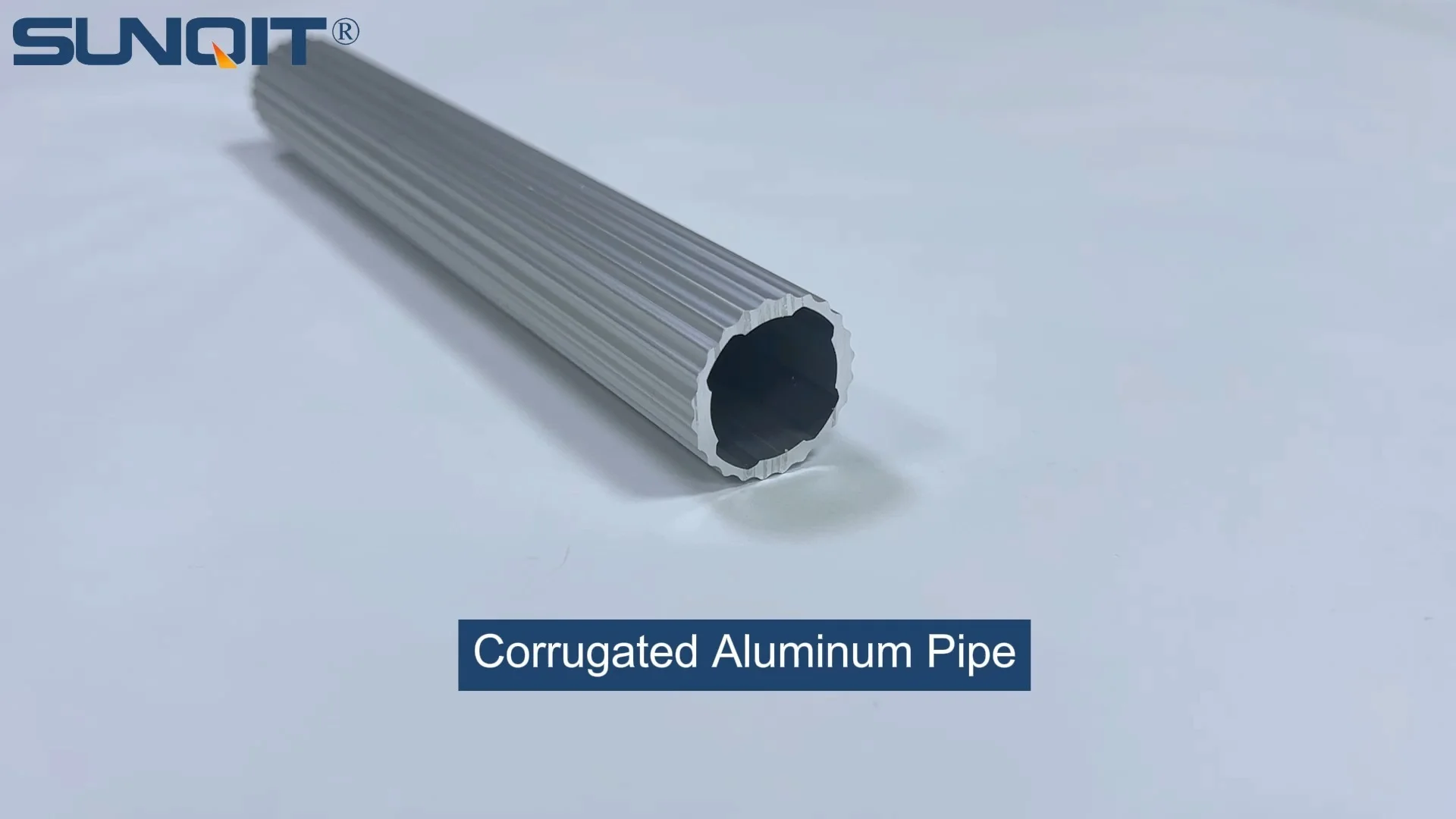
Product Description The slot side is 10mm which can work with a T sliding block for connection accessories Quick Detail Product name Corrugated Aluminum pipe model GLT28-T-3010A Material Science 6005-T6 thickness 1.7mm surface treatment anodic oxidat
The unsung hero behind flexible, efficient, and waste-free production lines
Introduction: The Heartbeat of Lean Manufacturing
Walk into any modern manufacturing facility, and you'll likely hear the term "lean" thrown around. But what does it really mean? At its core, lean manufacturing is about more than just cutting costs—it's a philosophy that prioritizes eliminating waste , streamlining processes , and empowering teams to work smarter, not harder. It's about creating systems that adapt, evolve, and grow with your business, rather than weighing it down with rigidity and inefficiency.
For plant managers, production supervisors, and operations teams, the challenge often lies in finding tools that don't just talk the talk but walk the walk. You need solutions that can keep up with shifting demand, reduce downtime, and make every square foot of your facility count. That's where corrugated aluminum pipe comes in—a humble yet powerful component that's quietly revolutionizing how lean systems are built and maintained.
In this article, we'll explore how corrugated aluminum pipe aligns with the fundamental principles of lean manufacturing. From reducing waste to enhancing workflow, we'll break down why this material has become a go-to choice for businesses looking to build truly agile production lines. We'll also touch on its compatibility with key components like aluminum extrusion profile, flow racks, and workbenches—proving that sometimes, the smallest parts make the biggest difference in a lean system.
What Is Corrugated Aluminum Pipe, Anyway?
Before diving into its role in lean, let's get to know the star of the show: corrugated aluminum pipe. At first glance, it might look like just another metal tube, but its design holds the key to its versatility. Unlike smooth-walled pipes, corrugated aluminum pipe features a series of ridges (or "corrugations") along its length. These ridges aren't just for show—they dramatically boost the pipe's strength without adding unnecessary weight, creating an impressive strength-to-weight ratio that's hard to match with traditional materials like steel or plastic.
Made from high-grade aluminum, this pipe is lightweight, corrosion-resistant, and built to last. But what really sets it apart is its modularity . Corrugated aluminum pipe is designed to work seamlessly with aluminum extrusion profile and a wide range of accessories—think joints, connectors, and brackets—that let you assemble, disassemble, and reconfigure structures in minutes, not days. No welding, no heavy machinery, no downtime. Just a system that bends to your needs, whether you're setting up a new workbench, retooling a flow rack, or adjusting a conveyor line.
Imagine, for a moment, a production line that can be rearranged in hours to accommodate a rush order, or a workbench that grows with your team as you hire more operators. That's the flexibility corrugated aluminum pipe brings to the table—and flexibility, as any lean practitioner will tell you, is the cornerstone of efficiency.

Aligning with Lean Principles: How Corrugated Aluminum Pipe Delivers
Lean manufacturing is built on five core principles: eliminate waste , create flow , build quality , pull production , and continuous improvement . Let's break down how corrugated aluminum pipe supports each one, turning abstract ideas into tangible results.
1. Eliminate Waste: Doing More with Less
Waste comes in many forms—excess inventory, unused space, time spent on unnecessary tasks, and even materials that end up in the scrap heap. Corrugated aluminum pipe attacks waste from multiple angles, starting with its material efficiency.
Aluminum itself is a sustainable choice; it's 100% recyclable, and the corrugated design means you get maximum strength with minimal material. Unlike heavy steel pipes, which require more raw material to achieve the same rigidity, corrugated aluminum pipe lets you build sturdy structures without overbuilding. This not only reduces material costs but also cuts down on waste during production and disposal.
Then there's the waste of time . Traditional production setups often require custom fabrication—welding steel frames, cutting pipes to fixed lengths, or waiting for specialized tools. With corrugated aluminum pipe, assembly is as simple as sliding on a joint or clamping on a bracket. No welding, no cutting, no waiting. A team of two can assemble a full workbench or flow rack in under an hour, compared to half a day with steel. That's time saved that can be redirected to more critical tasks, like training employees or optimizing workflows.
Space waste is another target. Corrugated aluminum pipe's lightweight design means structures can be built taller, narrower, or more compact without sacrificing stability. For example, a material rack built with corrugated aluminum pipe can hold the same weight as a steel rack but with a smaller footprint, freeing up floor space for additional production lines or storage. In a lean system, every inch counts—and corrugated aluminum pipe helps you make the most of it.
2. Create Flow: Keeping Production Moving
Flow is the lifeblood of lean manufacturing. When materials, parts, and products move smoothly from one step to the next, bottlenecks disappear, and productivity soars. Corrugated aluminum pipe excels here, especially when paired with components like flow racks and conveyors.
Take flow racks, for example. These are essential for "first in, first out" (FIFO) inventory management, ensuring that older stock is used before newer stock, reducing waste from expired or obsolete parts. Corrugated aluminum pipe's modularity lets you design flow racks that fit your exact needs—adjusting shelf heights, adding dividers, or even integrating roller tracks for easy part movement. Unlike fixed steel racks, which lock you into a single configuration, these racks can evolve as your product mix changes. Need to accommodate larger parts? Swap out a few pipes and joints, and you're done.
Conveyors are another area where corrugated aluminum pipe shines. Its lightweight nature makes it ideal for building flexible conveyor systems that can be extended, shortened, or re-routed with minimal effort. Whether you're moving small electronics components or larger automotive parts, corrugated aluminum pipe provides a stable, durable framework that integrates seamlessly with rollers, belts, and guides. The result? A production line where materials glide from station to station, reducing the need for manual handling and cutting down on delays.
One plant manager I spoke with recently put it this way: "Before corrugated aluminum pipe, our conveyor lines were like concrete—fixed in place, no room for change. Now, if a new product comes in that requires a different path, we can reconfigure the conveyor in a morning. The flow never stops, and neither do we."
3. Build Quality: Durability That Prevents Defects
Quality isn't just about the end product—it's about the tools and systems you use to create it. A wobbly workbench, a sagging flow rack, or a misaligned conveyor can all lead to errors, rework, and wasted materials. Corrugated aluminum pipe is built to prevent these issues, thanks to its inherent strength and precision.
The corrugated design isn't just for show—it's engineered to distribute weight evenly, reducing flex and vibration. This stability is critical for tasks that require precision, like assembly work or quality inspection. A workbench built with corrugated aluminum pipe won't wobble mid-assembly, ensuring that parts are fitted correctly the first time, every time. Fewer defects mean less rework, lower costs, and happier customers.
Aluminum's resistance to corrosion is another quality win. In environments where moisture, chemicals, or humidity are present (like food processing or electronics manufacturing), steel racks can rust, leading to contamination or weakened structures. Corrugated aluminum pipe stands up to these conditions, maintaining its integrity over time. This durability means fewer replacements, less downtime for repairs, and a production line that you can count on—even in tough conditions.
4. Pull Production: Making What's Needed, When It's Needed
Pull production is all about responding to customer demand, not pushing out products based on forecasts. It's about building only what's needed, when it's needed, to avoid overstocking and excess inventory. For this to work, your production line must be able to pivot quickly—scaling up for a sudden rush or scaling down for a lull.
Corrugated aluminum pipe is the ultimate enabler of this flexibility. Let's say you run a contract manufacturing facility, and a client suddenly increases their order by 50%. With traditional steel workbenches, you'd need to order new custom-built stations, wait for delivery, and spend days setting them up. With corrugated aluminum pipe, you can repurpose existing structures—adding shelves to a flow rack, extending a conveyor, or assembling new workbenches from spare parts in your inventory. The same goes for a slow period: disassemble unused stations and store the pipes and joints compactly until they're needed again. No wasted space, no wasted money on idle equipment.
Even better, corrugated aluminum pipe works seamlessly with aluminum extrusion profile accessories, like adjustable shelves, tool holders, and bins. This means each workstation can be customized to the specific task at hand—whether you're assembling small circuit boards or large machinery. Operators have exactly what they need, right where they need it, reducing the time spent searching for tools or adjusting to ill-fitting setups. When production is pulled by demand, this level of adaptability isn't just nice to have—it's essential.
5. Continuous Improvement: Evolving with Your Process
Lean isn't a one-and-done project; it's a never-ending journey of improvement. Your production line today might not be the same as it is six months from now, as you find new ways to optimize, train your team, or adopt new technologies. Corrugated aluminum pipe grows with you, making continuous improvement not just possible, but easy.
Consider a scenario where your team identifies a bottleneck in the assembly process. Maybe parts are piling up at a certain station because the conveyor is too slow, or the workbench is too low for comfortable access. With traditional setups, fixing this might require a complete overhaul. With corrugated aluminum pipe, you can tweak the system incrementally: raise the workbench by swapping out shorter pipes for longer ones, add a steeper incline to the flow rack to speed up part delivery, or install a new roller track to redirect materials. These changes can be tested, adjusted, and refined in a matter of hours, not weeks.
Employees also play a key role in continuous improvement—they're the ones on the front lines, noticing inefficiencies that managers might miss. Corrugated aluminum pipe empowers teams to take ownership of their workspaces. If an operator suggests repositioning a tool holder for better ergonomics, they can make that change themselves, without waiting for maintenance or engineering. This sense of ownership fosters a culture of improvement, where everyone feels invested in making the line better. After all, lean is about people as much as it is about processes—and corrugated aluminum pipe puts the power to improve in their hands.
Corrugated Aluminum Pipe vs. Traditional Materials: A Lean Comparison
To truly appreciate the impact of corrugated aluminum pipe, it helps to see how it stacks up against traditional materials like steel, plastic, and smooth aluminum pipes. The table below breaks down the key differences, focusing on the lean principles we've discussed.
| Feature | Corrugated Aluminum Pipe | Steel Pipe | Plastic Pipe | Smooth Aluminum Pipe |
|---|---|---|---|---|
| Weight | Lightweight (1/3 the weight of steel) | Heavy (requires more labor to move/assemble) | Light, but less rigid | Light, but less strong than corrugated |
| Assembly Time | Fast (no welding; tool-free joints) | Slow (requires welding, cutting, specialized tools) | Moderate (limited joint options; less durable connections) | Moderate (smooth surface can slip in joints; less stability) |
| Durability | High (corrugations add strength; corrosion-resistant) | High, but prone to rust; heavy weight causes fatigue in structures | Low (prone to cracking, warping under heat/weight) | Moderate (smooth design lacks corrugation strength; dents easily) |
| Flexibility/Reusability | High (easily disassembled, reconfigured, or repurposed) | Low (fixed welds make reconfiguration nearly impossible) | Moderate (can be disassembled, but joints weaken with reuse) | Moderate (can be reconfigured, but less stable in custom setups) |
| Waste Reduction | High (recyclable; modular design reduces overbuilding) | Low (excess material; hard to recycle; fixed setups waste space) | Low (non-recyclable in many cases; short lifespan leads to frequent replacement) | Moderate (recyclable, but less efficient in material use than corrugated) |
As the table shows, corrugated aluminum pipe outperforms traditional materials across the board when it comes to lean principles. It's lighter, faster to assemble, more durable, and infinitely more flexible—all qualities that translate to a leaner, more efficient operation.
Real-World Impact: How Businesses Are Using Corrugated Aluminum Pipe
Numbers and features tell part of the story, but real-world examples bring it to life. Let's look at how two different businesses leveraged corrugated aluminum pipe to transform their lean systems.
Case Study 1: Automotive Parts Manufacturer
A mid-sized automotive parts manufacturer was struggling with frequent changeovers between product lines. Their steel workbenches and flow racks were fixed in place, meaning each new part required a custom-built station—costing time and money. After switching to corrugated aluminum pipe, they saw immediate results:
- Changeover time reduced by 40%: A team could reconfigure a workbench for a new part in 30 minutes, down from 2 hours with steel.
- Space savings of 25%: Modular flow racks built with corrugated aluminum pipe allowed them to stack materials vertically, freeing up 1,200 square feet of floor space for a new assembly line.
- Scrap reduction of 15%: Stable, precise workbenches reduced errors in part fitting, cutting down on defective products.
"We used to dread new product launches because of the setup time," said the plant manager. "Now, we look forward to them—corrugated aluminum pipe makes us feel ready for anything. That's the lean mindset we've been chasing."
Case Study 2: Electronics Assembly Plant
An electronics plant specializing in consumer devices faced challenges with ESD (electrostatic discharge) protection and frequent product updates. Their steel workbenches were prone to rust, and static buildup damaged sensitive components. Switching to corrugated aluminum pipe with ESD-safe joints and accessories solved both issues:
- ESD incidents dropped by 90%: Aluminum's conductive properties, paired with ESD-safe wheels and brackets, dissipated static electricity, protecting components.
- Product update lead time cut by 35%: Modular workstations could be adjusted for new device sizes in hours, not days.
- Maintenance costs reduced by 20%: Corrosion-resistant aluminum eliminated the need for regular repainting or rust treatment.
"Our customers expect new models every 6 months, and we need to keep up," noted the production supervisor. "Corrugated aluminum pipe isn't just a tool—it's our secret weapon for staying agile."
Choosing the Right Partner: Why Your Supplier Matters
Of course, the benefits of corrugated aluminum pipe depend on working with a supplier who understands both the material and the principles of lean manufacturing. A good supplier won't just sell you pipes and joints—they'll collaborate with you to design systems that fit your specific needs, from custom workbenches to integrated flow rack and conveyor setups.
Look for a supplier that offers a wide range of accessories, including aluminum extrusion profile, ESD-safe components, and compatible joints and brackets. They should also provide technical support, helping you troubleshoot designs or optimize setups for maximum efficiency. A supplier who's invested in your success will go the extra mile to ensure you're getting the most out of your corrugated aluminum pipe—whether that means providing training for your team or helping you source hard-to-find accessories.
Remember, lean manufacturing is a journey, not a destination. Your supplier should be a partner on that journey, evolving with your business and helping you find new ways to eliminate waste, create flow, and improve every day.
Conclusion: Building a Lean Future, One Pipe at a Time
Corrugated aluminum pipe may not be the flashiest technology in your manufacturing facility, but it's one of the most impactful. It's a tool that turns the abstract principles of lean manufacturing into concrete action—eliminating waste, creating flow, building quality, enabling pull production, and fostering continuous improvement. It's lightweight but strong, simple but versatile, and sustainable but cost-effective.
For businesses looking to stay competitive in a fast-paced world, the message is clear: lean isn't just about processes—it's about the tools you choose to bring those processes to life. Corrugated aluminum pipe isn't just a pipe; it's a foundation for a leaner, more efficient, and more adaptable future.
So the next time you walk through your facility, take a look at your workbenches, flow racks, and conveyors. Are they holding you back, or propelling you forward? If it's the former, maybe it's time to consider the humble corrugated aluminum pipe. Your team, your bottom line, and your lean journey will thank you.