- Company Articles
- Products and Technology
- Product knowledge
- How Do Aluminum Pipe Adjustable Leveling Feet Improve Workbench Stability?

How Do Aluminum Pipe Adjustable Leveling Feet Improve Workbench Stability?
Related Product
Aluminum Pipe Adjustable Leveling Feet
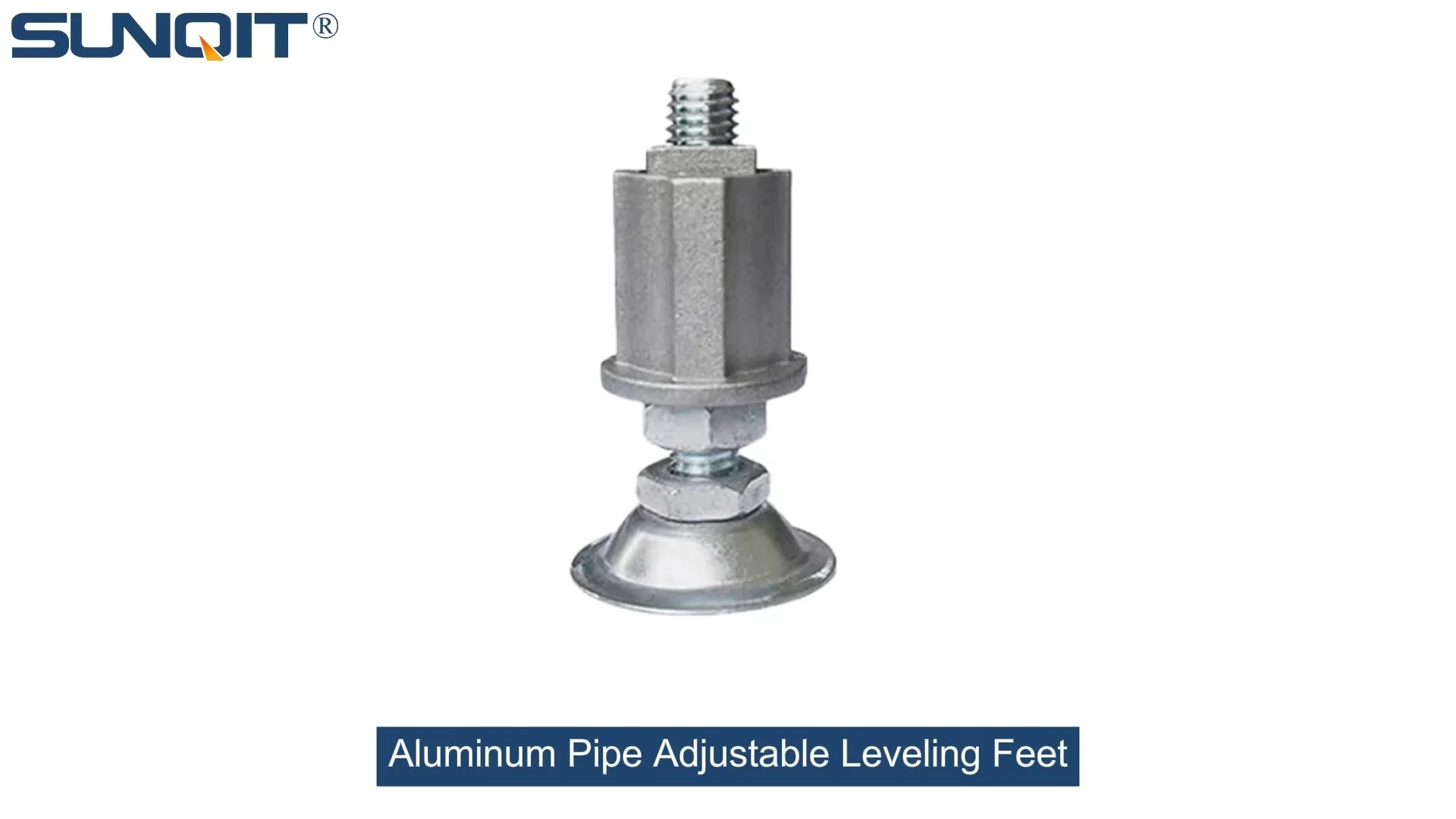
Aluminum Pipe Adjustable Leveling Feet are designed to keep machines level when placed on uneven or sloped ground. Otherwise known as adjustable equipment feet, they are available to order in a wide variety of size and load capacity combinations.
Introduction: The Hidden Cost of an Unstable Workbench
Walk into any workshop, manufacturing plant, or laboratory, and you'll likely find a workbench at the heart of the action. It's where tools are organized, parts are assembled, experiments are conducted, and ideas take physical form. But what happens when that workbench isn't stable? A slight wobble might seem harmless at first, but over time, it can snowball into bigger issues: tools slide off, precision tasks become frustratingly difficult, and worst of all, workers might develop fatigue or even injuries from compensating for an uneven surface. In high-stakes environments like assembly lines or research labs, instability isn't just an annoyance—it's a productivity killer and a safety risk.
Most workbench stability problems boil down to one common culprit: uneven floors. Few spaces have perfectly level ground, especially in older facilities or industrial settings where heavy machinery has worn down surfaces over time. Even new buildings can have subtle slopes or dips that throw a workbench off-kilter. Traditional fixed feet might work on ideal floors, but they're useless when the ground isn't cooperating. That's where adjustable solutions come in—and among them, aluminum pipe adjustable leveling feet stand out as a game-changer. Designed to pair seamlessly with aluminum profile workbenches (a staple in lean manufacturing and modular setups), these small but mighty components offer a blend of adjustability, durability, and compatibility that transforms wobbly workbenches into rock-solid workstations.
In this article, we'll dive deep into how aluminum pipe adjustable leveling feet work, why they're superior to other leveling solutions, and how they can elevate the stability of your workbench—whether you're running a busy production line, managing a workshop, or setting up a precision lab. By the end, you'll understand why these unassuming accessories are more than just "feet"—they're the foundation of a more efficient, safer, and frustration-free workspace.
What Are Aluminum Pipe Adjustable Leveling Feet?
Before we explore how they improve stability, let's start with the basics: what exactly are aluminum pipe adjustable leveling feet? At first glance, they might look like simple threaded components, but their design is surprisingly thoughtful, tailored to the unique needs of aluminum pipe workbenches and modular systems.
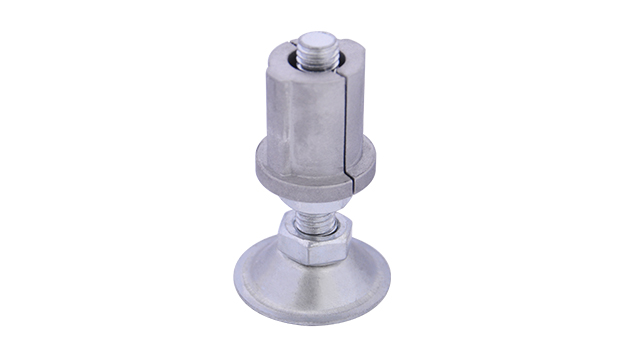
These feet are essentially adjustable supports that attach to the bottom of a workbench's frame—typically made from aluminum pipes or profiles. They consist of three main parts: a threaded stem, a base, and an adjustment mechanism. The threaded stem screws into a mounting point on the workbench leg (often an aluminum pipe or profile), while the base sits on the floor. The magic lies in the threads: by twisting the stem, you can raise or lower the foot, fine-tuning the height of each corner of the workbench independently. This adjustability is key to counteracting uneven floors.
But what makes them "aluminum pipe" specific? Unlike generic leveling feet, these are engineered to work with the modular nature of aluminum profile systems. Aluminum profiles, with their T-slot designs, allow for easy attachment of accessories—and aluminum pipe adjustable leveling feet are no exception. They often come with mounting brackets or threads that align perfectly with standard aluminum pipe sizes, ensuring a secure, rattle-free fit. Many also feature a rubber or non-slip base, which adds grip to prevent the workbench from sliding, even on smooth floors.
Materials matter too. The stem is usually made from aluminum (lightweight and corrosion-resistant) or steel (for heavier loads), while the base might be rubber, plastic, or metal. The choice of material depends on the environment: for example, a rubber base is ideal for dampening vibrations, while a stainless steel base might be preferred in wet or corrosive settings. But aluminum remains the star here, thanks to its unique combination of strength, lightness, and resistance to rust—qualities that make aluminum pipe adjustable leveling feet a durable choice for long-term use.
In short, these feet are more than just "levelers." They're a bridge between your workbench and the imperfect world of real floors, designed to adapt, support, and stabilize in ways fixed feet never could.
How Do They Improve Stability? The Science of Adjustability
Now, let's get to the core question: how exactly do aluminum pipe adjustable leveling feet turn a wobbly workbench into a stable one? It all comes down to three key mechanisms: micro-adjustment for uneven floors, load distribution, and vibration dampening. Let's break each down.
1. Micro-Adjustment: Taming Uneven Floors
Imagine your workbench has four legs, each with a fixed foot. If the floor dips by just 1/8 of an inch under one leg, that leg will hang in the air, leaving the workbench to rock back and forth on the other three. With aluminum pipe adjustable leveling feet, you can twist the stem of the "short" leg to extend it by that 1/8 inch, ensuring all four feet make solid contact with the floor. This micro-adjustment—often down to fractions of a millimeter—lets you compensate for even the most subtle floor irregularities.
But it's not just about making contact. By adjusting each foot independently, you can dial in the workbench to be perfectly level, even if the floor slopes in multiple directions. A level workbench isn't just more stable; it's also safer. Tools stay put, liquids don't spill, and workers don't have to hunch or strain to keep their work steady. In precision tasks like electronics assembly or lab work, levelness is critical—even a tiny tilt can throw off measurements or lead to faulty products. Aluminum pipe adjustable leveling feet put that control directly in your hands.
2. Load Distribution: Spreading Weight Evenly
Stability isn't just about not wobbling—it's about supporting heavy loads without sagging or shifting. A workbench might hold hundreds of pounds of tools, materials, or equipment, and if that weight isn't distributed evenly, stress can on one leg, leading to bending, cracking, or even collapse over time. Aluminum pipe adjustable leveling feet help spread the load across all legs by ensuring each foot bears its fair share of the weight.
Here's how: when a workbench is uneven, most of the weight rests on the legs that are touching the floor, while the "floating" legs do nothing. By adjusting all feet to make contact, the weight is distributed equally across the frame. This even distribution reduces stress on individual legs and the overall structure, extending the life of the workbench. It also prevents the frame from warping, which can happen when one side is consistently under more pressure than the others. For aluminum profile workbenches, which are prized for their modularity and lightweight strength, proper load distribution is especially important to maintain their structural integrity.
3. Vibration Dampening: Quieting the Shake
Even a level workbench can vibrate, especially in busy environments with nearby machinery or foot traffic. Over time, these vibrations can loosen fasteners, damage sensitive equipment, or make precision work difficult. Many aluminum pipe adjustable leveling feet address this with their base materials. Rubber or elastomeric bases act as shock absorbers, dampening vibrations before they reach the workbench. Unlike hard plastic or metal bases, which can transmit vibrations like a drum, rubber bases absorb and dissipate energy, keeping the work surface steady.
For example, in a manufacturing setting where a conveyor runs nearby, the constant hum and shake can travel through the floor and into the workbench. With rubber-based leveling feet, that vibration is muffled, making it easier for workers to focus and reducing wear on the workbench itself. It's a small detail, but it adds up to a more comfortable and durable workspace.

Why Aluminum Pipe Adjustable Leveling Feet Stand Out: Comparing Solutions
Adjustable leveling feet aren't new, but aluminum pipe-specific models offer advantages that generic or alternative solutions can't match. Let's compare them to common alternatives to see why they're the top choice for aluminum profile workbenches.
| Feature | Aluminum Pipe Adjustable Leveling Feet | Fixed Plastic Feet | Steel Threaded Feet | Rubber Pads (Non-Adjustable) |
|---|---|---|---|---|
| Adjustability | High (fine-tuned height adjustment) | None (fixed height) | High (but heavier and less corrosion-resistant) | None (fixed thickness) |
| Compatibility with Aluminum Profiles | Designed for T-slot systems; easy mounting | May require adapters; not always secure | Can work, but bulkier and may not fit T-slots | Adhesive-based; no structural mounting |
| Weight | Lightweight (aluminum stem) | Light, but flimsy | Heavy (adds unnecessary weight to workbench) | Very light, but no structural support |
| Corrosion Resistance | High (aluminum resists rust) | High, but prone to cracking | Low (steel rusts without coating) | High, but degrades over time |
| Vibration Dampening | Good (often with rubber base) | Poor (hard plastic transmits vibration) | Poor (metal base transmits vibration) | Good, but no adjustability |
As the table shows, aluminum pipe adjustable leveling feet excel in adjustability, compatibility, and durability—three traits that make them ideal for aluminum profile workbenches. Let's dig deeper into a few key advantages:
Lightweight Strength
Aluminum is famous for its strength-to-weight ratio, and that's a huge plus here. Steel leveling feet might be strong, but they add unnecessary weight to the workbench, making it harder to move (if needed) and putting more stress on the floor. Aluminum feet, on the other hand, are lightweight but still strong enough to support heavy loads. This is especially important for modular workbenches, which are often reconfigured or moved as production needs change. You don't want to struggle with a heavy bench just to adjust its position.
Corrosion Resistance
Workshops and manufacturing plants aren't always clean, dry environments. Spills, humidity, and chemicals can take a toll on metal components. Steel feet rust, plastic feet crack, but aluminum resists corrosion naturally. Even if a foot gets wet or exposed to mild chemicals, it won't degrade quickly. For outdoor workshops or facilities with high moisture (like food processing plants), this resistance is a lifesaver, ensuring the feet last for years without needing replacement.
Seamless Integration with Lean Systems
Many modern workbenches are built using lean manufacturing principles, which emphasize modularity, flexibility, and efficiency. Aluminum profiles are a cornerstone of lean systems, as they can be easily assembled, disassembled, and reconfigured. Aluminum pipe adjustable leveling feet fit right into this ethos. They attach quickly to T-slot profiles, require no special tools, and can be adjusted on the fly as the workbench is moved or repurposed. This modularity means you're not stuck with a permanent setup—you can adapt your workbench to new tasks without buying entirely new equipment.
Aesthetic Appeal
Okay, this might seem trivial, but appearance matters in professional settings. Aluminum has a clean, modern look that complements aluminum profile workbenches, creating a cohesive, professional setup. Steel feet can look industrial and clunky, while plastic feet often feel cheap. If your workspace is visible to clients or visitors, aluminum feet help maintain a polished, put-together appearance.

Types of Aluminum Pipe Adjustable Leveling Feet: Finding the Right Fit
Not all aluminum pipe adjustable leveling feet are created equal. Just like workbenches come in different sizes and styles, these feet are designed to meet specific needs—from light-duty hobby workbenches to heavy-duty industrial setups. Understanding the types available can help you choose the right ones for your workspace.
By Base Material
- Rubber Base: The most common type, rubber bases excel at vibration dampening and grip. They're ideal for indoor workshops, labs, or offices where floors are smooth (like concrete or tile). The rubber prevents slipping and reduces noise from movement or vibration. Look for non-marking rubber if you're worried about scuffing floors.
- Plastic Base: Lighter and often more affordable than rubber, plastic bases are a good choice for light-duty applications. They're resistant to chemicals and easy to clean, making them suitable for environments where spills are common (like garages or hobby workshops). However, they don't dampen vibrations as well as rubber.
- Metal Base: For heavy loads or outdoor use, metal bases (usually stainless steel or aluminum) are the way to go. They're incredibly durable and can withstand rough floors, extreme temperatures, or exposure to water. Metal bases are less common for general use but essential for industrial settings where the workbench holds hundreds of pounds.
By Load Capacity
Load capacity refers to how much weight each foot can support. This is critical—choosing feet with too low a capacity can lead to bending, breaking, or instability. Most manufacturers list load capacity per foot, so be sure to calculate the total weight of your workbench plus its typical load, then divide by the number of legs to find the minimum capacity per foot. For example, a 4-legged workbench that holds 400 pounds total needs feet rated for at least 100 pounds each (though it's smart to add a safety margin).
- Light-Duty: Up to 100 pounds per foot. Suitable for small workbenches, hobby tables, or labs with lightweight equipment.
- Medium-Duty: 100–300 pounds per foot. Ideal for most workshop workbenches, assembly lines, or commercial labs with moderate loads.
- Heavy-Duty: 300+ pounds per foot. Designed for industrial settings, heavy machinery workbenches, or storage areas where the workbench holds tools, materials, and equipment.
By Stem Length
The stem length determines how much you can adjust the height of the workbench. Shorter stems (1–2 inches) are fine for slightly uneven floors, while longer stems (3–6 inches) are better for floors with significant dips or slopes. Some feet even have telescoping stems for extra adjustability. When in doubt, opt for longer stems—you can always screw them in further if you don't need the extra height, but you can't extend a short stem beyond its length.
Specialty Types
- Swivel Feet: These have a ball joint that allows the base to pivot, making them ideal for floors with extreme unevenness or for workbenches that need to be adjusted on slopes. The swivel base ensures the foot always sits flat on the floor, even if the stem is at an angle.
- Locking Feet: Once adjusted, these feet can be locked in place with a nut or set screw, preventing accidental movement. They're great for workbenches that are moved occasionally but need to stay stable during use.
- ESD-Safe Feet: For electronics assembly or labs where static electricity is a risk, ESD (electrostatic discharge) safe feet are made from conductive materials that dissipate static, protecting sensitive components from damage.
Choosing the right type depends on your environment, load, and floor conditions. If you're unsure, consult a lean pipe supplier or aluminum profile supplier—they can help assess your needs and recommend the best feet for your setup.
Installation Guide: How to Install Aluminum Pipe Adjustable Leveling Feet
Installing aluminum pipe adjustable leveling feet is a straightforward process, even if you're not a DIY expert. With a few basic tools and some patience, you can have your workbench level and stable in under an hour. Here's a step-by-step guide:
Tools You'll Need
- Adjustable wrench or hex key (depending on the foot's adjustment mechanism)
- Spirit level (to check for levelness)
- Tape measure (optional, for measuring height adjustments)
- Marker (to mark adjustment positions)
- Rubber mallet (for gently tapping feet into place, if needed)
Step 1: Prepare the Workbench
Start by emptying the workbench of all tools, materials, and equipment. You'll need full access to the legs, and a lighter workbench is easier to adjust. If possible, move the workbench to a flat area of the floor (even if it's temporary) to make installation simpler.
Step 2: Attach the Feet to the Legs
Most aluminum pipe adjustable leveling feet attach to aluminum profiles via T-slot nuts or threaded inserts. Here's how:
- Identify the mounting points on the workbench legs. Aluminum profiles have T-slots running along their length—these are where the feet will attach.
- insert a T-slot nut into the slot at the desired height (usually near the bottom of the leg). If the feet come with threaded stems, screw the stem into the T-slot nut until it's hand-tight.
- For feet with mounting brackets, align the bracket with the T-slot and secure it with bolts or screws. Tighten until the bracket is snug against the leg—you don't want it to wiggle.
- Repeat for all legs. Make sure the feet are roughly the same height to start—you'll adjust them more precisely later.
Step 3: Position the Workbench
Move the workbench back to its permanent location. Try to place it as evenly as possible, but don't worry about perfection yet—you'll adjust the feet to compensate for the floor.
Step 4: Level the Workbench
This is the critical step. Grab your spirit level and place it on the workbench surface, first along the length, then along the width. The bubble in the level will show you which side is higher or lower.
- Start with the lowest corner. If the bubble leans toward the front left, that corner is too low—twist the front left foot's stem clockwise to raise it. If it leans toward the back right, lower that foot by twisting counterclockwise.
- Check the level again after each adjustment. Small turns go a long way—twist the stem 1/4 turn at a time to avoid overshooting.
- Once the workbench is level along one axis (length or width), check the other axis and repeat. You may need to adjust multiple feet to get both axes level.
- For extra precision, check the diagonal corners (front left to back right, front right to back left). If the bubble is centered on both diagonals, the workbench is perfectly level.
Step 5: Lock the Feet (If Applicable)
If your feet have locking nuts or set screws, tighten them once the workbench is level. This prevents the feet from unscrewing over time due to vibration or movement.
Step 6: Test for Stability
Give the workbench a gentle shake to test for wobbling. If it still moves, double-check the level and adjust the feet as needed. You can also place a heavy object (like a toolbox) on the workbench to simulate a typical load and recheck the level—sometimes the weight of tools can cause minor shifts.
Pro tip: If your floor is extremely uneven, consider using shims under the feet for extra height before adjusting. Just make sure the shims are stable and won't slip.
Real-World Applications: Where Aluminum Pipe Adjustable Leveling Feet Shine
To truly understand the impact of aluminum pipe adjustable leveling feet, let's look at how they're used in real-world settings. From small workshops to large factories, these feet are solving stability problems and improving productivity across industries.
Manufacturing Assembly Lines
In manufacturing, every second counts. A wobbly workbench on an assembly line can slow down workers, lead to errors, and even cause injuries. Take, for example, a automotive parts supplier we worked with last year. Their assembly workbenches, made from aluminum profiles, were constantly wobbling due to the uneven concrete floor in their 50-year-old factory. Workers were struggling to align small components, and tools frequently slid off the benches, causing delays and frustration.
After installing aluminum pipe adjustable leveling feet with rubber bases, the transformation was immediate. The workbenches were perfectly level, tools stayed put, and assembly times decreased by 15% in the first month. The rubber bases also reduced noise from the nearby conveyor belts, making the workspace more comfortable. The plant manager later told us, "We didn't realize how much time we were wasting on a wobbly bench until we fixed it. It's like night and day."
Lab and Research Facilities
Precision is everything in labs—even a tiny vibration can ruin an experiment or skew results. A university chemistry lab we consulted had a problem with their analytical balance workbench: it sat near a busy hallway, and foot traffic caused the bench to vibrate, making measurements unreliable. The lab tried fixed feet, but the uneven floor made it impossible to stabilize the bench.
We recommended aluminum pipe adjustable leveling feet with swivel bases and rubber dampeners. The swivel bases allowed the feet to adapt to the uneven floor, while the rubber dampened vibrations from the hallway. After installation, the balance measurements were consistent, and the lab was able to complete experiments faster without repeat trials. The lab director noted, "These feet turned a frustrating, error-prone setup into one we can rely on. It's a small change that made a huge difference in our research."
Hobby Workshops and Garages
It's not just industrial settings that benefit. Hobbyists and DIYers often build their own workbenches using aluminum profiles for flexibility, and aluminum pipe adjustable leveling feet make these setups practical. Take Mark, a woodworker in our local community, who built a custom aluminum profile workbench for his garage. His garage floor sloped toward the door, making the bench wobble whenever he used his power tools.
Mark installed light-duty aluminum pipe adjustable leveling feet with plastic bases. "I was skeptical at first—how much difference could a few feet make?" he told us. "But after adjusting them, the bench is rock solid. I can use my miter saw without it sliding, and my projects are more precise because the surface doesn't move. Best of all, if I ever move the bench to a different spot, I can just readjust the feet."
Maintenance and Care: Keeping Your Leveling Feet in Top Shape
Aluminum pipe adjustable leveling feet are durable, but like any tool, they need a little care to keep working their best. With proper maintenance, they can last for years—even in tough environments.
Regular Cleaning
Dirt, dust, and debris can build up in the threads of the stem, making adjustment difficult. Every few months (or more often if your workspace is dirty), wipe the stems with a clean cloth to remove grime. For stubborn dirt, use a small brush (like a toothbrush) to scrub the threads. If the feet have rubber bases, clean them with mild soap and water to remove oil or grease, which can reduce grip.
Lubricate the Threads
To keep the adjustment smooth, apply a small amount of lubricant to the threads annually. Use a dry lubricant (like graphite powder) or a silicone-based spray—avoid oil-based lubricants, which can attract dirt. A little lubricant goes a long way; too much can make the threads slippery and harder to adjust precisely.
Check for Wear
Inspect the bases regularly for signs of wear. Rubber bases can crack or lose their grip over time, especially in extreme temperatures. If the base is cracked or no longer non-slip, replace the foot—it's a small cost compared to the risk of a wobbly workbench. Metal bases should be checked for rust (though aluminum and stainless steel are resistant, scratches can lead to corrosion). If you see rust, sand it off and apply a rust-resistant coating.
Retighten and Relevel
Over time, vibrations or heavy loads can cause the feet to loosen slightly. Every few months, check the level of the workbench and readjust the feet if needed. This is especially important after moving the workbench or adding heavy equipment to it.
replace When Necessary
Even with care, leveling feet will eventually wear out. If the threads become stripped, the stem bends, or the base is beyond repair, replace the feet promptly. Don't try to "make do" with damaged feet—instability can lead to accidents or damage to your workbench and tools.
Choosing the Right Supplier: What to Look For
Now that you know why aluminum pipe adjustable leveling feet are essential and how to use them, the next step is finding a reliable supplier. With so many options online, it can be hard to separate quality products from cheap knockoffs. Here's what to look for when choosing a lean pipe supplier or aluminum profile supplier for your leveling feet:
Product Range and Customization
A good supplier will offer a variety of leveling feet to meet different needs—light-duty, heavy-duty, different base materials, etc. They should also be able to customize feet if you have unique requirements (like extra-long stems or specialty bases). Avoid suppliers with a one-size-fits-all approach—your workspace deserves a tailored solution.
Quality Materials and Testing
Ask about the materials used. The stem should be high-grade aluminum (6061-T6 is common for strength and corrosion resistance), and the base should be durable (rubber, plastic, or stainless steel). Reputable suppliers will test their feet for load capacity, corrosion resistance, and durability—don't hesitate to ask for test reports or certifications.
Customer Support
Installing and adjusting leveling feet can be tricky if you're new to it. A good supplier will offer technical support—whether it's help choosing the right feet, installation tips, or troubleshooting advice. Look for suppliers with phone or email support, and check reviews to see how responsive they are to customer questions.
Price and Value
Price is important, but don't sacrifice quality for the lowest cost. Cheap leveling feet may bend, strip, or wear out quickly, costing you more in replacements down the line. Look for suppliers that offer fair prices for quality materials and construction—value, not just cost.
Shipping and Availability
For time-sensitive projects, fast shipping is a must. Check if the supplier has inventory in your region to avoid long wait times. Also, ask about return policies in case the feet don't fit or meet your needs.
Remember, a reliable supplier is a partner in your workspace success. Take the time to research and choose one that prioritizes quality, support, and customization—your workbench (and your productivity) will thank you.
Conclusion: Small Feet, Big Impact
At first glance, aluminum pipe adjustable leveling feet might seem like components—small, simple, and easy to overlook. But as we've explored, they play a critical role in creating a stable, efficient workspace. By adapting to uneven floors, distributing weight evenly, and dampening vibrations, these feet transform wobbly workbenches into reliable, productive hubs.
Whether you're running a manufacturing plant, a research lab, or a hobby workshop, stability matters. It reduces frustration, improves precision, and keeps workers safe. Aluminum pipe adjustable leveling feet offer a solution that's not just effective, but also flexible, durable, and tailored to the modular nature of modern workbenches (especially those built with aluminum profiles).
So, if you're tired of chasing tools that slide off your bench, redoing work ruined by wobbles, or just want a more comfortable, efficient workspace, it's time to invest in aluminum pipe adjustable leveling feet. They're a small change that delivers big results—proof that sometimes, the most impactful solutions come in the smallest packages.
Ready to get started? Reach out to a trusted lean pipe supplier or aluminum profile supplier today. With the right feet under your workbench, you'll wonder how you ever worked without them.