- Company Articles
- Products and Technology
- Product knowledge
- How Do Flat Adjustable Swivel Castor Wheels Enhance Workbench Mobility?

How Do Flat Adjustable Swivel Castor Wheels Enhance Workbench Mobility?
Related Product
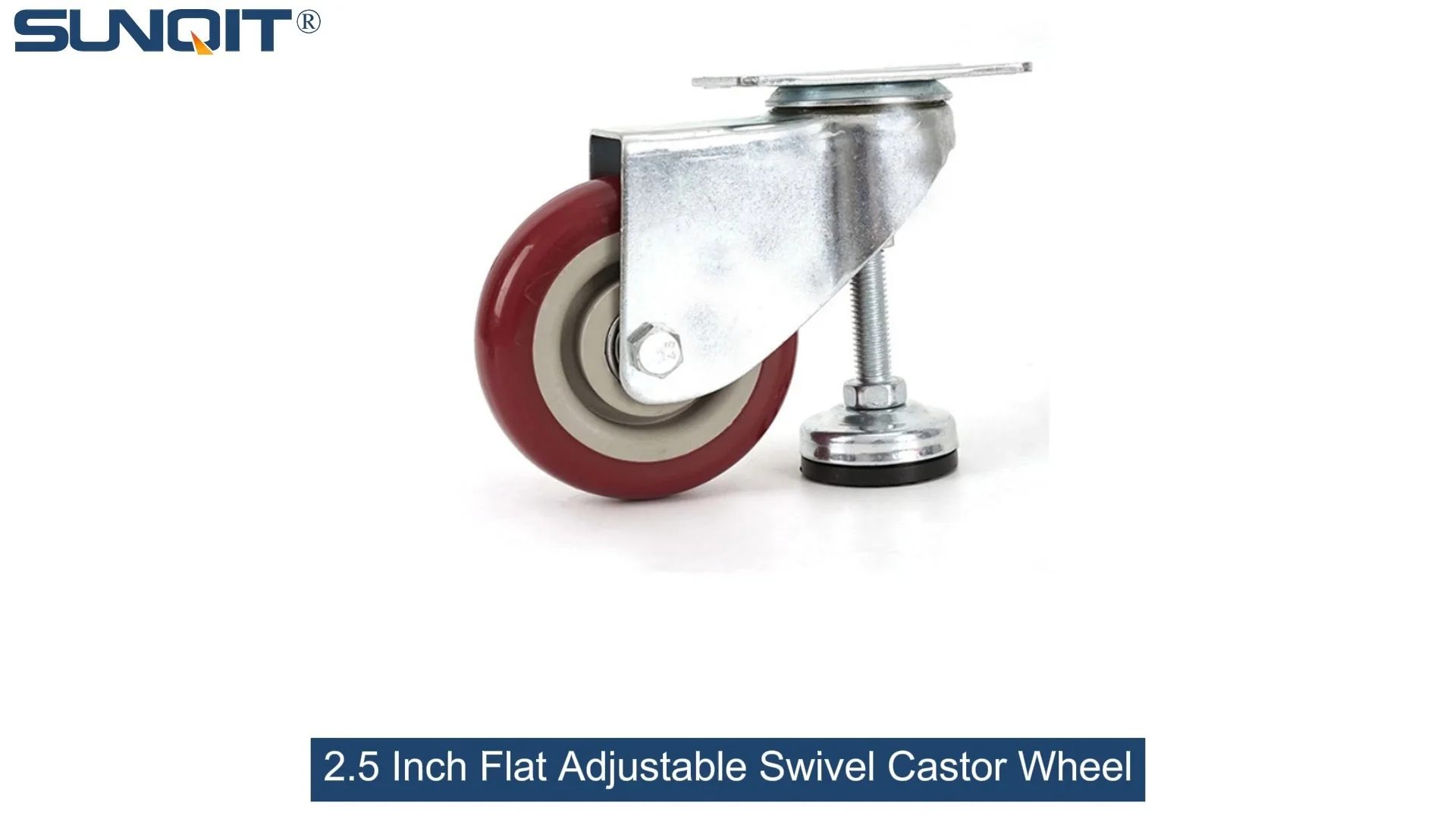
Flat Adjustable Swivel Castor Wheel
Swivel Chair Casters Ball Bearing Wheels Rubber Base with adjustable height function. Resistant to abrasion, impact and corrosion. Heavy payload can hold 80Kgs per pcs,which can make it works at a stable and smooth status.
In the bustling environment of a manufacturing plant, warehouse, or assembly line, the workbench is more than just a table—it's the heartbeat of daily operations. It's where components are assembled, tools are organized, and products take shape. But what happens when that heartbeat needs to move? For years, many workbenches have been anchored to the floor, limiting flexibility and slowing down processes. Enter the unsung hero of workplace mobility: the flat adjustable swivel castor wheel. These small but mighty components are transforming how workbenches (and the teams that rely on them) operate, turning static workspaces into dynamic, adaptable hubs. Let's dive into how these castors enhance mobility, and why they've become a game-changer for industries worldwide.
The Mobility Challenge: Why Traditional Workbenches Fall Short
Before we explore the solution, let's first understand the problem. Traditional workbenches—whether made of wood, steel, or even modern materials like aluminum profile—often come with fixed legs. While sturdy, this design locks them into a single spot, creating a host of challenges for today's fast-paced workplaces. Imagine a scenario in a electronics assembly plant: a team is tasked with ramping up production for a new product. The existing layout has workbenches spaced far apart, forcing workers to carry heavy components back and forth. Or consider a lab where equipment needs to be rearranged for a specialized experiment, but the workbench won't budge. In these cases, fixed workbenches become bottlenecks, not assets.
Even when workbenches are lightweight, moving them without proper casters is a hassle. Workers might resort to pushing, pulling, or even lifting—straining muscles and risking injury. And for heavier setups, like a lean pipe workbench loaded with tools and materials, mobility becomes nearly impossible. This lack of flexibility not only slows down workflows but also limits a facility's ability to adapt to changing demands, whether it's a sudden shift in production needs or a push to optimize space for lean manufacturing principles.
The rise of lean systems and just-in-time production has only amplified the need for mobile workspaces. These methodologies emphasize minimizing waste, maximizing efficiency, and keeping workflows smooth. A static workbench, however, is the opposite of lean—it creates waste in the form of time spent moving materials, reduces efficiency by limiting layout flexibility, and can even lead to overcrowding as teams struggle to make the most of fixed spaces. Clearly, the status quo wasn't cutting it. What was needed was a way to make workbenches mobile without sacrificing stability, safety, or functionality. That's where flat adjustable swivel castor wheels stepped in.
What Are Flat Adjustable Swivel Castor Wheels, Exactly?
Let's break down the name: "flat adjustable swivel castor wheel." Starting with the basics: a castor is a wheel mounted on a bracket, designed to be attached to the bottom of a piece of furniture or equipment to make it mobile. But not all casters are created equal. The "flat" in flat adjustable refers to the mounting plate—the part that attaches the castor to the workbench. Unlike stem casters (which use a rod to insert into a hole), flat mount casters have a flat, rectangular plate with pre-drilled holes, making them easy to bolt or screw onto the bottom of a workbench. This design distributes weight evenly, ensuring stability even when the workbench is loaded.
Next, "adjustable." These casters aren't just mobile—they're customizable. Most models feature a height-adjustment mechanism, often a threaded stem or a lever, that lets users raise or lower the workbench slightly. Why does this matter? Floors in industrial settings are rarely perfectly level. A workbench with fixed legs might wobble on uneven ground, making precise work difficult. With adjustable casters, you can tweak each wheel's height to stabilize the bench, ensuring it sits flat and secure, even on rough surfaces. Some models also offer adjustments for wheel tension, letting you control how easily the castor swivels—handy for environments where both mobility and stability are needed.
Finally, "swivel." Unlike rigid casters, which only roll forward and backward, swivel casters can rotate 360 degrees. This allows the workbench to move in any direction with minimal effort. Picture pushing a cart with rigid wheels: you have to turn it like a car, requiring space and force. With swivel casters, you can maneuver around tight corners, navigate between machinery, and even pivot in place—all with a gentle push. Combine this with the flat mount and adjustability, and you have a castor that's not just mobile, but intelligently mobile.

Key Features of Flat Adjustable Swivel Castor Wheels That Boost Mobility
Flat adjustable swivel castor wheels aren't just a "one-size-fits-all" solution—they're engineered with specific features to address the unique challenges of workbench mobility. Let's take a closer look at these features and how they make a difference:
1. 360-Degree Swivel Action: Maneuverability Without Limits
The swivel mechanism is the star of the show when it comes to mobility. Most high-quality castors use a ball bearing raceway (a ring of small steel balls) to allow the wheel assembly to rotate smoothly. This reduces friction, making it easy to turn the workbench even when it's fully loaded. For example, a workbench e (single deck-without caster) converted with flat adjustable swivel casters can glide around a sudden obstacle in the aisle, whereas a rigid-caster setup would require stopping, readjusting, and pushing again. This seamless maneuverability cuts down on time wasted navigating tight spaces and keeps workflows moving.
2. Height Adjustment: Stability on Any Surface
As mentioned earlier, uneven floors are a common issue in industrial settings. A workbench that rocks back and forth isn't just annoying—it's dangerous. Tools can slide off, precision work suffers, and workers might lose balance. Flat adjustable casters solve this with their height-adjustment feature. Typically, this involves a threaded stem that can be turned to raise or lower the wheel by a few inches. For instance, if one corner of the workbench sits lower than the others, you simply twist the adjustment nut on that caster to level it out. This not only improves stability but also protects the workbench itself from warping over time due to uneven weight distribution.
3. Heavy-Duty Load Capacity: Moving More, With Less Effort
Workbenches aren't light, especially when fully equipped. A lean pipe workbench, for example, might hold tools, raw materials, and even heavy machinery like soldering stations or testing equipment. Flat adjustable swivel casters are built to handle this weight. They're typically made with robust materials: the mounting plate is often steel or aluminum for strength, the wheel itself might be rubber (for grip), polyurethane (for durability), or even stainless steel (for corrosion resistance in wet environments). Load capacities vary, but many models can support 200–500 pounds per wheel. With four casters per workbench, that's a total capacity of 800–2000 pounds—more than enough for most industrial applications.
4. Integrated Brakes: Locking in Place When Needed
Mobility is great, but there are times when you need the workbench to stay put. That's why many flat adjustable swivel casters come with built-in brakes. These can range from simple foot-operated locks that clamp the wheel in place to dual-locking systems that lock both the wheel and the swivel mechanism (preventing rotation). Imagine a worker using a power tool on a mobile workbench—without a brake, the bench might drift, causing inaccuracies or even accidents. With a quick tap of the foot, the brake engages, securing the bench firmly. When it's time to move again, another tap releases the lock. This balance of mobility and stability is what makes these casters so versatile.
5. Durable Wheel Materials: Grip, Quiet, and Floor Protection
The wheel itself is just as important as the swivel mechanism. Different environments call for different wheel materials. For example, rubber wheels are ideal for indoor use on smooth floors—they provide excellent grip, reduce noise (a big plus in busy facilities), and won't scratch or mark concrete or tile. Polyurethane wheels are a step up in durability, resistant to oils, chemicals, and abrasion, making them perfect for warehouses or auto shops. For outdoor use or rough surfaces, steel wheels offer maximum strength, though they're noisier and harder on floors. Many casters also feature treaded designs to improve traction, even on slippery surfaces like wet concrete or polished factory floors.

From Static to Dynamic: Real-World Benefits of Mobile Workbenches
So, what does all this mean for the average worker or facility manager? The benefits of flat adjustable swivel castor wheels go far beyond "being able to move the workbench." They ripple through every aspect of operations, from productivity and safety to employee satisfaction. Let's explore some real-world scenarios where these casters make a tangible difference:
1. Flexibility to Adapt to Changing Needs
In today's manufacturing landscape, change is constant. A facility might shift from producing one product to another overnight, or adopt a new layout to support social distancing. With mobile workbenches, adapting is easy. For example, a team using turnover trolley and rack systems to move materials can now position workbenches directly next to the trolleys, eliminating the need to carry items across the floor. Or, during peak seasons, workbenches can be clustered to create assembly lines, then spread out again during slower periods to free up space. This flexibility isn't just convenient—it's a competitive advantage, allowing facilities to respond quickly to market demands.
2. Reduced Worker Fatigue and Injury Risk
Manual lifting and pushing are leading causes of workplace injuries, particularly back strain and musculoskeletal disorders. When workbenches are immobile, workers often have to lift heavy tools or materials onto carts, push the carts to the bench, then unload—repeating this dozens of times a day. With a mobile workbench, the bench comes to the materials. A worker can roll the bench to a storage area, load it up, and roll it back to their station—all without heavy lifting. Flat adjustable swivel casters make this effortless: even a fully loaded workbench can be moved with minimal force, thanks to smooth-rolling wheels and swivel action. This not only reduces injury risk but also keeps workers energized throughout the day, boosting overall productivity.
3. Improved Cleaning and Sanitation
Cleanliness is critical in industries like food processing, pharmaceuticals, or electronics manufacturing, where even a speck of dust can ruin products. Fixed workbenches are a nightmare to clean around—dust and debris accumulate underneath, and mopping or sanitizing requires moving around the bench, often missing hard-to-reach spots. With mobile workbenches, cleaning becomes a breeze. Simply roll the bench out of the way, sanitize the entire floor, then roll it back. This not only improves hygiene but also reduces downtime: what used to take an hour of moving equipment can now be done in minutes. Some facilities even schedule "deep clean" days where all workbenches are rolled to the perimeter, leaving the entire floor clear for thorough scrubbing.
4. Enhanced Collaboration and Teamwork
Collaboration is key to innovation, but it's hard to collaborate when teams are stuck at separate workbenches. Mobile workbenches break down these barriers. Imagine a design team needs to review a prototype—instead of gathering around a single fixed bench, they can roll their individual workbenches into a circle, creating an impromptu meeting space. Or, in a training scenario, a supervisor can roll a demonstration workbench to each trainee, allowing for hands-on learning without everyone crowding around one spot. This flexibility fosters communication, speeds up problem-solving, and makes training more effective.

How Flat Adjustable Swivel Casters Compare to Other Mobility Solutions
Flat adjustable swivel castor wheels aren't the only option for making workbenches mobile. So how do they stack up against alternatives like rigid casters, stem casters, or even dollies? Let's compare:
| Feature | Flat Adjustable Swivel Castor | Traditional Rigid Caster | Stem Caster | Dolly (Separate Platform) |
|---|---|---|---|---|
| Swivel Range | 360 degrees (full maneuverability) | 0 degrees (only forward/backward) | 360 degrees (if swivel stem) | Depends on caster type (often limited) |
| Height Adjustment | Yes (levels uneven floors) | No (fixed height) | Rarely (stem length fixed) | No (fixed height) |
| Stability | High (flat mount distributes weight; brakes lock in place) | Medium (rigid but no swivel stability) | Medium (stem can wobble under heavy loads) | Low (risk of workbench sliding off dolly) |
| Installation | Easy (bolt-on flat plate) | Easy (bolt-on or weld-on) | Requires pre-drilled holes for stem | None (place workbench on dolly) |
| Best For | Heavy, frequent movement; uneven floors; need for stability | Straight-line movement (e.g., conveyor lines) | Lightweight furniture; pre-drilled equipment | Occasional, short-distance moves |
As the table shows, flat adjustable swivel casters excel in versatility, stability, and maneuverability. Rigid casters are fine for straight paths, but they lack the flexibility to navigate tight spaces. Stem casters are easier to install on some equipment but offer little adjustability and can be less stable under heavy loads. Dollies are a quick fix for mobility, but they're risky—workbenches can slide off, and dollies themselves need storage when not in use. For most industrial workbenches, especially those used daily and in dynamic environments, flat adjustable swivel casters are the clear winner.
Choosing the Right Flat Adjustable Swivel Castor Wheels for Your Workbench
Not all flat adjustable swivel casters are created equal. To get the most out of your investment, you'll need to choose the right model for your specific needs. Here are the key factors to consider:
1. Load Capacity: Don't Skimp on Strength
Start by calculating the total weight your workbench will carry. This includes the weight of the bench itself, plus tools, materials, and any equipment placed on it. Then, divide that total by the number of casters (usually four) to get the minimum load capacity per caster. It's always smart to add a 20–30% buffer to account for unexpected weight (e.g., a worker leaning on the bench or temporarily placing a heavy item). For example, a lean pipe workbench weighing 100 pounds, plus 300 pounds of tools and materials, totals 400 pounds. Divided by four casters, that's 100 pounds per caster—so look for casters rated for at least 120–130 pounds each.
2. Wheel Material: Match the Environment
As mentioned earlier, wheel material matters. Consider your floor type and working conditions:
- Rubber: Best for smooth indoor floors (tile, concrete). Quiet, good grip, floor-friendly.
- Polyurethane: Versatile—works on smooth or rough floors. Resistant to chemicals, oils, and abrasion.
- Nylon: High load capacity, low friction. Good for heavy loads but can be noisy on hard floors.
- Steel: Maximum durability for outdoor use or rough surfaces (gravel, uneven concrete). Noisy and hard on floors.
3. Brake Type: Safety First
If your workbench will be used for tasks that require stability (like precision assembly or power tool use), a brake is a must. There are two main types:
- Wheel brakes: Clamp the wheel to prevent rolling. Simple and effective for most uses.
- Total-lock brakes: Lock both the wheel and the swivel mechanism, preventing both rolling and rotation. Ideal for uneven floors or when the bench needs to stay perfectly aligned.
4. Mounting Plate Size: Secure Attachment
The mounting plate is what attaches the caster to the workbench. Make sure it's large enough to distribute weight evenly and that the holes align with the workbench's frame. Most workbenches have pre-drilled holes for casters, but if not, you may need to drill your own (use a template to ensure accuracy). A plate that's too small can bend or crack under heavy loads, so opt for a plate that's at least 4x4 inches for medium loads, or larger for heavier setups.
5. Adjustment Range: Leveling Needs
Check the height adjustment range of the caster. Most models adjust by 1–3 inches, which is enough for minor floor unevenness. If your facility has severely sloped or damaged floors, look for casters with a wider adjustment range (4–6 inches). Also, ensure the adjustment mechanism is easy to use—some casters require a wrench, while others have hand-turn knobs for quick adjustments.
Maintenance Tips to Keep Your Casters Rolling Smoothly
Like any equipment, flat adjustable swivel castor wheels need regular maintenance to perform their best. Neglecting them can lead to squeaky wheels, stuck swivels, or even brake failure—all of which reduce mobility and safety. Here's how to keep them in top shape:
1. Clean Regularly to Prevent Debris Buildup
Dirt, dust, and small debris can get trapped in the swivel mechanism or around the wheel axle, causing friction and slowing movement. Once a week, wipe down the casters with a damp cloth to remove surface dirt. For hard-to-reach spots (like between the wheel and the bracket), use a small brush or compressed air to blow out debris. In environments with oil or chemicals (like auto shops), clean the wheels more frequently to prevent buildup that can degrade rubber or polyurethane.
2. Lubricate Moving Parts
The swivel raceway and wheel bearings need lubrication to stay smooth. Use a high-quality lubricant (like silicone spray or lithium grease) every 3–6 months, depending on usage. Apply a small amount to the swivel joint (where the wheel assembly connects to the mounting plate) and the wheel axle. Avoid over-lubricating, as excess grease can attract dirt. If you notice the swivel is stiff or the wheel squeaks, lubricate immediately—it's a sign friction is building up.
3. Inspect Brakes and Locks
Brakes are critical for safety, so check them before each use. Test the brake lever to ensure it engages and releases smoothly. If the brake feels loose or doesn't hold the wheel firmly, tighten the adjustment nut (refer to the manufacturer's instructions) or replace worn brake pads. For total-lock brakes, check that both the wheel and swivel lock securely—if one part fails, the bench may still move unexpectedly.
4. Check for Wear and Tear
Inspect the wheels for signs of damage: cracks, flat spots, or worn tread. A damaged wheel will roll unevenly, causing the workbench to wobble. Also, check the mounting plate and bolts for rust, bending, or looseness. Tighten any loose bolts immediately—if a caster detaches from the bench, it could cause a serious accident. If parts are bent, cracked, or excessively worn, replace them promptly. Many manufacturers offer caster accessories like replacement wheels, bearings, or brake pads, making repairs easy and affordable.
5. Avoid Overloading
Even the strongest casters have limits. Overloading can bend the mounting plate, damage the swivel mechanism, or cause the wheel to fail. Post the maximum load capacity of the workbench (including casters) in a visible spot, and train workers to avoid exceeding it. If you need to move exceptionally heavy items, use a dedicated cart or forklift instead of relying on the workbench casters.
The Future of Workbench Mobility: What's Next?
As industries continue to evolve, so too will the technology behind flat adjustable swivel castor wheels. Manufacturers are already exploring innovations like smart casters with built-in sensors that monitor load, temperature, and wear, alerting maintenance teams when parts need replacement. Some are even experimenting with motorized casters, allowing workbenches to be moved with the push of a button—ideal for extremely heavy setups or workers with mobility limitations.
Sustainability is also a growing focus. Casters made from recycled materials or with recyclable components are becoming more common, and wheel designs that reduce rolling resistance (saving energy when moving) are in development. Additionally, modular casters that can be easily upgraded (e.g., swapping a rubber wheel for a polyurethane one) are gaining popularity, allowing facilities to adapt their casters to changing needs without replacing the entire assembly.
But even with these advancements, the core appeal of flat adjustable swivel castor wheels remains the same: they solve a basic problem—making workbenches mobile—in a simple, reliable, and affordable way. In a world where efficiency and flexibility are everything, that's a solution that will stand the test of time.
Conclusion: Mobility as a Catalyst for Success
Flat adjustable swivel castor wheels may be small, but their impact on workbench mobility is enormous. By turning static workspaces into dynamic, adaptable hubs, they empower teams to work smarter, not harder. Whether it's reducing strain on workers, improving cleaning efficiency, or enabling quick layout changes, these casters are more than just "wheels"—they're a catalyst for productivity, safety, and innovation.
So, if you're still using fixed workbenches, it might be time to make the switch. Invest in quality flat adjustable swivel castor wheels, and watch as your facility transforms from a collection of isolated workstations into a cohesive, mobile ecosystem. Your workers will thank you, your productivity will soar, and you'll wonder how you ever managed without them. After all, in today's fast-paced world, the ability to move forward shouldn't be limited by the furniture we work on.