- Company Articles
- Products and Technology
- Product knowledge
- How Do Lean Pipe Clamps Work? A Comprehensive Guide

How Do Lean Pipe Clamps Work? A Comprehensive Guide
Related Product
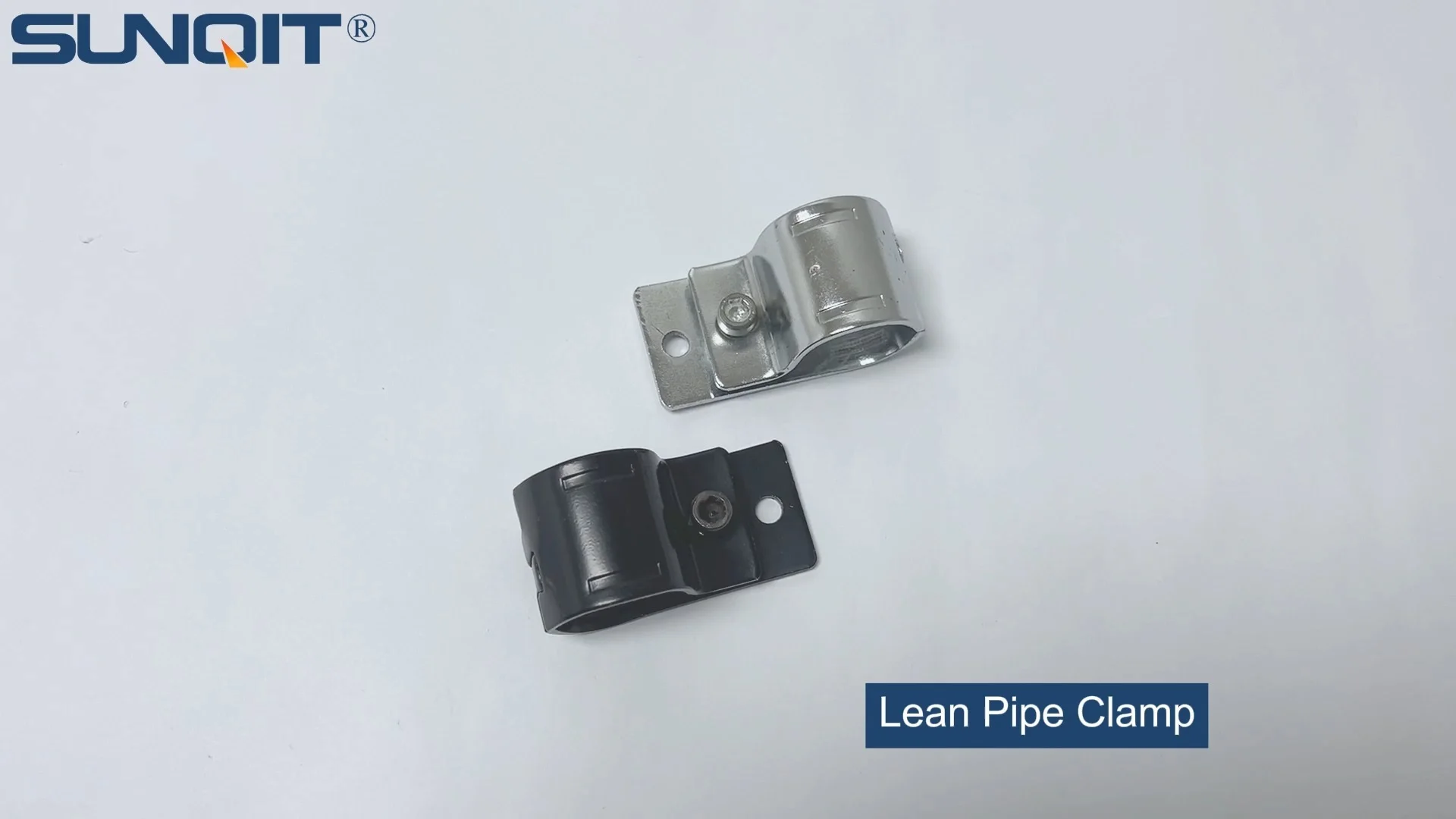
Lean Pipe Clamp
Lean pipe clamp is used for rack system hang monitor or other panel for workbenck, flowrack in production daily use.
Walk into any modern manufacturing facility, and you'll likely spot a familiar sight: workbenches with sleek frames, roller tracks gliding materials across the floor, and turnover trolleys zipping between stations. Behind all these (efficient) setups lies a quiet hero of lean manufacturing: the lean pipe clamp. These unassuming components are the glue that holds lean systems together, turning basic pipes and accessories into customized, flexible workspaces. But how exactly do they work? Why are they so crucial for lean operations? And what should you know before choosing the right ones for your needs? Let's dive in.
What Are Lean Pipe Clamps, Anyway?
First things first: let's clarify what we're talking about. Lean pipe clamps are mechanical fasteners designed to connect lean pipes (also called "lean tubes")—hollow metal or plastic-coated tubes—to form structures like workbenches, material racks, and roller tracks. Think of them as the building blocks of lean systems: without clamps, you'd be stuck with rigid, one-size-fits-all furniture, not the adaptable setups that make lean manufacturing so powerful.
But lean pipe clamps aren't just simple "connectors." They're engineered to balance three key needs: strength, flexibility, and ease of use. A good clamp should hold pipes securely enough to support heavy tools or materials, yet loosen quickly when you need to reconfigure your workspace. They're also designed to work seamlessly with other lean pipe and accessories, from joints and casters to roller tracks and workbench surfaces.
The Anatomy of a Lean Pipe Clamp
Before we get into how they work, let's break down the parts of a typical lean pipe clamp. While designs vary by type and manufacturer, most clamps share a few core components:
- Body: The main frame of the clamp, usually made of steel, aluminum, or plastic-coated steel. It wraps around the outer diameter of the lean pipe.
- Jaw: The gripping surface that presses against the pipe when tightened. Many jaws have serrated or textured edges to prevent slipping.
- Bolt or Screw: The mechanism that tightens the clamp. This is often a hex-head bolt or a hand-tightened knob for quick adjustments.
- Mounting Point: A bracket, hole, or slot that connects the clamp to another pipe, joint, or accessory (like a roller track or workbench panel).
Some clamps also include extras like rubber gaskets (to protect pipe surfaces) or locking nuts (to prevent loosening from vibration). Now, let's see how these parts come together to do their job.

How Do Lean Pipe Clamps Actually Work?
The basic principle is simple: friction and mechanical force. When you place a clamp around two lean pipes (or a pipe and an accessory), tightening the bolt pulls the clamp's jaws together. This creates pressure between the jaws and the pipe, gripping it tightly. The more you tighten the bolt, the stronger the grip—up to the clamp's maximum load capacity, of course.
But there's more to it than just "squeezing" pipes. Let's walk through a step-by-step example of building a simple workbench frame, which uses lean pipe clamps and lean pipe joints to create a sturdy structure:
- Align the pipes: You start with four vertical lean pipes (the legs) and four horizontal pipes (the top frame). You want the horizontal pipes to connect to the vertical ones at 90-degree angles.
- Attach the clamps: Slide a 90-degree lean pipe joint onto the end of a horizontal pipe. Then, position a lean pipe clamp over the joint and the vertical pipe. The clamp's body wraps around both the joint and the vertical pipe, with the jaw facing inward.
- Tighten the bolt: Using a wrench or hex key, turn the clamp's bolt clockwise. As the bolt tightens, the clamp's jaws close, pressing the joint and vertical pipe together. The serrated jaws bite into the pipe's surface, creating friction that prevents slipping.
- Repeat and reinforce: Add clamps at each corner of the frame, then check for stability. If the frame wobbles, tighten the clamps a bit more—or add extra clamps for support (like diagonal braces).
The magic here is that the clamp doesn't damage the pipe (thanks to gentle but firm pressure) and can be loosened later if you want to adjust the workbench's height or width. That flexibility is why lean pipe clamps are a cornerstone of "continuous improvement"—a key principle of lean manufacturing.

Types of Lean Pipe Clamps: One Size Doesn't Fit All
Not all lean pipe clamps are created equal. Just as you wouldn't use a Phillips screwdriver on a flathead screw, you need the right clamp for the job. Here's a breakdown of the most common types, along with when to use them:
| Clamp Type | Design (Features) | Best For | Common Materials |
|---|---|---|---|
| Fixed-Angle Clamps | Pre-set angles (90°, 45°, 180°); rigid connection | Workbench frames, straight roller track sections | Steel, aluminum |
| Swivel Clamps | Adjustable angles (0°–180°); rotating joint | Curved roller tracks, sloped material racks | Plastic-coated steel, stainless steel |
| Parallel Clamps | Connects two pipes side-by-side (0° angle) | Reinforcing frames, double-deck workbenches | Aluminum, zinc-plated steel |
| Crossing Clamps | Overlapping 90° connection (e.g., vertical and horizontal pipes crossing) | Multi-level material racks, overhead storage | Stainless steel, heavy-duty aluminum |
For example, if you're building a workbench with a single deck (like "Workbench E" in many supplier catalogs), fixed 90° clamps are perfect—they create a sturdy, square frame that won't shift. But if you need a roller track that curves around a corner, swivel clamps let you adjust the angle of the roller track to match the layout of your facility.

Materials Matter: Steel, Aluminum, or Plastic-Coated?
The material of your lean pipe clamp affects everything from durability to cost. Here's how the options stack up:
Steel Clamps
Steel is the workhorse of clamp materials. It's strong, affordable, and resistant to wear—ideal for heavy-duty applications like automotive assembly lines, where clamps might support engines or toolboxes. Many steel clamps are zinc-plated to prevent rust, but they can still corrode in humid environments (like food processing plants).
Aluminum Clamps
Aluminum clamps are lighter than steel and naturally corrosion-resistant, making them great for cleanrooms or electronics manufacturing (where dust and moisture are concerns). They're also easier to handle during assembly, which speeds up setup time. The tradeoff? They're slightly less strong than steel, so they're better for medium-weight loads (think: circuit boards, not engine blocks).
Plastic-Coated Steel Clamps
These clamps have a steel core wrapped in a plastic coating (usually PVC or nylon). The plastic protects the underlying pipe from scratches and reduces noise (no more "clanging" when you move a workbench). They're popular in environments where aesthetics matter, like retail stockrooms or office-based assembly stations.
From Clamps to Systems: Real-World Applications
Okay, so we know what lean pipe clamps are and how they work—but how do they fit into bigger lean systems? Let's look at two common setups where clamps shine: workbenches and roller tracks.
Building a Workbench with Lean Pipe Clamps
A typical lean workbench (like "Workbench E (single deck-without caster)" from suppliers) starts with a frame of lean pipes connected by clamps. Here's how clamps make it functional:
- Frame stability: 90° fixed clamps connect vertical and horizontal pipes to form a square frame. Extra clamps at the midpoint of horizontal pipes prevent bending under heavy tools.
- Surface attachment: Parallel clamps secure the workbench top (wood, metal, or plastic) to the frame. Some clamps even have slots for bolts, letting you fasten the surface without drilling into the pipes.
- Accessory mounting: Swivel clamps attach side shelves or tool holders at angles that suit the user (e.g., a 45° angle for easy tool access).
The best part? If a worker needs more space, you can loosen the clamps, add an extra horizontal pipe, and re-tighten—no saws, no welding, no hassle.
Creating Roller Tracks for Smooth Material Flow
Roller tracks are another area where lean pipe clamps shine. These tracks use rollers (often plastic or steel) to slide materials from one workstation to the next—critical for reducing manual lifting and speeding up production. Clamps play two key roles here:
- Mounting rollers: Specialized clamps (like "roller track placon mount for aluminum profile flat") attach roller tracks to the underlying lean pipe frame. These clamps are designed to hold rollers at a precise height, ensuring materials glide smoothly without jamming.
- Adjusting slope: Swivel clamps let you tilt the roller track slightly (usually 5°–10°) so gravity helps move materials. If you need to change the slope (e.g., for heavier boxes), just loosen the clamps, adjust the angle, and retighten.
In electronics factories, for example, roller tracks with plastic roller track guide rail (yellow or grey) are often used to move circuit board trays. The clamps ensure the track stays aligned, even as trays zip by all day.
Why Lean Pipe Clamps Beat Welding or Glue
You might be thinking: "Why not just weld the pipes together? Or use strong glue?" It's a fair question—but lean pipe clamps have some big advantages:
- Flexibility: Welded structures are permanent. If your production line changes (e.g., you start making a larger product), you'll need to cut and reweld the frame. With clamps, you can reconfigure in minutes.
- Cost savings: Welding requires skilled labor and equipment; glue weakens over time and can't handle heavy loads. Clamps are affordable, reusable, and require no special training to install.
- Safety: Welding creates sparks (a fire hazard in some facilities), and glue fumes can be toxic. Clamps are safe to use anywhere, even in cleanrooms or food-processing areas.
In short, clamps make lean systems "lean" by letting you adapt quickly—without wasting time, money, or resources.
Troubleshooting Common Lean Pipe Clamp Issues
Even the best clamps can run into problems. Here are a few common issues and how to fix them:
Loose Clamps
If your workbench wobbles or a roller track shifts, the clamps might be loose. This is often caused by vibration (from nearby machinery) or over-tightening (which can strip the bolt threads). Fix it by:
- Retightening the clamp with a torque wrench (follow the manufacturer's recommended torque—usually 20–30 Nm for steel clamps).
- Adding a thread locker (like Loctite) to the bolt threads to prevent loosening.
- Replacing worn clamps (if the jaws are bent or the bolt is stripped).
Misaligned Pipes
If pipes don't sit straight (e.g., a horizontal pipe angles downward), the clamps might be on crooked. Loosen the clamps, realign the pipes, and retighten—making sure the jaws grip the pipe evenly.
Damaged Pipes
Over-tightening clamps can dent or crush thin-walled pipes. To avoid this, use clamps with rubber-padded jaws, and never exceed the pipe's recommended load capacity.
Choosing the Right Lean Pipe Clamps: What to Look For
Ready to buy lean pipe clamps? Here's what to keep in mind:
- Material compatibility: Match the clamp material to your pipes. For example, aluminum clamps work best with aluminum lean pipes, while steel clamps pair well with plastic-coated steel pipes.
- Load capacity: Check the clamp's maximum weight rating. A clamp for a light tool shelf won't work for a workbench holding 200kg of equipment.
- Angle range: Need a fixed 90° angle? Go with a fixed clamp. Want to adjust angles later? Swivel clamps are worth the extra cost.
- Brand reputation: Stick with trusted lean pipe suppliers. Cheap clamps often have weak jaws or poorly threaded bolts, which can fail under stress.
The Future of Lean Pipe Clamps
As lean manufacturing evolves, so do lean pipe clamps. Manufacturers are now experimenting with lighter materials (like carbon fiber-reinforced plastic) and "smart" clamps with built-in sensors that alert you when they're loose. There's also a trend toward ergonomic designs—clamps that can be tightened by hand (no tools needed), reducing setup time even more.
But no matter how they evolve, the core purpose of lean pipe clamps will stay the same: to make workspaces flexible, efficient, and adaptable. In a world where manufacturing needs change faster than ever, that's more valuable than ever.
Wrapping Up: Small Clamps, Big Impact
Lean pipe clamps might not be the flashiest tools in a factory, but they're the unsung heroes of lean systems. By connecting lean pipes into workbenches, roller tracks, and more, they turn rigid spaces into dynamic, worker-friendly environments. Whether you're building a simple workbench or a complex material flow system, the right clamps can make all the difference in efficiency, safety, and cost.
So next time you walk past a lean workbench or watch materials glide down a roller track, take a second to appreciate the clamps holding it all together. They're proof that sometimes, the smallest components make the biggest impact.