- Company Articles
- Products and Technology
- Product knowledge
- How Do M10*56 Rubber Leveling Feet Enhance Equipment Stability?

How Do M10*56 Rubber Leveling Feet Enhance Equipment Stability?
Related Product
M10*56 Rubber Leveling Feet
Adjustable leveling feet are designed to keep machines level when placed on uneven or sloped ground. Otherwise known as adjustable equipment feet, they are available to order in a wide variety of size and load capacity combinations.
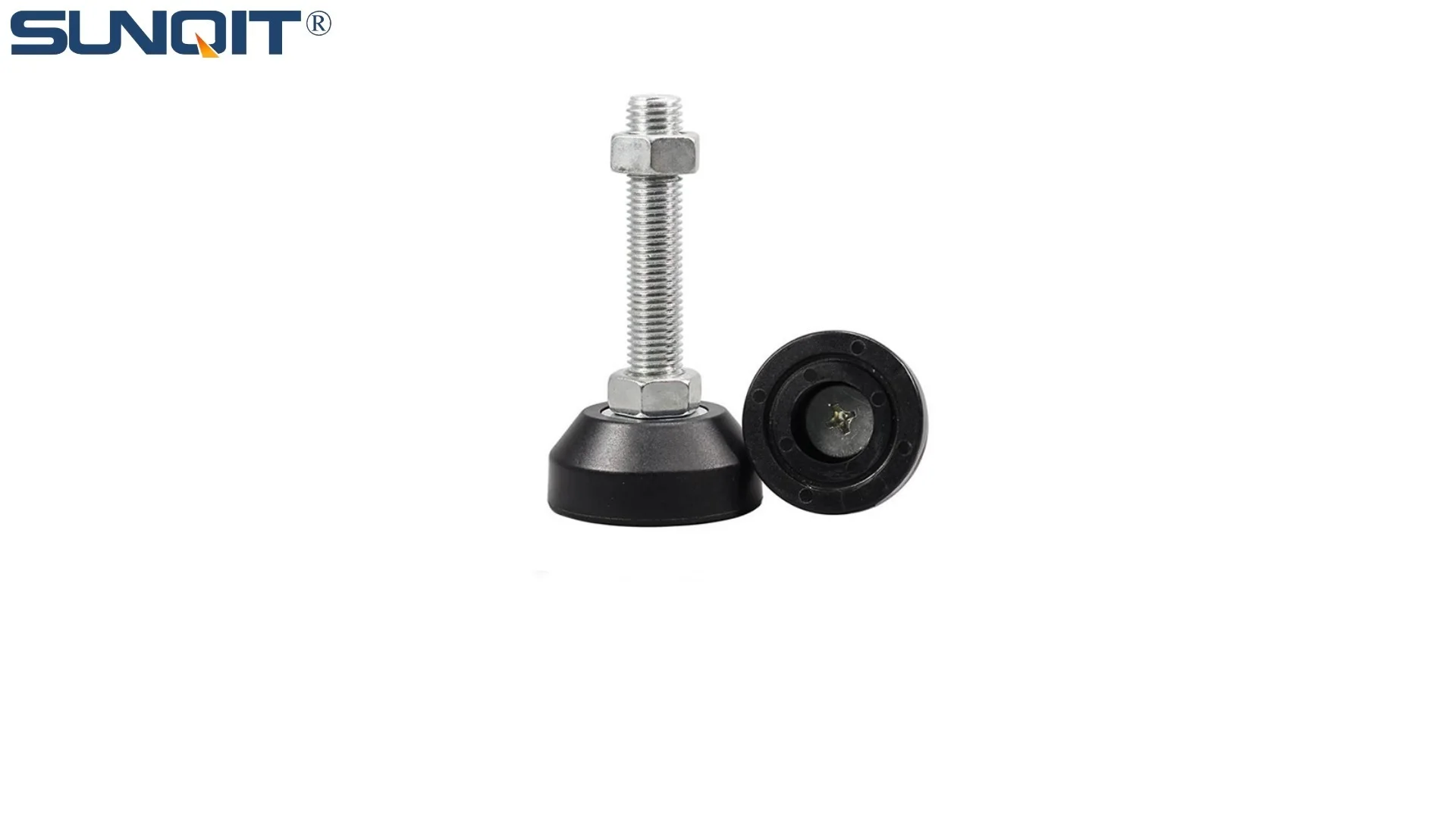
In the bustling world of manufacturing, laboratories, and workshops, the stability of equipment isn't just a nicety—it's the backbone of productivity, precision, and safety. Imagine a technician assembling delicate circuit boards on a wobbly workbench, or a production line where a misaligned conveyor causes parts to jostle and scratch. These scenarios aren't just frustrating; they lead to wasted time, damaged materials, and even workplace injuries. That's where yet critical components like M10*56 rubber leveling feet come into play. These small but mighty tools are the unsung heroes that keep equipment grounded, level, and reliable—even when floors are uneven, loads are heavy, or vibrations threaten to disrupt operations. In this article, we'll dive deep into how M10*56 rubber leveling feet work, why they matter, and how they transform ordinary workspaces into hubs of efficiency and stability.
Understanding M10*56 Rubber Leveling Feet: More Than Just "Feet"
Before we explore their impact, let's break down what M10*56 rubber leveling feet actually are. At first glance, they might look like simple bolts with rubber caps, but their design is purposefully engineered for stability. The "M10*56" designation refers to the metric thread size: a 10mm diameter thread (M10) and a 56mm length (the part of the rod that screws into the equipment). The rubber base, usually made from durable, high-friction materials like nitrile or polyurethane, forms the contact point with the floor. Above the rubber sits a metal bracket or plate, which connects the threaded rod to the equipment's base. This combination of metal strength and rubber flexibility creates a tool that's both adjustable and shock-absorbent.
What makes these leveling feet unique is their dual role: they adjust to compensate for uneven surfaces and stabilize by gripping the floor. Unlike fixed feet, which can't adapt to dips or bumps in the ground, M10*56 rubber leveling feet let you tweak the height of individual legs, ensuring the entire piece of equipment sits perfectly flat. And the rubber base? It's not just for show—it dampens vibrations, prevents slipping, and protects floors from scratches or indentations caused by metal-to-concrete contact.
The Science of Stability: How They Work
Stability in equipment boils down to two key factors: even weight distribution and secure contact with the floor. M10*56 rubber leveling feet excel at both. Let's start with adjustability. Most workspaces aren't perfectly level—concrete floors might have minor cracks, warehouse floors could slope slightly, or old workshop floors might be uneven from years of heavy use. When you place a workbench or a material rack on such surfaces, one leg might hover above the ground, while another bears too much weight. This imbalance leads to wobbling, which in turn affects everything from the precision of tasks to the longevity of the equipment itself.
M10*56 leveling feet solve this by letting you "fine-tune" each leg. The threaded rod screws into the equipment's base, and by rotating the rod (or the rubber base, depending on the design), you raise or lower that corner. For example, if a lean pipe workbench has a leg that's too short, you simply twist the leveling foot clockwise to extend the rod, lifting that corner until the bench is level. A quick check with a spirit level confirms the adjustment, and suddenly, what was a wobbly surface becomes a rock-solid platform.
The rubber base amplifies this stability. Rubber is naturally grippy, so even on smooth floors, it resists sliding—critical for equipment that might be bumped or vibrated during use. It also acts as a shock absorber. Think about a conveyor in a manufacturing plant: as parts roll along, the machine vibrates. Over time, these vibrations can loosen bolts, misalign components, or even damage the floor. The rubber in M10*56 leveling feet absorbs some of that energy, reducing the transfer of vibrations to the floor and the equipment itself. This not only extends the life of the machine but also creates a quieter, more comfortable workspace.

Key Benefits: Why M10*56 Rubber Leveling Feet Stand Out
1. Adaptability to Uneven Floors
No floor is perfect, but M10*56 leveling feet turn imperfection into irrelevance. Whether you're setting up a workbench in a 50-year-old factory with cracked concrete or a lab with slightly sloped tile, these feet let you adjust each leg independently. This adaptability ensures that even heavy equipment—like a material rack loaded with tools or an aluminum profile assembly station—stays balanced, reducing the risk of tipping or structural stress.
2. Vibration Dampening for Precision Work
In fields like electronics manufacturing or lab research, precision is everything. A microscope stand that shakes, or a soldering workbench that vibrates, can ruin hours of careful work. The rubber base of M10*56 leveling feet absorbs high-frequency vibrations, keeping sensitive equipment steady. For example, a technician soldering microchips on an ESD workstation (electrostatic discharge workstation) needs absolute stability to avoid bridging circuits with the soldering iron. Leveling feet with rubber bases minimize even the smallest wobbles, making precise work possible.
3. Floor and Equipment Protection
Metal feet or casters (from caster and accessories sets) can scratch, dent, or mark floors—especially soft surfaces like vinyl or polished concrete. Rubber, however, is gentle. The M10*56 rubber base acts as a buffer, preventing metal-on-floor contact and preserving the integrity of the workspace. This is especially valuable in environments where cleanliness matters, like food processing plants or pharmaceutical labs, where floor damage could harbor bacteria or debris.
On the flip side, they also protect the equipment. When a machine is unbalanced, stresss on certain legs or joints, leading to premature wear. By distributing weight evenly, M10*56 leveling feet reduce strain on the equipment's frame, extending its lifespan and reducing maintenance costs.
4. Cost-Effective and Easy to Install
Compared to complex leveling systems, M10*56 rubber leveling feet are affordable and straightforward to install. You don't need specialized tools—just a wrench or even your hands to twist the threaded rod into place. This simplicity makes them a favorite for small workshops and large factories alike. Plus, their durability means they rarely need replacement, making them a cost-effective long-term solution.

Applications: Where M10*56 Rubber Leveling Feet Shine
These leveling feet aren't one-trick ponies—they're versatile enough to enhance stability across countless industries and equipment types. Let's explore some common applications where they make a tangible difference.
Workbenches: The Foundation of Precision
Workbenches are the heart of any workshop, whether it's a garage, a manufacturing plant, or a tech lab. From assembling furniture to repairing electronics, the tasks performed on workbenches demand a flat, stable surface. M10*56 rubber leveling feet are a staple here. Take a workbench E (single deck-without caster), a popular model in many factories. Without casters, it relies entirely on its feet for stability. If the floor is uneven, the bench might rock, making tasks like cutting, drilling, or measuring frustratingly imprecise. By adding M10*56 leveling feet to each leg, workers can adjust the height until the bench is perfectly level, turning it into a reliable platform for even the most detailed work.
Lean Pipe Workbenches: Streamlining Assembly Lines
Lean pipe workbenches are a cornerstone of lean manufacturing, designed for flexibility and efficiency. They're used in assembly lines, where speed and accuracy are critical. A wobbly lean pipe workbench can slow down production: parts might slide off, tools could tip over, and workers might waste time readjusting their setup. M10*56 leveling feet ensure these workbenches stay stable, even when loaded with tools, components, and. For example, in an automotive parts assembly line, a lean pipe workbench holding torque wrenches, screwdrivers, and small parts bins needs to stay steady as workers reach for tools and place finished parts on a conveyor. Leveling feet keep the bench grounded, reducing distractions and errors.
Aluminum Profile Structures: Frames Built to Last
Aluminum profiles are widely used to build frames, racks, and workstations thanks to their strength, light weight, and modularity. A material rack B (3 row and 3 floor), for instance, is often constructed with aluminum profiles to hold heavy materials like metal sheets or plastic bins. Without stable feet, this rack could lean or tip when fully loaded, posing a safety risk. M10*56 rubber leveling feet attach easily to the base of aluminum profile legs, allowing workers to adjust each corner to ensure the rack stands straight and steady. This not only prevents accidents but also protects the materials stored on the rack from damage caused by shifting or falling.
Laboratory and Medical Equipment: Stability for Sensitive Tasks
In labs and medical facilities, precision is non-negotiable. Equipment like microscopes, centrifuges, and testing stations must stay perfectly still to ensure accurate results. M10*56 rubber leveling feet are ideal here because their rubber bases dampen vibrations (critical for sensitive instruments) and their adjustability compensates for uneven lab floors. A lab technician using a microscope mounted on an aluminum profile stand, for example, can the leveling feet to eliminate even the smallest wobble, ensuring crystal-clear images and reliable data.

M10*56 Leveling Feet vs. Casters and Fixed Feet: A Comparison
When it comes to equipment feet, there are three main options: casters (from caster and accessories), fixed feet, and adjustable leveling feet like M10*56 rubber ones. Each has its place, but leveling feet stand out for stability. Let's compare them side by side:
| Feature | M10*56 Rubber Leveling Feet | Casters | Fixed Feet |
|---|---|---|---|
| Adjustability | High: Threaded rod allows height adjustment to level uneven floors. | Low: Height is fixed; some have brakes, but no leveling capability. | None: Height is fixed; cannot adapt to uneven surfaces. |
| Stability | Excellent: Rubber base grips floors and dampens vibrations. | Low: Even with brakes, casters can shift under heavy loads or vibrations. | Good on flat floors, but poor on uneven surfaces (causes wobbling). |
| Mobility | None: Designed for stationary equipment. | High: Easy to roll equipment around the workspace. | None: Equipment must be lifted or slid to move. |
| Floor Protection | High: Rubber base prevents scratches and indentations. | Medium: Rubber or plastic caster wheels reduce scratches, but heavy loads can still mark floors. | Low: Metal fixed feet often scratch or dent floors. |
| Best For | Stationary equipment needing precision (workbenches, racks, lab tools). | Equipment that needs frequent movement (trollies, mobile workstations). | Light, stationary equipment on perfectly flat floors. |
As the table shows, M10*56 rubber leveling feet are the clear choice when stability and adjustability are priorities. Casters are great for mobility, but when equipment needs to stay put and level, leveling feet are unmatched. Fixed feet, while simple, fail to adapt to real-world floor imperfections, making them a risky choice for anything beyond light, low-precision tasks.
Installation and Maintenance: Getting the Most Out of Your Leveling Feet
Installing M10*56 rubber leveling feet is straightforward, but a few tips can ensure they perform optimally. Here's a step-by-step guide:
Installation Steps
- Prepare the Equipment Base: Ensure the mounting holes on the equipment's legs are compatible with the M10 thread (10mm diameter). If not, use bush adapters (small metal sleeves) to adjust the hole size.
- Screw in the Leveling Feet: Hand-tighten the threaded rod into each mounting hole. For better grip, apply a small amount of thread locker (like Loctite) to prevent loosening over time.
- Level the Equipment: Place a spirit level on the equipment's surface (e.g., the top of a workbench or rack). Adjust each leveling foot by twisting the rod or rubber base: turn clockwise to lower the leg, counterclockwise to raise it. Move the level to different areas of the surface to ensure it's flat in all directions.
- Secure the Feet: Once level, tighten the locking nut (if included) against the equipment base to prevent the leveling foot from rotating during use.
Maintenance Tips
To keep your M10*56 rubber leveling feet working well for years, follow these maintenance habits:
- Clean the Rubber Base: Dirt, oil, or debris on the rubber can reduce friction, making the equipment prone to slipping. Wipe the base with a damp cloth regularly to remove buildup.
- Check for Loosening: Vibrations from equipment can cause the threaded rod to loosen over time. Periodically check each leveling foot and retighten if needed.
- Inspect Rubber Wear: Over time, the rubber base may crack or harden, reducing its grip and shock-absorbing properties. replace any leveling feet with damaged rubber immediately.
- Lubricate Threads (If Needed): If adjusting the leveling feet becomes difficult, apply a small amount of lubricant (like silicone spray) to the threaded rod to keep it turning smoothly.
Real-World Impact: A Factory's Success Story
To understand the true value of M10*56 rubber leveling feet, let's look at a real example: a mid-sized electronics manufacturing plant in Ohio. The plant produces circuit boards for medical devices, a process that demands extreme precision. A few years ago, the plant was struggling with high defect rates—around 8% of boards had soldering errors or component misalignments. After investigating, managers realized the issue: the lean pipe workbenches used in assembly were wobbly due to uneven concrete floors. Workers reported that parts would slide, and the soldering iron would sometimes jump, causing tiny bridges between circuits.
The solution? The plant replaced the fixed metal feet on 20 lean pipe workbenches with M10*56 rubber leveling feet. Within a week, defect rates dropped to 3%. Workers noted that the workbenches felt "rock solid," and they spent less time readjusting components. Six months later, the plant reported a 15% increase in production speed, as workers no longer wasted time correcting mistakes. The cost of the leveling feet was negligible compared to the savings from reduced defects and improved efficiency—a clear win for both the company and its employees.
Conclusion: The Unsung Heroes of Stable Workspaces
M10*56 rubber leveling feet may be small, but their impact on equipment stability is enormous. By combining adjustability, vibration dampening, and floor protection, they transform wobbly workbenches, racks, and stations into reliable, efficient tools. Whether you're setting up a lean pipe workbench in a factory, a lab workstation, or an aluminum profile material rack, these leveling feet ensure your equipment stays grounded—so you can focus on what matters: producing high-quality work, safely and efficiently.
In a world where precision and productivity are everything, it's the little components that often make the biggest difference. M10*56 rubber leveling feet are a testament to that: simple, affordable, and indispensable. So the next time you walk into a workshop or factory and notice how smoothly the equipment runs, take a moment to look down—you might just spot the quiet heroes keeping everything stable.