- Company Articles
- Products and Technology
- Product knowledge
- How Do T-Slot Rubber Seal Covers Work? A Guide to Their Sealing Mechanism

How Do T-Slot Rubber Seal Covers Work? A Guide to Their Sealing Mechanism
Related Product
T-slot Rubber Seal Cover
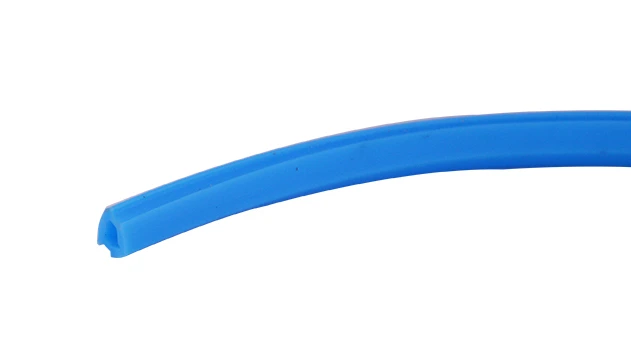
The rubber T-slot seal cover prevents dust and debris buildup, covers wires in the T-slot channel, and adds an extra layer of protection to applications. It rolls into the T-slot, making it easy to assemble.
Introduction: The Unsung Heroes of Aluminum Profile Systems
In the bustling world of manufacturing and industrial design, it's often the smallest components that hold the biggest impact. Walk through any production floor, and you'll likely spot rows of sleek, modular structures—workbenches where assembly lines hum, conveyors moving parts with precision, or material racks organizing tools and components. These structures, more often than not, are built from aluminum extrusion profiles—versatile, lightweight, and infinitely customizable building blocks that have revolutionized how factories and workshops operate.
But for all their strength and adaptability, aluminum profiles have a tiny feature that, left unaddressed, can undermine their performance: the T-slot. Those long, narrow grooves running along the length of the profile are what make aluminum extrusion so flexible—they let you attach brackets, panels, and accessories with ease. Yet, they also act like magnets for dust, debris, and liquids, which can corrode the metal, jam moving parts, or compromise the integrity of the entire system over time. That's where T-slot rubber seal covers come in.
Often overlooked in discussions about industrial hardware, these simple yet ingenious accessories are the unsung heroes of aluminum profile systems. They slip into T-slots, forming a tight, protective barrier that keeps out contaminants while smoothing rough edges and enhancing safety. In this guide, we'll dive deep into how T-slot rubber seal covers work, exploring their design, materials, and the science behind their sealing mechanism. Whether you're a plant manager looking to extend the life of your workbenches, a maintenance technician troubleshooting a dusty conveyor, or simply curious about the mechanics of industrial design, this article will show you why these small components deserve a spot in the spotlight.
What Are T-Slot Rubber Seal Covers, Anyway?
Let's start with the basics: T-slot rubber seal covers are specialized accessories designed to fit snugly into the T-slots of aluminum extrusion profiles. If you're unfamiliar with aluminum profiles, think of them as industrial Lego blocks—extruded lengths of aluminum with standardized cross-sections, including the signature T-shaped groove (the T-slot) that runs along their sides. These slots are the "connectors" of the system, allowing you to bolt, clamp, or snap on everything from shelves to wheels to electrical panels.
But T-slots, by nature, are open channels. Imagine a 4040 aluminum profile (one of the most common sizes, measuring 40mm by 40mm) used to build a workbench in an electronics factory. Over time, solder splatter, dust from circuit boards, and even spilled cleaning fluids could seep into those T-slots. Left unchecked, this debris can corrode the aluminum, gunk up the slots so accessories won't fit, or even create electrical hazards in ESD (Electrostatic Discharge) workstations where static control is critical. T-slot rubber seal covers solve this by acting as a physical barrier: they plug the slot, keeping contaminants out while maintaining the profile's structural integrity.
Made from flexible rubber compounds, these covers are engineered to be both durable and easy to install. They're typically sold in rolls or pre-cut lengths, and they come in various sizes to match common aluminum profile series—think 2020, 3030, 4040, or 4080 profiles, each with T-slots of different widths and depths. Some are even colored (like the yellow or grey plastic roller track guide rails you might see in material handling setups) to match factory aesthetics or coding systems, though their primary job is always protection.

Materials Matter: The Rubber Behind the Seal
Not all T-slot rubber seal covers are created equal. The key to their performance lies in the type of rubber used, which determines everything from flexibility and durability to resistance against heat, chemicals, and wear. Let's break down the most common materials and what makes each one unique:
| Material Type | Temperature Resistance | Chemical Resistance | Flexibility | Common Applications |
|---|---|---|---|---|
| EPDM (Ethylene Propylene Diene Monomer) | -40°C to 150°C (-40°F to 302°F) | Resistant to water, steam, mild acids, and alkalis | High flexibility, even in cold temperatures | General industrial use, outdoor applications, washdown areas |
| Silicone | -60°C to 230°C (-76°F to 446°F) | Resistant to oils, solvents, and UV radiation | Exceptional flexibility; retains shape after extreme temperature cycles | High-temperature environments (e.g., near ovens or furnaces), medical equipment |
| Nitrile (Buna-N) | -40°C to 120°C (-40°F to 248°F) | Excellent resistance to oils, fuels, and hydraulic fluids | Good flexibility; more rigid than EPDM but highly durable | Automotive production lines, machine shops with oil exposure |
| Neoprene | -40°C to 100°C (-40°F to 212°F) | Resistant to ozone, weathering, and mild chemicals | Balanced flexibility and toughness; resistant to abrasion | Outdoor structures, marine environments, applications with ozone exposure |
EPDM is the workhorse of the group, favored for its all-around performance and affordability. It's the go-to choice for most general industrial settings, from lean pipe workbenches to conveyor frames, where protection against dust, water, and moderate temperatures is key. Silicone, on the other hand, shines in extreme conditions—think pharmaceutical factories with high-temperature sterilization processes or food processing plants where heat and chemical cleaners are common. Nitrile is the top pick for environments with oil or fuel exposure, like automotive assembly lines, while neoprene holds up well outdoors or in areas with high ozone levels, such as near electrical equipment.
Beyond the base rubber, some seal covers include additives like UV stabilizers (for outdoor use), flame retardants (for electrical enclosures), or conductive fillers (for ESD workstations, where static buildup can damage sensitive electronics). These tweaks make T-slot rubber seal covers adaptable to almost any industrial scenario.

Design Secrets: How Shape and Size Lock in the Seal
Materials are only part of the story. The physical design of T-slot rubber seal covers is just as critical to their sealing ability. At first glance, they might look like simple strips of rubber, but a closer inspection reveals clever engineering tailored to the unique challenges of T-slots.
Most seal covers have a cross-sectional shape that resembles a "U" or a "C" with small lips or tabs along the edges. This design is intentional: when inserted into the T-slot, the lips press against the inner walls of the groove, creating friction that holds the cover in place without the need for adhesives or fasteners. The U-shape also allows the cover to flex and conform to minor irregularities in the slot, ensuring a tight fit even if the aluminum profile isn't perfectly smooth (a common scenario in mass-produced extrusion).
Size matters, too. T-slots come in different widths and depths depending on the aluminum profile series. For example, a 2020 profile (20mm x 20mm) has a narrower T-slot than a 4040 profile (40mm x 40mm). Seal covers are manufactured to match these dimensions precisely—too narrow, and they'll slip out; too wide, and they'll stretch or tear when installed. Reputable suppliers often list compatibility with specific profile series (e.g., "fits 3030 aluminum profiles" or "compatible with 4080b EU standard aluminum profile") to take the guesswork out of choosing the right size.
Another design feature to note is the thickness of the rubber. Thicker covers offer more durability and better impact resistance, making them ideal for high-traffic areas like material racks or hand trolleys where the T-slot might get bumped or scraped. Thinner covers, by contrast, are more flexible and easier to trim, which is useful for custom-length profiles or tight corners where a rigid strip might kink.
The Sealing Mechanism: How They Actually Keep Contaminants Out
Now, let's get to the heart of the matter: how do T-slot rubber seal covers create a reliable seal? It all comes down to three key principles: friction fit, compression, and barrier protection.
First, the friction fit. When you press a seal cover into a T-slot, the flexible rubber lips on either side of the U-shape press against the slot's inner edges. This creates a tight, mechanical bond that resists movement—even if the profile is vibrated (like on a conveyor) or jostled (like on a mobile workbench with casters). The more the lips are compressed, the stronger the friction, which is why choosing the right size is so important: a cover that's slightly oversized for the slot will compress more, enhancing the fit.
Second, compression. Rubber is an elastomer, meaning it can deform under pressure and return to its original shape. When the seal cover is installed, the T-slot's walls squeeze the rubber, compressing it into every nook and cranny of the groove. This compression eliminates gaps where dust, water, or debris could sneak in. Think of it like a cork in a bottle: the cork (seal cover) is compressed by the bottle's neck (T-slot), creating a seal that keeps the contents (contaminants) out.
Third, barrier protection. Once installed, the seal cover forms a physical barrier across the opening of the T-slot. This blocks larger particles like metal shavings or plastic scraps from falling in, while the rubber's dense molecular structure prevents smaller contaminants like dust or moisture from seeping through. In environments with liquids—such as food processing plants or car washes—this barrier can even repel splashes, keeping the T-slot dry and corrosion-free.
It's worth noting that the seal isn't just one-way. T-slot rubber seal covers also protect the T-slot from the inside out. For example, if the profile is used to house wires or cables (a common practice in custom workbenches), the seal cover prevents those wires from rubbing against the sharp edges of the T-slot, which could fray insulation over time. This dual protection—keeping contaminants out and sensitive components in—is what makes seal covers indispensable in precision-focused industries.
Where Do They Shine? Common Applications in Industry
T-slot rubber seal covers are versatile enough to pop up in almost any industry that uses aluminum extrusion profiles. Let's explore some of their most common applications and why they're essential in each:
Workbenches and Assembly Stations: In electronics manufacturing, where ESD workstations are critical, even a tiny dust particle can short-circuit a circuit board. Seal covers keep T-slots clean, ensuring that tools and fixtures attached to the workbench (like LED task lights or anti-static mats) stay secure and functional. They also smooth the profile's edges, reducing the risk of cuts or snags on wiring harnesses.
Conveyors and Material Handling Systems: Conveyors—whether roller track, belt, or chain-driven—are workhorses in warehouses and production lines. The aluminum profiles that frame these systems are exposed to constant vibration, dust from packages, and occasional spills. Seal covers prevent debris from jamming the T-slots, which are often used to mount guides, sensors, or stop blocks that keep products moving straight. Without them, maintenance crews would spend hours cleaning slots instead of keeping the line running.
Lean Manufacturing Cells: Lean systems thrive on efficiency, and that includes minimizing downtime. T-slot rubber seal covers extend the life of aluminum profiles in material racks, turnover trolleys, and kanban systems by preventing corrosion and wear. For example, a material rack B (3 row and 3 floor) used to store heavy parts will last longer if its T-slots are protected from rust caused by warehouse humidity.
Outdoor and Harsh Environments: Aluminum profiles aren't limited to indoor use—they're also used in outdoor shelters, loading docks, and agricultural equipment. Here, seal covers made from UV-resistant materials like EPDM or silicone protect T-slots from rain, snow, and sunlight, which can fade or degrade unprotected rubber over time.
Medical and Pharmaceutical Settings: Cleanliness is non-negotiable in these industries. Silicone seal covers, which are resistant to autoclaving (high-temperature steam sterilization) and chemical cleaners, are used on aluminum profile workstations where medical devices or drugs are assembled. They prevent bacteria from hiding in T-slots, helping facilities meet strict FDA or ISO standards.
Beyond Protection: The Hidden Benefits of Seal Covers
While sealing and protection are their primary roles, T-slot rubber seal covers offer a handful of bonus benefits that make them even more valuable in industrial settings:
Safety Enhancement: Raw aluminum T-slots can have sharp edges, especially if the profile was cut to length on-site. A seal cover softens these edges, reducing the risk of cuts for workers who lean against or brush up against the profile. This is especially important in busy environments like assembly lines, where speed and movement are constant.
Aesthetic Improvement: Let's face it—exposed T-slots can look messy, with dust and debris collecting in the grooves. Seal covers give aluminum profiles a clean, finished look, which matters in customer-facing areas (like demo labs) or facilities that prioritize 5S (Sort, Set in Order, Shine, Standardize, Sustain) principles for workplace organization.
Noise Reduction: In environments with moving parts—like roller tracks or conveyors—vibrating aluminum profiles can create a high-pitched hum. Rubber seal covers dampen this vibration, acting as a sound insulator and making the workspace quieter and more comfortable for employees.
Cost Savings: Replacing an entire aluminum profile because its T-slots are corroded or jammed is expensive. Seal covers cost a fraction of the price of a new profile and are easy to replace when worn, making them a cost-effective way to extend the life of your existing equipment.
Installing T-Slot Rubber Seal Covers: A Step-by-Step Guide
Installing T-slot rubber seal covers is a straightforward process that requires no special tools—just a little patience and the right technique. Here's how to do it like a pro:
- Prepare the T-Slot: Start by cleaning the T-slot thoroughly. Use a soft brush or compressed air to remove dust, debris, or old adhesive residue. If there's rust or stubborn grime, wipe the slot with a cloth dampened with isopropyl alcohol and let it dry completely—clean surfaces ensure better adhesion (though most seal covers rely on friction, not glue).
- Measure and Cut: Measure the length of the T-slot you need to cover, then add a few extra millimeters to account for trimming. Use sharp scissors or a utility knife to cut the seal cover to length. For clean, straight cuts, place the cover on a flat surface and score it lightly with the knife before snapping it—this prevents the rubber from stretching or fraying.
- Align and insert: Hold the seal cover at one end of the T-slot, making sure the U-shaped opening faces the slot. Gently press the cover into the slot, starting at the end and working your way down. Use your thumb or a rubber mallet (for thicker covers) to tap the cover into place, ensuring the lips on both sides of the U-shape are fully seated against the slot walls.
- Smooth Out Bubbles or Wrinkles: If the cover bunches up or forms bubbles, peel it back slightly and reinsert, stretching it gently as you go. For corners or bends, make small notches in the cover's lips to allow it to fold without creasing—this is especially useful for profiles used in curved structures like circular workstations.
- Trim Excess: Once the cover is fully installed, use scissors to trim any overhanging ends flush with the profile. This gives a neat, professional finish and prevents the cover from catching on tools or clothing.
Pro tip: If you're installing covers on multiple profiles, consider using a roller tool (like those used for applying vinyl decals) to ensure even pressure and a consistent seal. This is a huge time-saver for large projects like outfitting an entire production line.
Caring for Your Seal Covers: Maintenance Tips for Longevity
T-slot rubber seal covers are low-maintenance, but a little care can go a long way in extending their lifespan. Here's what to keep in mind:
Regular Inspection: Check seal covers monthly for signs of wear, such as cracks, tears, or hardening (which indicates the rubber is aging). Pay extra attention to high-stress areas like corners, where the cover is bent, or near moving parts like conveyor rollers, where friction can wear down the rubber over time.
Clean as Needed: Wipe covers with a damp cloth to remove surface dust or grease. For heavier soiling, use a mild detergent (avoid harsh chemicals like bleach, which can degrade rubber). Rinse thoroughly and let dry before reinstalling.
replace When Worn: If a cover is cracked, torn, or no longer fits snugly, replace it immediately. A damaged cover can't protect the T-slot effectively, and leaving it in place might trap debris under the rubber, causing more harm than good.
Store Spare Covers Properly: Keep extra seal covers in a cool, dry place away from direct sunlight and heat sources. UV radiation and high temperatures can cause rubber to degrade, even when not in use. Store them flat or rolled loosely (not folded) to prevent creases that could weaken the material.
Conclusion: Small Component, Big Impact
T-slot rubber seal covers may not be the most glamorous part of an industrial setup, but their role in protecting aluminum extrusion profiles is indispensable. By combining smart design, durable materials, and a simple yet effective sealing mechanism, they keep T-slots clean, extend the life of equipment, and enhance safety across countless industries—from electronics manufacturing to food processing, from lean production cells to outdoor structures.
Whether you're building a new workbench, maintaining a conveyor line, or upgrading your facility's material handling systems, don't overlook these small but mighty accessories. Investing in quality T-slot rubber seal covers is an investment in the reliability and longevity of your aluminum profile systems—and in the efficiency of your entire operation.
So the next time you walk past a sleek aluminum structure, take a closer look at those T-slots. Chances are, there's a rubber seal cover quietly doing its job, keeping the system running smoothly and the future of your production line secure.