- Company Articles
- Products and Technology
- Solution
- How Does 40 Aluminum Roller Track Grey Improve Material Flow in Warehouses?

How Does 40 Aluminum Roller Track Grey Improve Material Flow in Warehouses?
Related Product
40 Aluminum Roller Track Grey
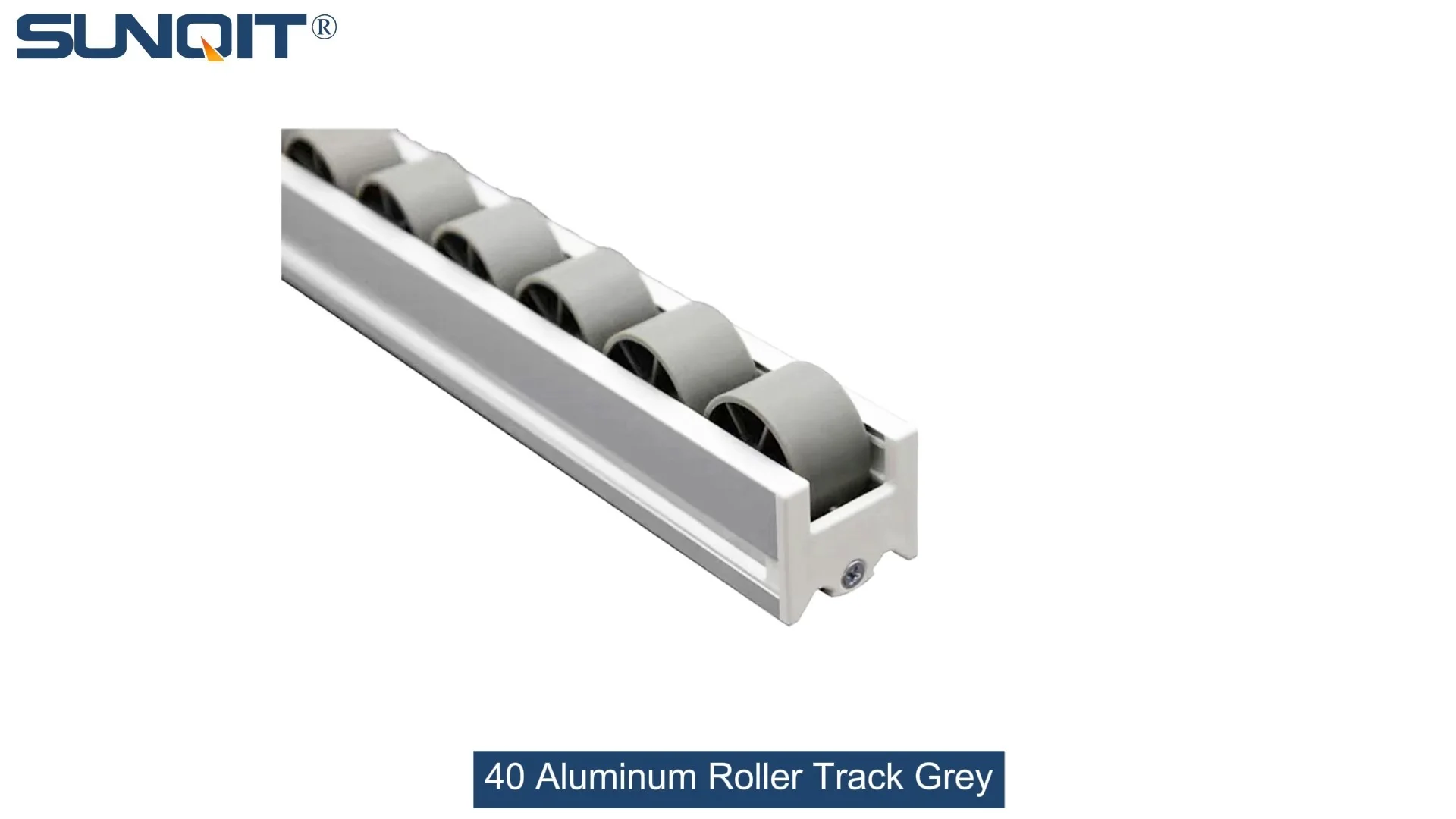
Durable and smooth-running modular roller rails. The system is fully assembled. The roller rail profile contains plastic rollers mounted on steel axles. Aluminum frame with plastic wheel make it anti corrosion,and material convey more smooth.
Walk into any busy warehouse, and you'll quickly realize that material flow is the invisible force keeping everything moving. It's the rhythm that ensures raw materials reach production lines, finished goods make their way to shipping docks, and workers aren't stuck waiting for parts or tools. But when that rhythm falters—when boxes get stuck, carts are heavy to push, or inventory piles up at bottlenecks—the whole operation feels the strain. Missed deadlines, frustrated employees, and rising costs become the new normal. That's where solutions like the 40 aluminum roller track grey come in. Far more than just a strip of metal with wheels, this unassuming tool is quietly transforming how warehouses handle material flow, turning chaos into efficiency and stagnation into momentum.
In this article, we'll dive into why material flow matters, the specific challenges warehouses face, and how the 40 aluminum roller track grey addresses those issues head-on. We'll look at real-world examples, compare it to other common solutions, and explore how it integrates with broader systems like flow racks and lean management practices. By the end, you'll understand why this track isn't just a piece of equipment—it's a catalyst for change in modern warehouse operations.
The Hidden Cost of Poor Material Flow
Before we talk about solutions, let's unpack the problem: what happens when material flow breaks down? It's not just about inconvenience—it's about tangible, bottom-line costs. Take manual handling, for example. In many warehouses, workers still push heavy carts loaded with parts across concrete floors, or carry boxes from storage racks to packing stations. Over time, this leads to fatigue, which slows down work and increases the risk of injuries. The Bureau of Labor Statistics reports that overexertion and repetitive motion injuries cost U.S. companies billions annually in workers' compensation and lost productivity. A single back strain from lifting a misaligned box can take an employee off the floor for weeks—and leave their team scrambling to cover the gap.
Then there are the bottlenecks. Imagine a pick-and-pack area where orders pile up because the conveyor belt feeding boxes to packers keeps jamming. Or a production line where assemblers wait 20 minutes for a bin of screws because the storage rack is too far, and the path between the rack and the workbench is uneven. These delays ripple outward: orders ship late, customers get frustrated, and managers spend hours troubleshooting instead of planning for growth. Even small inefficiencies add up. If a worker spends just 10 extra minutes per hour navigating poor material flow, that's over 80 hours of lost time per year—enough to process hundreds more orders or train new staff.
Rigid systems are another culprit. Many warehouses rely on fixed infrastructure: permanent conveyor belts, heavy steel racks bolted to the floor, or custom-built workstations that can't adapt to changing needs. When product lines change, seasonal demand spikes, or new inventory arrives in different sizes, these systems become liabilities. A conveyor designed for small boxes can't handle bulkier items without expensive modifications, and a static storage rack might leave valuable floor space unused. In an era where agility is key, rigidity is a death sentence for efficiency.
Finally, there's maintenance. Older roller tracks or worn-out casters often require constant upkeep—greasing wheels, replacing broken parts, or repainting rusted steel. Each repair means downtime, and each unplanned stop disrupts the flow all over again. A steel roller track that rusts in humid environments, for instance, might need parts replaced every few months, adding to long-term costs. Plastic tracks, while cheaper upfront, can crack under heavy loads or warp in extreme temperatures, leading to frequent replacements. For warehouse managers, this creates a cycle: spend money on repairs, lose time to downtime, and never quite catch up.
What Is 40 Aluminum Roller Track Grey, Anyway?
At first glance, the 40 aluminum roller track grey might not seem revolutionary. It's a long, flat strip of aluminum—typically 40mm in width—with evenly spaced rollers embedded along its length, finished in a neutral grey color. But looks can be deceiving. Every aspect of its design is intentional, from the material choice to the roller spacing, and those details are what make it a game-changer for material flow.
Let's break down the name: "40" refers to its width (40mm), which strikes a balance between stability (wide enough to support most standard boxes and bins) and flexibility (narrow enough to fit in tight spaces between racks or workbenches). "Aluminum" is the star here—lightweight yet surprisingly strong, resistant to rust, and easy to handle during installation. Unlike steel, which can be heavy and cumbersome, aluminum tracks are easy for two workers to carry and position, even in hard-to-reach areas. "Roller track" speaks to its function: small, smooth-rolling wheels (usually made of durable plastic or rubber) that reduce friction, letting materials glide instead of being pushed. And "grey"? That's not just about aesthetics. The neutral tone hides scuffs and dirt better than bright colors, keeping the track looking clean even in dusty warehouse environments, and it blends seamlessly with most industrial decor—no need for custom painting to match existing racks.
But the real magic is in the details. The rollers are spaced just right—typically 50-60mm apart—to ensure even weight distribution, so even irregularly shaped items won't get stuck. The aluminum frame is extruded, meaning it's formed into a single, seamless piece, reducing weak points where bending or breaking might occur. Many models also include built-in guides along the edges to keep boxes centered, preventing them from veering off track and causing jams. And because it's modular, you can cut sections to length or connect multiple tracks end-to-end, creating custom paths that snake around obstacles or link different parts of the warehouse.
Perhaps most importantly, the 40 aluminum roller track grey is designed to work with existing systems, not replace them. It integrates with flow racks, workbenches, and even conveyor systems, turning static storage into dynamic material delivery. Whether you're moving small parts from a flow rack to an assembly workbench or sliding cartons from a picking area to a packing station, this track acts as a bridge, ensuring materials flow where they need to go—when they need to go—with minimal effort.

5 Ways 40 Aluminum Roller Track Grey Solves Material Flow Challenges
Now that we understand the problem and the basics of the track itself, let's get specific: how exactly does the 40 aluminum roller track grey improve material flow? Let's look at five key areas where it makes a measurable difference.
1. Reducing Friction, Effort, and Fatigue
Friction is the enemy of material flow. When a worker has to push a 50-pound cart across a rough floor, or drag a bin of parts up a slight incline, every inch requires extra effort. Over a full shift, that effort adds up, leading to slower work and increased fatigue. The 40 aluminum roller track grey eliminates this by turning static friction into rolling friction. Instead of pushing against the floor, materials glide on the track's rollers, reducing the force needed to move them by up to 70%, according to industry studies.
Consider a scenario: A warehouse uses a manual cart to move bins of electronics components from a flow rack to a soldering workbench, 50 feet away. Without the track, a worker might exert 30 pounds of force to get the cart moving, and 20 pounds to keep it rolling. With the track? Maybe 5 pounds of force to start, and almost nothing to keep it going. That's a massive difference—one that lets workers move more bins in less time, with less strain. Over weeks and months, this reduces the risk of injuries and keeps energy levels high, even during peak hours.
"We installed 40 aluminum roller track grey between our main flow rack and the assembly line last year, and the difference was night and day," says Raj, a production supervisor at a mid-sized electronics manufacturer. "Before, my team was taking 15-minute breaks every hour because their arms and backs were sore from pushing carts. Now, they're moving twice as many parts and barely breaking a sweat. Break times are shorter, and morale is way up."
2. Eliminating Bottlenecks with Modular Flexibility
Bottlenecks often form because material paths are fixed. A conveyor belt that only runs in one direction, or a storage area that's too far from a packing station, can create logjams when demand shifts. The 40 aluminum roller track grey solves this with modularity—meaning it's easy to reconfigure as needs change. Unlike fixed conveyors, which require professional installation and major overhauls to modify, these tracks can be cut, extended, or rerouted with basic tools and minimal downtime.
For example, a toy manufacturer might see a surge in demand for a new product line in Q4. Suddenly, they need to move more boxes from the production area to shipping, but the existing path is too narrow. With the 40 aluminum roller track grey, they can quickly add a parallel track alongside the original one, or extend a section to bypass a crowded corner. No need to call in contractors or halt operations for days—just a few hours of work, and the material path is optimized for the new demand.
This flexibility also helps with space utilization. Warehouses often struggle with balancing storage and workflow; a rack that's perfect for summer inventory might block a critical path in winter. The track's lightweight design means it can be mounted on walls, under shelves, or even overhead (with the right supports), freeing up floor space for other uses. It's not just a tool for moving materials—it's a tool for adapting to change.
3. Integrating with Flow Racks for "First In, First Out" Efficiency
Flow racks are a staple in lean warehouses, designed to ensure "first in, first out" (FIFO) inventory management—older stock gets used before newer stock, reducing waste and obsolescence. But flow racks work best when materials can move smoothly from the back (where stock is loaded) to the front (where it's picked). Without a good track system, items might get stuck halfway, requiring workers to reach deep into the rack or pull bins out manually—defeating the purpose of FIFO.
The 40 aluminum roller track grey is engineered to work seamlessly with flow racks. Its narrow profile fits perfectly into the rack's shelving, and the rollers are spaced to support standard bin sizes, from small parts containers to larger cartons. When a worker loads a new bin onto the back of the rack, gravity and the track's rollers carry it gently to the front, ready for picking. No more jams, no more manual adjustment, and no more expired inventory sitting forgotten in the back.
This integration is especially valuable for high-turnover items. In a food distribution warehouse, for instance, perishable goods need to move quickly to avoid spoilage. By pairing flow racks with 40 aluminum roller track grey, the warehouse ensures that cases of produce or dairy slide to the front as soon as they're loaded, so pickers always grab the oldest stock first. The result? Less waste, fresher products, and happier customers.
4. Low Maintenance, High Durability
A solution is only as good as its reliability. If a roller track breaks down every few weeks, it becomes a bottleneck itself. That's why the 40 aluminum roller track grey is built for low maintenance and long life. Aluminum is naturally resistant to rust and corrosion, even in humid or dusty environments, so it won't degrade like steel tracks (which can rust and seize up) or plastic tracks (which can crack or warp under heavy loads).
The rollers, too, are designed for durability. Most are made of high-density polyethylene (HDPE) or rubber, which resist wear and require no lubrication. Unlike metal rollers, they won't scratch delicate items like electronics or finished furniture, and they operate quietly—no more loud clanging as boxes move along the track. Even the connections between track sections are robust, using simple clips or placon mounts (like the roller track placon mount for aluminum profile, a common accessory) that stay secure without constant tightening.
Compare this to a traditional steel roller track. Steel might be strong, but it needs regular greasing to keep rollers moving, and any scratch or chip can lead to rust. Over five years, the maintenance costs for steel tracks—replacement rollers, rust treatment, lubrication—can add up to 30% more than the initial purchase price. The 40 aluminum roller track grey, by contrast, might need a quick wipe-down with a damp cloth every few months and an occasional check of the mounts. That's it. For busy warehouse managers, this means fewer repair calls, less downtime, and more time focusing on growth.
5. Supporting Lean System Principles
At its core, lean management is about eliminating waste—whether it's time, effort, space, or materials. The 40 aluminum roller track grey aligns perfectly with this philosophy by streamlining material flow and reducing non-value-added activities. In lean terms, "value" is anything that directly contributes to getting a product to the customer; everything else is waste. When a worker walks 50 feet to fetch a part, that's waste. When a box sits idle on a shelf because the path to the packing station is blocked, that's waste. The track minimizes these wastes by creating direct, efficient paths for materials.
Take "motion waste," for example. Lean experts estimate that workers in poorly designed warehouses spend up to 30% of their day walking or searching for items. By installing 40 aluminum roller track grey between key points—say, from the receiving dock to the flow rack, or from the flow rack to the shipping workbench—you cut down on unnecessary movement. A picker no longer has to walk to the back of the rack to retrieve a bin; the bin comes to them, thanks to the track and flow rack combo. A packer doesn't have to wait for a forklift to deliver boxes; the boxes glide to their station on the track.
This also supports "just-in-time" (JIT) production, where materials arrive exactly when they're needed, not before. With the track, you can set up "supermarkets"—small, localized storage areas near workstations—stocked with just enough parts to keep production running. As parts are used, the track replenishes them from the main flow rack, ensuring no excess inventory piles up. It's lean in action: the right materials, in the right place, at the right time—no waste, no waiting, no excess.

How Does It Stack Up? Comparing 40 Aluminum Roller Track Grey to Other Solutions
Of course, the 40 aluminum roller track grey isn't the only option for improving material flow. Steel roller tracks, plastic tracks, and powered conveyors are all common alternatives. So how does it compare? Let's break it down with a side-by-side look at key factors like cost, durability, and flexibility.
| Feature | 40 Aluminum Roller Track Grey | Steel Roller Track | Plastic Roller Track | Powered Conveyor |
|---|---|---|---|---|
| Material | Aluminum frame, HDPE/rubber rollers | Steel frame, steel rollers | Plastic frame, plastic rollers | Steel frame, motorized belt/rollers |
| Weight (per 10ft section) | 15-20 lbs | 40-50 lbs | 8-12 lbs | 60-80 lbs (plus motor) |
| Max Load Capacity (per linear ft) | 50-75 lbs | 100-150 lbs | 20-30 lbs | 100-500+ lbs (varies by model) |
| Installation Time (10ft section) | 20-30 minutes (2 people) | 45-60 minutes (2-3 people) | 15-20 minutes (1 person) | 2-4 hours (professional install) |
| Maintenance Needs | Minimal (occasional cleaning) | High (lubrication, rust treatment) | Moderate (replace cracked rollers) | Very high (motor upkeep, belt replacement) |
| Initial Cost (per 10ft section) | $80-120 | $100-150 | $40-60 | $500-1,500+ |
| Long-Term Cost (5 years) | $80-120 (no maintenance) | $150-200 (maintenance + repairs) | $100-140 (replacement sections) | $1,000-2,500 (electricity + repairs) |
| Flexibility (Reconfigurability) | High (easily cut/extended, no tools needed) | Low (heavy, hard to reposition) | High (lightweight, but less durable) | Very low (fixed, requires electrician to move) |
| Best For | Medium loads, dynamic environments, lean systems | Heavy loads, static paths, industrial settings | Light loads, temporary setups, low budgets | High-volume, continuous flow (e.g., Amazon-style warehouses) |
As the table shows, the 40 aluminum roller track grey hits a sweet spot between cost, durability, and flexibility. It's lighter and easier to install than steel, more durable than plastic, and far cheaper and simpler than powered conveyors. For most warehouses—especially those focused on lean management or frequent layout changes—it's the most practical choice. Steel might be better for ultra-heavy loads, and powered conveyors for high-volume, non-stop flow, but for the average warehouse dealing with medium loads and changing needs, aluminum is the way to go.

Real-World Impact: A Case Study
Numbers and comparisons are helpful, but nothing illustrates impact like a real-world example. Let's look at how a mid-sized automotive parts distributor used 40 aluminum roller track grey to transform their material flow.
The company, let's call them AutoParts Inc., operates a 30,000 sq ft warehouse storing everything from brake pads to engine components. Before 2023, their material flow was a patchwork of manual carts, static steel racks, and a single old conveyor belt that frequently jammed. Order processing times were slow—an average of 2.5 hours per batch of 50 orders—and pickers were complaining about fatigue and missed items.
In early 2023, AutoParts Inc. decided to adopt lean principles and invested in a warehouse redesign. A key part of that redesign was installing 40 aluminum roller track grey in three critical areas:
- Between the receiving dock and the main flow rack area, to move incoming parts to storage quickly.
- From the flow racks to the picking workbenches, to deliver parts directly to pickers.
- From the packing workbenches to the shipping dock, to move packed orders to trucks.
The results were striking. Within three months:
- Order processing time dropped from 2.5 hours to 1.2 hours per batch—a 52% improvement.
- Picker walking distance decreased by 40%, from 8 miles per day to 4.8 miles.
- Worker-reported fatigue scores (measured via monthly surveys) fell by 65%.
- Inventory accuracy improved by 18%, as parts were less likely to be misplaced during movement.
- Shipping errors (wrong parts, missing items) dropped from 5% to 1.5%.
"We were skeptical at first—how could a simple track make that much difference?" admits Lisa, AutoParts Inc.'s warehouse manager. "But the data speaks for itself. We're processing twice as many orders with the same number of staff, and turnover has gone down because people aren't quitting due to exhaustion. The 40 aluminum roller track grey wasn't the only change we made, but it was the backbone that made everything else work. It turned our warehouse from a place where people fought to keep up into a place where things just… flow."
Installation and Integration: Getting Started with 40 Aluminum Roller Track Grey
If you're convinced that 40 aluminum roller track grey could benefit your warehouse, you might be wondering: How do I get started? The good news is that installation is straightforward, even for teams with limited technical experience. Here's a quick overview of the process and what you'll need.
Step 1: Plan Your Path Start by mapping your current material flow. Where are the bottlenecks? Which areas have the most foot traffic or cart movement? Common paths include between flow racks and workbenches, receiving and storage, or packing and shipping. Measure the length of these paths to determine how many track sections you'll need. Most tracks come in standard lengths (5ft, 10ft) but can be cut to size with a hacksaw or miter saw if needed.
Step 2: Gather Tools and Accessories You won't need much: a tape measure, a level, a drill (for mounting to floors or racks), and basic hand tools. You'll also need mounting hardware, which varies depending on where you're installing the track. For example, if mounting to aluminum profiles (like those used in flow racks), you'll use roller track placon mounts for aluminum profile (flat or high, depending on the profile's shape). If mounting to the floor, simple brackets or adhesive strips (for temporary setups) work well.
Step 3: Install the Track Lay out the track sections along your planned path, ensuring they're level (use a bubble level to check). Connect sections using the built-in clips or connectors (like the roller track placon mount connector, another common accessory). Mount the track to your chosen surface—floors, walls, or racks—using the appropriate hardware. Tighten everything securely, then test with a few boxes or bins to ensure smooth movement. Adjust as needed (e.g., re-level if items veer off track).
Step 4: Integrate with Existing Systems The beauty of the 40 aluminum roller track grey is how well it plays with others. Connect it to your flow rack by mounting the track at the front of the rack's shelves, so bins slide directly onto the track. Pair it with a workbench by aligning the track with the bench's surface, so parts can be pushed from the track to the bench with one hand. Even better, use it to extend a powered conveyor—let the conveyor handle long distances, then use the aluminum track for the final "last mile" to the workstation, saving on electricity costs.
For most teams, installing a 100ft track system takes a day or less, with no need to shut down operations entirely. Many warehouses install during off-hours or weekends to minimize disruption. And because the track is modular, you can start small—say, with a single path between two key areas—and expand later as you see results.
The Future of Material Flow: Why Aluminum Tracks Are Here to Stay
As warehouses evolve—adopting automation, IoT sensors, and AI-driven inventory management—the role of material flow solutions like the 40 aluminum roller track grey is only growing. While flashy technologies like autonomous forklifts or robotic pickers get a lot of attention, the foundation of efficient material flow will always be simple, reliable tools that move materials with minimal effort. Aluminum tracks fit that bill perfectly.
Consider the rise of "human-robot collaboration" in warehouses. Many facilities now use cobots (collaborative robots) to assist workers with tasks like lifting heavy items or moving bins. The 40 aluminum roller track grey complements these cobots by providing a smooth, predictable path for materials, letting cobots focus on lifting while the track handles movement. Similarly, as warehouses add IoT sensors to track inventory in real time, the track ensures that materials move in a way that's easy to monitor—no more lost bins or unexpected delays.
Sustainability is another trend driving adoption. Aluminum is 100% recyclable, and its lightweight design reduces fuel consumption for shipping (since more track sections fit on a truck). Unlike steel, it doesn't require toxic coatings or lubricants, making it better for the environment and worker health. For companies aiming to reduce their carbon footprint, aluminum tracks are a small but meaningful step.
Finally, as e-commerce continues to grow, warehouses are under pressure to process smaller, more frequent orders (think: single-item shipments to consumers). This "micro-fulfillment" model demands material flow that's fast, flexible, and precise—exactly what the 40 aluminum roller track grey delivers. It can handle small bins of individual items just as easily as large cartons, and its modularity lets warehouses reconfigure paths on the fly to meet sudden demand spikes (like during holiday seasons).
Conclusion: More Than a Track—A Catalyst for Change
Material flow might not be the most glamorous topic in warehouse management, but it's the backbone of every successful operation. When it works, it's invisible—just a smooth, steady rhythm that keeps everything moving. When it doesn't, it's a constant source of frustration and cost. The 40 aluminum roller track grey is more than just a tool to fix material flow; it's a catalyst for change, turning stagnant warehouses into dynamic, efficient spaces where workers thrive and operations scale.
Whether you're struggling with bottlenecks, worker fatigue, or rigid systems, this track offers a simple, affordable solution. It reduces effort, eliminates jams, integrates with lean principles, and stands up to the demands of daily warehouse life. And as we saw with AutoParts Inc., the results aren't just numbers on a spreadsheet—they're happier workers, faster order fulfillment, and a business better equipped to compete in today's fast-paced market.
So if you're ready to transform your warehouse's material flow, don't overlook the power of a well-designed roller track. The 40 aluminum roller track grey might not grab headlines, but it will grab hold of your material flow challenges—and set your warehouse in motion.