- Company Articles
- Products and Technology
- Product knowledge
- How Does a Five Way Straight Lean Pipe Joint Enhance Lean Pipe System Flexibility?

How Does a Five Way Straight Lean Pipe Joint Enhance Lean Pipe System Flexibility?
Related Product
Five Way Straight Lean Pipe Joint
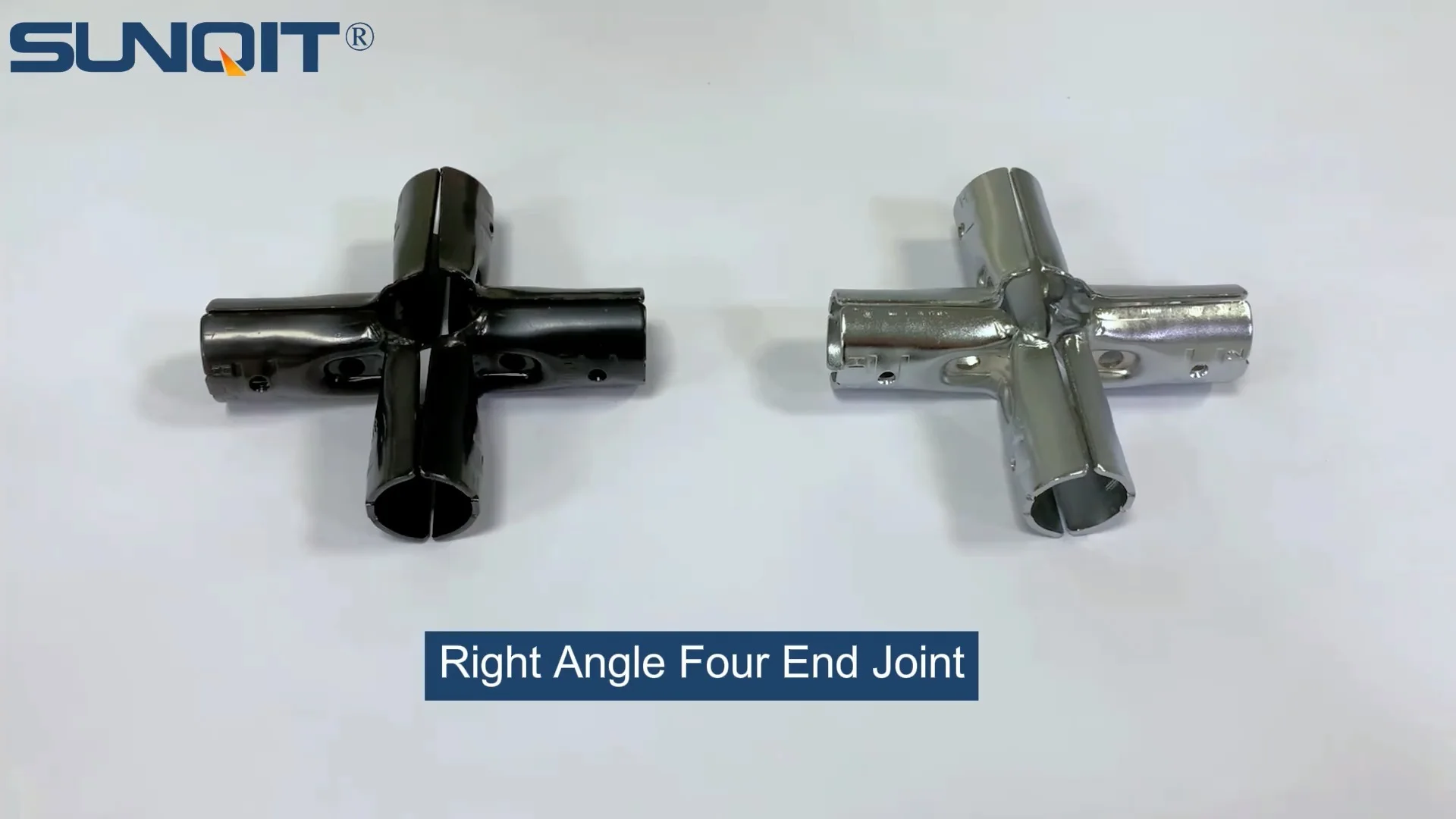
Five way straight lean pipe joint, for 5 pcs 28mm lean pipe connect in straight angle,which used widely in workbench, flow rack, hand trolley frame connection.
In the world of modern manufacturing, where customer demands shift overnight and production lines must pivot at a moment's notice, flexibility isn't just a buzzword—it's the difference between thriving and falling behind. Lean systems have long been celebrated for their ability to streamline processes, eliminate waste, and boost efficiency, but even the most well-designed lean setup can grind to a halt if it can't adapt. That's where the unsung heroes of lean infrastructure come into play: the small, unassuming components that hold everything together. Among these, the five way straight lean pipe joint stands out as a quiet game-changer, turning rigid structures into dynamic, reconfigurable systems that keep pace with the chaos of today's factories.
At first glance, a lean pipe joint might seem like little more than a metal connector. But for anyone who's ever watched a production line transform from assembling smartphones to medical devices in a matter of days, or seen a warehouse reorganize its material flow to accommodate a sudden surge in orders, the true power of these joints becomes clear. They're not just parts—they're the building blocks of adaptability. And the five way straight lean pipe joint, in particular, takes this adaptability to a new level by enabling multi-directional connectivity that was once unthinkable with traditional rigid structures. Let's dive into how this humble component enhances the flexibility of lean pipe systems , and why it's become a staple for manufacturers aiming to stay agile in an unpredictable world.
What Is a Five Way Straight Lean Pipe Joint, Anyway?
Before we can appreciate how the five way straight lean pipe joint boosts flexibility, let's start with the basics: what exactly is this component, and what does it do? Put simply, a five way straight lean pipe joint is a specialized connector designed to link up to five lean pipes (also known as "lean tubes") in a straight-line configuration. Unlike standard two-way or three-way joints, which limit connections to two or three directions, this joint opens up a world of possibilities by allowing pipes to extend in five different directions from a single central point—think of it as a traffic intersection for lean pipes, where multiple paths can converge and diverge without tangling.
Most five way straight joints are made from durable materials like galvanized steel or aluminum, often coated with a protective layer (like PE or chrome) to resist corrosion and wear. They're engineered with precision-threaded holes or clamping mechanisms that allow pipes to be inserted and secured quickly—no welding, drilling, or specialized tools required. This "tool-less assembly" is key: it means workers on the factory floor can set up, adjust, or tear down structures in minutes, not hours. Imagine a joint with five evenly spaced ports, each sized to fit standard lean pipe diameters (usually 28mm or 30mm), and you've got the basic idea. Some models even include locking levers or set screws to ensure a tight, stable connection that won't loosen under the stress of daily use.
But why "straight" specifically? While there are swivel or angled five way joints, the "straight" variant is designed for linear connections, making it ideal for building structures like multi-tiered workbench frames, vertical material racks, or horizontal flow rails where pipes need to extend in straight lines from a central hub. This linear focus might sound limiting, but in reality, it's what makes the joint so versatile: by keeping connections straight, it simplifies alignment, reduces structural stress, and ensures that even complex builds remain stable and easy to modify.
Flexibility by Design: How the Five Way Joint Transforms Rigid Systems
To understand the five way straight lean pipe joint's impact on flexibility, let's compare it to a common scenario: building a production workbench with traditional methods. In the past, workbenches were often welded steel structures—sturdy, but fixed. If a manufacturer needed to add a shelf, extend the length, or reposition the bench to accommodate a new machine, they'd either have to cut and reweld the frame (costly and time-consuming) or build an entirely new bench (wasting materials and space). Lean pipe systems changed this by using modular pipes and joints, but early joints (two-way, three-way) still had limits. A three-way joint, for example, could connect pipes in three directions, but adding a fourth or fifth required stacking joints, which created weak points and made the structure bulky.
Enter the five way straight joint. Suddenly, a single joint could replace multiple smaller joints, reducing clutter and creating a cleaner, more stable structure. But the real magic is in how it enables "on-the-fly" reconfiguration. Let's say a electronics manufacturer needs to adjust their assembly line to produce a new tablet model. The old line had a single-level workbench with materials stored on a separate turnover trolley and rack across the floor—a setup that worked for the previous product but now causes workers to waste time walking back and forth. With a five way straight joint, they can quickly reconfigure the workbench: add two vertical pipes from the back of the bench (using the joint's upward ports) to support a second shelf for materials, and extend a horizontal pipe to the side (using a side port) to attach a roller track that feeds components directly to the assembly station. All of this can be done with a few twists of a wrench, no welding required, and if the next product needs a different layout? Disassemble the joint, rearrange the pipes, and you're good to go.
This ability to adapt without rebuilding from scratch is the core of flexibility, and it stems from three key features of the five way straight lean pipe joint:
1. Multi-Directional Connectivity: Beyond "Either/Or" to "And/Also"
Traditional two-way joints force a binary choice: left/right, up/down, or forward/backward. Three-way joints add a third direction, but they're often limited to 90-degree angles, making it hard to create complex, multi-tiered structures. The five way straight joint, by contrast, offers five distinct ports (typically one central port and four equally spaced around it), allowing pipes to extend in five directions at once. This means a single joint can support a workbench top, a lower shelf for tools, an upper shelf for documentation, a side rail for bins, and a vertical post for cable management—all without needing extra connectors. For example, a material rack built with five way joints can have three rows of shelves on one side and two rows on the other, adapting to different material sizes without sacrificing stability.
2. Tool-Less Reconfiguration: Speed Matters in a Fast-Paced Factory
In manufacturing, downtime is the enemy. Every minute a production line is idle while workers reconfigure a structure is a minute of lost output. The five way straight lean pipe joint addresses this by using a simple clamping or threaded design that allows pipes to be added, removed, or adjusted without drills, welders, or specialized training. A worker with a basic wrench can loosen the joint's set screws, slide a pipe into a new port, and retighten—all in under a minute. Compare this to traditional welded structures, where reconfiguration might take hours (or days) and require a skilled metalworker. For a factory handling seasonal demand spikes, this speed is invaluable: imagine needing to expand a packaging line from 10 stations to 15 in time for the holiday rush. With five way joints, the line can be extended by adding new sections in a morning, rather than waiting for a contractor to weld new frames.
3. Compatibility with Lean Pipe and Accessories: A System, Not Just a Part
A joint is only as useful as the system it fits into, and the five way straight lean pipe joint was designed to play well with others. It works seamlessly with standard lean pipes (whether steel, aluminum, or PE-coated), as well as a wide range of accessories: roller tracks for material flow, casters for mobile workbenches, brackets for attaching bins or tools, and even ESD (electrostatic discharge) components for sensitive electronics assembly. This compatibility means manufacturers aren't locked into a single brand or type of equipment—they can mix and match components from different suppliers, using the five way joint as the "glue" that holds everything together. For example, a food processing plant might use stainless steel lean pipes (for hygiene) with five way joints to build a mobile turnover trolley , then add plastic roller tracks (to prevent product damage) and caster wheels (for easy movement) to create a custom solution that meets their unique needs.

Real-World Impact: How Manufacturers Are Using Five Way Joints to Stay Agile
To put this flexibility into context, let's look at a few real-world examples of how companies are leveraging five way straight lean pipe joints to solve common manufacturing challenges:
Case Study 1: Automotive Supplier Adapts to Just-In-Time (JIT) Demands
A Tier 1 automotive supplier produces brake components for multiple car models, each with slightly different part sizes and assembly steps. In the past, they maintained separate production lines for each model, tying up valuable floor space. When their biggest client introduced a new hybrid model with unique brake assemblies, they needed to reconfigure their lines to handle both old and new parts without expanding their facility. Using five way straight lean pipe joints, they built modular workbenches that could be adjusted on the fly: by adding or removing vertical pipes (via the joint's top/bottom ports), they raised or lowered shelves to fit different part bins; by attaching roller tracks to side ports, they directed parts to the assembly station in the correct sequence. Today, a single line can switch between models in under an hour—no more dedicated lines, no more wasted space.
Case Study 2: Electronics Manufacturer Responds to Supply Chain Delays
A consumer electronics company faced a sudden shortage of a key component, forcing them to shift production to a backup supplier with different packaging. The new components came in taller boxes, which wouldn't fit in their existing material racks. Rather than waiting weeks for custom racks, they used five way joints to modify their current racks: by adding horizontal pipes to the top ports of existing joints, they created an extra shelf level, doubling vertical storage space. They also attached angled brackets (via side ports) to tilt shelves, making it easier for workers to access the taller boxes. The entire project took two days, and the racks can be reverted back once the original supplier is back online—no permanent changes, no wasted investment.
Case Study 3: Small Batch Producer Scales Up (and Down) Without Overhead
A small bakery that supplies artisanal bread to local cafes uses lean principles to keep costs low. Their biggest challenge? Demand fluctuates wildly—high during holidays, slow in summer. With five way straight lean pipe joints, they built a modular workbench and cooling rack system that can expand or contract as needed. During peak season, they add extra bench sections (using joints to connect new pipes) and stack cooling racks vertically (via top ports) to handle more dough. In slow months, they disassemble the extra sections and store the pipes, freeing up floor space for other tasks. This "pay-as-you-grow" approach has allowed them to avoid investing in permanent infrastructure they only need part-time.

Beyond Flexibility: The Hidden Benefits of Five Way Joints
While flexibility is the star of the show, the five way straight lean pipe joint brings other advantages that make it a smart investment for lean systems:
Cost Savings: Reuse, Don't replace
Traditional rigid structures are "one and done"—if you outgrow them or their purpose changes, they end up in the scrapyard. Five way joints, by contrast, let you reuse components. A workbench frame can be disassembled and rebuilt as a material rack; a roller track can be repurposed as a trolley handle. Over time, this reuse reduces the need to buy new equipment, cutting long-term costs. One manufacturer we spoke to estimated saving 30% on infrastructure costs over three years by reconfiguring existing lean pipe systems with five way joints instead of buying new ones.
Ergonomics: Build for People, Not Just Processes
Flexibility isn't just about production—it's about people. Workers come in different heights, and repetitive tasks can lead to injuries if workstations aren't ergonomic. Five way joints make it easy to adjust workbench heights, shelf positions, or tool placement to fit individual workers. For example, a taller employee can raise their work surface by adding a few extra inches of pipe to the joint's vertical ports, while a shorter colleague can lower theirs—no need for custom-built benches. This not only reduces injury risk but also boosts morale and productivity.
Sustainability: Less Waste, More Green
In an era where sustainability is a priority, the ability to reuse components is a huge win. By extending the lifespan of lean pipes and accessories, five way joints reduce the amount of metal and plastic that ends up in landfills. Additionally, since they require no welding or painting (which can release fumes), they contribute to a cleaner, healthier factory environment.

Comparing Joint Types: Why Five Way Straight Stands Out
Not all lean pipe joints are created equal. To see why the five way straight joint is so valuable for flexibility, let's compare it to other common joint types using a simple table:
| Joint Type | Max Pipe Connections | Best For | Flexibility Rating (1-10) | Common Use Cases |
|---|---|---|---|---|
| Two-Way Straight | 2 | Linear structures (e.g., single-shelf racks) | 4 | Simple handrails, straight conveyor rails |
| Three-Way 90° | 3 | Right-angle builds (e.g., L-shaped workbenches) | 6 | Corner shelves, T-shaped material racks |
| Four-Way Cross | 4 | Cross-shaped structures (e.g., overhead support beams) | 7 | Ceiling-mounted racks, multi-directional flow systems |
| Five Way Straight | 5 | Multi-tiered, linear builds (e.g., workbenches with shelves) | 9 | Modular assembly lines, vertical storage racks, custom workstations |
| Swivel Joint | 2-3 (with rotation) | Angled or movable structures (e.g., tilting tables) | 8 | Adjustable inspection stations, pivoting tool holders |
As the table shows, the five way straight joint scores highest for flexibility thanks to its combination of multiple connections, linear stability, and compatibility with a wide range of builds. While swivel joints offer movement, they can't match the five way's ability to create complex, multi-directional structures that remain easy to reconfigure. For manufacturers prioritizing adaptability, this makes the five way straight joint a top choice.
Conclusion: The Joint That Powers the Future of Lean Manufacturing
In the end, the five way straight lean pipe joint is more than just a connector—it's a symbol of how lean manufacturing is evolving. Lean has always been about efficiency, but in today's world, efficiency without flexibility is a dead end. Customers want customization, markets shift overnight, and disruptions (like supply chain delays or new regulations) are the norm. To survive, manufacturers need systems that can bend without breaking.
The five way straight lean pipe joint delivers this by turning static structures into dynamic, reconfigurable assets. It lets workers build what they need, when they need it, and change it again tomorrow—all without wasting time, money, or materials. It's a small component, but its impact is huge: fewer bottlenecks, less downtime, happier workers, and a business that can keep up with whatever the future throws its way.
So the next time you walk through a factory and see a workbench that seems to "grow" extra shelves overnight, or a material rack that rearranges itself to fit new products, take a closer look. Chances are, there's a five way straight lean pipe joint holding it all together—quietly, reliably, and flexibly building the future of manufacturing, one connection at a time.