- Company Articles
- Products and Technology
- Product knowledge
- How Does a Flat Swivel Castor Wheel with Brake Work? Mechanism & Operation Guide

How Does a Flat Swivel Castor Wheel with Brake Work? Mechanism & Operation Guide
Related Product
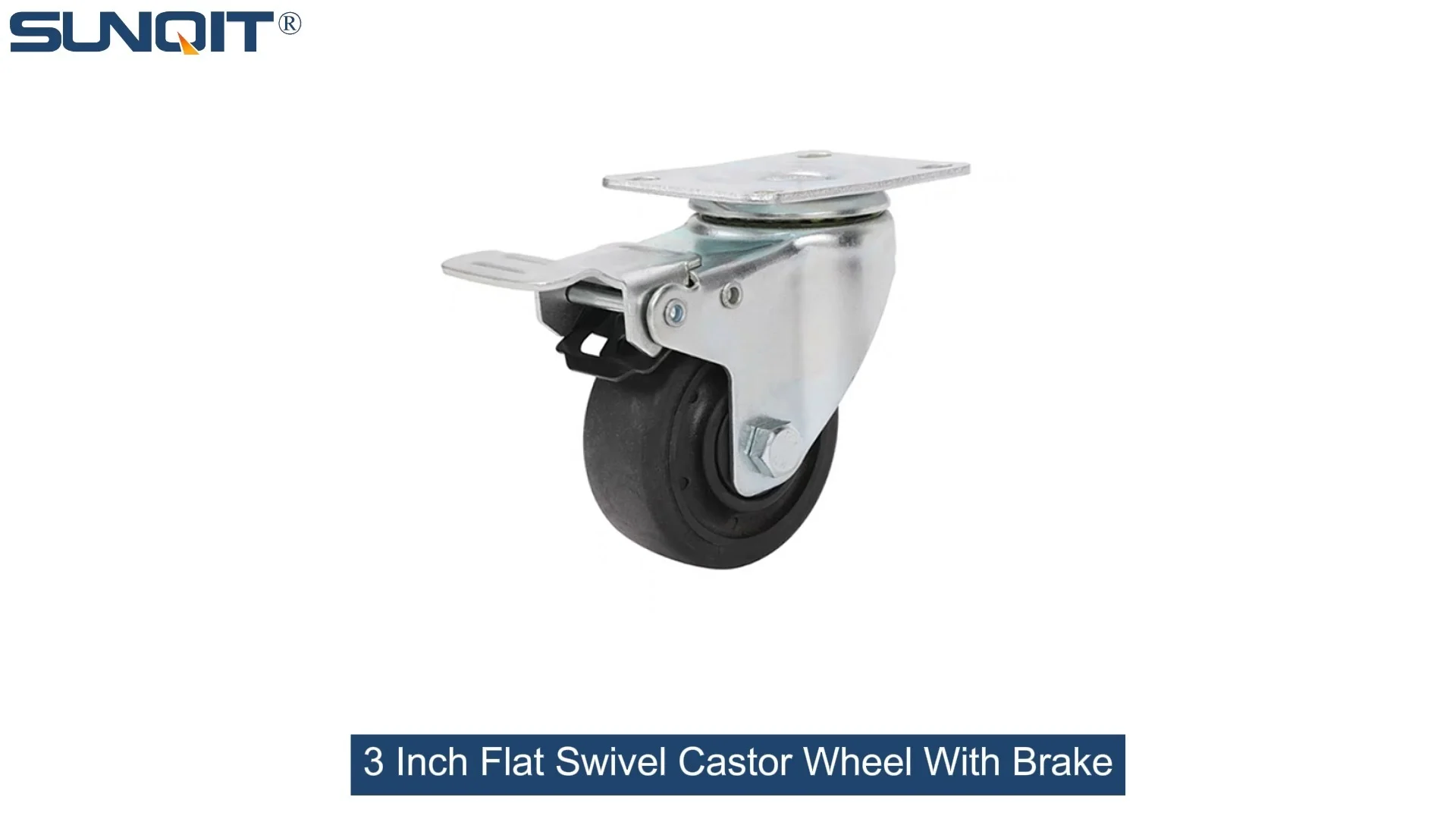
Flat Swivel Castor Wheel With Brake
Chair Casters Ball Bearing Wheels Rubber Base with brake design. Resistant to abrasion, impact and corrosion. Heavy payload can hold 70Kgs per pcs,which can make it works at a stable and smooth status.
Walk into any workshop, warehouse, or manufacturing facility, and you'll likely spot them: carts gliding smoothly across the floor, workbenches being repositioned with ease, and material racks that seem to move as if by magic. Behind this seamless mobility lies a humble yet critical component: the caster wheel. Among the many types of caster wheels available, the flat swivel castor wheel with brake stands out as a workhorse in industrial and commercial settings. Whether it's supporting a heavy-duty lean pipe workbench on a factory floor or stabilizing a mobile tool cart in a garage, this small but mighty device balances mobility and stability in ways that few other components can. But how exactly does it work? What makes its swivel mechanism so fluid, and how does the brake system reliably lock it in place when needed? In this guide, we'll dive deep into the mechanics, components, and real-world applications of the flat swivel castor wheel with brake—unlocking the secrets behind its everyday utility.
The Basics: What is a Flat Swivel Castor Wheel with Brake?
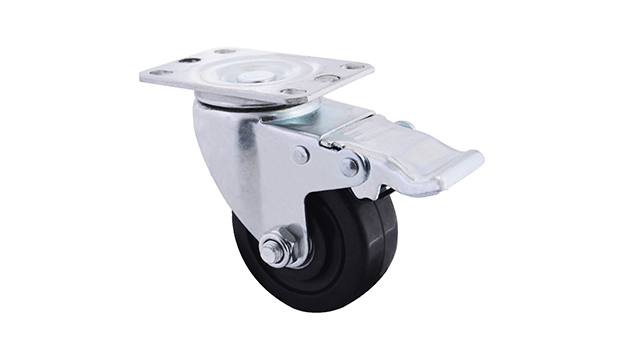
Before we dissect its inner workings, let's clarify what a flat swivel castor wheel with brake is. At its core, a caster wheel is a wheel mounted on a bracket, designed to be attached to the bottom of an object to enable movement. The "flat" in its name refers to the mounting plate—a flat, sturdy metal plate that bolts or welds to the underside of the equipment (like a lean pipe workbench or turnover trolley). "Swivel" means the wheel can rotate 360 degrees, allowing the object to move in any direction without needing to be lifted or turned. And "with brake" speaks for itself: a built-in mechanism that, when engaged, stops the wheel from rotating, keeping the equipment stationary.
These castors are not one-size-fits-all. They come in various sizes, load capacities, and materials (rubber, polyurethane, steel, etc.) to suit different environments—from cleanrooms requiring non-marking wheels to warehouses handling heavy loads. But regardless of the variant, the basic mechanism remains consistent: a swivel head for rotation, a wheel for movement, and a brake for stability. To understand how they work together, let's break down the components.
Anatomy of a Flat Swivel Castor Wheel with Brake: Key Components
Like a well-orchestrated machine, every part of a flat swivel castor wheel with brake plays a role in its performance. Let's explore each component and how they interact:
1. The Wheel: The Point of Contact
The wheel is the most visible part of the caster, and its design directly impacts mobility, load capacity, and floor protection. Typically made from materials like rubber, polyurethane, or nylon, the wheel's tread (the outer surface) is engineered to grip the floor without leaving marks or damaging surfaces. For example, polyurethane wheels are prized for their durability and shock absorption, making them ideal for uneven factory floors, while rubber wheels offer quiet operation—perfect for office or hospital settings. The wheel's diameter also matters: larger wheels roll more easily over obstacles (like small debris or floor seams), while smaller wheels are better for tight spaces. Inside the wheel, a bearing (often ball bearings or roller bearings) reduces friction, allowing the wheel to spin smoothly even under heavy loads.
2. The Swivel Head: The "Rotator" Mechanism
What sets a swivel caster apart from a rigid (fixed-direction) caster is its swivel head—a pivot point that allows the wheel to rotate 360 degrees. The swivel head sits between the mounting plate and the wheel bracket, and its smooth operation is critical for maneuverability. Most modern swivel heads use a raceway (a circular track) filled with ball bearings or roller bearings. As the equipment turns, the bearings roll within the raceway, reducing friction and enabling effortless rotation. Some heavy-duty models may use a kingpin (a central bolt) to secure the swivel head, while kingpinless designs (common in industrial settings) eliminate this bolt, reducing wear and increasing durability. Without a well-functioning swivel head, even the best wheel would struggle to turn—making this component the "brain" of the caster's mobility.
3. The Brake System: The "Stabilizer"
The brake is what transforms a mobile caster into a stationary one, and it's where the real ingenuity lies. Most flat swivel castor wheels with brakes use a foot-operated brake system, consisting of three key parts: a brake pedal, a brake pad, and a return spring. Here's how they work together:
- Brake Pedal: A small, lever-like pedal mounted near the wheel. When pressed (usually with a foot), it activates the brake.
- Brake Pad: A friction material (often rubber or metal) attached to the end of the pedal. When the pedal is pressed, the pad presses against the wheel's tread or hub, creating friction to stop rotation.
- Return Spring: A small spring that pulls the pedal back to its "released" position when not in use, disengaging the brake pad from the wheel.
Some advanced models may include a secondary lock for the swivel head, preventing the wheel from rotating even when unlocked—a useful feature for equipment that needs to move in a straight line. But for most industrial applications, the standard foot brake is sufficient to balance mobility and stability.
4. The Mounting Plate: The "Anchor"
The mounting plate is the bridge between the caster and the equipment it supports. Made from thick steel or aluminum, it features pre-drilled holes that align with the equipment's base (like the frame of a lean pipe workbench ). The plate must be strong enough to withstand the weight of the equipment and its load without bending or warping. For example, a caster rated for 500 lbs will have a mounting plate designed to distribute that weight evenly, preventing stress fractures over time. Caster accessories like bolts, washers, and locknuts are often included to secure the plate to the equipment—ensuring a tight, wobble-free fit.
5. Bearings and Bushings: The "Smooth Operators"
While they're not visible from the outside, bearings and bushings are the unsung heroes of a caster's performance. In the wheel, bearings reduce friction between the wheel hub and axle, allowing the wheel to spin freely. In the swivel head, bearings (or bushings) minimize friction between the rotating raceway and the fixed mounting plate, ensuring the swivel action remains smooth even after years of use. Low-quality bearings can lead to "sticky" swivel heads or wheels that drag, making the equipment hard to move. For heavy-duty applications, sealed bearings (which keep out dust and debris) are a must—prolonging the caster's lifespan and reducing maintenance needs.
How It Works: The Swivel and Brake Mechanism in Action
Now that we've identified the components, let's walk through how they work together to enable movement, rotation, and braking. Imagine a lean pipe workbench equipped with four flat swivel castor wheels with brakes. Here's what happens when you push, turn, or brake it:
Step 1: Swiveling into Motion
When you push the workbench forward, the swivel heads on the casters swing into action. As the front wheels encounter resistance from the floor, the swivel head's ball bearings roll within the raceway, allowing the wheels to pivot toward the direction of movement. This 360-degree rotation is what makes the workbench so maneuverable—you can easily navigate tight corners or pivot in place without lifting a finger. The key here is the balance between friction and freedom: the swivel head must be loose enough to rotate smoothly but tight enough to prevent "wheel flop" (unwanted swiveling when the equipment is in motion).
Step 2: Engaging the Brake
Once the workbench is in the desired position, you need to lock it in place. To engage the brake, simply press down on the brake pedal with your foot. As you apply pressure, the pedal pivots downward, pushing the brake pad against the wheel's tread. The friction between the pad and the wheel slows it to a stop, and the spring inside the brake mechanism holds the pedal in the "engaged" position. Even if someone bumps the workbench, the brake pad remains pressed against the wheel, preventing movement. This is critical for safety: a lean pipe workbench loaded with tools or parts can't afford to roll unexpectedly, and the brake ensures stability during use.
Step 3: Disengaging the Brake
When you're ready to move the workbench again, disengage the brake by lifting the pedal (some models have a "toe lift" tab, while others release when you press the opposite end of the pedal). The return spring pulls the brake pad away from the wheel, freeing it to rotate. With the brake released, the swivel head and wheel return to their mobile state, ready to glide across the floor once more.
Why It Works: The Science of Friction
At its core, the brake system relies on friction—the force that resists motion between two surfaces in contact. When the brake pad presses against the wheel, the friction between them converts the wheel's kinetic energy (motion) into heat, slowing it down. The harder the pedal is pressed, the greater the friction, and the faster the wheel stops. Brake pads are designed to have a high coefficient of friction (meaning they grip well) without damaging the wheel's tread. Over time, the pad will wear down, which is why regular inspection is important—worn pads reduce braking effectiveness, increasing the risk of the equipment rolling unexpectedly.

Table: Comparing Caster Types: Which One Do You Need?
| Caster Type | Key Features | Best For | Pros | Cons |
|---|---|---|---|---|
| Flat Swivel with Brake | 360° swivel, foot-operated brake, flat mounting plate | Lean pipe workbenches, mobile tool carts, medical equipment | Maneuverable, stable when braked, versatile | Higher cost than rigid casters; brake pedal may get stuck if dirty |
| Rigid (Fixed-Direction) | No swivel; moves only forward/backward | Heavy machinery, straight-path carts | Simple, durable, lower cost | Hard to maneuver in tight spaces |
| Swivel Without Brake | 360° swivel, no brake | Light-duty carts, office chairs | Highly maneuverable, low maintenance | No stability; equipment may roll unintentionally |
| Locking Swivel (Swivel Lock + Wheel Brake) | Brake locks wheel and swivel head | Precision equipment, outdoor use on slopes | Maximum stability; prevents both rolling and swiveling | Complex mechanism; more expensive to repair |

Real-World Applications: Where Flat Swivel Castors with Brake Shine
Flat swivel castor wheels with brake are not just for industrial use—they're everywhere you need mobility and control. Here are some of the most common applications:
1. Lean Pipe Workbenches and Systems
In lean manufacturing, flexibility is key. Lean pipe workbenches , built from aluminum or steel pipes and joints, are designed to be reconfigured quickly to adapt to changing production needs. Adding flat swivel castors with brake to these workbenches allows workers to move them to different assembly lines, clean areas, or storage zones with ease. When in use, the brakes lock the workbench in place, ensuring stability while employees assemble products, test equipment, or pack orders. A reliable lean pipe supplier will often offer castors as part of their system, ensuring compatibility between the workbench frame and caster mounting plates.
2. Material Handling and Logistics
Warehouses and distribution centers rely on mobile carts and racks to move inventory efficiently. A flat swivel castor with brake on a turnover trolley, for example, lets workers transport boxes from the loading dock to the storage area, then lock the trolley in place while unloading. In busy environments, the brake prevents the trolley from rolling into walkways or other equipment, reducing accident risks. Similarly, flow racks equipped with these castors can be repositioned to optimize picking routes, with brakes ensuring they stay put during operation.
3. Medical and Laboratory Equipment
In hospitals and labs, precision and safety are non-negotiable. Mobile medical carts (used for medications, tools, or patient records) and lab equipment (like centrifuges or microscopes) often use flat swivel castors with brake. The swivel feature allows nurses or technicians to navigate tight hospital corridors, while the brake ensures the cart stays stable during procedures. Non-marking wheels (a common option) prevent scuffs on polished floors, and sealed bearings keep out dust and liquids—critical for sterile environments.
4. Retail and Commercial Settings
From mobile display racks in clothing stores to food service carts in restaurants, flat swivel castors with brake add versatility to commercial equipment. A clothing rack with these castors can be moved to the front of the store for a sale, then locked in place to prevent it from shifting. In restaurants, food carts with brakes stay steady while servers load plates, reducing spills. Even office furniture—like mobile file cabinets or printer stands—uses these castors to maximize space efficiency.
Maintenance Tips: Keeping Your Castors in Top Shape
Like any mechanical component, flat swivel castor wheels with brake require regular maintenance to perform their best. Neglecting them can lead to sticky swivels, weak brakes, or premature failure. Here's how to keep them running smoothly:
1. Clean Regularly
Dust, dirt, and debris can build up in the swivel head, brake pedal, and wheel bearings, causing friction and sticking. Use a brush or compressed air to clean the swivel raceway and brake mechanism weekly (or more often in dirty environments). Wipe the wheel tread with a damp cloth to remove oil or grease, which can reduce traction and brake effectiveness.
2. Lubricate Moving Parts
Lubrication is key to maintaining smooth swivel and wheel rotation. Apply a high-quality lubricant (like lithium grease or silicone spray) to the swivel head's raceway, wheel bearings, and brake pivot points every 3–6 months. Avoid over-lubricating, as excess grease can attract more dirt. For sealed bearings, check the manufacturer's recommendations—some are pre-lubricated and don't require additional oiling.
3. Inspect Brakes and Wheels
Check the brake pads for wear monthly. If the pad is thin, cracked, or hard (instead of flexible), replace it immediately. Test the brake pedal to ensure it engages and releases smoothly—if it sticks, clean the mechanism and lubricate the pivot. For wheels, look for cracks, flat spots, or uneven wear, which can cause wobbling or reduced load capacity. replace worn wheels promptly to avoid damaging floors or straining the caster's components.
4. Tighten Loose Hardware
Caster accessories like bolts and nuts can loosen over time, leading to wobbling or noisy operation. Periodically check the mounting plate bolts and swivel head fasteners, tightening them with a wrench as needed. For locknuts, use a torque wrench to ensure they're secured to the manufacturer's specifications—over-tightening can strip threads, while under-tightening increases the risk of the caster detaching from the equipment.
Choosing the Right Caster: What to Look For
Not all flat swivel castors with brake are created equal. To ensure you get the right one for your needs, consider these factors:
- Load Capacity: Calculate the total weight of the equipment and its maximum load, then divide by the number of casters (e.g., a 2000-lb workbench with 4 casters needs 500-lb casters each). Always choose a caster rated for 20–30% more than the expected load to account for uneven weight distribution.
- Floor Type: Soft floors (carpets, concrete with cracks) need larger wheels to avoid sinking, while hard floors (tile, polished concrete) benefit from non-marking wheels to prevent scuffs.
- Environment: For wet or corrosive environments (like food processing plants), choose stainless steel casters with sealed bearings. For cleanrooms, opt for non-shedding wheels and smooth surfaces that won't trap dust.
- Brake Type: Foot brakes are standard, but some models offer hand brakes or dual-locking brakes (which lock both the wheel and swivel head). Choose based on accessibility and safety needs.
- Supplier Reputation: A reliable caster supplier (or lean pipe supplier for workbench-specific castors) will offer high-quality products with clear specifications and warranties. Avoid cheap, generic casters—they often cut corners on materials and testing, leading to premature failure.
Conclusion: The Unsung Hero of Mobility and Stability
The flat swivel castor wheel with brake may be small, but its impact is enormous. By combining smooth 360-degree rotation with a reliable braking system, it empowers workers to move heavy equipment with ease while ensuring safety and stability when needed. From the factory floor to the hospital ward, it's a testament to how thoughtful engineering can turn a simple concept into a tool that shapes how we work, build, and create. Whether you're outfitting a lean pipe workbench in a manufacturing plant or upgrading the casters on your garage tool cart, understanding its mechanism, maintaining it properly, and choosing the right model will ensure it serves you well for years to come. After all, in a world that values efficiency and flexibility, the ability to move freely—and stop securely—is more than a convenience; it's a game-changer.