- Company Articles
- Products and Technology
- Product knowledge
- How Does a Four Way Straight Lean Pipe Joint Work? Mechanism Explained

How Does a Four Way Straight Lean Pipe Joint Work? Mechanism Explained
Related Product
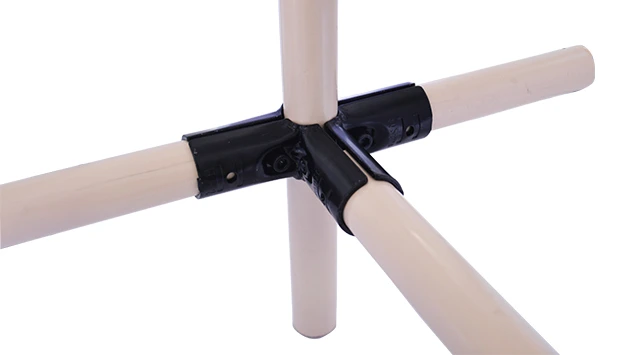
Four Way Straight Lean Pipe Joint
Four way lean pipe joint for 4 pcs 28MM lean pipe connection in straight angle, which used widely in workbench, flow rack, hand trolley frame connection.
Walk into any modern manufacturing facility, warehouse, or assembly line, and you'll likely notice a network of metal pipes and frames quietly holding everything together. These aren't just random pieces of hardware—they're the backbone of lean system infrastructure, designed to streamline workflows, reduce waste, and adapt to ever-changing production needs. At the heart of this infrastructure lie the unsung heroes: lean pipe joint s. Today, we're zooming in on one particularly versatile component: the four way straight lean pipe joint. How does it work? Why is it so crucial? Let's dive in.
1. Understanding Lean Systems: The Foundation of Modern Efficiency
Before we get to the nuts and bolts of pipe joints, let's take a step back to understand the bigger picture: lean systems. Born from the Toyota Production System in the mid-20th century, lean manufacturing is all about eliminating waste—whether that's wasted time, materials, or motion. A well-designed lean system ensures that every tool, every workspace, and every process serves a clear purpose, with minimal excess.
Central to this philosophy is flexibility. In today's fast-paced industries, production lines must pivot quickly to accommodate new products, seasonal demand, or updated safety standards. Rigid, permanent structures (think welded steel frames or custom-built shelving) simply can't keep up. That's where lean pipe systems come in. These modular frameworks, made from lightweight pipes and configurable joints, act like industrial Erector Sets, letting teams build, break down, and rebuild workspaces on the fly.
2. Lean Pipes and Accessories: Building Blocks of Flexibility
Lean pipes—also called "kitchen pipes" in some circles, thanks to their early use in food manufacturing—are typically made from steel (often coated in plastic for durability) or aluminum. They come in standard diameters (28mm is common) and lengths, making them easy to source and cut to size. But a pipe is just a pipe without the right lean pipe and accessories to connect it. Joints, casters, workbench tops, roller tracks—these are the components that turn simple pipes into functional workstations, flow racks, and material trolleys.
Among these accessories, joints are the critical link. They determine how pipes connect, how much weight the structure can bear, and how easily it can be reconfigured. And when it comes to creating intersections where multiple pipes meet—say, a main horizontal beam with vertical supports or side branches—the four way straight lean pipe joint shines.

3. What Is a Four Way Straight Lean Pipe Joint?
At its core, a four way straight lean pipe joint is a connector designed to join four lean pipe s at a single point, aligned along two perpendicular axes (think of a "+" sign). Unlike a three way joint (which forms a T-shape) or a two way joint (which connects two pipes in a straight line), the four way straight joint allows for connections in four directions: front, back, left, and right. This makes it ideal for building structures where multiple pipes need to intersect cleanly—like the corners of a flow rack, the supports of a multi-level workstation, or the framework of a material trolley with side rails.
Most four way straight joints are made from durable materials like nylon (for lightweight, corrosion-resistant applications) or aluminum (for heavier loads). They feature four hollow ports (one for each pipe) and an internal locking mechanism to secure the pipes in place. Some designs also include reinforcement ribs or flanges to boost strength, especially in industrial settings where vibrations or heavy weights are common.

4. The Mechanism: How It All Comes Together
The magic of the four way straight lean pipe joint lies in its simplicity. Let's break down how it works, step by step:
4.1 The Ports: Precision Fit for Pipes
First, look at the joint's ports—those four openings where the pipes insert. Each port is slightly larger than the outer diameter of a standard lean pipe (typically 28mm). This "slip fit" allows the pipe to slide in easily but leaves just enough space for the locking mechanism to grip. The ports are aligned at 90-degree angles to each other, ensuring that pipes inserted into opposite ports form a straight line (e.g., front and back ports align horizontally, left and right ports align vertically, creating that "+" shape).
4.2 The Locking Mechanism: Friction and Force
Once the pipes are inserted into the ports, the joint needs to hold them tight. Most four way straight joints use a setscrew mechanism to achieve this. Here's how it works:
- The Setscrew: Each port has a small threaded hole (usually 5mm or 6mm) where a setscrew (or grub screw) is inserted. The screw is typically hexagonal, so it can be tightened with a hex key (Allen wrench)—a common tool in most workshops.
- Gripping the Pipe: When you tighten the setscrew, its tip presses against the outer surface of the lean pipe. As you turn the hex key, the screw digs into the pipe's coating (or metal surface, for uncoated pipes), creating friction. This friction locks the pipe in place, preventing it from sliding out or rotating.
- Even Pressure: Well-designed joints distribute pressure evenly across the pipe's surface, avoiding dents or damage. Some high-quality joints even include a small metal or rubber pad at the end of the setscrew to increase grip and protect the pipe's finish.
4.3 Stability: Why It Doesn't Wobble
You might wonder: With four pipes pulling in different directions, why doesn't the joint loosen over time? The answer lies in the combination of tight setscrews and the joint's structural design. The ports are reinforced to resist bending, and the locking mechanism creates a rigid connection that can withstand both static loads (like a stack of boxes on a shelf) and dynamic loads (like a trolley being pushed across a factory floor). In fact, most four way straight joints can handle loads of up to 50kg per port—more than enough for typical lean system applications.
4.4 Reusability: The Lean Advantage
Unlike welded joints (which are permanent and require cutting to modify), the four way straight lean pipe joint is designed to be reusable. Need to reconfigure your workstation for a new product? Simply loosen the setscrews with a hex key, slide the pipes out, and reassemble them in a new layout. This aligns perfectly with lean principles, where adaptability and waste reduction are key. No more wasted materials from cutting or welding—just a few turns of a wrench, and your structure is ready for its next job.
5. Applications: Where Four Way Straight Joints Shine
Now that we understand how it works, let's explore where the four way straight lean pipe joint is most useful. Here are a few common applications:
5.1 Flow Racks: Streamlining Material Handling
Flow rack s are a staple in warehouses and assembly lines, designed to let materials "flow" from the back (where they're stocked) to the front (where they're used). They typically feature inclined shelves with roller tracks, so gravity does the work of moving boxes or bins. The four way straight joint is ideal for building the vertical and horizontal supports of these racks. For example, a flow rack with three levels might use four way joints at each corner, connecting the vertical posts to the horizontal beams that hold the roller tracks. This creates a sturdy, modular frame that can be adjusted if you need to add or remove shelves later.
5.2 Workstations: Customizable and Ergonomic
Modern workstations need to adapt to different tasks, tools, and worker heights. A four way straight joint lets you build workbenches with overhead shelves, side tool racks, or under-shelf storage. For instance, a workstation in an electronics factory might have a main horizontal beam (supported by vertical pipes) with four way joints at intervals, allowing for the attachment of side rails to hold cables or small parts bins. If a worker needs more space, simply reposition the joints to widen the rails—no hassle, no downtime.
5.3 Turnover Trolleys: Mobile Material Transport
Turnover trolleys (used to move materials between workstations) rely on lightweight but sturdy frames. Four way straight joints are perfect for building the trolley's base, where horizontal and vertical pipes intersect to support the platform and side rails. Add a set of casters (another common lean pipe accessory), and you've got a mobile unit that can be easily pushed around—all held together by the reliable grip of four way joints.
5.4 Storage Racks: Maximizing Vertical Space
In warehouses where floor space is precious, vertical storage is a must. Four way straight joints help build multi-level storage racks by connecting horizontal beams to vertical posts at regular intervals. For example, a rack with five shelves might use four way joints at each post-beam intersection, ensuring the shelves are level and secure. If you need to adjust shelf heights later (to accommodate taller items), just loosen the joints, slide the beams up or down, and retighten—simple as that.
6. Benefits of the Four Way Straight Lean Pipe Joint
Why choose a four way straight joint over other types? Here are its standout advantages:
6.1 Unmatched Flexibility
With four connection points, this joint is the Swiss Army knife of lean pipe accessories. It can adapt to almost any layout, from simple frames to complex multi-axis structures. Whether you're building a small parts bin or a large-scale assembly line, the four way straight joint gives you the freedom to design exactly what you need.
6.2 Easy Installation (No Special Skills Needed)
You don't need to be a professional welder or engineer to use a four way straight joint. All you need is a hex key and a bit of common sense. This makes it accessible to small businesses, startups, and even DIY enthusiasts looking to organize their garages or workshops.
6.3 Cost-Effective in the Long Run
While the upfront cost of a four way straight joint is slightly higher than a basic two way joint, its reusability and durability make it cheaper over time. Instead of buying new materials every time you reconfigure, you can reuse the same joints and pipes—saving money and reducing waste.
6.4 Compatibility with Standard Lean Pipes
Most four way straight joints are designed to work with standard 28mm lean pipes, which are widely available from lean pipe supplier s. This means you don't have to worry about mismatched parts—you can mix and match joints, pipes, and accessories from different brands, as long as they follow the standard size.
7. Comparing Lean Pipe Joints: How Four Way Straight Stacks Up
To truly appreciate the four way straight joint, let's compare it to other common lean pipe joints. The table below breaks down key differences:
| Joint Type | Number of Ports | Connection Orientation | Primary Use Case | Key Advantage |
|---|---|---|---|---|
| Two Way Straight | 2 | Straight line (180°) | Extending pipes in a single direction (e.g., long beams) | Simplest design, low cost |
| Three Way (T-Shaped) | 3 | One straight, two perpendicular (90°) | Adding a branch to a main pipe (e.g., a shelf arm on a rack) | Versatile for T-junctions |
| Four Way Straight | 4 | Two perpendicular axes (front/back, left/right) | Intersections with four directions (e.g., flow rack corners, multi-level workstations) | Maximizes connection points in tight spaces |
| Four Way Swivel | 4 | Two axes with rotating ports | Angled connections (e.g., sloped shelves, adjustable workbenches) | Allows for non-straight angles |
As you can see, the four way straight joint fills a unique niche: it's the go-to choice when you need to connect pipes in four directions without sacrificing strength or simplicity. For most industrial applications, it's the most efficient solution for building complex, adaptable structures.
8. Installation and Maintenance Tips
To get the most out of your four way straight lean pipe joints, follow these installation and maintenance best practices:
8.1 Installation: Step-by-Step
- Measure Twice, Cut Once: Before cutting your lean pipes, double-check the lengths you need. Most joints add about 20mm to the total length of a structure (since the pipe inserts into the joint), so account for that in your measurements.
- Deburr the Pipes: After cutting, use a deburring tool to smooth the edges of the pipes. Sharp edges can damage the joint's ports or cause injuries during installation.
- insert Pipes Fully: Push each pipe into its port until it hits the bottom of the joint. This ensures maximum contact with the locking mechanism and prevents wobbling.
- Tighten Setscrews Gradually: Tighten the setscrews in a crisscross pattern (like tightening lug nuts on a car wheel) to ensure even pressure. Overtightening can strip the threads or crack the joint—aim for a firm, snug fit, not a vice-like grip.
- Test for Stability: After assembly, gently shake the structure to check for looseness. If a pipe wobbles, retighten the corresponding setscrew.
8.2 Maintenance: Keeping Joints in Top Shape
With proper care, four way straight lean pipe joints can last for years. Here's how to maintain them:
- Regular Inspections: Check joints monthly for loose setscrews (vibrations from machinery can loosen them over time). A quick tighten with a hex key is usually all it takes.
- Cleaning: Wipe joints with a damp cloth to remove dust, oil, or debris. For nylon joints, avoid harsh chemicals (like bleach) that can degrade the plastic.
- replace Worn Parts: If a setscrew strips or a port cracks, replace the joint immediately. A damaged joint can compromise the entire structure's stability.
- Protect from Corrosion: In humid or wet environments, opt for aluminum or stainless steel joints instead of nylon. You can also apply a thin coat of anti-rust spray to metal joints for extra protection.
Case Study: How Four Way Joints Transformed a Small Electronics Factory
Let's look at a real-world example of how four way straight lean pipe joints improved efficiency. Meet Precision Circuits, a small electronics manufacturer with 50 employees, specializing in circuit board assembly.
The Problem: Precision Circuits' assembly line was rigid. Workstations were built with welded steel frames, and material shelves were fixed to the walls. When the company landed a contract for a new circuit board model, they needed to reconfigure their line to accommodate smaller components and new testing equipment. The old setup took 3 days to modify—costing valuable production time.
The Solution: The team switched to a lean system using 28mm aluminum lean pipes and four way straight joints. They rebuilt workstations, flow racks, and material trolleys with the new modular setup. Key changes included:
- Multi-level workstations with adjustable shelves (using four way joints to connect vertical posts and horizontal beams).
- Mobile flow racks (on casters) with four way joints at the corners, allowing easy repositioning.
- Tool holders mounted on side rails (connected via four way joints) to reduce worker motion waste.
The Result: Reconfiguring the line for the new product took just 4 hours instead of 3 days. The team also reported a 20% reduction in time spent searching for tools (thanks to the organized tool holders) and a 15% increase in daily output. "We used to dread product changes," said plant manager Maria Gonzalez. "Now, with the four way joints, we can adapt on the fly. It's like having a production line that bends instead of breaks."
8. The Future of Lean Pipe Joints
As manufacturing and warehousing continue to evolve, so too will lean pipe systems. What does the future hold for joints like the four way straight? Here are a few trends to watch:
- Smart Joints: Imagine joints with built-in sensors that alert maintenance when a setscrew loosens or a pipe is overloaded. Early prototypes are already in testing, and they could revolutionize predictive maintenance in lean systems.
- Lightweight Materials: Advances in composite materials may lead to even lighter, stronger joints—ideal for applications where weight is critical, like aerospace manufacturing.
- 3D-Printed Custom Joints: For unique or low-volume applications, 3D printing could allow companies to design custom four way joints tailored to specific pipe sizes or load requirements.
Even with these innovations, the basic mechanism of the four way straight lean pipe joint—simple, reliable, and adaptable—will remain a cornerstone of lean systems. After all, sometimes the best solutions are the ones that just work, no frills attached.
9. Conclusion: The Backbone of Lean Adaptability
The four way straight lean pipe joint may not be the flashiest piece of equipment in a factory, but it's undeniably essential. By allowing for four-directional connections, easy reconfiguration, and durable performance, it embodies the core principles of lean system s: flexibility, efficiency, and waste reduction. Whether you're building a flow rack, a workstation, or a material trolley, this humble joint ensures your structure can keep up with the demands of modern production.
So the next time you walk through a manufacturing facility, take a moment to look at the pipes and joints holding everything together. Chances are, you'll spot a four way straight joint quietly doing its job—proof that even the smallest components can make a big difference in the world of lean manufacturing.