- Company Articles
- Products and Technology
- Solution
- How Does a Free Flow Chain Conveyor Enhance Lean Manufacturing?

How Does a Free Flow Chain Conveyor Enhance Lean Manufacturing?
Related Product
Free Flow Chain Conveyor
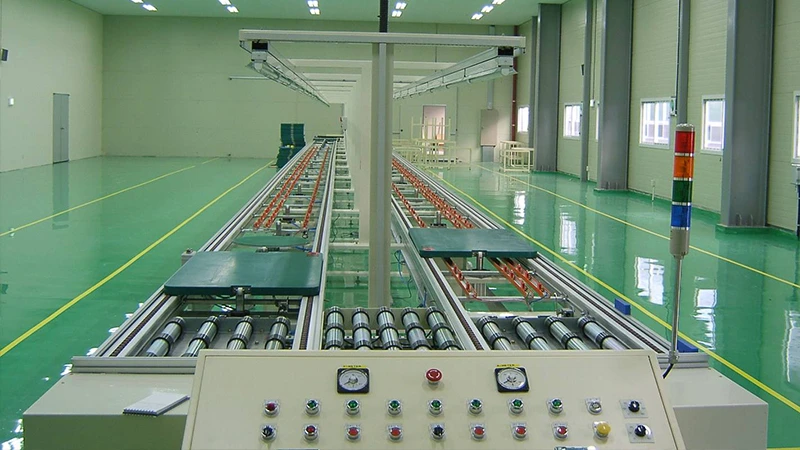
The free flow conveyor system uses a free flow chain that can increase the speed of the tooling board that supports the products. This can improve the efficiency and quality of the production process, as well as reduce the wear and tear of the system.
The Heartbeat of Lean: Why Manufacturing Flow Matters
Walk into any thriving manufacturing facility today, and you'll likely notice a quiet rhythm—a steady, unbroken flow of materials moving from one station to the next, workers focused on value-adding tasks, and a distinct lack of the chaos that once defined factory floors. This harmony isn't accidental. It's the result of lean manufacturing, a philosophy built on eliminating waste, optimizing processes, and putting efficiency at the center of operations. At the heart of this transformation? Tools like the free flow chain conveyor, a yet powerful component that turns disjointed workflows into synchronized symphonies.
Lean manufacturing isn't just about cutting costs—it's about respecting people, valuing time, and creating systems that adapt and improve. Think of it as a mindset: instead of pushing products through a rigid pipeline, lean pulls value through the process, ensuring every step serves a purpose. And in this mindset, the way materials move matters as much as the materials themselves. A single bottleneck, a delayed shipment, or a misplaced part can disrupt the entire chain, leading to wasted hours, frustrated teams, and missed deadlines. That's where the free flow chain conveyor steps in—not just as a piece of equipment, but as a partner in lean's core mission: to make work flow .
What Is a Free Flow Chain Conveyor, Anyway?
Before diving into how it enhances lean, let's get clear on what a free flow chain conveyor actually is. Picture a series of interconnected rollers or slats, driven by a chain mechanism, designed to move materials—whether small components, heavy assemblies, or delicate parts—across a production line with minimal friction. Unlike traditional conveyors that might be fixed, slow, or limited in flexibility, free flow chain conveyors are built for adaptability. They can operate on gravity (letting items glide downhill with ease) or be motorized for precise control, and they're often made with durable materials like aluminum, which balances strength with lightweight maneuverability.
But what truly sets them apart is their "free flow" design. The chain-driven rollers allow for smooth, consistent movement, even when handling irregularly shaped items. And because they're modular, they can be customized to fit almost any space—curving around corners, integrating with workbenches, or connecting to flow racks with simple adjustments. Add in accessories like plastic roller track guide rails (available in yellow or grey for visibility and organization) or swivel roller balls (1 inch or 0.5 inch, depending on load size), and you have a system that grows with your needs, not against them.
5 Ways Free Flow Chain Conveyors Amplify Lean Principles
Lean manufacturing rests on five key principles: value, value stream, flow, pull, and perfection. Let's break down how free flow chain conveyors strengthen each one, turning abstract ideals into tangible results.
1. Eliminating Waste: The Lean "Enemy Number One"
Waste—whether in time, materials, or effort—is the antithesis of lean. Traditional manufacturing setups often suffer from "motion waste," where workers spend hours moving parts between stations, or "waiting waste," where production stalls because materials haven't arrived. A free flow chain conveyor attacks both head-on. By automating material transport, it reduces the need for manual lifting and carrying, cutting down on physical strain and human error. Imagine a worker at an ESD workstation (designed to protect sensitive electronics from static) who used to spend 20 minutes per hour fetching parts from a distant shelf. With a conveyor feeding parts directly to their bench, those 20 minutes become time spent assembling, testing, or innovating— actual value .
Even better, the conveyor's precision minimizes "inventory waste." In lean, overstocking parts is a cardinal sin; it ties up capital and hides problems in the production line. Free flow systems pair seamlessly with pull-based inventory: parts only move when the next workstation signals a need, ensuring just-in-time delivery. No more piles of unused components cluttering the floor—just the right part, at the right time, every time.
2. Creating Uninterrupted Flow: The Lean "Lifeblood"
Lean gurus often talk about "flow" as the lifeblood of manufacturing. When work flows smoothly, bottlenecks disappear, and productivity soars. Free flow chain conveyors are masters of flow. Unlike gravity-fed roller tracks that rely on inclines, these conveyors maintain consistent speed—whether moving at 10 feet per minute or 50—so parts arrive at workstations in a steady, predictable stream. This is a game-changer for assembly lines, where even a 5-minute delay at one station can domino into hours of lost output.
Take the automotive industry, for example. A car door assembly line might require 12 different parts—from hinges to handles—to arrive at the welding station simultaneously. A misaligned conveyor could mean one part arrives early (sitting idle) and another late (holding up the welder). With a free flow chain conveyor, each part is timed to perfection, synchronized with the rhythm of the line. The result? No more stop-and-go, just a continuous, efficient flow that makes every second count.
3. Flexibility: Adapting to Change (Because Change Is Inevitable)
Lean isn't static—it's about evolving with customer demands, new products, or shifting market trends. A rigid conveyor system that works for one product might become obsolete when you launch a new model. Free flow chain conveyors, however, are built for change. Their modular design means you can add sections, reconfigure paths, or swap out components (like switching from steel roller tracks to aluminum guide rails) without overhauling the entire system. Need to expand to a second shift? Add a motorized segment. Launching a smaller product line? Swap 1-inch swivel roller balls for 0.5-inch versions to handle lighter loads.
This flexibility is especially critical in today's fast-paced markets. A electronics manufacturer, for instance, might shift from producing smartphones to tablets overnight. With a free flow conveyor, they can adjust the roller track placon mounts (used to connect rails to aluminum profiles) and reposition workbenches in hours, not days. Traditional conveyors? They'd require costly, time-consuming retrofits—if they could be adapted at all.
4. Pull, Don't Push: Letting Demand Drive Production
"Push" systems—where factories produce goods in bulk and hope they sell—are relics of the past. Lean thrives on "pull" systems, where production is triggered by actual customer demand , not forecasts. Free flow chain conveyors make pull systems possible by enabling tight integration with upstream and downstream processes. For example, when a worker at the final assembly workbench (say, Workbench E, a single-deck model without casters for stability) finishes a unit, they can signal the conveyor to send the next batch of parts. This "kanban" style of communication ensures no overproduction—you only make what's needed, when it's needed.
Roller track connectors and end supports with stops enhance this further. If a station gets backed up, a simple stop mechanism halts the conveyor, preventing a flood of parts from overwhelming the area. Once the station clears, the stop releases, and flow resumes. It's like a conversation between the conveyor and the workers: "I'll send more when you're ready." No waste, no guesswork, just precise, demand-driven production.
5. Perfection: Continuous Improvement in Action
Lean isn't a destination—it's a journey of continuous improvement. Free flow chain conveyors support this journey by providing data and adaptability. Many modern systems come with sensors that track throughput, identify slowdowns, or flag maintenance needs (like a worn caster wheel or a misaligned roller track placon mount bracket). This data lets teams pinpoint inefficiencies—maybe a certain section of the conveyor is slower, or a particular workbench isn't positioned optimally—and make adjustments on the fly.
Over time, these small tweaks add up. A manufacturer might start with a basic free flow setup, then add aluminum honeycomb panels to workbenches for lighter, sturdier surfaces, or switch to stainless steel swivel roller balls for corrosion resistance in a humid environment. Each change brings them closer to "perfection"—not a flawless system, but one that's always getting better.
Free Flow vs. Traditional Conveyors: A Lean Showdown
Still skeptical? Let's put free flow chain conveyors head-to-head with traditional options like belt conveyors or fixed roller tracks. The table below breaks down how they stack up against key lean metrics:
| Metric | Traditional Conveyors | Free Flow Chain Conveyors |
|---|---|---|
| Flexibility | Fixed paths; hard to reconfigure | Modular design; easy to adjust with roller track connectors, guide rails, etc. |
| Waste Reduction | Often causes waiting/waiting waste due to inflexible speed | Minimizes motion and waiting waste with synchronized, demand-driven flow |
| Integration with Lean Tools | Limited; struggles with pull systems or just-in-time delivery | Seamless integration with workbenches, flow racks, and kanban systems |
| Maintenance | High; belt wear, motor issues, or stuck rollers require frequent downtime | Low; aluminum/steel components resist wear, and modular parts are easy to replace |
| Cost Over Time | Higher; retrofits and downtime add hidden expenses | Lower; initial investment pays off via efficiency gains and adaptability |
Real-World Impact: A Lean Success Story
Let's ground this in reality with a hypothetical (but representative) example. Imagine a mid-sized electronics manufacturer producing circuit boards. Before adopting lean, their process was a mess: workers carried bins of components from storage racks to ESD workstations, often tripping over cables or dropping parts. Assembly lines frequently stopped because a critical resistor or capacitor hadn't arrived, and inventory piled up in corners, leading to expired parts and wasted space.
Then they invested in a free flow chain conveyor system. They connected their material rack B (a 3-row, 3-floor storage unit) directly to their ESD workstations using aluminum guide rails and 1-inch swivel roller balls. Parts now glide from storage to the assembly bench in seconds, not minutes. They added plastic roller track guide rails (yellow, for visibility) to separate different component types, reducing mix-ups. And by integrating the conveyor with a pull system, they cut inventory levels by 40%—no more overstocked resistors gathering dust.
The results? Production throughput increased by 25%, worker fatigue dropped (measured via reduced sick days), and customer lead times shrank from 2 weeks to 5 days. As one line supervisor put it: "The conveyor didn't just move parts—it moved our entire operation forward."
Choosing the Right Free Flow Chain Conveyor: Key Considerations
Not all free flow chain conveyors are created equal. To maximize lean benefits, keep these factors in mind when selecting a system:
- Load Capacity: Match the conveyor to your typical part size and weight. Heavier items may need steel roller tracks with black ESD wheels (to prevent static damage), while lighter parts could use aluminum roller tracks with yellow wheels for visibility.
- Space and Layout: Measure your facility carefully. Do you need to navigate tight corners? Look for flexible roller track connectors. Working in a cleanroom? Stainless steel swivel roller balls resist corrosion and contamination.
- Future Growth: Opt for modular components—like basic aluminum tubes and internal rotary aluminum joints—that can be expanded or reconfigured as your needs change.
- Supplier Support: Partner with a lean pipe supplier who understands both conveyors and lean principles. They can help design a system that integrates with your existing workbenches, flow racks, and turnover trolleys, ensuring a seamless transition.
Final Thoughts: More Than a Conveyor—A Lean Catalyst
At the end of the day, a free flow chain conveyor is more than just a machine. It's a tool that embodies lean's core belief: that work should be smarter , not harder. By eliminating waste, enhancing flow, and adapting to change, it turns manufacturing floors from chaotic battlegrounds into efficient, harmonious spaces where people and processes thrive together.
So if you're on a lean journey, don't overlook the power of how materials move. A free flow chain conveyor might just be the missing piece that transforms your operation from "good" to "great"—one smooth, steady flow at a time.