- Company Articles
- Products and Technology
- Product knowledge
- How Does a Multi-Angle Fixed Aluminum Joint Work? Mechanism Behind Flexible Locking

How Does a Multi-Angle Fixed Aluminum Joint Work? Mechanism Behind Flexible Locking
Related Product
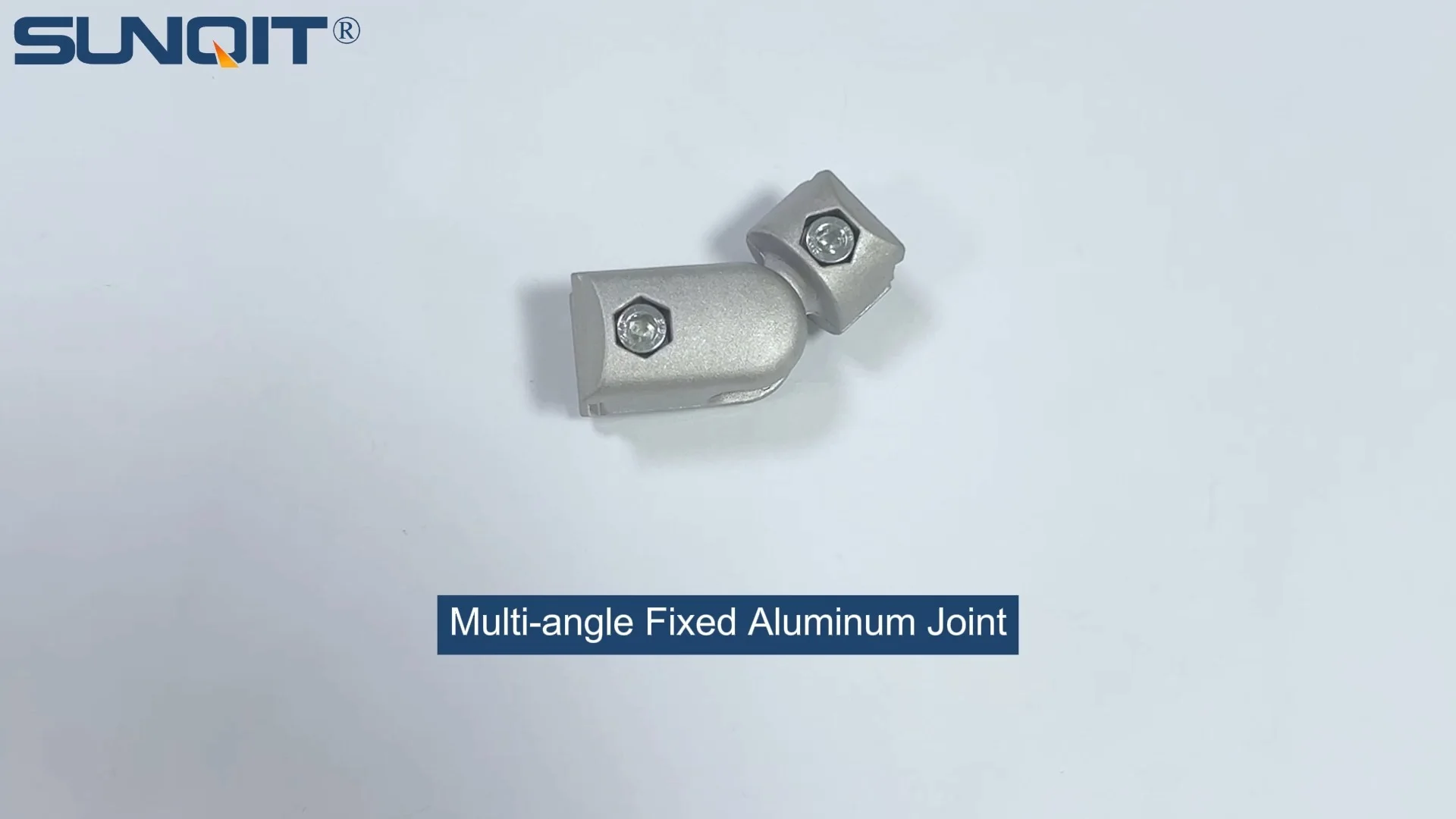
Multi-angle Fixed Aluminum Joint
Aluminum joint pipe connection for two pipe connection and work in mutiple angle.
Let's set the scene: You're standing in a bustling manufacturing workshop, surrounded by the hum of machinery and the clink of tools. Your team needs a new material rack—something that can hold heavy components but also adjust when your production line shifts next month. The old steel racks? They're welded solid, so reconfiguring them would mean cutting metal and starting from scratch. The plastic ones? Too flimsy for daily use. Then someone mentions, "Have you tried using multi-angle fixed aluminum joints?" You pause. What even is that, and how could it solve your problem?
If you've ever wrestled with rigid, one-size-fits-all connectors or wished your workbench/shelf/rack could "bend" without breaking, you're not alone. The magic of modern workspace design lies in adaptability—and at the heart of that adaptability often sits a small but mighty component: the multi-angle fixed aluminum joint. In this article, we're going to peel back the curtain on how these unassuming pieces work, why they're a game-changer for anyone building or modifying industrial setups, and how they transform aluminum pipe and aluminum extrusion profile into something far more versatile than the sum of their parts.
First Things First: What Is a Multi-Angle Fixed Aluminum Joint?
Let's start with the basics. A multi-angle fixed aluminum joint is exactly what it sounds like: a connector made (mostly) of aluminum that lets you join two or more pieces of aluminum pipe at multiple angles —and then locks that angle in place securely. Unlike a standard 90-degree elbow joint that only bends one way, or a welded joint that's stuck forever, these joints are designed for flexibility and stability. Think of them as the "swiss army knife" of industrial connectors: they adapt to your needs, not the other way around.
But why aluminum? Great question. Aluminum is lightweight yet surprisingly strong, corrosion-resistant (no rusting in damp workshops!), and easy to machine into precise shapes—all crucial traits for a component that needs to hold heavy loads while staying adjustable. Pair that with aluminum pipe (which is similarly lightweight and durable), and you've got a combo that's perfect for building everything from lean pipe workbenches to material racks to turnover trolleys.
At first glance, a multi-angle fixed aluminum joint might look simple: a small, often cylindrical or angular block with holes for pipes and a bolt sticking out. But inside that unassuming exterior is a clever mechanism that balances adjustability and rigidity—a balance that's tricky to get right. Let's break down how it all comes together.
The Anatomy of a Multi-Angle Fixed Aluminum Joint: Key Components
To understand how these joints work, we need to zoom in on their parts. While designs can vary slightly between manufacturers, most multi-angle fixed aluminum joints share a few core components. Let's break them down with a quick table (because who doesn't love a good visual?):
| Component | What It Does | Why It Matters |
|---|---|---|
| Aluminum Body | The outer shell of the joint, usually made from aluminum extrusion profile for strength and precision. | Aluminum's lightweight nature keeps the joint from adding unnecessary bulk, while its rigidity ensures the joint itself doesn't flex under load. |
| Pipe Receiving Ports | Hollow openings where the aluminum pipe slides in. These are often lined with a rubber or metal sleeve for a tighter grip. | The size of these ports (e.g., 20mm, 30mm) matches standard aluminum pipe diameters, ensuring a snug fit that prevents wobbling. |
| Clamping Mechanism | Typically a bolt (often a hex bolt) that, when tightened, squeezes the pipe receiving ports together. | This is the "locking" part! Tightening the bolt creates friction between the joint and the aluminum pipe, holding everything in place. |
| Angle Adjustment Notches/Grooves | Small indentations or markings on the joint's body that guide how far you can rotate the connected pipes. | These help you set precise angles (e.g., 30°, 45°, 60°, 90°) without guessing, ensuring consistency across your setup. |
| Inner Grip Sleeve (Optional) | A thin metal or plastic sleeve inside the pipe port that bites into the aluminum pipe when clamped. | Adds extra grip, especially useful for heavier loads—think of it like adding tread to a tire for better traction. |
Now, you might be thinking, "That sounds similar to other adjustable joints I've seen." And you're not wrong—but the key difference is in the balance . A cheap plastic adjustable joint might flex or slip under weight; a steel one might be too heavy. Multi-angle fixed aluminum joints hit that sweet spot: strong enough for industrial use, light enough to maneuver, and precise enough to trust with your tools and materials.

The Magic Happens Here: How the Locking Mechanism Actually Works
Okay, let's get into the nitty-gritty: How does turning a bolt transform a wobbly, adjustable joint into a rock-solid connection? It all comes down to friction and mechanical advantage .
Here's a step-by-step breakdown of the process:
Step 1: insert the Aluminum Pipe
First, you slide your aluminum pipe into the joint's receiving port. The port is slightly larger than the pipe's diameter (usually by 1-2mm) to make insertion easy—no forcing required. If the joint has an inner grip sleeve, the pipe slides through that too, positioning it right where the clamping will happen.
Step 2: Set Your Angle
Now, you rotate the pipe (and the joint, if needed) to your desired angle. Want a 45° slope for a material rack so parts slide down easily? Line up the pipe with the 45° notch on the joint. Need a 135° angle to create a corner on a lean pipe workbench? Rotate until the markings align. Most joints let you adjust angles in 15° or 30° increments, but some high-end models offer near-infinite adjustability (though "fixed" in the name means once you lock it, it stays put).
Step 3: Tighten the Clamping Bolt
This is where the magic starts. You take a hex key or wrench and start turning the clamping bolt. As you tighten it, the bolt pulls a metal plate or wedge inside the joint, which squeezes the receiving port shut around the aluminum pipe. Imagine pinching a straw between your thumb and finger—the harder you pinch, the harder it is to pull the straw out. That's exactly what's happening here: the joint's port is "pinching" the pipe, creating friction between the aluminum surfaces.
If there's an inner grip sleeve, this squeeze pushes the sleeve's teeth (tiny ridges) into the outer layer of the aluminum pipe. It doesn't damage the pipe (aluminum's soft enough to indent slightly but strong enough to hold), but it creates extra "bite" that prevents slipping, even if the joint is jostled or vibrated (common in busy workshops).
Step 4: Locked and Loaded
Once the bolt is tight enough (you'll feel resistance—don't overdo it and strip the threads!), the angle is fixed . The joint now acts like a solid, welded connection… but with a huge bonus: if you need to change the angle later, just loosen the bolt, adjust, and retighten. No cutting, no welding, no swearing (okay, maybe a little swearing if you drop the hex key). It's like having a temporary weld that you can undo with a tool.
"I once helped a client rebuild their entire assembly line using these joints," says Maria, a workshop designer with 15 years of experience. "They needed to switch from assembling small parts to larger components, so we took apart their old steel racks, swapped in aluminum pipe and multi-angle joints, and had the new setup ready in a day. With welded steel, that would've taken a week and a half. The joints held up perfectly—even with 50kg boxes stacked on them. We even adjusted a few angles mid-project when they realized the flow was off. You can't do that with welding!"

Why Does This Mechanism Matter? Real-World Benefits
Okay, so we know how it works—but why should you care? Let's talk about the practical perks that make multi-angle fixed aluminum joints a must-have for anyone building or modifying industrial setups.
Adaptability: Your Setup Grows with You
The biggest win is adaptability. Let's say you build a material rack using these joints at 90° angles for vertical shelves. Six months later, your team starts using taller boxes, and you need the shelves spaced wider apart. With welded steel, you'd need to cut the uprights and reweld. With these joints? Loosen the bolts, slide the shelves up, retighten. Done. Or maybe you want to add a sloped section to the rack so parts roll forward automatically—just adjust a few joints to 15° and you've got a gravity-fed system. It's like having a workspace that can "learn" and change as your needs do.
Lightweight but Strong: No More Backaches
Aluminum is about 1/3 the weight of steel, so even a full rack built with aluminum pipe and multi-angle joints is easier to move (with casters, of course) than a steel equivalent. This is a big deal for small workshops where space is tight—you can rearrange your lean pipe workbench or trolley without needing a forklift. And don't let the weight fool you: properly tightened, these joints can handle impressive loads. Most standard models hold 50-100kg per joint, and heavy-duty versions go up to 200kg or more. That's more than enough for most industrial parts, tools, or raw materials.
Cost-Effective: Save Time and Money Long-Term
Yes, multi-angle fixed aluminum joints cost more upfront than basic plastic connectors or even welded steel (since welding requires labor). But they pay for themselves fast. Think about it: if you can reconfigure a rack instead of buying a new one, if you can adjust a workbench height instead of building a new one, if you can fix a wobbly joint by retightening a bolt instead of replacing the whole thing—those savings add up. Plus, aluminum doesn't rust, so your setup lasts longer in humid or messy environments (looking at you, food processing or automotive workshops).
No Special Skills Required: DIY-Friendly
Welding steel requires training, equipment, and safety gear. Cutting metal needs tools and precision. But with multi-angle fixed aluminum joints? All you need is a hex key and a basic understanding of "righty-tighty, lefty-loosey." Even someone with zero industrial experience can build a functional material rack or workbench in an afternoon. That's a huge barrier lowered for small businesses or hobbyists who can't afford professional installers.

Where Do These Joints Shine? Common Applications
Multi-angle fixed aluminum joints aren't just for "big industry"—they're useful anywhere you need to build something sturdy but adjustable. Let's look at a few real-world scenarios where they're indispensable:
Lean Pipe Workbenches: The Backbone of Flexible Workspaces
Lean pipe workbenches (those modular tables used in assembly lines, labs, and workshops) are a classic example. A good workbench needs to hold tools, parts, and maybe even a vice or small machine. But workers come in different heights, and tasks change. With multi-angle joints, you can adjust the height of the bench (by changing the angle of the legs), add side shelves at 30° for easy access to tools, or tilt the tabletop slightly to prevent items from sliding off. One bench, endless configurations—all thanks to joints that let you tweak angles on the fly.
Material Racks and Flow Racks: Getting Parts Where They Need to Go
Material racks (like the "material rack b (3 row and 3 floor)" you might see in warehouse catalogs) often use these joints to create adjustable shelves. But where they really shine is in flow racks—those sloped shelves where parts roll forward as the front one is taken. The slope angle is critical: too steep, and parts crash; too shallow, and they don't roll. Multi-angle joints let you dial in that perfect 5-10° slope, ensuring smooth flow without damage. And if you switch to heavier parts that need a steeper slope? Just loosen the bolts and adjust.
Turnover Trolleys: Mobile Storage That Adapts
Turnover trolleys (those wheeled carts used to move parts between stations) need to be both sturdy and customizable. Maybe one day you're hauling small bins, so you add vertical dividers at 90° angles. The next day, you need to carry long pipes, so you remove the dividers and angle the sides outward at 120° to hold the pipes in place. With fixed joints, you'd need two separate trolleys. With multi-angle joints? One trolley, two jobs.
Custom Machinery Frames: Building Bespoke Solutions
Even small manufacturers building custom machines (like packaging equipment or testing rigs) use these joints. They're perfect for creating frames that need odd angles to fit around existing tools or workspace constraints. For example, if a machine needs to sit under a low ceiling, you can angle the legs inward at 15° to lower the overall height, then lock the joints. Try doing that with welded steel without a engineer!
How Do They Stack Up? Comparing Multi-Angle Joints to Other Connectors
To really appreciate multi-angle fixed aluminum joints, it helps to see how they compare to other common connectors. Let's break it down:
| Connector Type | Pros | Cons | Best For |
|---|---|---|---|
| Multi-Angle Fixed Aluminum Joint | Adjustable angles, strong, lightweight, reusable, corrosion-resistant | Higher upfront cost than plastic, needs occasional retightening (minor) | Workbenches, material racks, trolleys, any setup that might change |
| Standard Welded Joint | Extremely strong, permanent (no slipping) | Not adjustable, heavy, requires welding skills, hard to repair | Fixed, heavy-duty structures that never need to change |
| Plastic Adjustable Joint | Cheap, lightweight, easy to use | Weak (can't hold heavy loads), prone to cracking in cold/heat | Light-duty, temporary setups (e.g., home workshops, craft tables) |
| Steel Angle Bracket + Bolts | Strong, affordable, widely available | Only works at 90° angles, bulky, heavy, requires drilling holes | Simple, fixed 90° connections (e.g., shelf corners) |
The takeaway? If your setup needs to adapt, if you value lightweight durability, or if you want to save time and money long-term, multi-angle fixed aluminum joints are hard to beat. They're not the cheapest option upfront, but they're the most versatile— and in the world of industrial design, versatility often equals value.
You Asked, We Answered: Common Questions About Multi-Angle Joints
Let's tackle some of the questions people often ask when first encountering these joints. Chances are, you're wondering the same things!
"How tight should I tighten the clamping bolt? Can I overdo it?"
Great question. You want the bolt tight enough that the pipe doesn't wiggle, but not so tight you strip the threads or crack the joint. A good rule of thumb: tighten until you feel resistance, then give it a quarter-turn more . Most joints are made with high-strength aluminum, so they can handle reasonable torque, but over-tightening is a risk. If you're unsure, start with a medium tightness and test the joint by pulling on the pipe—if it slips, tighten a bit more.
"Will the joint loosen over time from vibration?"
It's possible, especially in very high-vibration environments (like near heavy machinery). To prevent this, check the bolts every few months and retighten if needed (a quick 30-second task). Some manufacturers also sell lock washers or thread-locking fluid (like Loctite) that can help keep bolts from vibrating loose. For most workshops, though, occasional checks are enough.
"Can I use these joints with other materials, like steel pipe or wood?"
Technically, you could use them with steel pipe if the diameter matches, but steel is heavier and can corrode, which might damage the aluminum joint over time. Wood? Probably not—the clamping mechanism relies on a smooth, hard surface (like aluminum) to grip. Wood is porous and might compress too much, leading to slipping. Stick with aluminum pipe for best results—they're designed to work together.
"Are there different sizes? What if my aluminum pipe is a weird diameter?"
Most manufacturers make joints to fit standard aluminum pipe diameters: 20mm, 28mm, 30mm, and 40mm are common. If you're using a non-standard size, you might need a custom joint (which is possible but pricier). Always check the pipe diameter before buying joints—mismatched sizes will lead to slipping, no matter how tight you crank the bolt.
Wrapping Up: The Small Part That Makes a Big Difference
At the end of the day, multi-angle fixed aluminum joints are one of those "quiet innovations" that don't get enough attention—until you need them. They're not flashy, but they solve a fundamental problem in industrial design: how to build strong, reliable structures that can still change with your needs. By combining the lightweight strength of aluminum with a clever clamping mechanism, they turn ordinary aluminum pipe and aluminum extrusion profile into something extraordinary: a toolkit for creating workspaces that adapt, grow, and evolve.
So, the next time you're staring at a rigid, unchanging setup and wishing it could "just bend a little," remember: the solution might be smaller than you think. A few multi-angle fixed aluminum joints, some aluminum pipe, and a hex key could be all you need to turn "impossible" into "I'll have that done by lunch."
After all, in a world where production lines shift, tools update, and teams grow, the best workspaces aren't the ones that stay the same—they're the ones that adapt . And adaptation? That's what these joints do best.