- Company Articles
- Products and Technology
- Product knowledge
- How Does a One Way Rotatory Straight Lean Pipe Joint Work? Mechanism & Principles

How Does a One Way Rotatory Straight Lean Pipe Joint Work? Mechanism & Principles
Related Product
One Way Rotatory Straight Lean Pipe Joint
Two way lean pipe joint for 2 pcs 28MM lean pipe connection in straight angle with rotatory fucntion, which used widely in workbench, flow rack, hand trolley frame connection.
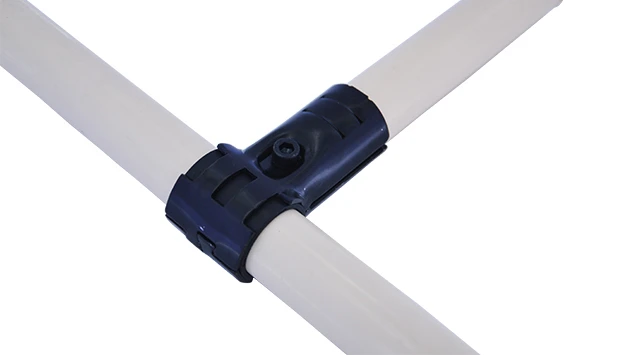
In the world of manufacturing and industrial operations, efficiency isn't just a buzzword—it's the backbone of success. Every second saved, every movement optimized, and every space utilized effectively adds up to significant improvements in productivity and profitability. This is where lean systems come into play, and at the heart of these systems lies a seemingly small but incredibly powerful component: the lean pipe joint. Among the many types of lean pipe joints, the one way rotatory straight lean pipe joint stands out for its unique ability to balance flexibility with stability, making it a cornerstone in building modular, adjustable structures that adapt to evolving workflow needs.
If you've ever walked through a well-organized factory floor, a bustling warehouse, or a precision-focused workshop, you've likely seen structures built from lean pipe—those sleek, often aluminum or steel tubes connected by various joints to form workbenches, material racks, conveyor systems, and more. What makes these structures so versatile is their modularity, and joints like the one way rotatory straight lean pipe joint are the unsung heroes that enable this adaptability. But how exactly does this joint work? What principles govern its design? And why is it so indispensable in lean environments? Let's dive in and explore.
1. Understanding the Basics: Lean Pipe and Its Ecosystem
Before we zoom in on the one way rotatory straight lean pipe joint, let's take a step back to understand the broader context: lean pipe systems. Lean pipe, also known as "flexible pipe" or "kitchen pipe" in some regions, is a modular building material typically made from steel, aluminum, or stainless steel, often coated with plastic (like PE) for durability and corrosion resistance. It's designed to be lightweight yet strong, allowing users to construct custom structures quickly without welding or complex tools.
The magic of lean pipe lies in its accessories—connectors, joints, clamps, casters, and panels—that transform simple tubes into functional systems. These accessories are the building blocks of lean manufacturing, enabling teams to create everything from workbenches and flow racks to turnover trolleys and conveyor tracks. Among these accessories, joints are critical: they determine how pipes connect, whether the structure can be adjusted, and how much weight it can support. And within the diverse family of lean pipe joints, the one way rotatory straight lean pipe joint has a special role to play.
2. What Is a One Way Rotatory Straight Lean Pipe Joint?
At its core, a one way rotatory straight lean pipe joint is a type of connector designed to join two lengths of lean pipe in a straight line while allowing rotation in one direction only. Unlike fixed joints, which lock pipes in a rigid position, or two-way rotatory joints, which allow rotation in both directions, this joint offers controlled movement: it lets you rotate the connected pipes in one direction (say, clockwise) but resists or locks when turned the opposite way (counterclockwise). This "one-way" functionality is key to its utility, as it prevents accidental adjustments while still allowing intentional repositioning.
Imagine building a workbench where the height of the shelf needs to be adjusted occasionally to accommodate taller materials, but you don't want it to slip downward under the weight of tools or parts. A one way rotatory joint would let you lift the shelf (rotating the joint upward) but lock it in place when you stop, ensuring it stays at the desired height. That's the practical value of this joint: it combines flexibility with stability, two traits that are often at odds in modular design.
Physically, the joint typically consists of two main parts: a housing that connects to one pipe and a rotating component that attaches to the other. Inside, a mechanism—often a ratchet, pawl, or spring-loaded lock—governs the direction of rotation. The exterior is usually compact, with a smooth, ergonomic design to avoid snags and make adjustments easy even with gloved hands.

3. Breaking Down the Components: What Makes It Tick?
To understand how the one way rotatory straight lean pipe joint works, let's dissect its key components. While designs may vary slightly between manufacturers, most joints share these core parts:
- Outer Housing: The rigid, often cylindrical or hexagonal casing that anchors the joint to one end of the lean pipe. It's typically made from die-cast aluminum or high-strength plastic, chosen for durability and lightweight properties.
- Rotating Shaft: A central rod or tube that extends from the housing and connects to the second lean pipe. This shaft is the moving part of the joint, responsible for rotation.
- One-Way Locking Mechanism: The heart of the joint. This can be a ratchet system (with teeth on the shaft that engage with a spring-loaded pawl), a cam lock, or a friction-based brake. Its job is to allow rotation in one direction and prevent it in the other.
- Connection Ports: The ends of the joint where the lean pipe is inserted and secured. These ports often have set screws, clamps, or internal threads to grip the pipe tightly, ensuring a secure fit that won't loosen under load.
- Release Lever (Optional): Some models include a small lever or button that, when pressed, disengages the locking mechanism, allowing rotation in both directions for easy repositioning. This is especially useful during initial setup or major adjustments.
Each component works in harmony to deliver the joint's signature functionality: controlled, one-way rotation with reliable locking. Let's take a closer look at how these parts interact during operation.

4. The Mechanism: How One-Way Rotation Works
The key to the one way rotatory straight lean pipe joint's operation is its one-way locking mechanism. Let's use a common design—the ratchet and pawl system—to illustrate this process. Picture the rotating shaft as having a series of small, angled teeth (the ratchet) around its circumference. Inside the outer housing, a spring-loaded metal piece (the pawl) rests against these teeth. When you rotate the shaft in the "allowed" direction (e.g., clockwise), the angled teeth push the pawl upward, compressing the spring, and then slide past it. This creates a smooth, almost frictionless rotation.
Now, if you try to rotate the shaft in the opposite direction (counterclockwise), the teeth catch on the pawl. Since the pawl is angled the other way, it can't compress the spring—instead, it locks firmly against the tooth, preventing rotation. This is why the joint only moves in one direction. The spring ensures the pawl stays in contact with the ratchet teeth at all times, even if the joint is jostled or vibrated, maintaining the lock.
Another common mechanism is the cam lock, which uses an eccentrically shaped cam (a wheel with an off-center axle) instead of ratchet teeth. As the shaft rotates in the allowed direction, the cam spins freely; when reversed, the cam's shape wedges against the housing, creating friction that stops movement. This design is often quieter than ratchets and works well in applications where smooth, continuous rotation (rather than step-by-step movement) is needed.
In both cases, the result is the same: intentional, controlled rotation in one direction and reliable locking in the other. This balance is crucial in lean environments, where structures need to be adjustable but also stable enough to support tools, materials, or even workers.
5. Design Principles: Why It Works in Lean Systems
The one way rotatory straight lean pipe joint isn't just a clever mechanical device—it's a product of lean principles. Lean manufacturing, pioneered by Toyota, focuses on eliminating waste (muda), optimizing flow, and empowering workers to improve processes. Let's see how this joint aligns with these principles:
- Flexibility: Lean systems demand adaptability. A workbench that's perfect for today's task might need to be taller, shorter, or reconfigured tomorrow. The one way rotatory joint allows for quick adjustments without disassembly, reducing setup time and waste.
- Stability: Waste includes errors and accidents. A structure that collapses or shifts unexpectedly can damage materials, injure workers, or disrupt production. The joint's locking mechanism ensures stability, preventing unintended movement and keeping workflows safe.
- Simplicity: Lean design favors simplicity over complexity. The joint's few moving parts make it easy to use, maintain, and repair. Even workers with minimal training can adjust it, empowering teams to own their workspace.
- Reusability: Unlike welded structures, lean pipe systems are modular. If a workbench is no longer needed, it can be disassembled, and the pipes and joints reused to build something new. The one way rotatory joint's durability ensures it can withstand multiple reassemblies.
These principles aren't just theoretical—they translate to real-world benefits, which we'll explore next.
6. Practical Applications: Where You'll Find This Joint
The one way rotatory straight lean pipe joint is versatile, finding use in a wide range of lean structures. Here are some common applications where its unique functionality shines:
Workbenches
Workbenches are the workhorses of manufacturing and assembly lines, and their height often needs to be adjusted to suit different tasks or workers. A one way rotatory joint can be used in the legs or support frame, allowing the bench top to be raised (and locked) to the ideal height. This ergonomic adjustment reduces strain on workers, boosting comfort and productivity.
Flow Racks and Material Handling
Flow racks use gravity to move materials from the back to the front, ensuring easy access and first-in, first-out (FIFO) inventory management. The angle of the rack's shelves is critical—too steep, and materials slide too fast; too shallow, and they don't move at all. One way rotatory joints let workers tilt the shelves to the perfect angle and lock them in place, ensuring smooth material flow.
Adjustable Conveyor Systems
Conveyors often need to be angled to move products between different workstations or floors. A one way rotatory joint in the conveyor frame allows operators to adjust the incline, locking it to prevent slippage. This is especially useful in small-batch production, where conveyor setups change frequently.
Turnover Trolleys
Trolleys used to transport materials around a facility sometimes need adjustable shelves to accommodate different load sizes. The joint ensures shelves stay in place during transit, even over bumpy floors, but can be repositioned quickly when loading or unloading.
7. Comparing Lean Pipe Joints: Why Choose One-Way Rotatory?
Lean pipe joints come in many flavors, each suited to specific needs. To understand why the one way rotatory straight lean pipe joint is chosen for certain applications, let's compare it to other common types using a table:
| Joint Type | Rotation Capability | Primary Use Case | Key Advantage | Limitations |
|---|---|---|---|---|
| One Way Rotatory Straight | Rotation in one direction; locks in the other | Adjustable height workbenches, flow racks, inclined conveyors | Combines flexibility (one-way adjustment) with stability (locking) | Limited to straight pipe alignment; not for angled connections |
| 90° Fixed Lean Pipe Joint | No rotation; locks pipes at 90° angle | Rigid corners in frames, shelves, or workbench legs | Maximum stability for right-angle connections | No adjustability; requires disassembly to reposition |
| Two-Way Rotatory Joint | Rotation in both directions (no locking) | Temporary structures, adjustable guides, or swivel arms | Full flexibility for frequent, multi-directional adjustments | Not stable under heavy loads; may drift out of position |
| Three-Way Lean Pipe Joint | Fixed or limited rotation; connects three pipes | Junctions in complex frames (e.g., T-junctions, Y-junctions) | Supports multi-pipe connections in one component | Bulky; less flexible than straight joints |
As the table shows, the one way rotatory straight lean pipe joint fills a unique niche: it's the go-to choice when you need controlled adjustability without sacrificing stability. For example, a workbench using 90° fixed joints would require rebuilding the entire frame to change height, while a two-way rotatory joint might sag under the weight of tools. The one way joint strikes the perfect balance.
8. Maintenance and Care: Keeping Your Joints in Top Shape
Like any mechanical component, the one way rotatory straight lean pipe joint performs best with regular maintenance. Here are some tips to ensure longevity and reliable operation:
- Keep It Clean: Dust, grease, and debris can gum up the locking mechanism. Wipe the joint with a dry cloth regularly, and use a small brush (like a toothbrush) to clean out the ratchet teeth or cam mechanism if needed. For stubborn grime, a mild soap solution (avoid harsh chemicals) can be used, followed by thorough drying.
- Lubricate Moving Parts: The locking mechanism (ratchet, pawl, or cam) benefits from occasional lubrication. Use a lightweight machine oil or silicone spray, applying a tiny amount to the moving parts. Avoid over-lubricating, as this can attract more dust.
- Check for Wear: Over time, the ratchet teeth or pawl may wear down, reducing locking effectiveness. Inspect the joint periodically for signs of damage—chipped teeth, a loose pawl, or a weak spring. If the lock feels "slippery" or doesn't hold position, replace the worn parts (many manufacturers sell replacement kits) or the entire joint.
- Tighten Connection Ports: The set screws or clamps that secure the lean pipe can loosen with vibration. Check these periodically and tighten them with a hex key or screwdriver to prevent the pipe from slipping.
- Store Properly When Not in Use: If the joint is removed from a structure, store it in a dry, clean place to prevent rust (for metal parts) or degradation (for plastic parts). Avoid stacking heavy objects on top of it, as this can warp the housing or bend the shaft.
9. Case Study: Building an Adjustable Workbench with One Way Rotatory Joints
Scenario: A Small Electronics Assembly Workshop
Let's walk through a real-world example of how the one way rotatory straight lean pipe joint transforms a basic workbench into an ergonomic, adaptable tool. Imagine a small electronics workshop where two workers, Maria and Raj, assemble circuit boards. Maria is 5'2" (157 cm), and Raj is 6'1" (185 cm)—their ideal workbench heights are very different. The workshop previously used a fixed-height workbench, leading to Maria hunching over and Raj stooping, causing discomfort and slower assembly times.
The Solution: The team decides to build an adjustable workbench using lean pipe, one way rotatory straight lean pipe joints, and a few other lean pipe accessories. Here's how they do it:
- Frame Construction: They use 28mm aluminum lean pipe for the frame, as aluminum is lightweight yet strong enough for the task. The legs are made of four vertical pipes, connected at the top and bottom by horizontal pipes (using 90° fixed joints for stability).
- Adjustable Shelf Assembly: The workbench top is a separate frame of lean pipe with a plywood surface. To connect this top frame to the vertical legs, they use four one way rotatory straight lean pipe joints—one on each leg. The joints are secured to the vertical legs, and the top frame's horizontal pipes insert into the joint's rotating shafts.
- Setting Heights: Maria adjusts the top frame by rotating it upward (the allowed direction) to her ideal height (32 inches/81 cm). The one way joints lock, keeping the top stable as she works. When Raj takes over, he presses the release levers on the joints, lowers the top to his height (38 inches/97 cm), and releases the levers—the joints lock again, holding the new position.
- Adding Extras: They add a small flow rack above the workbench using additional lean pipe and one way rotatory joints, angling the rack to let components slide down to the assembly area. The joints ensure the rack stays at the perfect angle, preventing parts from jamming or sliding too quickly.
Result: After two weeks of using the adjustable workbench, the team reports a 15% increase in assembly speed and zero complaints of back or neck pain. Maria and Raj can now adjust the bench in seconds, and the one way rotatory joints have held their positions reliably, even with the vibration of tools and the weight of components on the shelf.
10. The Future of Lean Pipe Joints: Innovation on the Horizon
As lean manufacturing evolves, so too do the components that power it. What might the future hold for joints like the one way rotatory straight lean pipe joint? Here are a few trends to watch:
Smart Locking Mechanisms: Imagine a joint with built-in sensors that detect when a worker is adjusting it, automatically releasing the lock, and then relocking once the desired position is reached. Or joints that connect to a workshop's IoT system, logging usage data to help teams optimize their structures over time.
Advanced Materials: While aluminum and steel are currently dominant, we may see more use of carbon fiber composites—lighter, stronger, and more corrosion-resistant—making joints even more durable while reducing overall structure weight.
Modular Compatibility: With the rise of global manufacturing, joints may become more standardized, allowing parts from different suppliers to work seamlessly together. This would reduce costs and increase flexibility for businesses with international operations.
Sustainability Focus: Manufacturers are already moving toward recycled materials for lean pipe and accessories. Future joints may use bio-based plastics or recycled metals, with designs that are easier to disassemble and recycle at the end of their lifecycle, aligning with circular economy principles.
11. Conclusion: Small Joint, Big Impact
The one way rotatory straight lean pipe joint may be small in size, but its impact on lean systems is enormous. By balancing flexibility and stability, it empowers teams to build structures that adapt to their needs, reduce waste, and prioritize worker comfort—all hallmarks of lean manufacturing. Whether you're constructing a workbench, a flow rack, or a conveyor system, this joint ensures that your setup isn't just functional today, but ready to evolve tomorrow.
So the next time you see a lean pipe structure in action, take a moment to appreciate the joints that hold it all together. Behind that simple connector is a world of engineering thought, designed to make work smarter, not harder. And in the end, that's what lean is all about.