- Company Articles
- Products and Technology
- Product knowledge
- How Does a Parallel Rotatory Lean Pipe Joint Work? Mechanism & Principles

How Does a Parallel Rotatory Lean Pipe Joint Work? Mechanism & Principles
Related Product
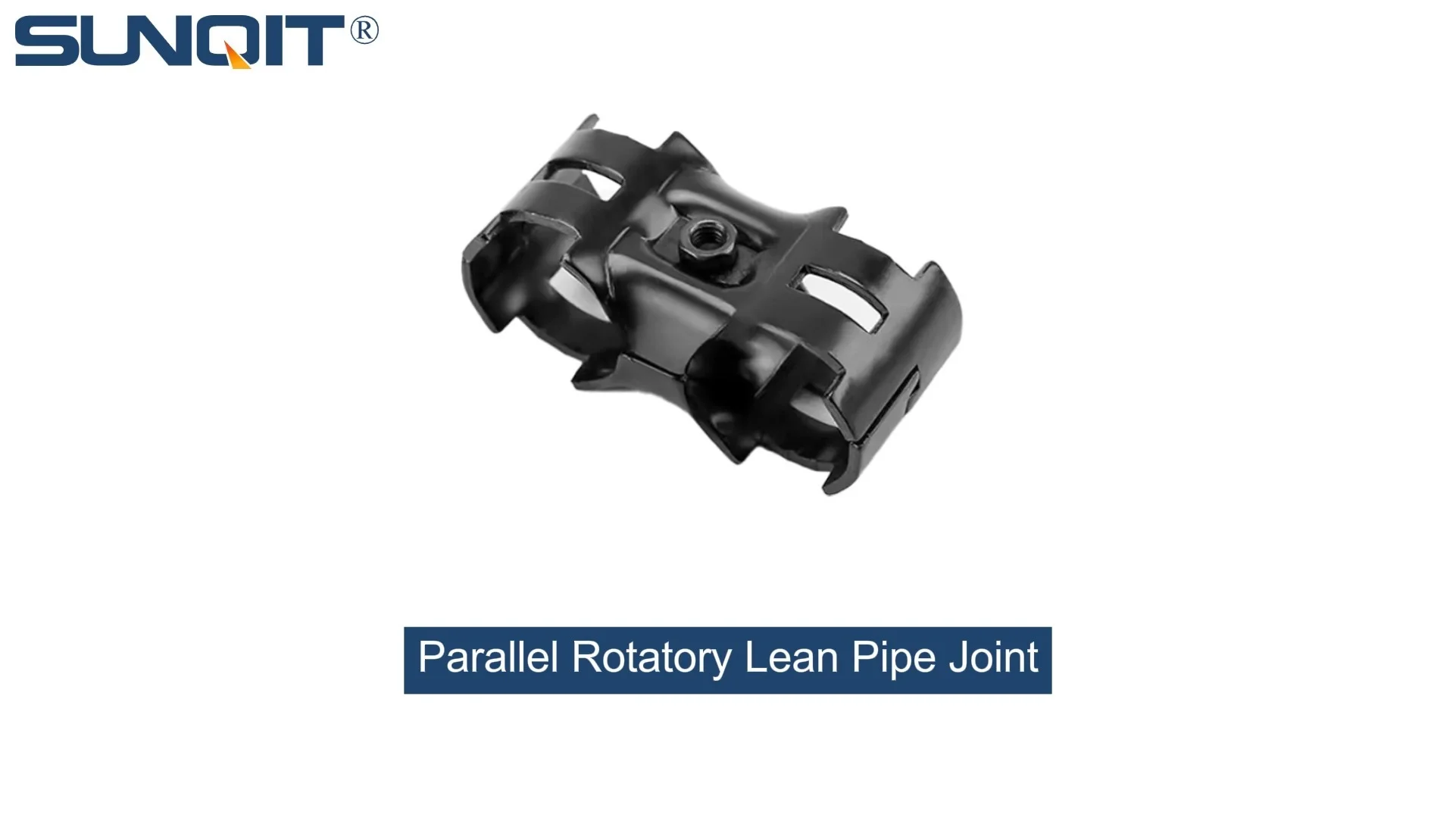
Parallel Rotatory Lean Pipe Joint
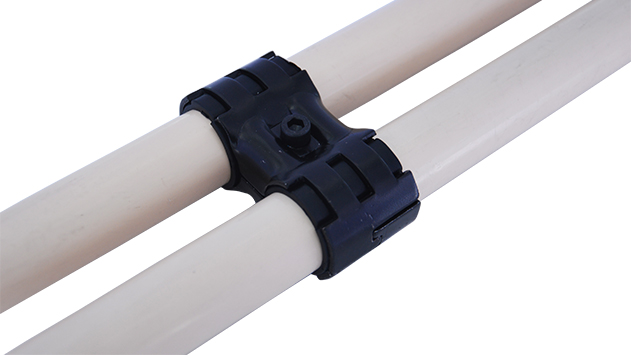
Parallel rotatory lean pipe joint, for 2 pcs pipe conenction in parallel direction with rotatory function.
The Backbone of Lean Manufacturing – Why Flexible Systems Matter
Walk into any modern manufacturing facility, and you'll notice a quiet revolution happening on the shop floor. Gone are the days of rigid, one-size-fits-all production lines bolted to the ground, resistant to change and slow to adapt. Instead, you'll find dynamic workspaces: workbenches that adjust to worker heights in seconds, flow racks that reconfigure for new product sizes overnight, and turnover trolleys that glide smoothly even as their load requirements shift. This transformation isn't magic – it's the result of lean manufacturing principles brought to life by modular systems, and at the heart of these systems lies a small but mighty component: the lean pipe joint .
Lean manufacturing, at its core, is about eliminating waste – not just physical waste like scrap materials, but also the "waste" of inflexibility. When a production line can't adapt to a new order size, or a workbench can't be repositioned for a new task, that's waste: wasted time, wasted space, and wasted potential. Modular systems, built from lean pipe and connectors, solve this by letting teams build, break down, and rebuild structures on demand. And among all the connectors available, few are as critical to flexibility as the parallel rotatory lean pipe joint. It's the unsung hero that turns static frames into dynamic tools, making lean systems truly "lean."
What is a Parallel Rotatory Lean Pipe Joint? Breaking Down the Basics
Let's start with the basics: A parallel rotatory lean pipe joint is, at its simplest, a connector designed to join lengths of lean pipe (or aluminum lean pipe , for lighter applications) while allowing controlled, parallel rotation between the connected pipes. Think of it as a hinge, but engineered for industrial strength and precision. Unlike fixed joints that lock pipes into a rigid angle, or 90-degree cross joints that force perpendicular connections, this joint lets two pipes rotate relative to each other along a parallel axis – imagine two parallel pencils connected by a hinge that lets them "swivel" past each other without losing alignment.
But why does this matter? In manufacturing, change is constant. A electronics plant might need to adjust its assembly line from smartphones to tablets next month; a automotive parts supplier could switch from small components to larger ones overnight. In these scenarios, rigid structures become liabilities. A parallel rotatory joint, though, turns that liability into an asset. It lets workers tilt a workbench surface for better ergonomics, angle a flow rack to speed up material handling, or adjust a trolley's shelf to fit awkwardly shaped parts – all without tools, and all in minutes.
Visually, these joints are unassuming: typically a cylindrical or rectangular housing with two or more ports for inserting lean pipes, and a central rotating mechanism that allows movement. They're often made of durable materials like steel or aluminum (to match aluminum lean pipe systems), with a smooth, low-friction finish to ensure rotation stays easy even after years of use. But don't let their simplicity fool you – inside that unassuming housing is a clever mechanism that balances strength, flexibility, and precision.
The Mechanism Unveiled: How Does It Actually Work?
To understand the parallel rotatory lean pipe joint, let's peek under the hood – or rather, inside the housing. At its core, this joint has four key components working in harmony: the outer housing, the rotating shaft, the locking mechanism, and the bearings. Each plays a role in ensuring the joint can rotate smoothly, support heavy loads, and stay secure when needed.
The Outer Housing: This is the "shell" of the joint, typically made of die-cast aluminum or steel for strength. It has openings (ports) where the lean pipes are inserted and secured – usually via set screws or compression fittings that bite into the pipe, creating a tight, non-slip connection. The housing also protects the internal components from dust, debris, and accidental impacts common in factory environments.
The Rotating Shaft: Running through the center of the housing is a shaft that connects the two (or more) pipe ports. This shaft is the "hinge" that enables rotation. Unlike a fixed joint, where the shaft is welded or bolted to the housing, here the shaft is free to spin within the housing – but only along a parallel axis. That means if you have two pipes connected to the joint, they can rotate toward or away from each other, but not twist out of alignment. This parallel rotation is key: it keeps the structure stable while allowing adjustability.
The Locking Mechanism: What good is rotation if the joint moves when you don't want it to? That's where the locking mechanism comes in. Most parallel rotatory joints have a built-in lever, knob, or cam that lets users "lock" the rotation at a specific angle. When unlocked, the shaft spins freely; when locked, a brake pad or clamp presses against the shaft, holding it firmly in place. This is crucial for safety and stability – imagine a workbench suddenly tilting mid-assembly because the joint slipped! The best locking mechanisms are intuitive: no tools required, just a quick twist or flip to secure the angle.
The Bearings: To ensure smooth rotation even under heavy loads, the shaft is supported by small bearings (often ball bearings or bushings) inside the housing. These bearings reduce friction between the rotating shaft and the stationary housing, so even after months of use, the joint won't "seize up" or require excessive force to move. For high-load applications (like supporting heavy material racks), bearings are often made of steel; for lighter aluminum lean pipe systems, durable plastic bearings may suffice, keeping the joint lightweight and corrosion-resistant.
Put it all together, and the mechanism is elegant in its simplicity: pipes lock into the housing, the shaft rotates parallel to their axis, bearings keep movement smooth, and the locking mechanism lets users set and secure angles. It's a design that balances three critical needs: adjustability (rotation), stability (locking), and durability (materials and bearings).

Materials Matter: Why Aluminum and Steel Are Top Choices
A joint is only as good as the materials it's made from. Parallel rotatory lean pipe joints need to be strong enough to support heavy loads (think full boxes of parts on a flow rack), durable enough to withstand daily use in harsh factory environments, and – in many cases – lightweight enough to keep the overall structure easy to move and reconfigure. That's why manufacturers typically choose between two materials: steel and aluminum.
Steel Joints: For Heavy-Duty Strength
Steel is the workhorse of industrial manufacturing, and for good reason. Steel joints are incredibly strong, with high load capacities (often up to 500+ pounds per joint, depending on design). They're resistant to bending or warping, even under constant stress, making them ideal for heavy applications like supporting multi-tier material racks or industrial workbenches. Steel also holds up well to impacts – a stray forklift bump is unlikely to damage a steel joint. The downside? Steel is heavy, which can make large structures harder to reconfigure, and it's prone to rust if not coated (many steel joints come with a zinc-plated or powder-coated finish to prevent corrosion).
Aluminum Joints: For Lightweight Flexibility
Aluminum is the go-to for
aluminum lean pipe
systems, and for good reason. Aluminum joints are significantly lighter than steel (about 1/3 the weight), which makes entire structures easier to move and adjust – a critical factor for turnover trolleys or temporary workstations. Aluminum is also naturally corrosion-resistant, so it works well in humid environments (like food processing plants) or cleanrooms where rust is a concern. While aluminum isn't as strong as steel, modern alloys (like 6061-T6 aluminum) offer impressive strength-to-weight ratios, supporting up to 300+ pounds per joint – more than enough for most assembly line or warehouse applications. Plus, aluminum has a sleek, modern look that many manufacturers prefer for visible structures.
The choice between steel and aluminum often comes down to the application. A heavy-duty automotive plant moving engine blocks might opt for steel joints on their material racks, while a electronics manufacturer using lightweight circuit boards could choose aluminum joints for their adjustable workbenches. Some systems even mix materials: steel joints at stress points (like the base of a rack) and aluminum joints elsewhere to reduce weight. Either way, the material is chosen to complement the lean pipe it connects, ensuring the entire structure works as a cohesive, durable unit.

Comparing Joints: What Makes Parallel Rotatory Stand Out?
Not all lean pipe joints are created equal. In a typical lean system, you'll find a variety of connectors: fixed straight joints, 90-degree cross joints, T-joints, and more. Each has a specific purpose, but the parallel rotatory joint stands out for its unique blend of adjustability and stability. To see why, let's compare it to two common alternatives: the fixed straight joint and the 90-degree crossing joint.
| Joint Type | Rotation Capability | Typical Load Capacity | Best For | Key Advantage | Limitations |
|---|---|---|---|---|---|
| Fixed Straight Joint | 0° (no rotation) | High (up to 800 lbs) | Rigid structures (permanent frames, vertical supports) | Maximum stability; cheapest option | No adjustability; must be disassembled to reconfigure |
| 90° Crossing Joint | 0° (fixed perpendicular angles) | Medium-High (up to 500 lbs) | Right-angle connections (shelves, corners of workbenches) | Creates stable 90° structures; versatile for corners | Limited to right angles; no rotation |
| Parallel Rotatory Joint | 180°+ (parallel axis rotation) | Medium (up to 300-500 lbs) | Adjustable structures (tilting workbenches, angled flow racks, reconfigurable trolleys) | Dynamic adjustability; no disassembly needed to reposition | Slightly lower load capacity than fixed joints; more expensive than basic fixed joints |
The table tells the story: fixed joints are great for stability but terrible for change. 90-degree joints solve corner connections but still lack adjustability. Parallel rotatory joints, though, bridge the gap: they offer enough stability for most applications while adding the game-changing ability to rotate and lock at different angles. For example, a fixed joint might hold up the legs of a workbench, but a parallel rotatory joint on the tabletop could let workers tilt the surface 15° for better access to parts – a small adjustment that reduces neck strain and speeds up assembly.
Another scenario: A food packaging plant switches from glass jars (heavy, rigid) to flexible pouches (light, irregularly shaped). With fixed joints, the flow rack holding these products would need to be completely rebuilt. With parallel rotatory joints, workers can simply unlock the joints, angle the rollers to better support the pouches, and relock – done in 10 minutes instead of 2 hours. That's the power of adjustability.
Real-World Applications: Where You'll Find These Joints Hard at Work
Parallel rotatory lean pipe joints aren't just theoretical – they're hard at work in factories, warehouses, and assembly lines around the world. Let's look at three common applications where their unique capabilities shine:
1. Ergonomic Workbenches: Putting Worker Comfort First
One of the biggest wastes in manufacturing is "ergonomic waste" – workers straining to reach parts, hunching over work surfaces, or twisting awkwardly to use tools. Parallel rotatory joints solve this by letting workbenches adapt to the worker, not the other way around. For example, a electronics assembly workbench might use parallel rotatory joints to tilt the work surface from flat (for detailed soldering) to a 30° angle (for inserting components into circuit boards), reducing neck and back strain. Some workbenches even use multiple parallel rotatory joints to adjust the height of individual sections, so a tall worker and a short worker can use the same bench comfortably. And because the joints lock securely, there's no risk of the surface slipping mid-task.
3. Turnover Trolleys: Adapting to Awkward Loads
Turnover trolleys (used to move parts between stations) often carry irregularly shaped items – think automotive bumpers, curved plastic components, or bulky packaging. Fixed shelves on these trolleys can waste space or risk damaging parts that don't fit. Parallel rotatory joints solve this by letting workers angle shelves to cradle odd shapes. For example, a trolley transporting curved car door panels might have shelves tilted at 45° to prevent the panels from sliding, while the same trolley could be reconfigured with flat shelves the next day to carry boxes of screws. No disassembly, no tools – just unlock, adjust, lock, and go.
The Benefits: Why Manufacturers Swear by Parallel Rotatory Joints
At this point, you might be wondering: Are these joints really worth the investment? After all, fixed joints are cheaper and simpler. The answer, for most lean-focused manufacturers, is a resounding "yes." Here's why parallel rotatory lean pipe joints deliver ROI that goes beyond the initial cost:
Time Savings: Reconfigure in Minutes, Not Hours
Traditional rigid structures require disassembly, drilling, and reassembly to change – a process that can take hours (or even days) for large systems. Parallel rotatory joints eliminate this: unlock, adjust, relock. A team can reconfigure a workbench or flow rack in 10 minutes instead of half a day, getting back to production faster. For manufacturers with frequent product changes (like consumer electronics or seasonal goods), this time savings alone justifies the cost.
Cost Efficiency: Reuse, Don't replace
Lean manufacturing is about eliminating waste, and one of the biggest wastes is throwing away usable equipment because it no longer fits the task. Parallel rotatory joints extend the life of lean systems by making them adaptable. A single workbench can serve as an assembly station one month, a packaging station the next, and a quality inspection station after that – all with quick angle adjustments. This reduces the need to buy new equipment, cutting capital expenses.
Worker Satisfaction: Empowering Teams to Adapt
Nothing kills morale like working with tools that don't fit the job. When workers can adjust their workbench height, tilt a shelf to reach parts easier, or reangle a trolley to carry their load safely, they feel empowered. Studies show that ergonomic, adaptable workspaces reduce absenteeism and increase productivity – workers are happier, more engaged, and less likely to suffer from repetitive strain injuries.
Sustainability: Less Waste, More Reuse
By extending the life of lean systems and reducing the need for new equipment, parallel rotatory joints support sustainability goals. Fewer materials end up in landfills, and less energy is spent manufacturing new structures. For companies focused on green manufacturing, this is a tangible way to reduce their carbon footprint.
Conclusion: The Small Joint That Drives Big Lean Wins
In the world of lean manufacturing, it's easy to focus on big-picture concepts like "value stream mapping" or "continuous improvement." But the true magic of lean often lies in the details – the small components that make flexibility and efficiency possible. The parallel rotatory lean pipe joint is one such detail.
It's a simple device: a connector that joins lean pipe (or aluminum lean pipe ) with parallel rotation, locking at adjustable angles. But its impact is profound. It turns rigid structures into dynamic tools, letting manufacturers adapt to changing demands, reduce waste, and empower their teams. Whether it's a tilting workbench that cuts down on worker strain, a flow rack that speeds up material delivery, or a trolley that adapts to odd-shaped parts, this joint is the quiet force behind some of the most efficient, flexible workspaces in modern manufacturing.
So the next time you walk through a factory and see a workbench adjust mid-shift, or a flow rack reconfigure for a new product, take a closer look. Chances are, you'll spot a parallel rotatory lean pipe joint – small in size, but mighty in the role it plays in keeping lean manufacturing alive and thriving.