- Company Articles
- Products and Technology
- Application Cases
- How Does a T Slot Aluminum Pipe with Board Holder Work in Lean Manufacturing?

How Does a T Slot Aluminum Pipe with Board Holder Work in Lean Manufacturing?
Related Product
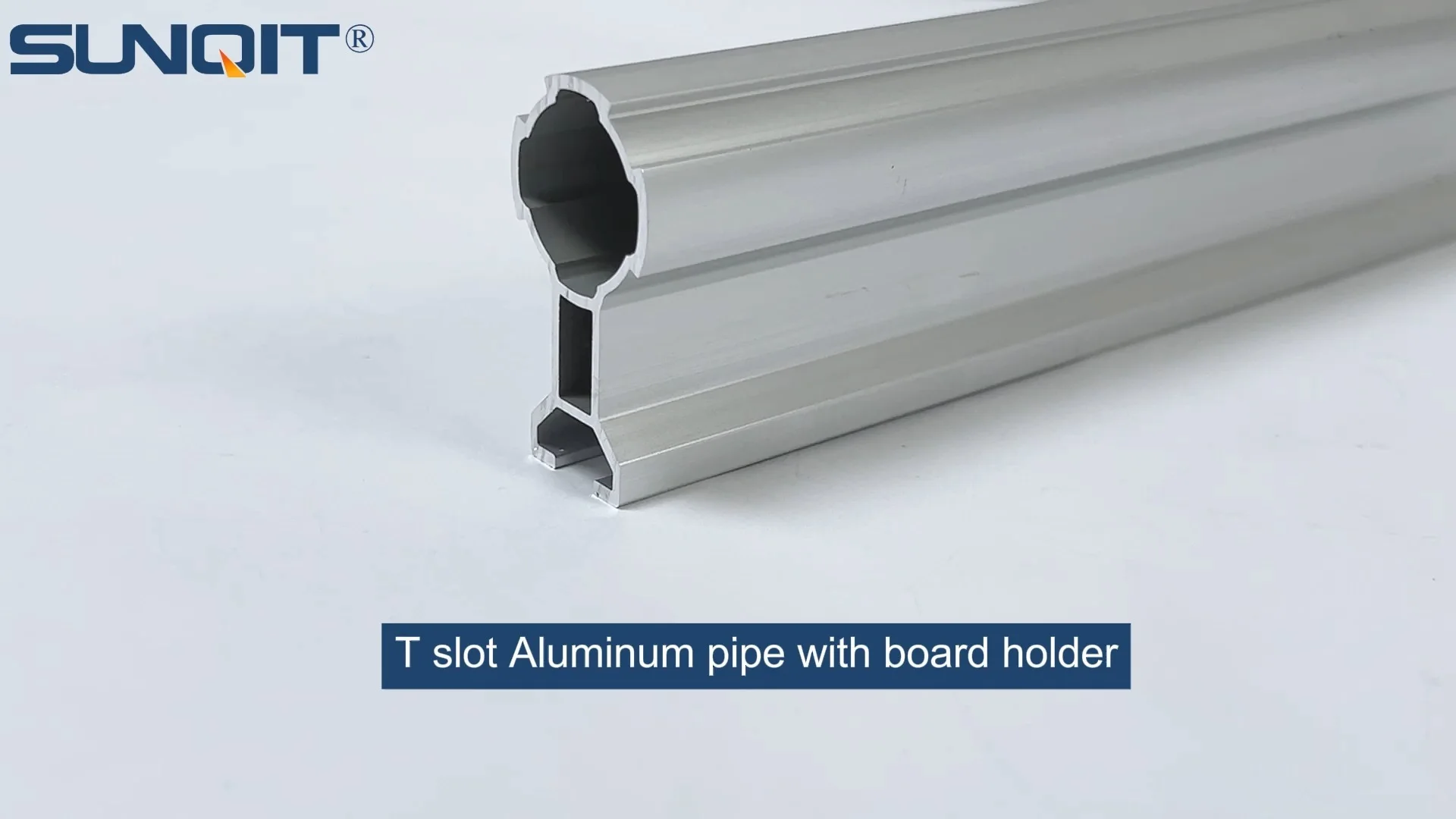
T Slot Aluminum Pipe with Board Holder
T slot Aluminum pipe with board holder,the pipe one side connected by a joint, the other side with a slot which can hold a tray or a aluminum pannel
Introduction: Lean Manufacturing and the Quest for Flexible Infrastructure
Walk into any thriving manufacturing facility today, and you'll likely notice a common theme: efficiency isn't just a buzzword—it's the backbone of every process. Lean manufacturing, a philosophy born from the Toyota Production System, has revolutionized how factories operate by focusing on eliminating waste, streamlining workflows, and empowering teams to continuously improve. But here's the thing: lean principles don't just live on whiteboards or in process maps. They're built into the very tools and structures workers interact with daily—from the workbenches where assemblies take shape to the flow racks that keep materials moving.
Traditional manufacturing setups often rely on rigid, one-size-fits-all infrastructure. Picture a heavy wooden workbench bolted to the floor, or a metal shelf unit that can't be adjusted without a wrench and a team of helpers. These systems might work for a while, but as production needs change—new product lines, shifting demand, or process tweaks—they become anchors holding back progress. That's where flexible tools come in. Enter the T Slot Aluminum Pipe with Board Holder : a deceptively simple component that's quietly transforming how lean systems adapt and thrive.
In this article, we'll dive deep into how this unassuming tool works, why it's become a staple in modern lean environments, and how it integrates with everything from aluminum profile accessories to workbenches and flow racks. Whether you're a plant manager looking to upgrade your facility or a curious enthusiast wanting to understand lean's physical side, let's unpack the magic of the T Slot Aluminum Pipe with Board Holder.
What Is a T Slot Aluminum Pipe with Board Holder, Anyway?
Let's start with the basics. At first glance, a T Slot Aluminum Pipe looks like any other metal tube—but take a closer look, and you'll notice a key detail: a long, narrow groove (the "T slot") running along its length. This groove isn't just for show. It's a built-in channel designed to accept bolts, brackets, and accessories, turning a simple pipe into a modular building block. Now, add a board holder —a attachment that slides into that T slot—and suddenly you've got a system that can secure everything from tool panels and part bins to instruction sheets and digital displays.
But why aluminum? Unlike steel, aluminum is lightweight yet surprisingly strong, making it easy to maneuver during setup without sacrificing durability. It's also resistant to corrosion, which is a big plus in factories where spills or humidity are common. And because it's malleable, aluminum pipes can be cut to custom lengths, ensuring they fit perfectly into any workspace—no more forcing a square peg into a round hole.
The board holder itself is a study in simplicity. Most designs feature a clamp or bracket that slides into the T slot and tightens with a thumb screw or hex key, meaning you can attach or reposition it in seconds. Some holders are fixed, while others swivel or tilt, letting workers adjust the angle of their boards for better visibility. Imagine a assembly line worker who needs quick access to a checklist: with a T Slot Aluminum Pipe and board holder, that checklist is always within arm's reach, no more fumbling through drawers or balancing papers on a cluttered workbench.

Design Deep Dive: How the T Slot and Board Holder Work Together
The T Slot: More Than a Groove
The T slot is the unsung hero here. Its shape—wide at the bottom, narrow at the top—allows for "drop-in" accessories. Think of it like a track for a train: once a bolt or bracket is inserted into the slot, it can slide along the entire length of the pipe but won't fall out, thanks to the T shape. This means you can position the board holder (or any accessory) exactly where you need it—centered, off to the side, or even at an angle—without drilling new holes or damaging the pipe.
Aluminum pipes come in various sizes, but the most common for lean setups are 20mm, 30mm, or 40mm in diameter. The T slot width also varies, typically matching standard bolt sizes (M5, M6) to ensure compatibility with off-the-shelf aluminum profile accessories. This standardization is key: it means you can mix and match components from different suppliers without worrying about fit issues.
The Board Holder: Customization at Your Fingertips
Board holders come in all shapes and sizes, but they all share a common goal: to keep flat surfaces (boards, panels, shelves) securely attached to the pipe. Some are designed for thin materials like pegboards or magnetic tool strips, while others can support thicker plywood or plastic boards for heavier tools. Many even have built-in features like cable management clips or slots for labels, adding another layer of organization.
One of the best parts? Because the holder attaches via the T slot, you can easily swap out boards when needs change. A workbench used for assembling small electronics might have a board with tiny tool hooks one week; the next, if the line switches to larger components, you can replace it with a sturdier board with deeper bins—all without dismantling the entire setup.

Integrating with Lean Systems: From Workbenches to Flow Racks
A T Slot Aluminum Pipe with Board Holder rarely works alone. In lean manufacturing, it's part of a larger ecosystem of tools designed to create smooth, waste-free workflows. Let's explore how it fits into two common lean staples: workbenches and flow racks .
Workbenches: The Heart of the Workspace
Workbenches are where the rubber meets the road in manufacturing. They're where parts are sorted, tools are stored, and assemblies are built. Traditional workbenches often have fixed shelves and cabinets, which can quickly become cluttered or inefficient if the task changes. But a workbench built with T Slot Aluminum Pipes? It's a blank canvas.
Imagine a workbench frame made from interconnected T Slot Aluminum Pipes. Along the back edge, a horizontal pipe runs the length of the bench, fitted with multiple board holders. Each holder supports a pegboard with hanging tools—screwdrivers, pliers, wrenches—positioned exactly where the worker stands. Above that, another pipe with a board holder holds a digital display showing assembly instructions, eliminating the need for printed manuals. On the sides, vertical pipes with board holders support small part bins, color-coded by component type.
The beauty? If the workbench needs to switch from assembling smartphones to tablets (which are larger and require different tools), the board holders can be slid along the T slots to reposition the pegboards and bins. No disassembly, no downtime—just a few minutes of adjustment, and the workbench is ready for the new task. This flexibility directly aligns with lean's principle of "jidoka" (autonomation), ensuring the workspace adapts to the worker, not the other way around.
Flow Racks: Keeping Materials Moving
Flow racks are another lean essential, designed to move materials from storage to the production line using gravity. They're all about reducing "motion waste"—the time workers spend walking to fetch parts. But even flow racks can benefit from a T Slot Aluminum Pipe with Board Holder.
Consider a flow rack in a warehouse, stocked with boxes of components. Each shelf is angled slightly, so when the front box is taken, the next one slides forward. But without labels, workers might grab the wrong part, leading to defects. Enter the T Slot Aluminum Pipe: mounted along the front edge of each shelf, with a board holder securing a label holder. Now, each shelf has a clear, visible label showing part numbers and quantities. If the components change, just swap out the label—no more peeling off sticky notes or printing new signs.
Some facilities take it a step further, using board holders to attach small LED lights above each shelf. When stock runs low, the light turns red, alerting the warehouse team to restock—another example of how the T Slot system turns passive racks into active, communication tools.
Why Lean Systems Love T Slot Aluminum Pipes with Board Holders: Key Benefits
By now, you might be thinking, "This sounds useful, but what makes it specifically 'lean'?" Let's break down the benefits that make this tool a favorite in lean environments:
1. Eliminates Waste (Muda) in All Its Forms
Lean manufacturing identifies eight types of waste, and the T Slot Aluminum Pipe with Board Holder attacks several at once:
- Motion Waste: By keeping tools and materials within arm's reach (via the board holder), workers move less, saving time and reducing fatigue.
- Inventory Waste: No need to stockpile extra shelves or tool panels—one pipe and a few board holders can adapt to multiple needs.
- Waiting Waste: Quick reconfiguration means less downtime when switching tasks.
- Defects: Clear labels and organized workspaces (thanks to board holders) reduce errors from misplaced tools or parts.
2. Drives Continuous Improvement (Kaizen)
Kaizen, or continuous improvement, is all about small, incremental changes that add up to big results. But how can workers suggest improvements if they can't adjust their workspace? With T Slot Aluminum Pipes, employees can experiment: "What if I move the tool board six inches to the left?" or "What if we angle the instruction sheet for better visibility?" Since adjustments are fast and reversible, teams feel empowered to test ideas—no need to wait for a maintenance request or budget approval.
A plant in Ohio reported a 15% increase in productivity after letting assembly line workers redesign their workbenches using T Slot Aluminum Pipes and board holders. One worker even suggested adding a small whiteboard (attached via a board holder) to jot down quick notes or process tweaks—a simple change that cut down on miscommunications.
3. Saves Money Over Time
At first glance, aluminum pipes might cost more than basic steel or wooden alternatives. But consider the long-term: a traditional workbench might last 3-5 years before needing replacement, while a T Slot Aluminum setup can last a decade or more, thanks to durable materials and the ability to reconfigure instead of replace. Plus, aluminum is recyclable, so when it finally does reach the end of its life, it can be melted down and repurposed—aligning with lean's growing focus on sustainability.
One manufacturer calculated that switching to T Slot Aluminum workbenches saved them $45,000 over five years by reducing the need for new furniture, lowering assembly errors, and cutting down on worker compensation claims (fewer strains from awkward reaching).
Real-World Example: How a Small Auto Parts Plant Transformed Its Line
Let's put this all into context with a real (anonymized) story. ABC Auto Parts, a small manufacturer with 50 employees, was struggling to keep up with demand for a new line of brake components. Their assembly area used old wooden workbenches with fixed shelves, and workers were spending 20% of their shift just searching for tools or adjusting to poorly positioned materials. Defect rates were hovering at 4%, and employee morale was low.
The plant manager, a lean enthusiast, decided to test T Slot Aluminum Pipes with Board Holders on one assembly line. Here's what happened:
- Week 1: Setup The team replaced two wooden workbenches with frames built from T Slot Aluminum Pipes. Along the back of each bench, they installed horizontal pipes with board holders, attaching pegboards for tools and magnetic strips for small parts. A vertical pipe with a swiveling board holder was added to each bench to hold digital assembly guides.
- Week 2: Adjustments Workers quickly noticed that the pegboards were too high for shorter team members. Using the T slots, they lowered the board holders by 6 inches—done in 10 minutes. They also added a second board holder to one bench to hold a bin for defective parts, reducing the time spent walking to a central reject bin.
- Month 1 Results Tool search time dropped by 75%, and defect rates fell to 1.5%. Workers reported less neck and shoulder strain from not having to crane their necks to read instructions. The plant manager was so impressed that they rolled out the system to the entire assembly area.
Today, ABC Auto Parts uses T Slot Aluminum Pipes and board holders in 80% of their workspaces. They've even expanded to using aluminum profile accessories like casters (to make workbenches mobile) and adjustable feet (to level benches on uneven floors). As the plant manager put it: "We didn't just buy pipes—we bought a way to let our team work smarter, not harder."
Pairing with Aluminum Profile Accessories: Building a Complete System
A T Slot Aluminum Pipe with Board Holder is powerful on its own, but it truly shines when paired with aluminum profile accessories . These add-ons turn a single pipe into a fully functional system. Let's explore a few must-have accessories:
Joints and Connectors
Want to build a workbench frame? You'll need joints to connect pipes at angles (90°, 45°, etc.). Most aluminum profile joints slide into the T slot and tighten with a bolt, creating a secure connection without welding. Internal rotary joints even let pipes pivot, adding another layer of flexibility—imagine a workbench shelf that can fold down when not in use.
Casters and Wheels
Add casters to the bottom of a T Slot Aluminum frame, and suddenly your workbench becomes a mobile workstation. This is a game-changer for lean cells, where materials and tools need to move to the work, not the other way around. Lockable casters ensure the bench stays put during use, then rolls easily during cleanup or reconfiguration.
Shelving Brackets
Need more storage? Shelving brackets slide into T slots to support shelves, which can be adjusted up or down as needed. Combine a shelf with a board holder, and you've got a place to store both tools (on the board) and bulk materials (on the shelf).
Traditional vs. T Slot Aluminum: A Comparison Table
| Feature | Traditional Workbench/Rack | T Slot Aluminum Pipe with Board Holder |
|---|---|---|
| Flexibility | Fixed design; hard to modify without tools. | Fully customizable; reconfigure in minutes using T slots. |
| Assembly Time | Hours (requires drilling, welding, or heavy lifting). | 30-60 minutes (no special tools; click-and-tighten accessories). |
| Durability | Wood warps; steel rusts; lifespan 3-5 years. | Aluminum resists corrosion; lifespan 10+ years with proper care. |
| Cost Over 5 Years | High (replacement costs, downtime for modifications). | Low (one-time purchase, reusable accessories, minimal downtime). |
| Worker Empowerment | Workers can't adjust; must request changes through management. | Workers can tweak setups independently, driving continuous improvement. |
Installation Tips: Getting Started with Your T Slot System
Ready to try a T Slot Aluminum Pipe with Board Holder? Here's a quick guide to get you started:
- Measure Twice, Cut Once Aluminum pipes can be cut with a hacksaw or miter saw, but measure your space carefully first. Most suppliers sell pre-cut lengths, but custom cuts ensure a perfect fit.
- Start Small Don't overhaul your entire facility at once. Begin with one workbench or flow rack to test the system. Gather feedback from workers before expanding.
- Invest in Quality Accessories Cheap joints or board holders might save money upfront, but they'll loosen or break quickly. Look for accessories made from durable materials like reinforced plastic or steel.
- Train Your Team Show workers how to adjust board holders, tighten joints, and swap accessories. The more comfortable they are with the system, the more they'll use it to improve their work.
The Future of Lean: Where T Slot Aluminum Pipes Are Headed
As manufacturing evolves—with trends like Industry 4.0 and automation—the need for flexible infrastructure will only grow. T Slot Aluminum Pipes with Board Holders are poised to play a big role here. Imagine pipes with built-in sensors that track tool usage, or board holders with wireless charging for tablets. Some manufacturers are already experimenting with "smart" T slots that connect to IoT systems, alerting managers when accessories are misaligned or tools are missing.
Sustainability is another trend driving innovation. Aluminum is 100% recyclable, and many suppliers now offer pipes made from recycled materials. Plus, the modular design means less waste—instead of throwing out an entire workbench, you just replace a single pipe or accessory.
Conclusion: More Than a Pipe—A Lean Mindset Made Tangible
At the end of the day, a T Slot Aluminum Pipe with Board Holder is more than just a tool. It's a physical representation of lean manufacturing's core belief: that the best systems are those that adapt to people, not the other way around. By combining flexibility, durability, and simplicity, this humble component empowers teams to eliminate waste, improve workflows, and build a culture of continuous improvement.
Whether you're running a massive production facility or a small workshop, the question isn't "Do I need T Slot Aluminum Pipes?"—it's "How can I use them to let my team do their best work?" Because in lean manufacturing, the right infrastructure doesn't just support your process—it becomes part of it.
So the next time you walk through a factory, take a look at the workbenches and racks. Chances are, if they're built with T Slot Aluminum Pipes and board holders, you're looking at a team that's serious about lean—and serious about success.