- Company Articles
- Products and Technology
- Product knowledge
- How Does a Two Way Lean Pipe Joint Chrome Work? Mechanism Explained

How Does a Two Way Lean Pipe Joint Chrome Work? Mechanism Explained
Related Product
Two Way Lean Pipe Joint Chrome
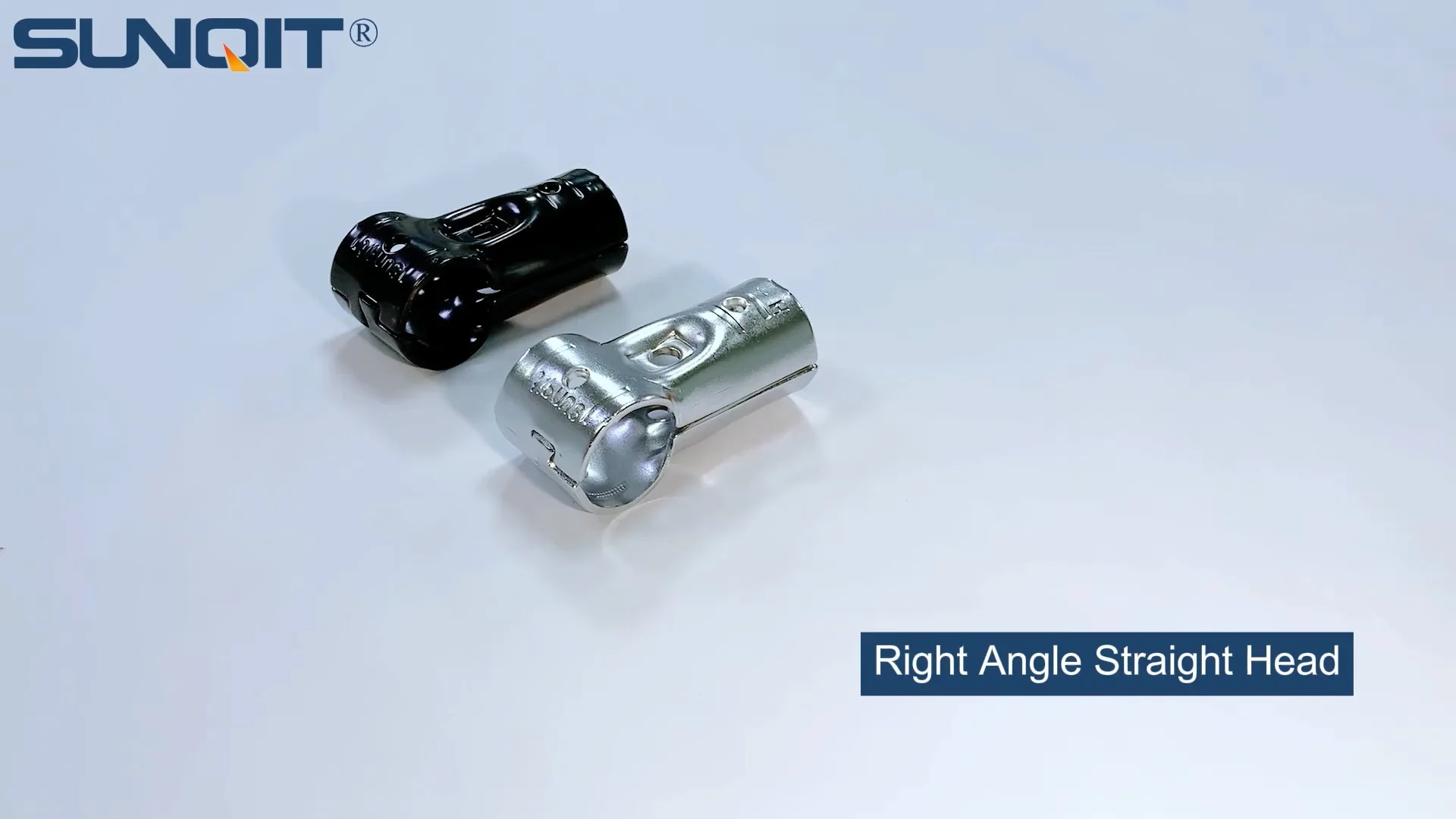
Two way lean pipe joint for 2 pcs 28MM lean pipe connection in straight angle, which used widely in workbench, flow rack, hand trolley frame connection.
1. Introduction: Lean Manufacturing and the Backbone of Flexibility
In the fast-paced world of manufacturing, where efficiency and adaptability can make or break a production line, lean manufacturing stands as a guiding philosophy. At its core, lean is about eliminating waste—whether it's time, materials, or unnecessary steps—to create a smoother, more responsive workflow. But here's the thing: lean principles don't just live on whiteboards or in process charts. They're built into the very tools and structures that workers interact with every day. Enter the unsung heroes of lean systems: lean pipe and accessories. These simple yet versatile components form the building blocks of everything from workbenches to material racks, and at the heart of this system lies a small but mighty part: the two way lean pipe joint chrome.
Imagine walking through a busy factory floor. You might see workers assembling electronics on a sturdy table, parts gliding along a roller track, or a trolley being wheeled to the next station. Chances are, much of that infrastructure is built using lean pipe—hollow metal tubes that are lightweight, strong, and infinitely configurable. And holding those pipes together? Joints. Specifically, joints like the two way lean pipe joint chrome, which connects pipes to form the frames, shelves, and supports that keep production moving. In this article, we'll dive deep into how this connector works, why its design matters, and how it contributes to the flexibility that makes lean manufacturing so powerful.
2. What is a Two Way Lean Pipe Joint Chrome?
Let's start with the basics: What exactly is a two way lean pipe joint chrome? At its simplest, it's a specialized connector designed to join two lengths of lean pipe at a specific angle (most commonly 90 degrees or straight, depending on the model). The "chrome" in its name refers to its finish—these joints are electroplated with a thin layer of chromium, which boosts durability and resistance to wear and tear. Think of it as the "elbow" or "T-joint" of the lean pipe world, but with a focus on modularity and ease of use.
Lean pipe, for context, is typically a steel tube coated with plastic (PE coated lean pipe) or made of aluminum (aluminum lean pipe), though steel remains the most common for heavy-duty applications. The two way joint is part of a broader family of lean pipe joints, which includes three way, 90° crossing, and parallel joints, each serving a unique purpose in building structures. But the two way joint is perhaps the most fundamental—it's the go-to for creating simple frames, like the legs of a workbench or the sides of a material rack.
What sets this joint apart is its dual focus on strength and flexibility. Unlike welded connections, which are permanent and require tools to modify, the two way lean pipe joint chrome allows for quick assembly and disassembly. Need to reconfigure a workstation to accommodate a new product? Just loosen the joint, adjust the pipes, and retighten. This adaptability is why lean pipe systems have become a staple in industries from automotive to electronics—they grow and change with your needs.
3. The Mechanism Unveiled: How It All Fits Together
3.1 Design Structure: Simplicity by Design
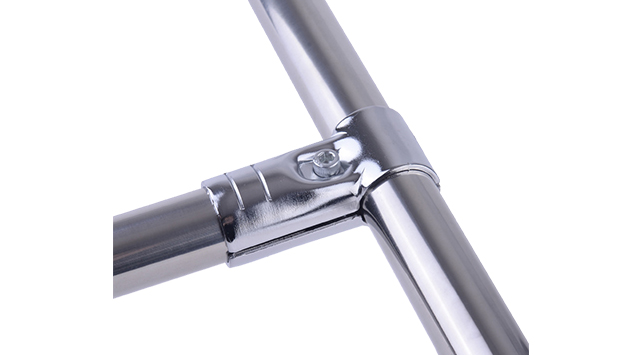
At first glance, a two way lean pipe joint chrome might look like a small, unassuming piece of metal. But its design is surprisingly thoughtful, engineered to balance grip, stability, and ease of use. Most models feature a central body with two or more openings (called "ports") where the lean pipes are inserted. These ports are sized to fit standard lean pipe diameters—usually 28mm for PE coated pipes or 30mm for aluminum lean pipe, though sizes can vary by manufacturer.
Inside each port, you'll often find subtle ridges or teeth. These aren't just for show—they dig into the outer layer of the lean pipe (whether plastic-coated or bare metal) when the joint is tightened, creating a friction-based grip that prevents slipping. Around each port, there's typically a clamping mechanism: a screw, bolt, or lever that, when tightened, compresses the port around the pipe. Some joints use a hex key (Allen wrench) to tighten a set screw, while others have a wing nut for tool-free adjustment. The goal is the same: to create a secure connection that can withstand the weight of tools, materials, or even workers leaning on the structure.
3.2 Assembly Process: Step-by-Step
Let's walk through how a worker might use a two way lean pipe joint chrome to build a simple frame. Suppose they're constructing the base of a lean pipe workbench. Here's how it would go:
Step 1: Measure and cut the pipes. First, they'll measure the length of lean pipe needed for the sides of the base—say, 120cm. Using a pipe cutter, they'll trim the pipe to size, ensuring clean, straight edges (ragged edges can prevent a tight fit in the joint).
Step 2: insert pipes into the joint. Next, they'll take a two way joint and slide one end of the cut pipe into one of the joint's ports. They'll push it in until it hits the stop inside the joint (a small lip that prevents over-insertion). Then, they'll take a second pipe (the crossbar of the base) and insert it into the other port, again pushing until it hits the stop.
Step 3: Tighten the clamping mechanism. Using a hex key, they'll turn the set screw on the joint clockwise. As the screw tightens, it presses against a metal plate inside the port, which squeezes the port walls inward. The ridges inside the port dig into the pipe's surface, creating a firm hold. They'll tighten until the joint feels secure—usually until the screw can't turn anymore without excessive force.
Step 4: Test for stability. Finally, they'll give the connected pipes a gentle shake or tug to ensure there's no wobble. If the joint feels loose, they'll loosen the screw, reposition the pipes (making sure they're fully inserted), and retighten. Repeat until the connection is rock-solid.
That's it—no welding, no adhesives, just a few minutes and a simple tool. This speed is a game-changer in lean environments, where downtime during reconfigurations can eat into productivity.
3.3 Locking Mechanism: Ensuring Stability Under Pressure
You might be wondering: Can a friction-based joint really hold up under the stresses of a busy factory? The answer is a resounding yes—thanks to the locking mechanism. When the clamping screw is tightened, the port walls don't just squeeze the pipe—they deform slightly, creating a mechanical lock. The ridges inside the port act like tiny teeth, biting into the pipe's surface to prevent rotation or sliding. For added security, some joints feature a "double clamp" design, with two screws per port, distributing pressure evenly and reducing the risk of loosening over time.
Manufacturers test these joints rigorously to ensure they can handle real-world loads. A standard two way lean pipe joint chrome, for example, might be rated to support 50-100kg per connection, depending on the pipe material and wall thickness. That's more than enough for most workbench frames, material racks, or light-duty conveyor supports. For heavier loads, users can opt for reinforced joints or pair two way joints with additional supports (like diagonal braces using three way joints).

4. Materials Matter: Why Chrome Plating?
Now that we understand how the joint works, let's talk about its finish: chrome plating. Why not just use plain steel, or even stainless steel? The answer lies in balancing performance, cost, and durability.
4.1 The Chrome Plating Process
Chrome plating (also called chromium plating) is an electroplating process where a thin layer of chromium (usually 0.0005 to 0.002 inches thick) is deposited onto a base metal—typically steel. The process involves submerging the joint in a chromic acid solution and passing an electric current through it, which causes chromium ions to bond to the steel surface. The result is a hard, shiny layer that transforms the joint's properties.
4.2 Benefits of Chrome Coating
So, what makes chrome worth the extra step? Let's break down the advantages:
Corrosion resistance: Steel is strong, but it's prone to rust when exposed to moisture, oils, or chemicals—common in factory environments. Chrome acts as a barrier, preventing water and oxygen from reaching the steel beneath. This is especially important for joints used in areas with frequent cleaning or high humidity, like food processing or pharmaceutical plants.
Wear resistance: Chromium is one of the hardest metals, with a hardness of 800-1000 HV (Vickers hardness), compared to 200-300 HV for unplated steel. This means the joint can withstand repeated tightening, loosening, and general wear without scratching or deforming. Over time, this reduces the need for replacements, saving on maintenance costs.
Easy to clean: The smooth, non-porous surface of chrome doesn't trap dirt, grease, or bacteria. A quick wipe with a damp cloth is usually enough to keep it clean—a big plus in industries with strict hygiene standards, like electronics manufacturing (where dust can damage components) or medical device production.
Aesthetic appeal: Let's not overlook the visual aspect. Chrome has a bright, reflective finish that gives lean structures a professional, polished look. In customer-facing areas (like demo labs or factory tours), this can make a positive impression. Even in back-of-house operations, a clean, well-maintained setup can boost worker morale.
4.3 Chrome vs. Other Options
Of course, chrome isn't the only finish available. Some joints are made from stainless steel, which offers excellent corrosion resistance but at a higher cost. Others are powder-coated (painted with a dry powder that's baked on), which comes in more colors but is less durable than chrome. For most lean manufacturing applications, though, chrome strikes the perfect balance: it's affordable, long-lasting, and low-maintenance—exactly what you need in a hardworking tool.
5. The Role in Lean Systems: Building Blocks of Efficiency
Lean systems are all about creating value with minimal waste, and the two way lean pipe joint chrome is a masterclass in this principle. Its design embodies three key lean ideals: modularity, adaptability, and cost-effectiveness. Let's explore how it brings these ideals to life.
5.1 Modularity: Build What You Need, When You Need It
Traditional manufacturing setups often rely on fixed, custom-built equipment—think heavy steel workbenches or welded material racks. These are strong, but they're also rigid. If your production line changes (e.g., you start making a larger product), you might need to replace the entire setup, which is costly and time-consuming.
Lean pipe systems, by contrast, are modular. They're built from standardized components—pipes, joints, casters, and accessories—that can be mixed and matched to create almost any structure. The two way lean pipe joint chrome is the foundation of this modularity. Need a small workbench for testing? Connect four pipes with two way joints to make a square frame, add a top, and you're done. Need a taller rack for storing boxes? Swap out the short pipes for longer ones, using the same joints. It's like building with industrial-scale Legos—only sturdier.
This modularity reduces waste in two ways: first, by eliminating the need for custom fabrication (you can reuse components across projects), and second, by allowing you to scale structures up or down as needed, so you're not paying for space or materials you don't use.
5.2 Integration with Lean Pipe Workbenches
One of the most common uses for the two way lean pipe joint chrome is in building lean pipe workbenches—the workhorses of assembly lines. A typical workbench might have a frame made from lean pipe, with a plywood or aluminum top, and accessories like tool hooks, bins, or LED lights attached. The two way joints form the corners of the frame, connecting the vertical legs to the horizontal rails.
What makes this setup lean? If a worker needs more space, you can add an extension using two way joints and extra pipes. If the workbench needs to be mobile, swap out fixed feet for casters (connected, of course, with joints). If the top gets damaged, you can replace just the top, not the entire bench. This flexibility ensures the workbench evolves with the task, rather than the other way around.
5.3 Supporting Flow Racks and Material Handling
Flow racks are another area where two way joints shine. These racks use gravity to move materials from the back to the front, ensuring workers always have easy access to parts. The frame of a flow rack is often built with lean pipe, and two way joints connect the vertical supports to the horizontal rails that hold the roller tracks. As with workbenches, if you need to adjust the rack's height or width to fit different-sized bins, you can do so by repositioning the joints.
Even conveyor systems—critical for moving materials between stations—can benefit from two way joints. While heavy-duty conveyors might use steel framing, smaller, temporary conveyors (or sections of larger ones) often rely on lean pipe frames held together by joints. This allows for quick setup in temporary work cells or during peak production periods.
6. Comparing Lean Pipe Joints: A Quick Reference Table
| Joint Type | Number of Connections | Common Angles | Best For | Chrome-Plated Option? |
|---|---|---|---|---|
| Two Way Lean Pipe Joint | 2 | 90°, 180° (straight) | Simple frames, workbench legs, basic shelves | Yes |
| Three Way Lean Pipe Joint | 3 | 90° (T-shape or Y-shape) | Adding crossbars, branching structures | Yes |
| 90° Crossing Lean Pipe Joint | 4 (2 perpendicular pairs) | 90° (crossing) | Overhead racks, multi-layered structures | Yes |
| Parallel Lean Pipe Joint | 2 (side-by-side) | 0° (parallel) | Reinforcing frames, creating double rails | Yes |
| Swivel Lean Pipe Joint | 2 | Adjustable (360° rotation) | Flexible structures, tilting shelves | Rare (usually unplated steel) |
As the table shows, the two way joint is the most versatile for basic structures, while other joints handle more complex configurations. But even with these options, the two way joint remains the backbone—you'll likely use more of these than any other type in a typical lean setup.
7. Real-World Applications: Where You'll Find It
To truly appreciate the two way lean pipe joint chrome, let's look at some real-world scenarios where it plays a starring role. These examples show how it solves common manufacturing challenges and supports lean goals.
7.1 Automotive Assembly Lines
Automotive plants are a hotbed of lean manufacturing, and for good reason: they produce complex products with hundreds of parts, requiring precise coordination between stations. Two way joints are used here to build workbenches where workers assemble components like dashboards or door panels. These workbenches need to be sturdy enough to hold tools and parts but flexible enough to reconfigure when a new model is introduced. With two way joints, workers can adjust the height of the bench to reduce ergonomic strain or add new tool holders in minutes, rather than waiting for custom fabrication.
7.2 Electronics Manufacturing (ESD Workstations)
Electronics manufacturing demands static control to protect sensitive components like circuit boards. ESD workstations (electrostatic discharge-safe workbenches) often use aluminum lean pipe or stainless steel pipe series for their frames, with two way joints connecting the pipes. The chrome plating on the joints helps dissipate static (though for strict ESD environments, joints may be made from conductive materials). Because electronics production lines change frequently (e.g., new phone models, smaller components), the ability to reconfigure workstations with joints is essential.
7.3 Warehouse and Distribution Centers
Warehouses rely on material racks and turnover trolleys to keep inventory organized and accessible. Two way joints are used to build lightweight yet strong racks that can be adjusted to fit different box sizes or pallet heights. Turnover trolleys—used to move goods from storage to shipping—often have frames made from lean pipe connected by two way joints, with casters added for mobility. If a trolley gets damaged, it's easy to replace just the broken joint or pipe, rather than the entire trolley.
7.4 Small Batch Production
Small manufacturers or job shops that produce custom orders in small batches benefit hugely from lean pipe systems. For example, a furniture maker might use two way joints to build temporary workbenches for a specific project, then disassemble them when the project ends to free up space. This "build and break down" approach reduces the need for permanent storage of specialized equipment, keeping costs low.
8. Choosing the Right Lean Pipe Supplier: What to Look For
Not all two way lean pipe joint chrome products are created equal. To ensure you're getting a joint that will hold up to daily use, it's important to choose a reputable lean pipe supplier. Here are key factors to consider:
8.1 Quality of Materials and Plating
Start by asking about the base material—most joints are made from carbon steel, but the quality of the steel (e.g., thickness, strength) varies. A good supplier will use high-grade steel that resists bending or cracking under load. Next, check the chrome plating: it should be even, with no bubbles, peeling, or discoloration. A thick, uniform plating (at least 0.0005 inches) will last longer than a thin, patchy one.
8.2 Load Capacity Ratings
Reputable suppliers will provide load capacity ratings for their joints (e.g., "supports up to 75kg per connection"). Be wary of suppliers that don't list these ratings—without them, you can't be sure the joint will handle your needs. If you're unsure what capacity you need, ask the supplier for guidance based on your application (e.g., "I need to build a workbench that holds 200kg total—what joints do you recommend?").
8.3 Range of Accessories
A good lean pipe supplier won't just sell joints—they'll offer a full range of lean pipe and accessories, including pipes, casters, roller tracks, and workbench tops. This one-stop shopping saves time and ensures compatibility (e.g., the joints will fit the supplier's pipes perfectly). Look for suppliers that also carry specialty items, like ESD-safe components or heavy-duty joints for industrial applications.
8.4 Technical Support and Customer Service
Even the best products can cause headaches if you don't know how to use them. Choose a supplier that offers technical support—whether it's help with designing a structure, troubleshooting loose joints, or providing assembly guides. Responsive customer service is also key: if a joint arrives damaged or doesn't fit, you want a supplier that will replace it quickly without hassle.
9. Maintenance Tips: Keeping Your Joints in Top Shape
Like any tool, two way lean pipe joint chrome will last longer with proper care. Here are simple maintenance tips to extend their lifespan:
Inspect regularly: Check joints monthly for loose screws, cracks, or signs of corrosion (e.g., rust spots under the chrome). Tighten loose screws immediately—over time, a loose joint can damage the pipe or cause the structure to wobble.
Clean gently: Wipe chrome surfaces with a soft cloth and mild detergent (like dish soap) to remove grease or dirt. Avoid abrasive cleaners or steel wool, which can scratch the chrome and expose the steel beneath to rust.
Lubricate moving parts: If your joints have moving parts (e.g., swivel joints), apply a small amount of lubricating oil to the pivot points annually to prevent squeaking or seizing.
replace when needed: If a joint is cracked, the chrome is peeling badly, or the clamping mechanism no longer holds securely, replace it. Trying to "make do" with a damaged joint can compromise the entire structure's stability.
10. Conclusion: Small Part, Big Impact in Lean Operations
The two way lean pipe joint chrome might be small in size, but its impact on lean manufacturing is enormous. By enabling quick, tool-free assembly and reconfiguration, it empowers businesses to adapt to changing needs, reduce waste, and keep production lines running smoothly. Whether it's holding together a workbench in an automotive plant, supporting a flow rack in a warehouse, or forming the frame of an ESD workstation in an electronics factory, this humble joint is a cornerstone of lean systems.
As manufacturing continues to evolve—with shorter product cycles, higher customization, and a focus on sustainability—the demand for flexible, modular tools like the two way lean pipe joint chrome will only grow. So the next time you walk through a factory or warehouse, take a moment to look at the structures around you. Chances are, you'll spot these little chrome connectors hard at work, quietly keeping lean systems moving forward.
And if you're in the market for lean pipe components, remember: choosing the right lean pipe supplier is just as important as choosing the right joint. Look for quality materials, clear load ratings, and good customer support, and your joints will serve you well for years to come. After all, in lean manufacturing, every detail counts—and the two way lean pipe joint chrome is a detail that delivers big results.