- Company Articles
- Products and Technology
- Product knowledge
- How Does an End Support for Roller Track Placon Mount with Stop Work? Mechanism Breakdown

How Does an End Support for Roller Track Placon Mount with Stop Work? Mechanism Breakdown
Related Product
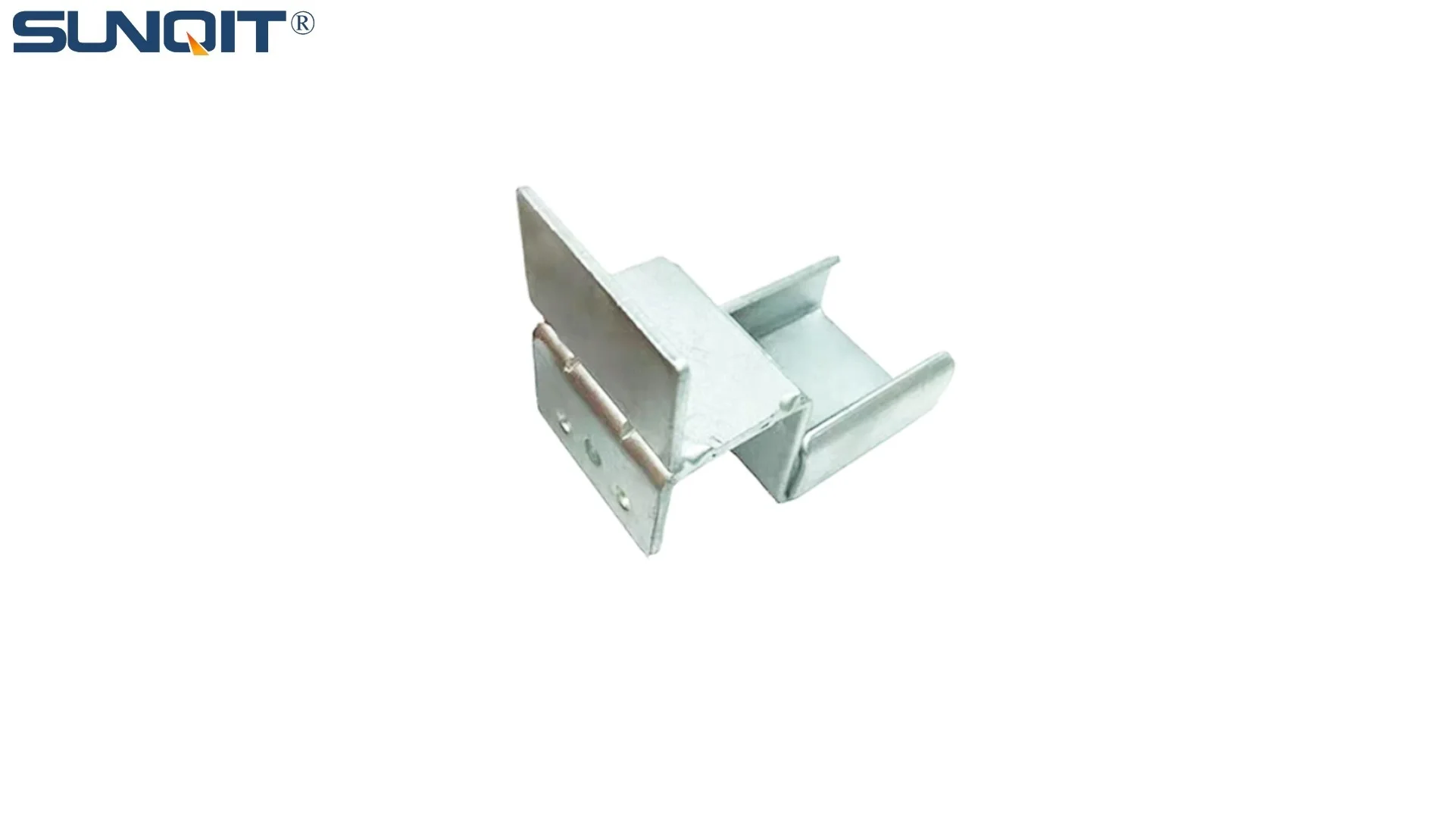
End Support for Roller Track Placon Mount with Stop
Roller track placon mount work as a connector for roller track and pipe or aluminum profile in rack syetem, it is a necessary parts in rack system which widely used in industrial plant and logistic,warehouse storage.
Walk into any manufacturing plant—whether it's a bustling 3C assembly line churning out smartphones or a precision-focused medical device workshop—and you'll notice a silent hero keeping things moving: roller tracks. These metal rails with spinning rollers carry components, parts, and products from one station to the next, making sure nothing gets stuck, delayed, or damaged. But have you ever wondered what keeps those rolling items from sliding off the edge or crashing into the end? That's where the
First Things First: What Even Is This "End Support with Stop"?
Before we dive into the mechanics, let's get clear on what we're talking about. Imagine you're building a slide for your kid's toys—you'd want the cars to zoom down, but not fly off the end and hit the wall, right? You might add a little bump at the bottom to slow them down gently. In manufacturing, a
But it's not just a simple block. Unlike a random piece of wood you might use for your kid's slide, this end support is part of a larger
Breaking Down the Parts: What Makes It Tick?
To understand how it works, let's take it apart—metaphorically, of course. This end support might look like a single piece at first glance, but it's actually a team of components working together. Here's a breakdown of its core parts, what they're made of, and what they do:
| Component | Typical Material | Job Description |
|---|---|---|
| Placon Mount Base | Aluminum Alloy |
The "feet" of the support. It bolts or clamps onto the roller track's frame (often an
|
| Stop Arm | Steel or Reinforced Plastic | The "brake pedal." This angled or curved piece sticks up slightly above the roller surface. When a part slides down the track, it hits this arm to slow down. |
| Buffer Pad | Rubber or EVA Foam | The "cushion." Attached to the stop arm, it softens the impact between the part and the metal arm. No more scratches on delicate components! |
| Height Adjuster | Stainless Steel Screw | The "tuner." Lets you tweak how high the stop arm sits. Need to stop smaller parts? Lower it a bit. Heavier items? Raise it to catch them better. |
| Mounting Holes & Connectors | Zinc-Plated Steel | The "glue." Pre-drilled holes and slots that let you attach the support to different types of roller tracks (like 40mm steel tracks or 38mm aluminum tracks) without custom drilling. |
Each part has a job, but together? They turn a potentially chaotic "free slide" into a controlled, predictable stop. Now, let's see how they work in action.

The Step-by-Step Mechanism: How It Stops (Without the Crash)
Let's walk through a real-world scenario. Say we're in a
- The Approach: The phone casing, weighing about 200g, glides down the roller track thanks to gravity (flow racks are usually tilted slightly). The rollers spin smoothly, so it's moving at a steady pace—fast enough to keep the line moving, but not so fast that it's hard to catch.
- The First Contact: As it nears the end of the track, the front edge of the casing hits the buffer pad on the stop arm. The rubber pad squishes a little, absorbing the initial (impact force). Think of it like catching a ball with a mitt instead of your bare hand—it's gentler for both the catcher and the ball.
- The Slowdown: The casing keeps moving forward, pushing the stop arm (which is fixed in place, by the way—no moving parts here!). The buffer pad's friction slows it down gradually, not suddenly. If there were no buffer, the casing might bounce back or scratch against the metal arm.
- The Halt: Within a few centimeters, the casing comes to a complete stop. It's now perfectly positioned at the end of the track, right where the picker can grab it without bending or stretching. No more fumbling for parts that slid too far, and no more dents from parts crashing into the wall.
- The Reset: Once the picker takes the casing, the next one slides down, and the process repeats. The end support doesn't need any resetting—it's ready 24/7, no batteries or buttons required.
Pro Tip:
The angle of the stop arm and the hardness of the buffer pad are usually customizable. For heavy parts (like metal engine components), you'd use a stiffer pad and a more upright arm. For delicate items (like medical syringes), a softer pad and a gentler angle prevent damage. That's the beauty of modular
lean pipe
systems—one part, endless tweaks!

Why It Matters: Lean Production Can't Live Without It
You might be thinking, "Okay, it stops parts. So what? Isn't that just basic common sense?" In manufacturing, common sense solutions often get overlooked, but this end support is a poster child for
1. It Cuts Down on Waste (The Lean Way)
Lean manufacturing is all about eliminating waste—whether that's wasted time, wasted materials, or wasted effort. Without a proper end stop, parts might slide off the track, get scratched, or land in awkward positions. That means workers spend time hunting for lost parts, repairing damaged ones, or adjusting their posture to reach items. The end support stops all that. By keeping parts in place, it reduces scrap, speeds up picking time, and lowers the risk of workplace injuries (no more bending to up fallen parts!).
2. It Protects Your Investment in Roller Tracks
Roller tracks aren't cheap—especially high-quality ones made with durable steel or aluminum. Without an end support, parts sliding off the end can bang into the track's frame, bend the rollers, or loosen the mounting brackets. Over time, that leads to wobbly tracks, stuck rollers, and expensive repairs. The end support acts like a shield, taking the hit instead of the track itself. Since it's a small, affordable part, replacing it is way cheaper than replacing an entire track.
3. It Makes Your Line "Predictable"
In manufacturing, predictability = productivity. If parts stop in the same spot every time, workers can build muscle memory—they know exactly where to reach, how to grip, and how long it takes for the next part to arrive. This consistency reduces errors (like picking the wrong part) and makes training new employees faster. Imagine teaching someone to catch a ball that lands in the same spot every time versus one that bounces randomly—that's the difference here.

Working with the Team: How It Fits Into the Larger System
No component works alone in a lean setup. The end support for roller track placon mount with stop is part of a bigger ecosystem of parts, all designed to work together seamlessly. Let's look at a few key teammates it collaborates with:
- Roller Track Placon Mount Connector: This is the "middleman" that attaches the end support to the roller track. It's a small bracket that ensures a tight, wobble-free fit—no loose screws or shaky mounts here.
- Aluminum Guide Rails: These run along the sides of the roller track, keeping parts centered as they slide. The end support aligns perfectly with these rails, so parts don't veer off course before hitting the stop.
-
Flow Rack Frames:
Most roller tracks live inside
flow racks (those multi-level shelving units with tracks on each shelf). The end support bolts directly to the flow rack's frame, using the same holes and slots as other components—no custom drilling required. - Adjustable Feet: If the floor is uneven (and let's be real, factory floors rarely are), adjustable feet under the flow rack level everything out. This ensures the roller track stays tilted at the right angle, so parts slide smoothly into the end support.
This teamwork is why
Real-World Wins: When This Support Shines Brightest
Still not convinced? Let's look at two industries where this end support makes a huge difference:
Case 1: 3C Assembly Lines (Think Phones and Laptops)
In 3C manufacturing, precision is everything. A tiny scratch on a phone screen or a misaligned circuit board can ruin a product. Workers handle dozens of small, delicate parts every minute. With an end support, each part—whether it's a camera lens or a battery—stops gently and precisely. No more fumbling, no more scratches, and no more wasted components. One electronics plant we worked with reported a 15% drop in part damage after installing these supports on their flow racks.
Case 2: Medical Device Manufacturing
Medical tools like scalpels, syringes, and MRI components need to be sterile and blemish-free. Imagine a syringe sliding off a roller track and hitting the floor—it's now contaminated and has to be thrown away. The end support ensures every syringe stops cleanly, right where the sterile-gloved worker can pick it up. It's not just about efficiency here; it's about patient safety.
Why Not Just Use a Block of Wood? (Spoiler: Durability Matters)
You might be tempted to DIY a solution—grab a piece of wood, bolt it to the track, and call it a day. But in a factory setting, that wood would last about a week before it gets scuffed, warped, or infested with bacteria (gross, but true). The end support we're talking about is built to survive the harsh realities of manufacturing:
- Material Toughness: Aluminum and steel resist rust, even in humid or oily environments. The buffer pads are made of industrial-grade rubber that won't crack or crumble after thousands of impacts.
- Load Capacity: It can handle parts weighing up to 50kg (110 lbs) or more, depending on the model. A wooden block would splinter under that kind of weight.
- Cleanability: Factories get dirty—oil, dust, and chemicals are everywhere. The end support's smooth surfaces wipe clean easily, which is critical for industries like food processing or pharmaceuticals where hygiene is key.
Wrapping Up: The Little Part That Keeps the Line Moving
At the end of the day, the
So the next time you see a smooth-running assembly line or a worker effortlessly picking parts from a flow rack, take a second to appreciate the silent guardian at the end of the roller track. It might not have a flashy name or a big price tag, but in the language of lean production, it's saying one thing loud and clear: "We've got this under control."