- Company Articles
- Products and Technology
- Product knowledge
- How Does an External Straight Aluminum Joint Work? Mechanism Explained

How Does an External Straight Aluminum Joint Work? Mechanism Explained
Related Product
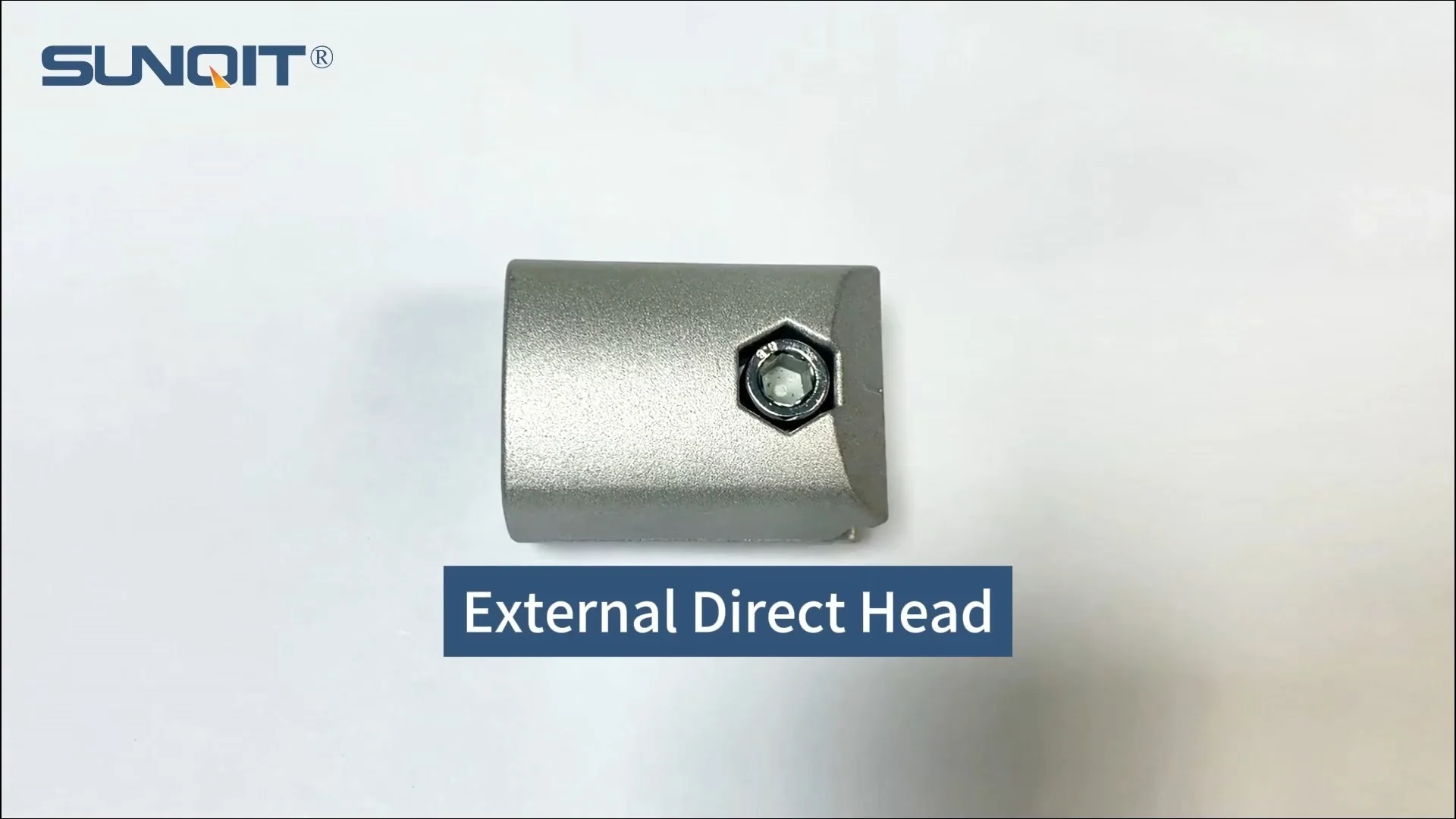
External Straight Aluminum Joint
Aluminum pipe joint outside connection used for two pcs 28pcs aluminum pipe connection in straight angle,it connects two pcs pipe from outside.
Walk into any modern manufacturing plant, warehouse, or assembly facility, and you'll likely notice a common thread: sleek, modular structures that seem to adapt and evolve with the needs of the space. From workbenches where technicians assemble delicate electronics to flow racks that keep materials moving smoothly along production lines, these setups rely on a hidden hero: the external straight aluminum joint. It's not the flashiest component on the factory floor, but without it, the flexibility and efficiency that define today's lean operations would fall apart. In this article, we'll peel back the curtain on this unassuming yet critical part, exploring how it works, why it matters, and how it integrates with aluminum profiles and lean pipe systems to keep industries running like well-oiled machines.
What Exactly Is an External Straight Aluminum Joint?
At its core, an external straight aluminum joint is a connecting component designed to link two or more aluminum profiles in a straight line. Think of it as the "glue" of modular industrial systems—though instead of adhesive, it uses mechanical force to create a secure, rigid bond. Unlike internal joints, which fit inside the hollow channels of aluminum profiles, external straight joints clamp around the outside of the profiles, making them easier to install and adjust without disassembling the entire structure. This external design also gives them unique advantages in terms of load distribution and accessibility, which we'll dive into later.
These joints are part of a broader family of aluminum pipe accessories, which includes everything from brackets and clamps to casters and end caps. Together, these components form the building blocks of lean pipe systems—frameworks that prioritize efficiency, adaptability, and waste reduction. Whether you're constructing a simple workbench or a complex conveyor system, the external straight aluminum joint plays a pivotal role in ensuring the structure is both sturdy and easy to reconfigure as needs change.
The Anatomy: Breaking Down Its Components
To understand how an external straight aluminum joint works, let's first look at its parts. While designs can vary slightly between manufacturers, most share a few key components:
- Joint Body: The main structure, typically made from die-cast aluminum alloy (often 6061 or 6063, known for their strength and corrosion resistance). It's shaped to wrap around the outer surface of aluminum profiles, with a curved or angular design that matches the profile's cross-section (common profiles include 2020, 3030, or 4040 series, named for their width and height in millimeters).
- Clamping Mechanism: Usually a set of bolts or screws (often stainless steel for durability) that tighten the joint body around the profiles. Some designs use T-slot bolts that fit into the grooves of aluminum extrusion profiles, while others use friction-based clamps for quick adjustments.
- Grip Pads: Rubber or plastic inserts on the inner surface of the joint body that enhance friction between the joint and the profile, preventing slippage even under heavy loads. These pads also protect the profile's surface from scratches during installation and adjustment.
- Reinforcement Ribs: Raised ridges on the joint body that add structural integrity, allowing the joint to withstand higher tensile and compressive forces without bending or deforming.
Each of these components works in tandem to create a connection that's both strong and versatile. The aluminum alloy body ensures lightweight durability, the clamping mechanism provides adjustable tension, and the grip pads ensure a secure hold—all critical for supporting the dynamic needs of industrial environments.

How It Actually Works: The Mechanism Unfolded
The magic of the external straight aluminum joint lies in its simplicity and effectiveness. Let's walk through how it connects two aluminum profiles step by step:
- Alignment: First, the two aluminum profiles are positioned end-to-end in a straight line. This is crucial—even a slight misalignment can affect the joint's load capacity and the overall stability of the structure.
- Placing the Joint: The joint body is placed over the seam where the two profiles meet, ensuring that its inner grip pads make full contact with the profiles' outer surfaces. Most joints are designed to cover a few inches of each profile, distributing stress across a larger area.
- Tightening the Clamps: Using a hex key or wrench, the bolts on the joint body are tightened. As the bolts turn, they draw the two halves of the joint body together (or a single half against the profile), compressing the grip pads against the aluminum. This compression creates friction, which locks the profiles in place.
- Load Distribution: Once tightened, the joint acts as a bridge, transferring weight and stress from one profile to the other. The external design means the joint itself bears some of the load, reducing strain on the profiles' internal walls—a key advantage over internal joints, which rely solely on the profile's inner structure for support.
- Adjustment (If Needed): Unlike welded connections, external straight aluminum joints are reversible. If the structure needs to be reconfigured, the bolts can be loosened, the joint repositioned, and retightened—no cutting or welding required. This flexibility is a cornerstone of lean manufacturing, where adaptability equals efficiency.
What makes this mechanism so effective is its balance of strength and adjustability. The combination of mechanical clamping and friction ensures a hold that can withstand thousands of pounds of force, while the ability to loosen and reposition the joint means structures can evolve with changing production needs—whether that's adding a new shelf to a workbench or extending a flow rack to accommodate larger materials.

Key Features and Why They Matter
External straight aluminum joints aren't just about connecting profiles—they're engineered to solve specific challenges in industrial settings. Here are some of their standout features and the benefits they bring:
Durable Aluminum Construction
Made from high-grade aluminum alloys, these joints resist rust, corrosion, and wear—even in harsh environments like factories with high humidity or exposure to chemicals. This durability translates to longer lifespans, reducing the need for frequent replacements.
Tool-Free Adjustments (In Some Designs)
While many joints require a wrench, some modern versions use quick-release levers or cam locks, allowing workers to adjust structures on the fly without stopping production. This saves time and reduces downtime during reconfigurations.
Compatibility with T-Slot Profiles
Most external straight joints are designed to work with T-slot aluminum extrusion profiles—the industry standard for modular systems. T-slots allow for easy attachment of other accessories (like shelves, bins, or lights) directly to the profiles, making the joint part of a fully integrated ecosystem.
High Load Capacity
Thanks to their reinforced design and clamping mechanism, these joints can support significant weight. A single well-installed joint might handle 500 pounds or more, making them suitable for heavy-duty applications like material racks or conveyor supports.
Lightweight Yet Strong
Aluminum is lighter than steel, so structures built with these joints are easier to move and reposition (important for mobile workbenches or temporary setups). Despite their light weight, the joints maintain rigidity, ensuring stability during operation.

Where You'll Find Them: Applications in Lean Pipe Systems
External straight aluminum joints are everywhere in lean manufacturing and industrial settings, often working behind the scenes to keep operations flowing. Here are some common applications where they shine:
Workbenches and Assembly Stations
Walk up to any aluminum workbench in a factory, and chances are it's held together with external straight joints. These joints connect the table's frame, supporting the weight of tools, components, and workers. Their adjustability means the bench can be modified—adding a shelf, raising the height, or even converting it into a standing desk—without replacing the entire structure.
Flow Racks and Material Handling
Flow racks, which use gravity to move materials from the back to the front, rely on straight, level runs of aluminum profiles. External straight joints ensure these runs stay aligned, so bins or products glide smoothly without jamming. In warehouses, this translates to faster picking times and reduced worker fatigue.
Conveyors and Roller Tracks
Conveyor systems often use aluminum profiles as rails for roller tracks. External straight joints connect these rails, maintaining the straight path needed for items to move efficiently. Their high load capacity ensures they can support the constant weight of products sliding or rolling along the track.
Turnover Trolleys and Carts
Mobile trolleys used to transport materials around a facility need to be both sturdy and lightweight. External straight joints connect the trolley's frame, while their compatibility with casters (another aluminum pipe accessory) makes the whole unit easy to maneuver. If the trolley needs to carry larger loads, the joints can be reinforced with additional brackets—no need for a new trolley.
Lean Manufacturing Cells
In lean cells—self-contained work areas focused on a specific task—modularity is key. External straight joints allow these cells to be reconfigured quickly as production demands change. For example, a cell assembling smartphones might need to expand to accommodate a new model; with these joints, the workbench, tool racks, and material bins can be adjusted in hours, not days.
How It Stacks Up: Comparing Joint Types
External straight aluminum joints are just one player in the world of industrial connectors. Let's see how they compare to other common joint types:
| Joint Type | Installation | Load Capacity | Flexibility | Best For |
|---|---|---|---|---|
| External Straight Aluminum Joint | Clamps externally; no disassembly needed | High (500+ lbs per joint) | High (easily adjustable) | Straight runs, workbenches, flow racks |
| Internal Straight Joint | Fits inside profiles; requires profile disassembly | Medium (300-400 lbs per joint) | Medium (adjustable but more time-consuming) | Hidden connections, aesthetic applications |
| 90-Degree Corner Joint | Clamps or fits at right angles | Medium-High (varies by design) | Low (fixed angle) | Corners of frames, shelving units |
| Swivel Joint | Ball-and-socket design; rotates 360° | Low-Medium (100-300 lbs) | Very High (adjustable angles) | Temporary structures, adjustable workstations |
As the table shows, external straight joints excel in straight-line applications where strength and adjustability are priorities. They're not the best choice for corners or rotating structures, but for linking profiles in a straight path—whether in a workbench, flow rack, or conveyor—they're hard to beat.
Materials and Manufacturing: Why Aluminum?
You might wonder why aluminum is the go-to material for these joints. The answer lies in its unique properties and the manufacturing process used to create aluminum extrusion profiles. Let's break it down:
Aluminum Alloys: Strength Meets Lightness
Most external straight aluminum joints are made from 6061 or 6063 aluminum alloys. These alloys contain small amounts of magnesium and silicon, which give them excellent strength-to-weight ratios. 6061, for example, has a tensile strength of around 45,000 psi—strong enough to support heavy loads—yet it's only about a third the weight of steel. This makes structures built with aluminum joints easier to handle and less costly to ship.
Extrusion: Precision and Consistency
Aluminum profiles are created through extrusion—a process where heated aluminum billets are forced through a die to create specific cross-sectional shapes (like T-slots). This method ensures profiles are consistent in size and shape, which is critical for joint compatibility. External straight joints are designed to match these extruded profiles exactly, ensuring a snug fit and reliable connection.
Surface Treatments: Protection and Performance
After extrusion, aluminum profiles and joints often undergo surface treatments to enhance their durability. Anodizing is common—it creates a protective oxide layer that resists corrosion and wear. Some joints are also powder-coated, adding color (often silver, black, or gray) and an extra layer of protection. These treatments make the joints suitable for use in harsh environments, from damp warehouses to cleanrooms in electronics manufacturing.
Pro Tips for Installation and Maintenance
To get the most out of your external straight aluminum joints, follow these best practices:
Installation Do's and Don'ts
- Do align profiles carefully: Use a level or straightedge to ensure profiles are perfectly straight before tightening the joint. Misalignment can cause uneven stress and reduce load capacity.
- Don't overtighten bolts: Over-tightening can strip threads or warp the joint body. Follow the manufacturer's torque specifications (usually 15-20 Nm for most aluminum joints).
- Do clean profiles first: Dust, oil, or debris on the profiles can reduce friction between the joint's grip pads and the aluminum. Wipe profiles with a clean cloth before installing the joint.
- Don't mix joint types: Using external and internal joints on the same structure can create weak points. Stick to one type for consistency.
- Do use lock washers: In high-vibration environments (like near machinery), add lock washers to bolts to prevent loosening over time.
Maintenance Made Simple
External straight aluminum joints require minimal maintenance, but a little care goes a long way:
- Inspect regularly: Check joints monthly for loose bolts, cracked grip pads, or signs of corrosion. Tighten bolts as needed and replace worn grip pads promptly.
- Clean with mild soap and water: Avoid harsh chemicals, which can damage anodized or powder-coated surfaces. A soft brush can remove dirt from crevices.
- Lubricate threads: If you need to disassemble a joint, apply a small amount of anti-seize lubricant to the bolts to prevent galling (aluminum-on-aluminum friction that can lock threads).
- replace when necessary: If a joint is bent, cracked, or the threads are stripped, replace it immediately. A damaged joint compromises the entire structure's safety.
Real-World Impact: A Case Study
To see how external straight aluminum joints make a difference, let's look at a hypothetical (but realistic) case study of a small electronics manufacturer, "TechFlow Inc."
TechFlow produces circuit boards for smartphones. Their assembly line relied on fixed steel workbenches and wooden shelves, which were heavy, hard to adjust, and prone to damage from static electricity (a risk for sensitive electronics). When demand spiked for a new phone model, they needed to expand production quickly—but their rigid setup couldn't keep up.
TechFlow switched to a lean pipe system using aluminum profiles, external straight aluminum joints, and ESD workbenches (ESD, or electrostatic discharge, protection is critical for electronics). Here's what happened:
- Faster setup: Using external straight joints, the team assembled 10 new workbenches in a day—compared to a week for the old steel benches. The joints' tool-free adjustment meant they could tweak heights and add shelves on the fly.
- Improved efficiency: Flow racks connected with external straight joints were added to feed components to the assembly line. Materials now glide to workers, reducing walking time by 30%.
- Cost savings: The modular system cost 40% less than new steel benches, and because it's adjustable, TechFlow can reconfigure it for future products instead of buying new equipment.
- Safer work environment: Aluminum's ESD properties reduced static damage to circuit boards by 75%, and the lighter workbenches reduced strain injuries among workers.
Today, TechFlow's production line is 50% more productive, and they've cut downtime from reconfigurations to nearly zero—all thanks in part to the flexibility and reliability of external straight aluminum joints.
Looking Ahead: Future Trends in Joint Design
As industries continue to embrace lean manufacturing and Industry 4.0 (smart manufacturing), external straight aluminum joints are evolving too. Here are a few trends to watch:
- Smart Joints with Sensors: Imagine joints embedded with sensors that monitor load, temperature, or vibration. If a joint loosens or a structure is overloaded, the sensor could send an alert to maintenance teams—preventing failures before they happen.
- 3D-Printed Custom Joints: For unique applications, 3D printing could allow manufacturers to create custom external straight joints tailored to specific profiles or load requirements—reducing lead times and costs for specialized projects.
- Eco-Friendly Materials: As sustainability becomes a priority, we may see joints made from recycled aluminum or bio-based grip pads, without sacrificing strength or durability.
- Integrated Cable Management: Future joints could include built-in channels for wires or hoses, reducing clutter on workbenches and making it easier to route power or air to tools.
The Unsung Hero of Modular Industry
External straight aluminum joints may not grab headlines, but they're the backbone of modern industrial efficiency. By connecting aluminum profiles with strength, flexibility, and precision, they enable the modular, adaptable systems that keep factories, warehouses, and assembly lines running smoothly. Whether you're building a simple workbench or a complex conveyor system, these joints ensure your structure can grow, change, and thrive in a fast-paced world.
So the next time you walk through a manufacturing plant or warehouse, take a closer look at the frameworks around you. Chances are, you'll spot an external straight aluminum joint—quietly doing its job, holding everything together, and proving that even the smallest components can make a big impact.