- Company Articles
- Products and Technology
- Product knowledge
- How Does End Support for Roller Track Placon Mount with Wheel Enhance Material Flow?

How Does End Support for Roller Track Placon Mount with Wheel Enhance Material Flow?
Related Product
End Support for Roller Track Placon Mount with Wheel
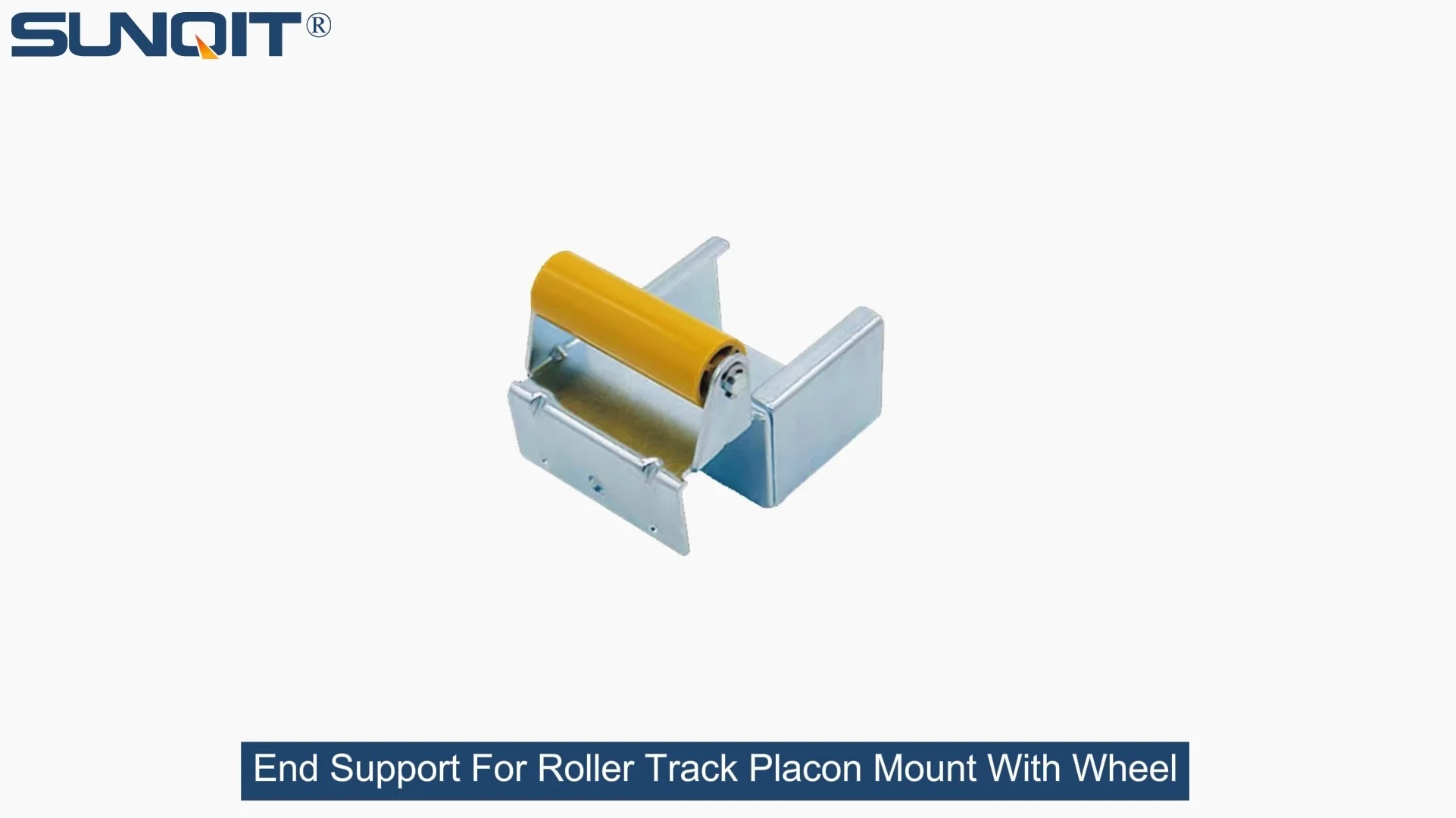
End support for roller track placon mount with wheel,the special design with end wheel,make it with more flexible function for roller track and pipe connection and give more option for selection for building flow rack system.
In the fast-paced world of manufacturing, where every second counts, the smooth flow of materials can make or break production efficiency. Imagine a busy electronics assembly line where circuit boards need to glide from the soldering station to the testing workbench, or a warehouse where components must move quickly from storage racks to packaging conveyors. Any hiccup in this flow—whether a stuck part, a wobbly track, or a misaligned transfer—can cause delays, bottlenecks, and even downtime. That's where small but critical components like the End Support for Roller Track Placon Mount with Wheel come into play. Far more than just a "support piece," this unassuming part is a silent hero in optimizing material flow, ensuring that parts move not just faster, but smarter and more reliably. Let's dive into how this component works, why it matters, and the tangible difference it brings to factories and warehouses worldwide.
What Exactly Is an End Support for Roller Track Placon Mount with Wheel?
Before we explore its benefits, let's get clear on what this component is. The End Support for Roller Track Placon Mount with Wheel is a specialized accessory designed to anchor the ends of roller tracks—those long, wheeled rails that carry materials through production lines or storage areas. As the name suggests, it combines three key features: a "placon mount" (a secure mounting system that attaches to aluminum profiles or frames), an "end support" (stabilizing the track's endpoint), and a "wheel" (a small, smooth-rolling component at the end to guide materials as they enter or exit the track).
Typically made from durable aluminum (aligning with the aluminum pipe and profile expertise of leading suppliers), this support is built to withstand the daily wear of heavy materials, constant movement, and industrial environments. Its design isn't just about strength, though—it's about precision. Many models include adjustable heights, anti-slip bases, and corrosion-resistant finishes, making them adaptable to everything from clean medical device facilities to bustling automotive plants.
4 Key Ways It Boosts Material Flow
Now, let's break down how this small but mighty component transforms material movement from "good enough" to "exceptional."
1. Eliminating Stalls with Stable, Secure Track Alignment
Ever watched a shopping cart get stuck because one wheel is off the track? The same principle applies in manufacturing—if a roller track isn't perfectly aligned, materials can jam, slow down, or even tip over. The End Support for Roller Track Placon Mount with Wheel solves this by anchoring the track's end firmly to the frame (often built with lean pipe for flexibility). Unlike basic supports that might loosen over time, its placon mount system locks into aluminum profiles, preventing sideways shifts or vertical wobbling. This stability ensures materials glide straight, without unexpected stops—critical for high-speed lines where even a 5-second delay per part adds up to hours of lost production annually.
2. Smoothing Transitions for Faster Material Transfer
Materials rarely move along a single track—they transition from roller track to conveyor , from conveyor to workbench, and back again. These handoffs are prime spots for slowdowns, especially if the end of a track is rigid or uneven. The "wheel" in this support changes everything. As a box, part, or tray reaches the track's end, the wheel gently guides it onto the next surface (say, a workbench or another track) with minimal friction. Unlike a fixed metal edge that might catch or scrape, the wheel lets materials "roll off" smoothly, cutting transfer time by up to 30% in some cases.
For example, in a 3C assembly plant (think smartphones or laptops), tiny components like circuit boards need to move from a workbench to a testing conveyor. Without a wheeled end support, a board might get stuck at the track's edge, requiring a worker to nudge it—disrupting their focus and slowing the line. With the wheeled support? The board glides onto the conveyor effortlessly, keeping the workflow uninterrupted.
3. Enhancing Safety to Keep Lines Moving (and Workers Protected)
A stalled line isn't just inefficient—it's a safety risk. When materials get stuck, workers might rush to fix the jam, leaning over tracks or reaching into tight spaces. The End Support for Roller Track Placon Mount with Wheel reduces these risks in two ways: first, by preventing jams in the first place (thanks to stable alignment), and second, by including built-in safety features. Many models have raised edges or "stops" to keep materials from sliding off the track entirely, while the wheel itself is often enclosed to avoid pinching fingers. In medical device manufacturing, where sterility and safety are non-negotiable, this peace of mind is invaluable.
4. Adapting to Your Needs—Because No Two Lines Are the Same
Manufacturing lines come in all shapes and sizes: some handle lightweight plastic parts, others heavy metal components; some run at slow, precise speeds, others at a breakneck pace. The End Support for Roller Track Placon Mount with Wheel isn't a one-size-fits-all solution—it's a flexible tool that adapts. Need to adjust the track height to match a new workbench ? Many supports have telescoping legs. Moving to a wet environment? Opt for a stainless-steel wheel. Handling extra-heavy loads? Choose a reinforced placon mount that attaches to thicker aluminum profiles. This adaptability ensures it integrates seamlessly into your existing setup, whether you're upgrading a single line or building a custom lean solution from scratch.

Real-World Impact: A Case from the 3C Industry
To see these benefits in action, let's look at a hypothetical (but realistic) scenario in a 3C assembly plant producing smartwatches. Before installing wheeled end supports, the plant's roller tracks suffered from two major issues: frequent jams at track-to-conveyor transitions, and misaligned tracks that slowed down material flow to workbenches. Workers spent 15-20 minutes per shift unjamming parts, and production targets were often missed by 5-10%.
After upgrading to End Support for Roller Track Placon Mount with Wheel, here's what changed:
- Jams dropped by 90%—workers now spend less than 2 minutes per shift on track issues.
- Material transfer time between roller track and conveyor decreased by 25%, letting the line process 120 more units per day.
- Track alignment stayed consistent even after weeks of heavy use, reducing maintenance checks from weekly to monthly.
In short, a small component delivered big results—proving that optimizing material flow often starts with the details.

Why It Fits the "Lean" Philosophy
For manufacturers focused on lean solution —the idea of minimizing waste and maximizing value—this end support is a natural fit. Lean isn't just about cutting costs; it's about creating systems that are efficient, adaptable, and sustainable. Here's how this component aligns:
- Waste Reduction: By preventing delays and jams, it eliminates "waiting waste"—one of the seven core wastes in lean manufacturing.
- Adaptability: Its compatibility with aluminum profiles and lean pipe frames means it can be reconfigured as production needs change—no need to buy new supports when you redesign a line.
- Durability: Made from long-lasting aluminum, it reduces the need for frequent replacements, aligning with sustainability goals.
It's not just a tool for better flow—it's a tool for building a smarter, more resilient production system.

Comparing End Supports: Wheel vs. No Wheel
Still wondering if the wheeled version is worth the investment? Let's compare it to a basic fixed-end support (no wheel) in key areas:
| Feature | Fixed-End Support (No Wheel) | End Support with Wheel |
|---|---|---|
| Material Transfer Smoothness | High friction; materials may catch or slow down | Low friction; materials glide off easily |
| Transition Speed | Slower (needs manual help 10-15% of the time) | Faster (no manual help needed) |
| Wear and Tear on Materials | Higher (scrapes or dents from rigid edges) | Lower (gentle wheel guidance) |
| Suitability for Delicate Parts | Not ideal (risk of damage) | Excellent (smooth handling) |
Final Thoughts: Small Part, Big Difference
Material flow might not be the most glamorous topic in manufacturing, but it's the backbone of efficient production. The End Support for Roller Track Placon Mount with Wheel proves that even the smallest components can have a huge impact—reducing delays, boosting safety, and aligning with lean principles. Whether you're running a workbench -focused assembly line, a large-scale conveyor system, or anything in between, this support ensures your materials move not just from point A to B, but with speed, reliability, and minimal waste.
So, the next time you walk through a factory or warehouse, take a closer look at those roller tracks. Chances are, the smooth flow you see is thanks to details like this—proof that great manufacturing starts with great support.