How Does Internal Straight Aluminum Joint Work? Working Principle Simplified

Related Product
Internal straight aluminum joint
Aluminum pipe joint inside connection used for two pcs 28pcs aluminum pipe connection in straight angle,it connects two pcs pipe from inside.
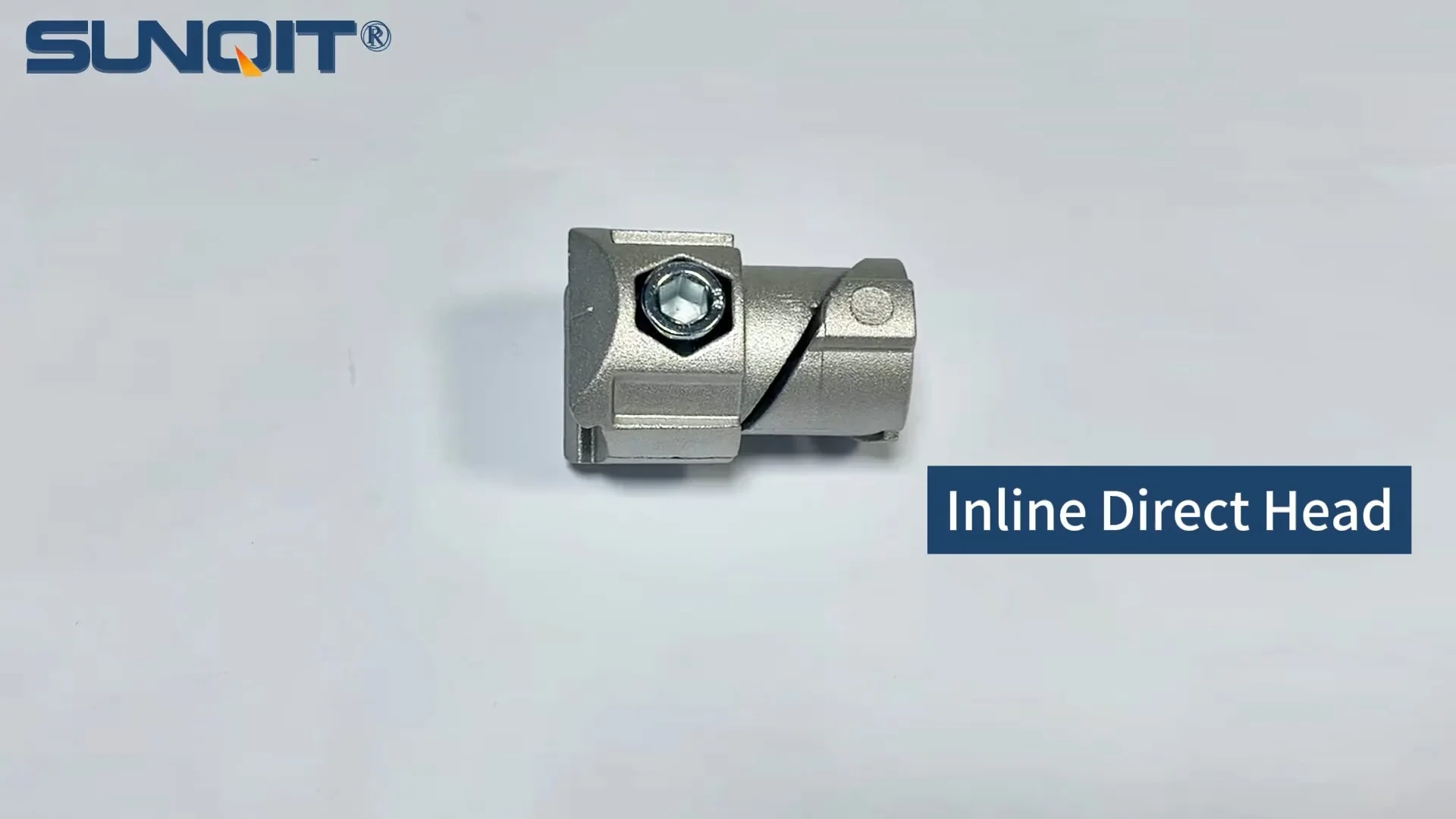
Internal straight aluminum joint
Walk into any modern workshop, manufacturing plant, or even a DIY enthusiast's garage, and you'll likely spot a common sight: sleek, modular structures built from aluminum profiles. These could be workbenches where intricate electronics are assembled, material racks holding components, or conveyor systems moving products along a production line. What you might not notice, though, is the unsung hero holding these structures together—the internal straight aluminum joint. It's small, often hidden from view, but without it, those sturdy, flexible setups would collapse into a pile of disconnected pipes. So, how exactly does this tiny component work, and why does it matter so much in the world of lean systems and aluminum assembly? Let's dive in.

First Things First: What Even Is an Internal Straight Aluminum Joint?

Before we get into the nitty-gritty of its working principle, let's make sure we're on the same page about what an internal straight aluminum joint actually is. Put simply, it's a specialized connector designed to join two or more aluminum profiles (or pipes) in a straight line—without any external bulges or clunky hardware. Unlike some joints that clamp around the outside of the profile (think of those visible plastic or metal brackets you might see on older workbenches), the internal straight joint slides *inside* the aluminum profile's T-slot (that long, narrow groove running along the length of the profile). Once in place, it locks securely, creating a smooth, seamless connection that's both strong and aesthetically clean.
You might be wondering, "Why internal? Why not just use an external joint?" Great question. External joints have their place, but they add bulk, can catch on tools or materials, and often limit how the structure can be reconfigured. Internal joints, by contrast, keep the profile's exterior smooth, making the entire structure safer (no sharp edges to snag on) and easier to clean. They're also a favorite in lean system setups, where efficiency and adaptability are key—since they allow for quick adjustments without compromising stability.

Breaking Down the Anatomy: The Parts That Make It Tick

To understand how the internal straight aluminum joint works, let's start by looking at its basic components. While designs can vary slightly between manufacturers, most internal straight joints share a few key parts:
The Body: This is the main cylindrical or block-shaped part of the joint, usually made from high-grade aluminum alloy (to match the profiles it connects). Its size is precision-engineered to fit snugly inside the T-slot of a specific aluminum profile—so a joint designed for a 2020 profile (20mm x 20mm) won't work with a 4040 profile (40mm x 40mm). The body often has grooves or ridges that help it grip the inside of the slot, preventing slippage once locked.
The Locking Mechanism: This is what transforms the joint from a loose fit to a rock-solid connection. Most internal straight joints use a threaded screw or cam lever to activate the locking. When you tighten the screw (usually with a hex key or screwdriver), it pushes against a wedge or expanding piece inside the joint. This causes the body to expand slightly, pressing firmly against the walls of the T-slot. The result? A friction-based hold that's surprisingly strong—strong enough to support heavy loads, like a fully loaded material rack or a workbench with tools and equipment.
The Threaded insert: Attached to the body is a metal insert with internal threading, which allows the locking screw to be (screwed in). This insert is typically made from steel for durability, as aluminum alone might strip under repeated tightening and loosening. The insert is often press-fit or welded into the joint body to ensure it doesn't twist or come loose during use.
Compatibility Features: Some joints have additional features to ensure they work with specific aluminum profile accessories. For example, a joint might have a small tab that aligns with a notch in the T-slot, preventing it from rotating once inserted. Others might include a flat edge to keep the joint straight, ensuring the connected profiles don't angle off-kilter.
Component Material Function
Body Aluminum alloy (6061 or similar) Forms the core structure; fits inside T-slot
Locking Screw Steel (zinc-plated or stainless) Activates expansion; tightens to secure joint
Threaded insert Steel Provides durable threading for the locking screw
Expansion Wedge Aluminum or nylon Expands when screw is tightened, gripping T-slot walls

The Working Principle: Step-by-Step, How It All Comes Together

Now that we know the parts, let's walk through exactly how an internal straight aluminum joint goes from a loose component to a structural anchor. Imagine you're building a simple aluminum workbench—let's say the "Workbench E (single deck-without caster)" from our keyword list. You've got two lengths of aluminum profile that need to be connected end-to-end to form the bench's frame. Here's how the joint does its job:

Step 1: Preparing the Aluminum Profile

First, you need to prep the aluminum profile. Most profiles come with a T-slot running along their length, but it might be covered by a plastic strip (to protect it during shipping). You'll peel that off, exposing the slot. Next, you'll slide the internal straight joint into the T-slot of one of the profile pieces. The joint should move freely at this stage—you're just positioning it where you want the connection to be (usually at the end of the profile, but sometimes in the middle for T-junctions or cross-connections, though we're focusing on straight joints here).

Step 2: Aligning the Second Profile

Once the joint is in place in the first profile, you'll take the second profile and align its end with the first. The key here is to make sure the two profiles are perfectly straight—no kinks or bends, as that could weaken the connection. You'll slide the second profile over the exposed part of the joint (some joints have a "stem" that sticks out of the first profile, which then inserts into the second profile's T-slot). Now both profiles are connected via the joint, but loosely—they can still wiggle or slide apart if you move them.

Step 3: Tightening the Locking Screw

Here's where the magic happens. Using a hex key (or whatever tool fits the joint's screw), you'll start tightening the locking screw. As you turn the screw, it pushes against the expansion wedge inside the joint. The wedge, in turn, presses outward against the walls of the T-slot. Since the T-slot has a slightly undercut design (wider at the top than the bottom), the expanding joint can't pop out—it's trapped, creating a vice-like grip.
You'll feel resistance as you tighten—this is the joint "biting" into the slot. It's important not to over-tighten here; aluminum is strong, but stripping the threads or deforming the T-slot is a real risk. Most manufacturers recommend tightening until you feel firm resistance, then giving it a quarter-turn more. That's enough to create a secure hold without damaging the materials.

Step 4: Testing the Strength

Once tightened, the joint should now hold the two profiles together rigidly. Try pushing or pulling on the connection—there should be no movement. The beauty of this design is that the force is distributed evenly across the T-slot walls, not just at a single point. This makes the joint surprisingly strong; some heavy-duty internal straight joints can support hundreds of pounds, depending on the profile size and joint quality.
What about vibration? In a busy workshop, equipment and machinery can cause constant shaking. Internal straight joints handle this well because the friction-based grip resists loosening over time. Unlike bolted connections, which might vibrate loose, the expanding mechanism maintains pressure as long as the screw stays tight.

Step 5: Disassembly (Because Lean Systems Love Flexibility)

One of the biggest advantages of internal straight aluminum joints is how easy they are to disassemble and reuse. If you need to reconfigure your workbench or material rack (say, to accommodate a new product line), you don't have to cut or drill new holes. Just loosen the locking screw with your hex key—the expansion wedge retracts, the joint releases its grip, and you can slide it out of the T-slot. Then, reposition the profiles, reinsert the joint, and tighten again. It's that simple. This reusability is a cornerstone of lean system philosophy, where adaptability and waste reduction are priorities.

Where You'll Find It: Real-World Applications of Internal Straight Aluminum Joints

Now that we understand how the joint works, let's talk about where you'll actually use it. Internal straight aluminum joints are everywhere in modular aluminum structures, but here are a few common scenarios:

Workbenches: The Backbone of Assembly Lines

Take the "Workbench E (single deck-without caster)" from our keyword list. This type of workbench is a staple in electronics manufacturing, where precision and organization matter. Its frame is built from aluminum profiles connected by internal straight joints. The straight joints ensure the legs and rails are perfectly aligned, creating a stable surface for assembling circuit boards or testing devices. If the workshop needs to adjust the bench's height or length later, the joints make reconfiguration a breeze—no need to buy a whole new bench.

Material Racks: Keeping Parts Organized and Accessible

Material racks, like "Material Rack B (3 row and 3 floor)", rely on internal straight joints to connect the vertical posts and horizontal shelves. Each shelf is supported by joints that keep the aluminum profiles straight and level, ensuring the rack can hold heavy boxes of components without sagging. Since the joints are internal, there's no hardware sticking out to catch on boxes as they're slid in and out—a small detail that makes a big difference in daily workflow efficiency.

Conveyor Systems: Smooth Movement for Lean Production

Conveyor systems, whether roller track or belt-driven, often use aluminum profiles for their frames. Internal straight joints connect the sections of the frame, ensuring the conveyor runs straight and true. This is critical for keeping products moving smoothly—even a tiny misalignment can cause jams or damage delicate items. The joints also make it easy to extend or shorten the conveyor as production needs change, which is essential in lean manufacturing setups where lines are constantly optimized.

Custom Projects: From Prototyping to Small-Scale Production

It's not just big factories that benefit. DIYers, startups, and small businesses love internal straight joints for custom projects. Need a custom shelving unit for your garage? Build it with aluminum profiles and internal joints. Want a mobile cart to move tools around your workshop? The joints make it easy to add casters and adjust the size later. Their versatility means you're not stuck with a "one-size-fits-all" solution—you can build exactly what you need, when you need it.

Why It's a Game-Changer: Benefits Over Traditional Joints

By now, you might be thinking, "Okay, internal straight joints sound cool, but are they really better than other connectors?" Let's compare them to a few common alternatives to see why they stand out:
Feature Internal Straight Aluminum Joint External Plastic Bracket Welded Connection
Strength High (even load distribution) Low to medium (prone to cracking under heavy load) Very high (but permanent)
Reusability High (easily disassembled and reused) Medium (can break when removed repeatedly) None (permanent; must be cut to disassemble)
Aesthetics Clean, seamless (no external hardware) Bulky, visible brackets Sleek, but requires finishing to look neat
Installation Time Fast (no drilling; just tighten a screw) Medium (may require drilling holes) Slow (requires welding equipment and skill)
Cost Moderate (more than plastic, less than welding) Low (but needs replacement often) High (equipment, labor, and materials)
As the table shows, internal straight aluminum joints strike a sweet spot between strength, flexibility, and cost. They're not the cheapest option upfront, but their reusability and durability make them a smart long-term investment—especially for businesses that value lean principles like adaptability and waste reduction.

Common Pitfalls and How to Avoid Them

Like any tool, internal straight aluminum joints work best when used correctly. Here are a few common mistakes to watch out for:
Using the Wrong Size: This is probably the most common error. A 2020 joint won't work in a 4040 profile—the body is too small, and the locking mechanism won't grip properly. Always check the profile size (e.g., 2020, 3030, 4040) before buying joints. Most manufacturers label their joints clearly, so double-check the product specs.
Over-Tightening the Screw: It's tempting to crank down on the locking screw to "make sure it's tight," but this can strip the threads or bend the T-slot walls. Remember: firm resistance + a quarter-turn is usually enough. If you hear a creaking sound or feel the profile bending, you've gone too far.
Misaligning the Profiles: If the two profiles aren't perfectly straight when you tighten the joint, the connection will be weak and might even warp over time. Use a level or straightedge to align the profiles before tightening. It takes an extra 30 seconds, but it's worth it for a stable structure.
Ignoring Debris in the T-Slot: Dirt, sawdust, or metal shavings in the T-slot can prevent the joint from seating properly. Always clean the slot with a brush or compressed air before inserting the joint. Even a tiny pebble can throw off the alignment or reduce the grip.

Maintenance Tips: Keeping Your Joints in Top Shape

Internal straight aluminum joints are low-maintenance, but a little care goes a long way in extending their lifespan:
Inspect Regularly: Every few months, check the joints for looseness—especially in high-vibration areas like near conveyor motors. A quick tighten with a hex key is all it takes to keep them secure.
Lubricate the Screw: If you're disassembling and reassembling joints frequently, a drop of machine oil on the locking screw's threads can prevent seizing. Just wipe off excess oil to avoid attracting dust.
Store Spares Properly: Keep extra joints in a dry, clean container to prevent rust (on steel components) or corrosion (on aluminum). A small tackle box works great for organizing different sizes.
replace When Worn: Over time, the expansion wedge or threads might wear out, reducing grip. If a joint starts slipping even after tightening, it's time to replace it. Most joints are affordable, so it's better to swap in a new one than risk a structural failure.

The Future of Aluminum Assembly: Where Do Joints Go From Here?

As manufacturing trends toward more flexible, sustainable practices, internal straight aluminum joints are likely to play an even bigger role. Here are a few innovations we might see:
Smart Joints: Imagine joints with built-in sensors that alert you when they're loose—perfect for large factories where regular inspections are time-consuming. While this is still in the prototype stage, it's not hard to see how IoT (Internet of Things) technology could integrate with these components.
Eco-Friendly Materials: Manufacturers are already exploring recycled aluminum alloys for joint bodies, reducing the environmental impact. We might also see biodegradable lubricants for the locking screws, aligning with green manufacturing goals.
Tool-Free Designs: While hex keys are simple enough, some companies are testing push-button or lever-activated joints that require no tools at all. This would make assembly even faster, which is a big plus for small businesses or DIYers without a full toolbox.

Final Thoughts: More Than Just a Connector

At first glance, the internal straight aluminum joint might seem like just another hardware component—a small, forgettable part of a bigger machine. But dig deeper, and you'll realize it's so much more. It's a symbol of how smart design can transform industries. By prioritizing strength, flexibility, and simplicity, these joints empower businesses to build leaner, more adaptable workspaces. They let small teams compete with big manufacturers by reducing setup costs and enabling quick pivots. They even make DIY dreams a reality, turning a pile of aluminum profiles into a custom workbench, shelf, or cart.
So the next time you walk into a workshop or see a modular aluminum structure, take a moment to appreciate the internal straight aluminum joint. It's not glamorous, but it's the quiet force holding everything together—one tight screw at a time. And who knows? Maybe the next time you need to build something, you'll reach for one yourself. After all, why settle for wobbly, permanent structures when you can build something that's strong, flexible, and uniquely yours?


Get In Touch with us

Hey there! Your message matters! It'll go straight into our CRM system. Expect a one-on-one reply from our CS within 7×24 hours. We value your feedback. Fill in the box and share your thoughts!