- Company Articles
- Products and Technology
- Product knowledge
- How Does Lean Pipe Clamp B Work? A Detailed Mechanism Explanation

How Does Lean Pipe Clamp B Work? A Detailed Mechanism Explanation
Related Product
Lean Pipe Clamp
Lean pipe clamp is used for rack system hang monitor or other panel for workbenck, flowrack in production daily use.
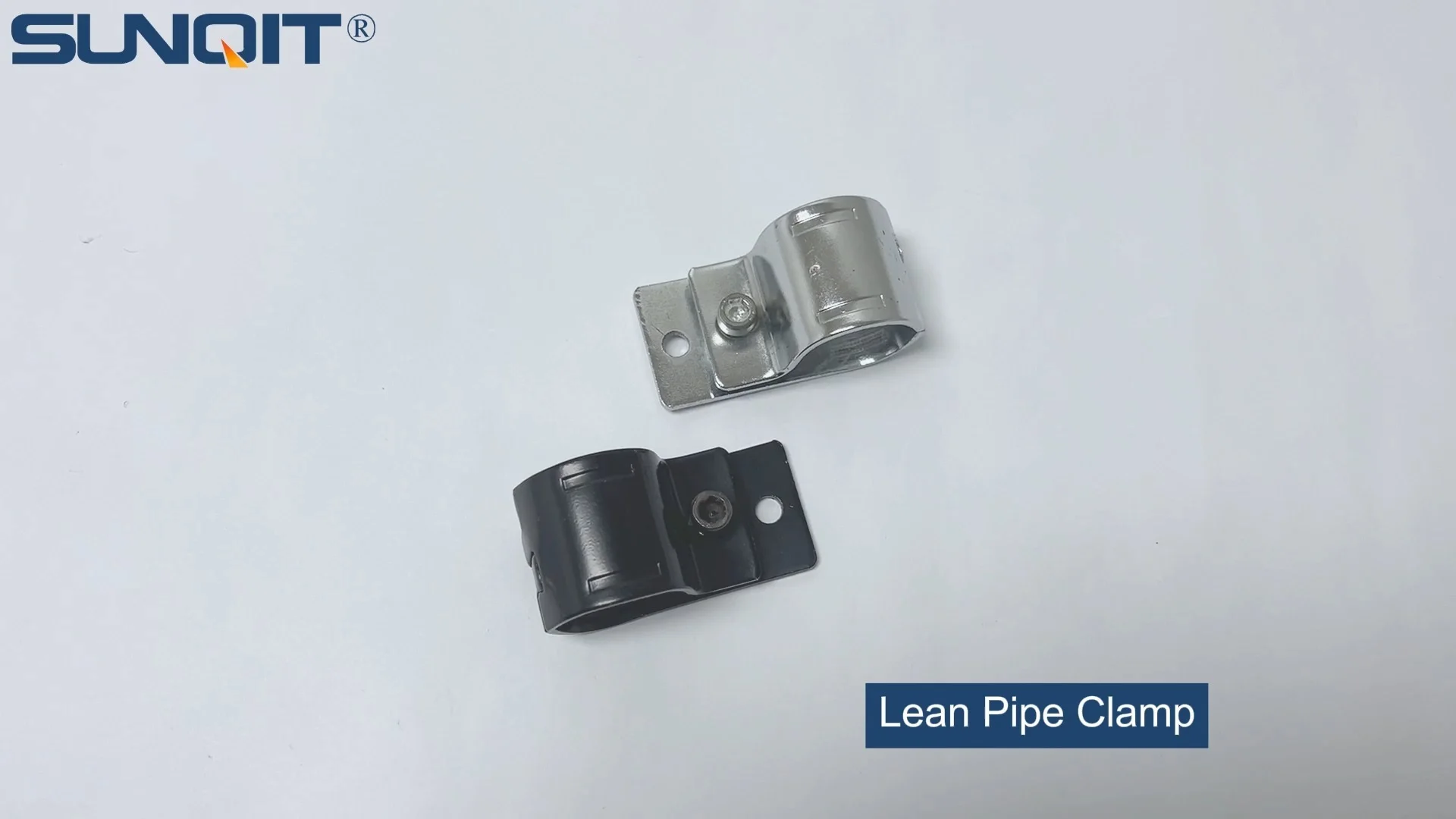
In the world of lean manufacturing, where efficiency is king and waste is the enemy, every component on the production floor plays a quiet but critical role. From the conveyor belts that move parts seamlessly to the workbenches where teams assemble products, the magic lies in the details—and often, those details are smaller than you might think. Today, we're diving into one such unsung hero: the Lean Pipe Clamp B . If you've ever wondered how those modular workbenches, flow racks, or turnover trolleys stay sturdy yet flexible enough to adapt to changing production needs, this little clamp is likely part of the answer. Let's unpack its mechanism, design, and why it's become a staple in lean systems worldwide.
What Even Is a Lean Pipe Clamp B, Anyway?
First things first: Let's get clear on what we're talking about. A Lean Pipe Clamp B is a type of connector designed to join lean pipe (also called "lean tube") in modular structures. Think of it as the glue that holds lean systems together—but unlike glue, it's temporary, adjustable, and built for repeated use. These clamps are part of a broader family of lean pipe accessories, which include everything from lean pipe joints to caster wheels, all working together to create customizable workspaces.
But why "B"? You might see other clamp types (A, C, etc.) in catalogs, each tailored for specific angles or load capacities. Clamp B, in particular, is prized for its versatility—it's commonly used to connect pipes at 90-degree angles (like the legs of a workbench to its frame) or to secure parallel pipes (such as the side rails of a flow rack). Its design balances strength and simplicity, making it a go-to for everything from lightweight workbench E (single deck-without caster) setups to heavier material racks.
Design Deep Dive: What Makes Lean Pipe Clamp B Tick?
To understand how Lean Pipe Clamp B works, let's start with its anatomy. Most clamps are made from durable materials like aluminum or steel, often coated with a layer of plastic or zinc to resist corrosion and, in some cases, provide ESD (Electrostatic Discharge) protection—critical for electronics manufacturing where static can damage sensitive components. The exact material depends on the application: For example, aluminum lean pipe systems often pair with aluminum clamps for lightweight strength, while stainless steel clamps might be used in environments where hygiene (like food processing) is key.
The Basic Structure
At its core, Lean Pipe Clamp B has three main parts:
- The "Jaws": These are the curved or U-shaped arms that wrap around the outer diameter of the lean pipe. They're lined with a rubber or plastic grip to prevent slipping and protect the pipe's surface from scratches.
- The Screw Mechanism: A metal bolt (usually with a hex head) runs through the clamp's body. When tightened, it pulls the jaws together, squeezing the pipes tightly.
- The Base Plate: A flat or angled plate that connects the jaws to the screw mechanism, distributing pressure evenly across the pipe to avoid deformation.
This simple design is intentional. Lean manufacturing thrives on "less is more," and Clamp B embodies that philosophy—no fancy hydraulics or complex parts, just a reliable, manual system that anyone on the shop floor can operate with a basic hex key.

The Mechanism: How Lean Pipe Clamp B Actually Works
Okay, let's get to the good stuff: How does this clamp actually hold two pipes together? Let's walk through the process step by step, using a common scenario: building the frame of a material rack B (3 row and 3 floor) , where Clamp B would connect the vertical support pipes to the horizontal shelves.
Step 1: Align the Pipes
First, you position the two pipes where they need to meet. For a 90-degree angle (like a corner of the rack), one pipe runs vertically, and the other horizontally. The clamp's jaws are designed to fit around both pipes at this angle—think of it like a hug that's just the right shape.
Step 2: Open the Clamp
The clamp starts in an "open" position, with the jaws spread wide enough to slide over the pipes. This is where the screw mechanism comes in: Loosening the hex bolt pushes the jaws apart, creating space. Most clamps have a maximum opening width of around 28mm (the standard diameter for many lean pipes), but some are adjustable to fit thicker aluminum pipe or stainless steel pipe series .
Step 3: Position the Clamp
Once the pipes are aligned, you slide the open clamp over their intersection. The jaws should fit snugly around both pipes—no gaps. If there's space, the clamp might slip later, so it's important to use the right clamp size for your pipe diameter. (Pro tip: Most suppliers list clamp compatibility clearly—e.g., "for 28mm lean pipe" or "fits 30mm aluminum profile.")
Step 4: Tighten the Screw
Now, grab your hex key and start turning the screw. As you tighten it, the jaws of the clamp begin to close, pressing against the pipes. Here's where the magic happens: The inner grip (that rubber or plastic lining) digs into the pipe's surface, creating friction. This friction, combined with the mechanical pressure from the screw, locks the pipes in place. It's not just about squeezing hard—it's about creating a secure, non-slip bond that can withstand the weight of tools, parts, or even a fully loaded flow rack .
Step 5: Test and Adjust (If Needed)
Give the structure a gentle shake to check for wobbles. If it moves, the clamp might need a little more tightening—but be careful not to overdo it! Overtightening can strip the screw threads or even dent thinner aluminum lean pipe . Most clamps have a "sweet spot" where they're tight enough to hold but still easy to loosen later if you need to reconfigure the structure.

Why It's Not Just a "Clamp": The Lean Philosophy in Action
At first glance, a Lean Pipe Clamp B might seem like just another hardware part. But its design is deeply rooted in lean principles—those same principles that drive everything from just-in-time production to continuous improvement. Here's how:
Modularity = No Waste
Traditional production setups often use welded frames, which are permanent. If your team needs to resize a workbench or repurpose a flow rack, you're stuck—either you weld new parts (wasting time and materials) or scrap the whole thing. With Clamp B, disassembly is as easy as loosening a screw. You can take apart a turnover trolley in 10 minutes and rebuild it into a roller track support frame. No waste, no hassle.
Adaptability = Faster Changeovers
In manufacturing, change is constant. A new product might require a taller workbench, or a seasonal rush might demand extra flow rack space. Clamp B lets teams adapt on the fly. For example, adding a second level to a material rack just means adding a few more pipes and Clamp Bs—no need to wait for a custom-built solution from a supplier.
Strength Without Overcomplication
Lean isn't about cutting corners—it's about doing more with less. Clamp B delivers impressive load capacity (often up to 50kg per clamp) without fancy engineering. Its simplicity also makes it affordable, which keeps costs low for small manufacturers and large facilities alike.

Clamp B vs. Other Lean Pipe Joints: When to Choose Which?
You might be thinking, "Why use Clamp B when there are other lean pipe joints out there?" It's a fair question. Let's break down how Clamp B compares to common alternatives, so you can pick the right tool for the job.
| Connector Type | Best For | Load Capacity | Adjustability |
|---|---|---|---|
| Lean Pipe Clamp B | 90-degree or parallel pipe connections; workbenches, flow racks | Medium (30-50kg) | High (easily loosened/repositioned) |
| Three-Way Lean Pipe Joint | Connecting three pipes at once (e.g., a T-junction) | High (50-80kg) | Medium (requires more tools to adjust) |
| Swivel Lean Pipe Joint | Angles that need to rotate (e.g., adjustable conveyor rails) | Low (10-20kg) | Very high (360-degree rotation) |
As you can see, Clamp B shines in scenarios where you need a balance of strength, simplicity, and adjustability. It's not the best for heavy-duty applications (that's where three-way joints or reinforced clamps come in), but for most day-to-day lean structures—like a workbench or a light-duty conveyor frame—it's hard to beat.
Real-World Applications: Where You'll Find Clamp B Hard at Work
To make this tangible, let's look at three common setups where Lean Pipe Clamp B is indispensable:
1. Workbench E (Single Deck-Without Caster)
A basic workbench is one of the simplest lean structures, but it relies on Clamp B to keep its frame square and stable. The legs (vertical pipes) connect to the tabletop frame (horizontal pipes) using Clamp B at each corner. Even without casters, the bench needs to stay sturdy as workers lean on it or set heavy tools down—and Clamp B ensures it does, thanks to its 90-degree gripping power.
2. Flow Racks with Roller Tracks
Flow racks (like material rack B (3 row and 3 floor) ) use roller track to let parts slide down to the picking area via gravity. The roller tracks themselves are mounted on a frame built with lean pipe—and Clamp B is used to secure the track rails to the frame. Since the rails need to be perfectly aligned for smooth part flow, Clamp B's adjustability is key: If a rail is slightly off, you can loosen the clamp, tweak the position, and retighten in seconds.
3. Turnover Trolleys
Turnover trolleys are mobile carts used to move parts between stations. Their frames are often made of lean pipe, with caster wheels attached to the bottom. Clamp B connects the trolley's vertical supports to its horizontal shelves, ensuring the structure can handle the weight of parts without bending. And when the trolley needs a new configuration (e.g., adding a shelf for taller parts), Clamp B makes it easy to disassemble and rebuild.
Pro Tips for Using Lean Pipe Clamp B Like a Pro
Now that you understand how Clamp B works, here are a few hacks to get the most out of it:
- Pair with the right pipe: For maximum grip, use Clamp B with standard lean pipe or aluminum lean pipe —avoid overly smooth surfaces (like polished stainless steel) that might reduce friction.
- Invest in quality: Cheap clamps might have weak screws or flimsy jaws that loosen over time. Look for suppliers that specify load capacity and material (e.g., "zinc-plated steel" for durability).
- Label your clamps: If you're building multiple structures, keep Clamp B separate from other clamp types to avoid mix-ups. A simple sticker or bin label saves time during assembly.
- Check for wear: Over time, the rubber grip on Clamp B can degrade. If you notice slipping, replace the clamp—don't risk a collapse!
Final Thoughts: The Little Clamp That Powers Lean Systems
At the end of the day, the Lean Pipe Clamp B is a testament to the beauty of lean thinking: It does one job exceptionally well, with no frills, and it does it in a way that empowers teams to adapt, innovate, and keep production moving. Whether it's holding together a workbench where a new product is born or securing the rails of a flow rack that keeps parts flowing smoothly, this tiny connector plays a big role in making lean manufacturing work.
So the next time you walk past a modular workstation or a flexible production line, take a closer look—chances are, there's a Lean Pipe Clamp B holding it all together, quietly doing its part to keep waste out and efficiency in. And now, you'll know exactly how it works.