- Company Articles
- Products and Technology
- Product knowledge
- How Does Parallel Lean Pipe Joint Chrome Enhance Lean Manufacturing Systems?

How Does Parallel Lean Pipe Joint Chrome Enhance Lean Manufacturing Systems?
Related Product
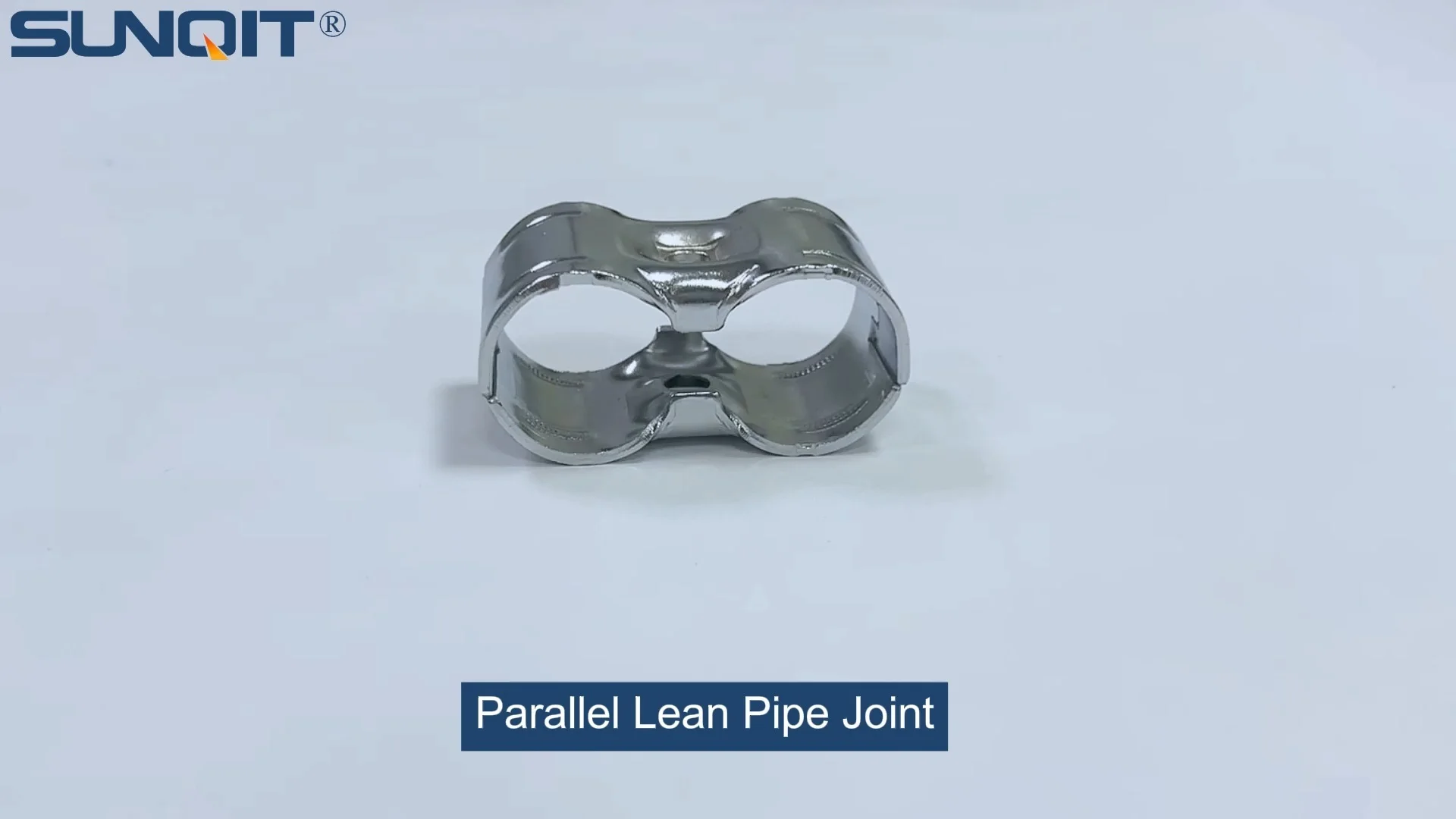
Parallel Lean Pipe Joint Chrome
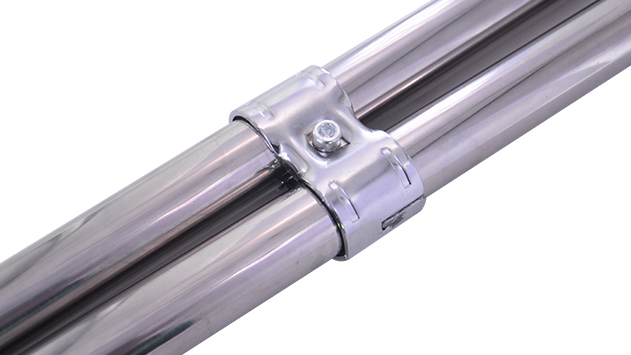
Parallel lean pipe joint used for 2 pcs 28MM lean pipe connection in parallel direction to enhance frame structure, usually for heavy payload requirement for workbench. flow rack, hand trolley.
In the fast-paced world of manufacturing, where every second counts and efficiency is the bottom line, the difference between a thriving production line and a struggling one often lies in the details. Picture this: a factory floor where assembly stations are rigid, reconfiguring a workbench takes hours of downtime, and material handling feels more like a puzzle than a streamlined process. For many manufacturers, this isn't just a hypothetical scenario—it's a daily reality. But what if the solution to these headaches wasn't a complete overhaul of your production line, but a small, unassuming component that quietly transforms how your systems operate? Enter the parallel lean pipe joint chrome —a workhorse in the realm of lean manufacturing that punches far above its weight in enhancing flexibility, durability, and workflow efficiency.
Lean manufacturing isn't just a buzzword; it's a philosophy centered on eliminating waste, optimizing flow, and creating value at every step. Yet, even the most well-intentioned lean initiatives can stumble when the physical infrastructure of a production line is stuck in the past. Traditional fixed structures, welded frames, and one-size-fits-all workstations often become barriers to adaptability, forcing teams to work around the tools instead of with them. This is where components like the parallel lean pipe joint chrome shine. Designed with the core principles of lean in mind—flexibility, reusability, and minimal waste—this joint isn't just a piece of hardware; it's a catalyst for transforming how manufacturers build, adapt, and excel.
Understanding the Backbone of Lean Systems
Before diving into the specifics of the parallel lean pipe joint chrome, let's ground ourselves in what makes a lean system tick. At its core, lean manufacturing is about creating more value with less work. This means cutting down on "muda" (waste) in all its forms: overproduction, unnecessary movement, waiting, defects, and underutilized resources. To achieve this, lean systems rely on infrastructure that can evolve with changing demands—whether that's a new product design, a shift in production volume, or a need to reallocate workspace.
Traditional production setups often fall short here. Welded steel frames, for example, are durable but rigid; once built, they're nearly impossible to modify without cutting, rewelding, and disrupting operations. Plastic joints, while cheap, may lack the strength to support heavy loads, leading to frequent replacements and material waste. What manufacturers need is a middle ground: a component that offers the durability of metal, the flexibility of modular design, and the longevity to withstand the wear and tear of daily use. This is precisely the gap that lean pipe systems—assembled using pipes, joints, and accessories—were created to fill. And within this ecosystem, the parallel lean pipe joint chrome emerges as a standout performer.
What Is a Parallel Lean Pipe Joint Chrome, Anyway?
Let's break it down. A lean pipe joint is the connector that holds together the aluminum or steel pipes used in building workbenches, flow racks, material trolleys, and other lean structures. The "parallel" in its name refers to its design: it's engineered to connect two pipes in a parallel orientation, creating stable, horizontal or vertical frames that form the backbone of workstations and racks. The "chrome" part? That's the protective coating applied to the joint, which enhances its resistance to corrosion, scratches, and daily wear—critical in factory environments where oil, moisture, and constant handling are par for the course.
But this joint is more than just a connector. Its design is a masterclass in simplicity and functionality. Unlike complex brackets or custom-machined parts, the parallel lean pipe joint chrome is designed for quick, tool-free assembly. Most models feature a clamping mechanism that tightens around the lean pipe (often aluminum or steel) with a hex key or even by hand, allowing teams to build, disassemble, and reconfigure structures in minutes, not hours. This simplicity is key to its role in lean systems: by reducing the time and effort needed to modify infrastructure, it minimizes downtime and empowers teams to adapt on the fly.
Key Features That Make It a Lean Game-Changer
To truly appreciate how the parallel lean pipe joint chrome enhances lean systems, let's unpack its standout features. Each of these design choices aligns with a specific lean goal, from reducing waste to improving workflow:
1. Chrome Coating: Durability That Stands the Test of Time
In manufacturing environments, equipment faces constant exposure to oils, coolants, and humidity—all of which can corrode unprotected metal. The chrome plating on this joint acts as a shield, preventing rust and degradation even in harsh conditions. This isn't just about longevity; it's about reducing waste. A joint that lasts longer means fewer replacements, less material waste, and lower maintenance costs over time—all hallmarks of lean efficiency.
2. Parallel Design: Stability for Heavy-Duty Applications
The parallel orientation of the joint isn't arbitrary. By connecting pipes in parallel, it distributes weight evenly across the structure, making it ideal for supporting heavy loads—think stacked flow rack shelves, tool-laden workbenches, or material trolleys carrying bulk components. This stability reduces the risk of structural failure, which in turn minimizes downtime from repairs and defects from unstable work surfaces.
3. Tool-Free Assembly: Minimizing Downtime and Labor Waste
One of the biggest drains on productivity in traditional setups is the time spent modifying infrastructure. Welding a new workbench or cutting steel frames requires specialized labor and halts production. The parallel lean pipe joint chrome eliminates this bottleneck. With its simple clamping mechanism, assembly and disassembly take minutes, not hours. This means a team can reconfigure a workbench for a new product line in the morning and switch it back in the afternoon—all without calling in a maintenance crew.
4. Compatibility: Seamless Integration with Lean Ecosystems
A lean system is only as strong as its ability to work as a cohesive unit. The parallel lean pipe joint chrome is designed to play well with others, compatible with standard lean pipes (aluminum, steel, or stainless steel), roller track components, casters, and accessories. This compatibility means manufacturers aren't locked into a single supplier or proprietary system; they can mix and match components to build exactly what they need, reducing the waste of overbuying or underutilizing specialized parts.

How Parallel Lean Pipe Joint Chrome Transforms Lean Systems in Action
Theory is one thing, but real-world impact is what matters. Let's walk through how the parallel lean pipe joint chrome enhances key elements of a lean system, from workbenches to flow racks, and the tangible benefits it brings to the factory floor.
1. Workbenches: From Static to Dynamic
The workbench is the heart of any assembly line—a space where precision, ergonomics, and accessibility directly impact productivity. Traditional workbenches are often fixed in height, width, and layout, forcing operators to adjust their posture or movement to fit the station. With parallel lean pipe joint chrome, this changes. By connecting aluminum or steel pipes with these joints, manufacturers can build workbenches that are fully customizable: adjustable height to reduce operator fatigue, modular shelving to keep tools within arm's reach, and even detachable components that can be reconfigured for different tasks.
For example, imagine an electronics manufacturer that produces both small circuit boards and larger display panels. With a traditional workbench, they might need two separate stations. With a lean workbench built using parallel lean pipe joint chrome, they can quickly swap out shelving, add a roller track for moving panels, or adjust the height to accommodate different operators—all in under an hour. This adaptability eliminates the waste of duplicate stations and frees up floor space, making the entire line more efficient.
2. Flow Racks: Smoothing Material Movement
In lean systems, material flow is everything. Parts should move seamlessly from storage to assembly, with minimal handling and waiting. Flow racks —tilted shelves with roller tracks that allow gravity to feed parts to operators—are a staple of lean material handling. But the stability of these racks depends entirely on their frame, and here, the parallel lean pipe joint chrome is indispensable.
By using parallel joints to construct the rack's vertical supports and horizontal beams, manufacturers ensure that the structure can bear the weight of stacked bins without sagging or shifting. The chrome coating resists the scuffs and scrapes that come with constant bin movement, while the joint's clamping mechanism keeps the roller tracks aligned—critical for preventing jams that disrupt flow. The result? A flow rack that not only lasts longer but also requires less maintenance, keeping material moving and operators focused on value-adding tasks.
3. Roller Tracks: Eliminating Bottlenecks in Material Handling
Roller tracks are the arteries of a lean production line, transporting parts between stations with minimal effort. Whether integrated into flow racks, conveyors, or workbench extensions, these tracks rely on precise alignment to function smoothly. Misaligned tracks lead to jams, damaged parts, and frustrated operators. The parallel lean pipe joint chrome addresses this by providing a stable, adjustable framework for mounting roller tracks. Its parallel design ensures that tracks run straight and level, while the joint's reusability means tracks can be extended or repositioned as production needs change—no need to build new frames from scratch.
The Tangible Benefits: Why Manufacturers Are Making the Switch
At this point, you might be wondering: Does a single joint really make that much of a difference? The answer, based on feedback from manufacturers who've integrated parallel lean pipe joint chrome into their systems, is a resounding yes. Here are the top benefits they report:
- Reduced Downtime: Reconfiguring a workstation or flow rack takes minutes instead of hours, cutting down on non-value-added waiting time.
- Lower Costs: Chrome coating extends joint lifespan, reducing replacement costs. Tool-free assembly eliminates the need for specialized labor.
- Less Waste: Reusable components mean fewer discarded frames and less material waste. Compatibility with existing lean pipes reduces overbuying.
- Improved Ergonomics: Customizable workbenches and adjustable heights reduce operator strain, lowering injury rates and boosting morale.
- Scalability: As production grows, systems can be expanded by adding more pipes and joints, avoiding the need for costly overhauls.
How Does It Compare to Other Joints? A Closer Look
To truly understand the value of the parallel lean pipe joint chrome, it helps to see how it stacks up against common alternatives. Let's compare it to two widely used options: standard uncoated steel joints and plastic joints.
| Feature | Parallel Lean Pipe Joint Chrome | Standard Uncoated Steel Joint | Plastic Joint |
|---|---|---|---|
| Durability | High (chrome coating resists corrosion; steel core withstands heavy loads) | Medium (prone to rust in humid environments) | Low (can crack under heavy loads or with repeated use) |
| Assembly Time | Fast (tool-free clamping; no welding) | Slow (often requires welding or bolts) | Fast (snap-on design) |
| Reusability | High (can be disassembled and reused indefinitely) | Low (welded joints are permanent; bolted joints may strip threads) | Medium (plastic can degrade with UV exposure or stress) |
| Cost Over Time | Low (long lifespan offsets higher upfront cost) | Medium (replacement needed due to corrosion) | High (frequent replacements add up) |
| Compatibility | High (works with standard lean pipes, roller tracks, and accessories) | Medium (may require specific pipe sizes) | Medium (limited to lightweight pipes) |
The table tells a clear story: while plastic joints may be cheaper upfront and uncoated steel joints familiar, the parallel lean pipe joint chrome offers the best balance of durability, flexibility, and long-term cost-effectiveness—exactly what lean systems need to thrive.
Choosing the Right Partner: The Role of a Reliable Lean Pipe Workbench Supplier
Of course, even the best component is only as good as its quality. To fully leverage the benefits of parallel lean pipe joint chrome, manufacturers need to source from a trusted lean pipe workbench supplier —one that prioritizes precision, material quality, and consistency. A reputable supplier will ensure that each joint meets strict standards for chrome plating thickness, clamping strength, and dimensional accuracy, avoiding the headaches of ill-fitting or weak components that can derail a lean system.
When evaluating suppliers, look for those that offer not just joints, but a full ecosystem of lean components—pipes, roller tracks, casters, and accessories. This ensures compatibility across your entire system, reducing the risk of mismatched parts and streamlining the ordering process. Additionally, suppliers with a track record of working with lean manufacturers can provide valuable insights into optimizing your setup, turning a simple purchase into a partnership for success.
Conclusion: Small Component, Big Impact
In the grand scheme of manufacturing, the parallel lean pipe joint chrome may seem like a small player. But as any lean practitioner will tell you, it's the small, intentional choices that add up to transformative change. By prioritizing flexibility, durability, and waste reduction, this joint embodies the spirit of lean manufacturing, empowering teams to build systems that adapt, evolve, and excel in an ever-changing market.
For manufacturers ready to take their lean initiatives to the next level, the message is clear: don't overlook the details. Invest in components that work with your goals, not against them. Whether you're building a new production line from scratch or retrofitting an existing setup, the parallel lean pipe joint chrome isn't just a part of the solution—it's the key to unlocking a more efficient, adaptable, and successful future.
In the end, lean manufacturing isn't about perfection—it's about progress. And with tools like the parallel lean pipe joint chrome, that progress is within reach.