- Company Articles
- Products and Technology
- Technology Sharing
- How Does Turning Angle Code 4040 Work in Lean Manufacturing Systems?

How Does Turning Angle Code 4040 Work in Lean Manufacturing Systems?
Related Product
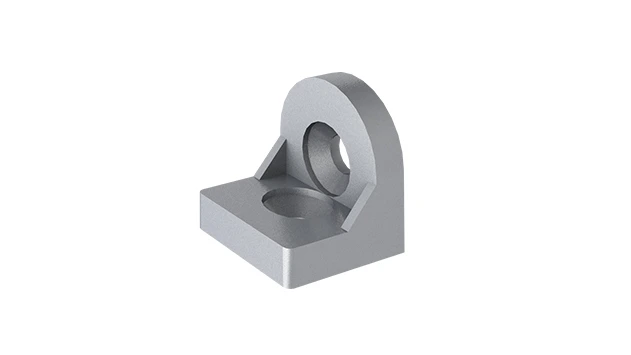
Turning Angle Code 4040
The turning angle aluminum profile connector provides a 90 degree hidden corner connection. 4040 it is means this size is used for 40 series aluminum profile.The corner code comes with set screws that allow for quick, easy connections.
In the fast-paced world of manufacturing, where efficiency and adaptability can make or break a production line, every component plays a silent but critical role. Lean manufacturing, a philosophy built on minimizing waste and maximizing value, relies heavily on tools and systems that support flexibility, durability, and quick reconfiguration. Among these unsung heroes are modular components—simple yet ingenious parts that transform static workspaces into dynamic, responsive environments. Today, we're shining a spotlight on one such component: the Turning Angle Code 4040 . Though small in size, this unassuming piece of hardware is a cornerstone in assembling robust, adaptable structures like workbenches, flow racks, and material handling systems. Let's explore how it works, why it matters, and the impact it has on lean manufacturing operations.
The Backbone of Lean Manufacturing: Modular Systems
Before diving into the specifics of the Turning Angle Code 4040, it's essential to understand why modular systems have become the backbone of modern lean manufacturing. Traditional manufacturing setups often rely on fixed, custom-built equipment—think heavy steel workbenches welded in place or rigid conveyor systems that take weeks to reconfigure. While these might work for mass production of a single product, they fall short in today's landscape, where customer demands shift rapidly, and production runs are shorter and more varied.
Modular systems, by contrast, are designed around interchangeable parts that can be assembled, disassembled, and reconfigured with minimal effort. This flexibility directly aligns with two core lean principles: eliminating waste (specifically, waste from overproduction, waiting, and unnecessary motion) and responding to change (adapting quickly to new product designs or production volumes). At the heart of these modular systems are aluminum profiles—lightweight, strong, and infinitely customizable beams that form the "skeleton" of workstations, racks, and trolleys. And to hold these skeletons together securely, you need reliable connectors. Enter angle codes like the Turning Angle Code 4040.
Aluminum Profiles: The Building Blocks of Modular Lean Systems
Aluminum profiles have revolutionized manufacturing setups for several reasons. First, their strength-to-weight ratio is unmatched: aluminum is lightweight enough to be maneuvered by a single worker but strong enough to support heavy loads, from tooling equipment to bulk materials. Second, their extruded design—featuring T-slots along their length—allows for easy attachment of accessories like brackets, shelves, and handles without welding or drilling. Finally, aluminum is corrosion-resistant, making it suitable for both indoor and outdoor use, and recyclable, aligning with sustainability goals, another growing priority in lean operations.
Among the most popular aluminum profiles is the 4040 aluminum profile . Named for its dimensions (40mm x 40mm cross-section), it's a versatile workhorse used in everything from simple workbenches to complex automated systems. Its size strikes a perfect balance: large enough to provide stability for heavy-duty applications but not so bulky that it limits flexibility. However, even the sturdiest profile is only as good as the connectors holding it together. This is where angle codes come into play.

What Is a Turning Angle Code 4040?
At its core, a Turning Angle Code 4040 is a type of aluminum profile accessory designed to join two 4040 aluminum profiles at a 90-degree angle. Think of it as a high-strength "corner bracket"—but engineered with the precision and durability needed for industrial use. Unlike generic brackets, which may bend under stress or require custom modification, the Turning Angle Code 4040 is purpose-built for 4040 profiles, ensuring a snug, secure fit that withstands the rigors of daily manufacturing.
Design Features That Make It Stand Out
The Turning Angle Code 4040 may look simple, but its design is the result of careful engineering. Let's break down its key features:
- Material: Typically made from high-grade aluminum alloy (often 6063-T5, a common choice for structural components), it matches the strength and corrosion resistance of the 4040 profiles it connects. This ensures the entire structure has uniform durability, avoiding weak points.
- Shape: Most models feature an L-shaped design with two perpendicular flanges, each sized to fit the T-slots of a 4040 profile. The flanges are often reinforced with ribbing or thickened edges to prevent bending under load.
- Mounting Holes: Pre-drilled holes on each flange align with the T-slots of the 4040 profile, allowing for secure attachment using T-slot nuts and bolts. Some designs include multiple holes to distribute weight evenly and provide flexibility in positioning.
- Precision Fit: The dimensions are machined to tight tolerances—often within 0.1mm—to ensure the angle code sits flush against the profile, eliminating gaps that could cause wobbling or instability.
- Surface Treatment: Many Turning Angle Code 4040 components undergo anodization, a process that forms a protective oxide layer on the aluminum surface. This not only enhances corrosion resistance but also gives the part a smooth, professional finish that resists scratches and wear.
These features work together to create a connector that's not just strong, but also easy to use —a critical factor in lean manufacturing, where time spent on setup or reconfiguration is waste to be minimized.
How It Works: Installation in 5 Simple Steps
One of the biggest advantages of the Turning Angle Code 4040 is its simplicity. Even workers with minimal training can install it in minutes, without specialized tools. Here's a step-by-step look at how it comes together:
- Prepare the Profiles: Cut two 4040 aluminum profiles to the desired length (using a miter saw or aluminum cutter). Ensure the ends are square to ensure a tight fit with the angle code.
- Position the Angle Code: Place the Turning Angle Code 4040 at the corner where the two profiles will meet. Align one flange with the T-slot of the first profile and the other flange with the T-slot of the second profile, ensuring they form a 90-degree angle.
- insert T-Slot Nuts: Slide T-slot nuts into the T-slots of both profiles, aligning them with the pre-drilled holes in the angle code's flanges. T-slot nuts are designed to lock into place once tightened, preventing slippage.
- Secure with Bolts: insert bolts through the angle code's holes and into the T-slot nuts. Use a hex key or screwdriver to tighten the bolts until snug—avoid over-tightening, which could strip the threads or warp the profile.
- Test for Stability: Gently shake the connected profiles to ensure there's no movement or wobbling. If needed, adjust the bolts or reposition the T-slot nuts for a tighter fit.
That's it. No welding, no drilling, no messy adhesives—just a secure, repeatable connection that can be disassembled just as easily if the structure needs to be reconfigured later. This speed and simplicity are game-changers in lean environments, where downtime for retooling can cost thousands of dollars per hour.

Why Turning Angle Code 4040 Is Essential for Lean Manufacturing
Now that we understand what a Turning Angle Code 4040 is and how it's installed, let's explore why it's so vital to lean manufacturing systems. Its value lies in how it addresses three key lean challenges: stability, adaptability, and cost-efficiency.
1. Stability: Preventing Waste from Equipment Failure
In lean manufacturing, "waste" isn't just about materials—it also includes waste from equipment breakdowns or inefficiencies caused by unstable workspaces. A wobbly workbench, for example, can lead to errors in assembly, slower production times, or even workplace injuries. The Turning Angle Code 4040 solves this by creating rigid, stable connections between profiles. Its precision fit and high-strength material ensure that structures like lean pipe workbenches or flow racks remain steady, even when loaded with heavy tools or materials.
Consider a typical assembly line workbench. It might hold power tools, bins of small parts, and a laptop for digital work instructions—all of which require a stable surface to prevent accidents or errors. By using Turning Angle Code 4040 to join the bench's frame, manufacturers can trust that the structure won't shift or flex during use, reducing the risk of dropped tools, spilled parts, or rework (a major source of waste in lean terms).
2. Adaptability: Enabling Quick Reconfiguration
Lean manufacturing thrives on adaptability. A production line that can switch from assembling Product A to Product B in hours (not days) has a competitive edge. The Turning Angle Code 4040 supports this by making reconfiguration fast and easy. Unlike welded joints, which require cutting and rewelding to modify, the angle code's bolted connection can be disassembled with basic tools, allowing workers to repurpose profiles into new structures as needed.
For example, suppose a manufacturer needs to expand a flow rack (a sloped rack used to gravity-feed materials to workers) to accommodate a new product line. With a modular flow rack built using 4040 profiles and Turning Angle Code 4040s, workers can simply unbolt the existing sections, add new profiles, and reattach the angle codes—all without specialized labor or downtime. This ability to "recycle" components reduces waste from purchasing new equipment and keeps production lines agile.
3. Cost-Efficiency: Long-Term Savings Through Durability
While modular components like the Turning Angle Code 4040 may have a higher upfront cost than generic brackets, they deliver long-term savings. Their durability means they rarely need replacement, even in high-traffic manufacturing environments. Aluminum's resistance to corrosion and wear ensures that angle codes remain functional for years, reducing the need for frequent repairs or replacements. Additionally, their compatibility with standard 4040 profiles and accessories means manufacturers can mix and match components from different suppliers, avoiding vendor lock-in and lowering procurement costs.
Moreover, the ability to reuse angle codes across multiple projects reduces waste and cuts down on inventory costs. Instead of storing custom brackets for every possible configuration, manufacturers can stock a few sizes of angle codes (like the 4040, 3030, and 2020 variants) and adapt them to different needs—a classic example of lean's "just-in-time" inventory philosophy.
Real-World Applications: Where Turning Angle Code 4040 Shines
To truly appreciate the Turning Angle Code 4040, let's look at some common applications in lean manufacturing. From workbenches to material handling systems, this small component plays a big role in keeping operations running smoothly.
1. Lean Pipe Workbenches
Lean pipe workbenches (often built with aluminum or steel pipes and joints) are a staple in assembly lines, laboratories, and warehouses. They're designed to be ergonomic, customizable, and durable. When constructed with 4040 aluminum profiles, Turning Angle Code 4040s are used to join the bench's legs, frame, and shelf supports. For example, the corner where the bench top meets the side rails is typically reinforced with angle codes to prevent sagging under heavy loads (like power tools or test equipment). The angle codes also allow for easy attachment of accessories like tool hooks, monitor arms, or drawer units—all of which can be repositioned as workflow needs change.
A case study: A automotive parts manufacturer was struggling with a static wooden workbench that couldn't support the weight of their new diagnostic tools, leading to frequent repairs. By switching to a modular workbench built with 4040 profiles and Turning Angle Code 4040s, they created a structure that could support 200kg of equipment, with adjustable shelves and tool holders. The result? A 30% reduction in rework due to stable surfaces and a 50% faster setup time when reconfiguring for new part models.
2. Flow Racks and Material Handling Systems
Flow racks are critical for "kanban" systems, a lean technique that ensures materials are delivered to workers exactly when needed (and no earlier). These racks use gravity to feed bins or totes from the back (where materials are restocked) to the front (where workers access them). To function properly, flow racks must be sloped at a precise angle and remain stable, even as heavy bins slide down. Turning Angle Code 4040s are used to join the rack's vertical supports to its horizontal rails, ensuring the structure doesn't bow under the weight of stacked materials. They also allow for easy adjustment of the slope angle—critical for different tote sizes or material weights.
For instance, a electronics manufacturer using small, lightweight circuit boards might need a gentler slope than a furniture manufacturer moving heavy wooden panels. With angle codes, workers can simply loosen the bolts, adjust the rails, and retighten—no need to rebuild the entire rack. This flexibility reduces waste from overstocking (since materials flow only when needed) and ensures workers always have access to what they need, exactly when they need it.
3. Turnover Trolleys and Mobile Workstations
Turnover trolleys (used to transport materials between workstations) and mobile workstations (which allow workers to move tools to the job site) are essential for reducing motion waste in lean operations. These mobile units must be both lightweight and sturdy—capable of rolling smoothly while supporting heavy loads. 4040 profiles, joined by Turning Angle Code 4040s, form the frame of these trolleys, providing the strength to carry materials without adding excess weight. The angle codes also secure caster wheels (another aluminum profile accessory) to the trolley's base, ensuring the wheels don't wobble or detach during transport.
A warehouse manager once shared how their team replaced heavy steel trolleys with aluminum modular trolleys using 4040 profiles and Turning Angle Code 4040s. The new trolleys were 40% lighter, reducing worker fatigue and injuries, while the angle codes' secure connections prevented materials from shifting during transport. This led to a 25% increase in trolley usage (since workers could move them more easily) and a 15% reduction in material damage.
Comparing Turning Angle Code 4040 to Other Angle Codes
The Turning Angle Code 4040 isn't the only angle code on the market. Manufacturers also use codes designed for smaller profiles, like the 3030 or 2020 aluminum profiles. How does it stack up? Let's compare key features in the table below:
| Feature | Turning Angle Code 4040 | Turning Angle Code 3030 | Turning Angle Code 2020 |
|---|---|---|---|
| Compatible Profile Size | 40mm x 40mm | 30mm x 30mm | 20mm x 20mm |
| Maximum Load Capacity (per joint) | Up to 500kg (static) | Up to 300kg (static) | Up to 100kg (static) |
| Common Applications | Heavy-duty workbenches, flow racks, industrial trolleys | Light workbenches, shelving, small material racks | Electronic enclosures, lightweight displays, small tools |
| Weight (per unit) | ~150g | ~80g | ~40g |
| Best For | High-stress, high-weight industrial environments | Medium-duty commercial or light industrial use | DIY projects, small-scale manufacturing, electronics |
As the table shows, the Turning Angle Code 4040 stands out for its high load capacity, making it ideal for the heavy-duty demands of industrial lean manufacturing. While smaller angle codes have their place, the 4040 variant is the go-to choice when stability and durability are non-negotiable.
Tips for Choosing and Using Turning Angle Code 4040
To get the most out of your Turning Angle Code 4040s, here are some practical tips for selection, installation, and maintenance:
Choosing the Right Angle Code
Not all Turning Angle Code 4040s are created equal. Look for these qualities when selecting a supplier:
- Material Quality: Opt for angle codes made from 6063-T5 aluminum alloy, which offers the best balance of strength and corrosion resistance.
- Precision Machining: Check that the holes and flanges are accurately sized—poorly machined angle codes may not fit 4040 profiles snugly, leading to instability.
- Anodized Finish: Anodization adds a protective layer, so look for angle codes with a clear or colored anodized finish (common options include silver, black, or blue).
Installation Best Practices
Even the best angle code will underperform if installed incorrectly. Follow these tips:
- Use the Right Hardware: Always pair angle codes with high-quality T-slot nuts and bolts (typically M6 or M8 size for 4040 profiles). Cheap hardware can strip or loosen over time.
- Distribute Loads Evenly: For long spans (over 1m), use multiple angle codes along the connection to spread weight and prevent bending.
- Torque Bolts Properly: Use a torque wrench to tighten bolts to the manufacturer's recommended setting (usually 8-10 Nm for M6 bolts). Over-tightening can damage the profile or angle code.
Maintenance and Longevity
To ensure your angle codes last for years:
- Inspect Regularly: Check bolts for tightness monthly, especially in high-vibration environments (like near conveyor belts).
- Clean as Needed: Wipe away dust, oil, or debris from the angle code and T-slots to prevent corrosion.
- replace Damaged Parts: If an angle code is bent, cracked, or has stripped threads, replace it immediately—compromised components risk the entire structure's stability.
The Future of Lean Manufacturing: Why Components Like Turning Angle Code 4040 Will Only Grow in Importance
As manufacturing continues to evolve—with trends like Industry 4.0, small-batch production, and sustainability driving change—the demand for modular, adaptable systems will only increase. The Turning Angle Code 4040, though simple, is a microcosm of this shift: it's a component that empowers manufacturers to build smarter, not harder. By enabling stable, reconfigurable structures, it supports the lean goals of waste reduction, efficiency, and adaptability.
Looking ahead, we can expect to see even more innovations in aluminum profile accessories—lighter materials, integrated sensors for predictive maintenance, or self-locking mechanisms for faster assembly. But for now, the Turning Angle Code 4040 remains a testament to the power of "small parts, big impact" in manufacturing. It's a reminder that lean manufacturing isn't just about grand strategies; it's about the details—the quiet, reliable components that keep production lines moving, workers safe, and businesses competitive.
Final Thoughts
The next time you walk through a manufacturing plant, take a moment to look at the workbenches, flow racks, and trolleys around you. Chances are, many of them are held together by components like the Turning Angle Code 4040. Though small and unassuming, this little angle code plays a huge role in making lean manufacturing a reality—one stable, adaptable connection at a time. Whether you're building a new production line or upgrading an existing one, investing in high-quality modular components like the Turning Angle Code 4040 isn't just a purchase; it's an investment in efficiency, durability, and the future of your operation.