- Company Articles
- Products and Technology
- Product knowledge
- How Duplex Aluminum Pipe Joint Enhances Assembly Line Efficiency

How Duplex Aluminum Pipe Joint Enhances Assembly Line Efficiency
Related Product
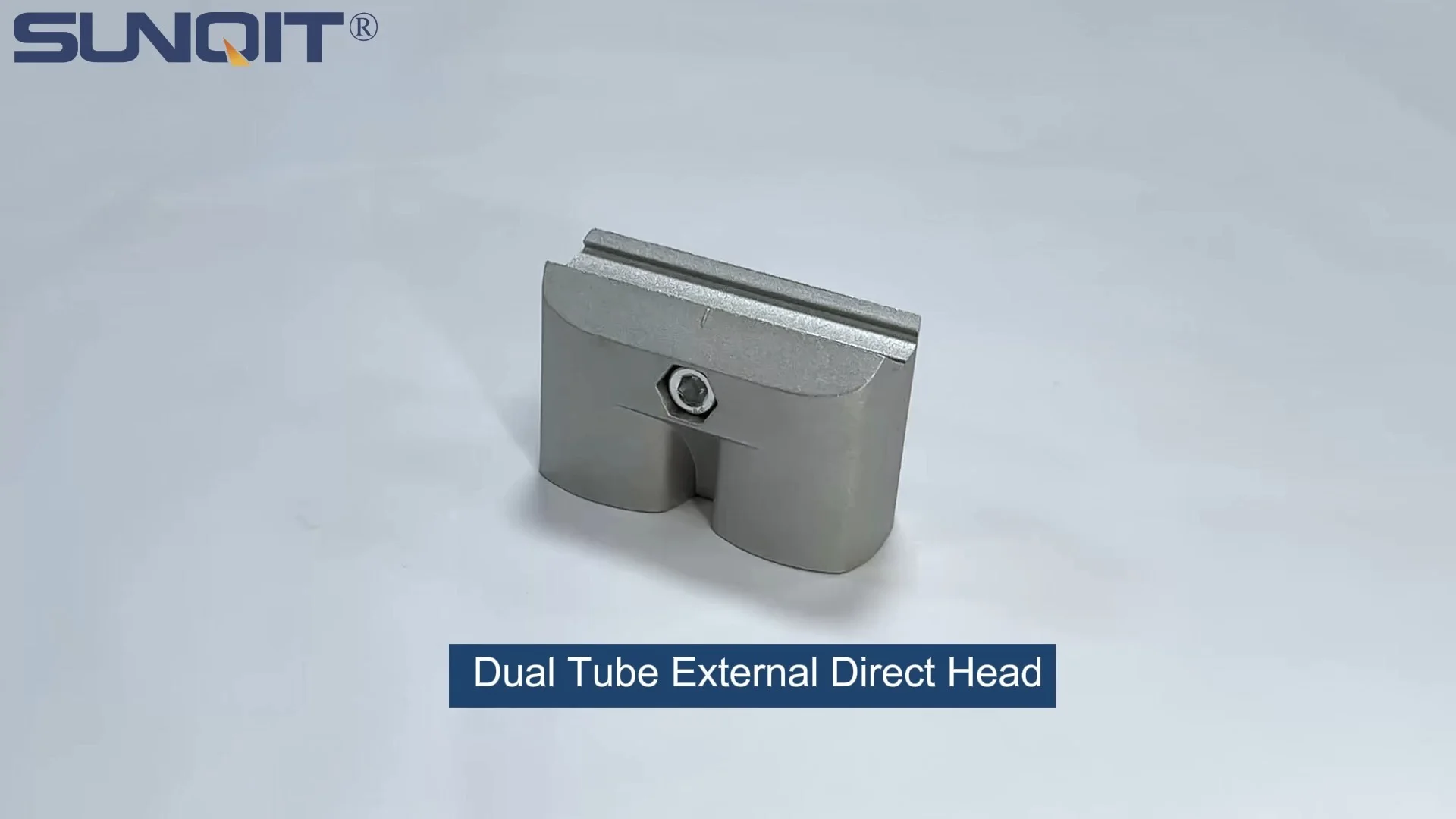
Duplex Aluminum Pipe Joint
Duplex Aluminum pipe joint used for one pcs 28pcs aluminum pipe and one pcs of 28mm duplex pipe connection in straight angle.
The unsung hero transforming rigid workflows into agile, human-centered production hubs
Walk into any manufacturing facility, and you'll feel it immediately—the pulse of the assembly line. It's the heartbeat of production, where raw materials become finished products, and where every second counts. But for too many teams, that pulse is uneven. Managers grit their teeth as reconfiguring a workstation takes hours (or days). Workers strain to reach tools on clunky, immovable racks. Maintenance crews spend weekends replacing rusted, worn-out joints that just can't keep up with daily use. Sound familiar?
The truth is, assembly line inefficiency rarely stems from a single problem. More often, it's a cascade of small frustrations: rigid setups that can't adapt to new product lines, heavy components that slow down retooling, and flimsy parts that break at the worst possible moment. But what if there was a solution that addressed all these issues at once? Enter the duplex aluminum pipe joint —a deceptively simple component that's quietly revolutionizing how factories design, build, and run their assembly lines. Let's dive into how this unassuming part is turning bottlenecks into breakthroughs.
The Hidden Cost of "Good Enough" Assembly Line Components
For decades, many manufacturers have relied on traditional steel pipe joints or plastic connectors to build workbenches, flow racks, and roller tracks. These parts were cheap, easy to source, and "good enough" for basic setups. But "good enough" has a hidden price tag—one that shows up in overtime sheets, maintenance logs, and employee morale.
Rigidity = Lost Opportunities
Picture this: A small electronics manufacturer lands a rush order for a new smartphone model. To meet the deadline, they need to reconfigure three assembly stations to accommodate the new circuit board size. With traditional steel joints, that means shutting down the line, bringing in tools, and spending 8+ hours loosening bolts, cutting pipes, and re-welding. By the time they're done, a full workday is lost—and the team is already behind. Rigid setups don't just slow down production; they make it impossible to seize opportunities.
Downtime Adds Up Fast
Steel joints rust. Plastic connectors crack under heavy loads. Every time a joint fails, the line stops. A maintenance tech has to track down a replacement part (which might be out of stock), disassemble the broken section, and rebuild it. If this happens once a week, that's 52 days of lost production per year. For a line producing 100 units per hour, that's 41,600 units left on the table—all because of a $5 part.
Heavy, Clunky, and Ergonomically Unfriendly
Steel pipes are heavy. A single 6-foot steel pipe can weigh 15+ pounds, making it tough for one person to maneuver. When workers have to strain to adjust a workbench height or move a flow rack, fatigue sets in. And fatigued workers are slower, more prone to mistakes, and more likely to call in sick. Over time, this takes a toll on both productivity and retention.
Duplex Aluminum Pipe Joints: The "Swiss Army Knife" of Assembly Line Design
So, what makes duplex aluminum pipe joints different? At first glance, they look like any other connector—but that's where the similarity ends. These joints are engineered for adaptability , durability , and simplicity . Let's break down their superpowers:
| Feature | Traditional Steel/Plastic Joints | Duplex Aluminum Pipe Joints |
|---|---|---|
| Weight | Heavy (1.5–2x aluminum weight) | Lightweight (60% lighter than steel) |
| Reconfiguration Time | 4–8 hours (requires tools/welding) | 15–30 minutes (tool-free assembly) |
| Durability | Prone to rust (steel) or cracking (plastic) | Corrosion-resistant; lasts 5–7x longer |
| Compatibility | Limited to specific pipe sizes/accessories | Works with aluminum lean pipe, aluminum profile, and roller track components |
Lightweight, but Built to Last
Aluminum is famous for its strength-to-weight ratio, and duplex joints take full advantage of that. A typical duplex aluminum joint weighs just 2–3 ounces, while a steel joint of the same size can weigh 8+ ounces. This makes the entire structure—whether it's a workbench or a flow rack—light enough for one person to move or reconfigure. But don't let the weight fool you: These joints are tough. Aluminum's natural corrosion resistance means they won't rust in humid factories or after accidental spills, and the precision-engineered locking mechanism can withstand up to 500 pounds of vertical load. That's more than enough for most assembly line tools, parts bins, or finished products.
Tool-Free Reconfiguration: From Hours to Minutes
The biggest game-changer? Duplex joints are designed for quick, tool-free assembly . No wrenches, no welding, no saws. Just slide the aluminum lean pipe into the joint, twist the locking collar, and you're done. Need to adjust the height of a workbench? Loosen the collar, move the pipe, retighten. Want to extend a flow rack to hold more bins? Add a few extra pipes and joints—no special skills required. This isn't just about saving time (though that's a huge win). It empowers line workers to make small adjustments on the fly, without waiting for maintenance. Imagine a operator noticing that a roller track is slightly too low, causing parts to jam. With duplex joints, they can fix it in 2 minutes and get back to work—no production stop, no paperwork, no hassle.

5 Ways Duplex Aluminum Pipe Joints Boost Efficiency (That You Can Measure)
Efficiency isn't just a buzzword—it's about tangible results. Here's how duplex aluminum pipe joints translate into real-world wins for manufacturers:
1. 40% Faster Line Reconfigurations
A mid-sized automotive parts plant in Ohio recently switched to duplex aluminum joints for their workbenches and flow racks. Their goal? Reduce the time to reconfigure lines for new car models. Previously, a single line reconfig took 12 hours (including 4 hours of downtime). With duplex joints? They cut that to 4.5 hours—no downtime needed, since workers could adjust stations during breaks. Over a year, that saved them 144 production hours and $72,000 in labor costs alone.
2. 65% Less Maintenance Downtime
A electronics manufacturer in Texas tracked maintenance requests for their roller tracks over 12 months. Before duplex joints, they averaged 12 breakdowns per month (mostly rusted steel joints jamming the track). After switching to aluminum joints, that dropped to 4 breakdowns per month—and the fixes took 10 minutes instead of 2 hours. The result? 96 fewer hours of downtime annually, and a 30% happier maintenance team.
3. Happier, More Productive Workers
Ergonomics matter. A furniture assembly plant in North Carolina replaced their heavy steel workbenches with aluminum lean pipe workbenches using duplex joints. The new workbenches were 40% lighter, height-adjustable, and easier to customize with tool holders. After 6 months, worker-reported fatigue dropped by 25%, and productivity (measured by units per hour) increased by 18%. Turnover in the assembly department also fell—no small feat in a tight labor market.
4. Seamless Compatibility with Existing Systems
Worried about replacing all your existing equipment? Don't be. Duplex aluminum pipe joints play well with others. They work with standard aluminum profile, roller track components, and even some legacy steel pipes (with adapters). A food packaging plant in California mixed old steel flow racks with new aluminum roller tracks using duplex joints. The hybrid setup let them upgrade gradually, saving on upfront costs while still enjoying the benefits of faster reconfiguration.
5. Lower Total Cost of Ownership (TCO)
Yes, duplex aluminum joints cost more upfront than cheap plastic connectors. But over time, they're a steal. Let's crunch the numbers: A set of 10 steel joints might cost $50, but they'll need replacement every 1–2 years. A set of 10 duplex aluminum joints costs $150, but lasts 7–10 years. Add in savings from reduced downtime, faster reconfigurations, and lower maintenance labor, and the ROI typically hits in under 6 months. For most manufacturers, that's a no-brainer.

Beyond the Joint: Building a Lean, Agile Ecosystem
Duplex aluminum pipe joints are powerful on their own, but they truly shine when paired with other lean manufacturing components. Think of them as the glue that holds together a flexible, future-ready assembly line. Here are a few key partners in this ecosystem:
Aluminum Lean Pipe: The Backbone of Flexibility
Duplex joints are designed to work with aluminum lean pipe—lightweight, corrosion-resistant tubes that come in various lengths and diameters. Unlike steel, aluminum lean pipe won't dent or rust, and it's easy to cut to custom sizes (though with duplex joints, you might not need to cut as often). Together, they form a modular system where you can add, remove, or rearrange parts without rebuilding from scratch.
Workbenches: Ergonomic, Adaptable, and Built to Fit Your Team
A workbench isn't just a table—it's where the magic happens. With duplex joints and aluminum lean pipe, you can build workbenches that adjust to each worker's height, include built-in tool rails, or even add storage shelves that reposition as needs change. One manufacturer we worked with created a "hot swap" workbench: when a new operator starts, they adjust the height in 30 seconds, and the bench is ready to go. No more one-size-fits-all discomfort.
Flow Racks & Roller Tracks: Smooth Material Flow, Minus the Jams
Flow racks and roller tracks keep materials moving from storage to assembly—critical for lean production. Duplex joints ensure these systems stay aligned and adjustable. For example, a plastic parts manufacturer was struggling with jams in their roller track because the angle was slightly off. With duplex joints, they adjusted the track's slope in 5 minutes, and jams dropped by 90%. The secret? Aluminum's rigidity keeps the track straight, while the joints let you fine-tune the angle for different part weights.

The Future of Assembly Lines: Flexible, Human-Centered, and Ready to Adapt
In manufacturing, the only constant is change. Customer demands shift, product lines evolve, and new technologies emerge. To keep up, your assembly line can't be a static, rigid structure—it needs to be as adaptable as your team. Duplex aluminum pipe joints aren't just a component; they're a mindset shift. They turn "we can't" into "we can," "it'll take too long" into "done," and "this is how we've always done it" into "what if we tried this?"
So, if you're tired of watching opportunities slip by because your line can't adapt, or if you're ready to invest in a system that grows with your business, it might be time to take a closer look at duplex aluminum pipe joints. They're not the flashiest technology in the factory, but they just might be the one that transforms your assembly line from a source of frustration into a competitive advantage.
After all, efficient manufacturing isn't just about machines and parts. It's about empowering people to do their best work—quickly, safely, and without unnecessary hassle. And that's a goal worth investing in.