- Company Articles
- Products and Technology
- Product knowledge
- How External Straight Aluminum Joints Improve Lean Workbench (Workbench E) Stability

How External Straight Aluminum Joints Improve Lean Workbench (Workbench E) Stability
Related Product
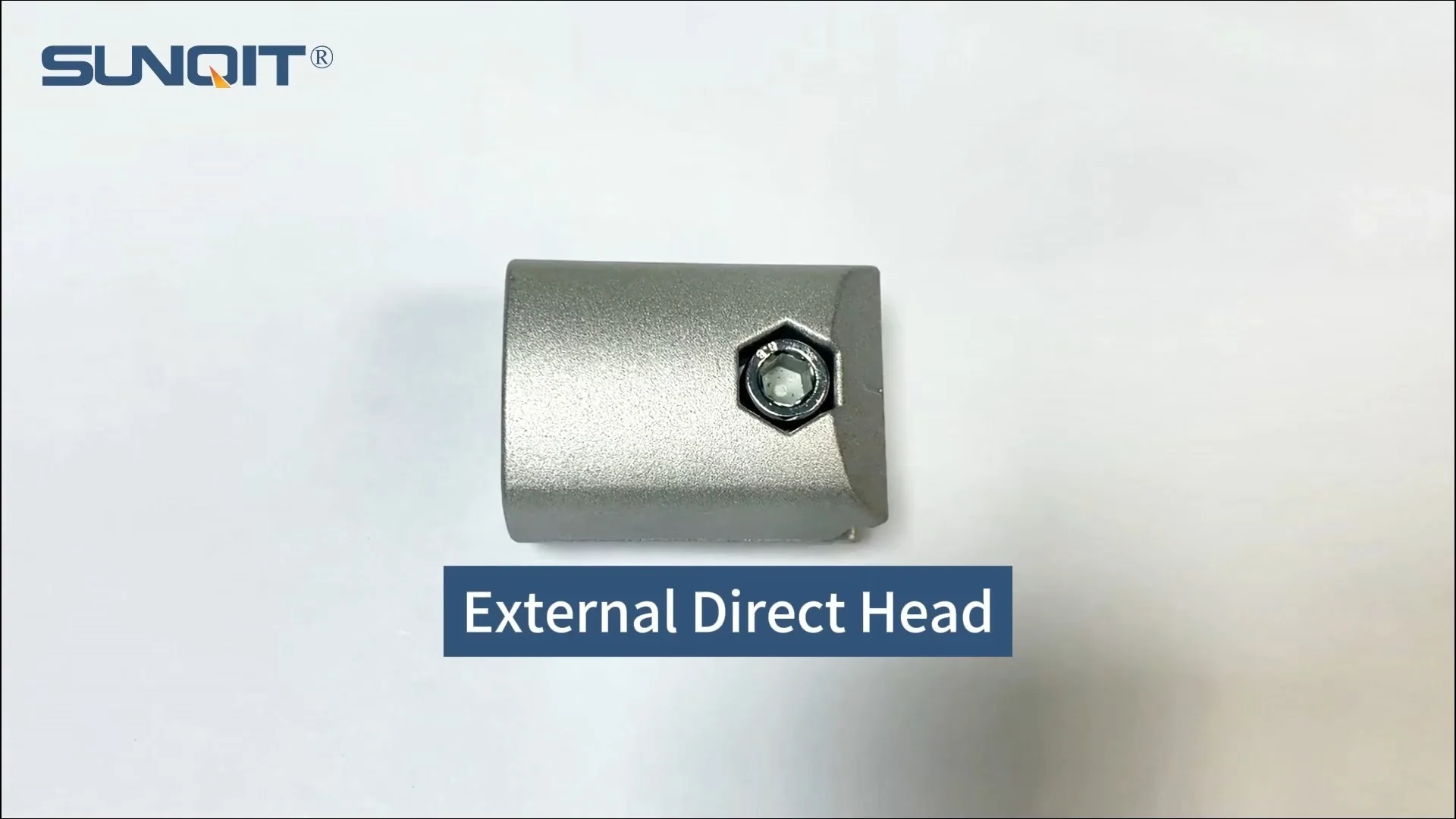
External Straight Aluminum Joint
Aluminum pipe joint outside connection used for two pcs 28pcs aluminum pipe connection in straight angle,it connects two pcs pipe from outside.
Introduction: The Backbone of the Production Floor – Lean Workbenches and Workbench E
Walk into any modern manufacturing facility, and you'll notice a quiet hero standing at the center of the action: the lean workbench. It's not just a table; it's the command center where assemblers piece together electronics, where technicians test components, and where teams collaborate to keep production lines moving. Among the various workbenches in use today, Workbench E – a single-deck model without casters – has become a staple for operations that prioritize stability and precision over mobility. Designed for tasks that demand a fixed, reliable surface, Workbench E is the workhorse of assembly stations, inspection areas, and small-part manufacturing cells.
But here's the thing about workbenches: their effectiveness hinges entirely on one often-overlooked factor: stability. A wobbly workbench isn't just an annoyance; it's a productivity killer, a quality risk, and even a safety hazard. Imagine a technician trying to solder a tiny circuit board on a surface that shifts with every movement, or an assembler struggling to align parts because the table rocks under the weight of tools. That's where the true value of a well-designed workbench lies – in its ability to stay steady, no matter what's thrown at it.
In recent years, manufacturers have turned to aluminum-based lean systems to solve stability issues, and at the heart of this shift are components like external straight aluminum joints. These unassuming connectors might not grab headlines, but they're revolutionizing how workbenches like Workbench E are built. In this article, we'll dive into why stability matters, the challenges with traditional workbench designs, and how external straight aluminum joints are changing the game for production assemble lines everywhere.
Why Stability Isn't Just "Nice to Have" – It's Critical for Production Assemble
Let's start with the basics: why does stability matter so much in production assemble? For anyone who's spent time on a factory floor, the answer is obvious, but it's worth spelling out. In assembly work, precision is everything. A fraction of an inch misalignment can ruin a product, leading to rework, scrap, and delayed orders. A stable workbench ensures that tools, parts, and assemblies stay exactly where they're placed, reducing errors and rework rates.
Then there's efficiency. A wobbly workbench forces workers to slow down. They'll second-guess their movements, adjust their grip, or pause to steady the surface – all of which add up to lost time. Over a shift, those seconds turn into minutes, and over a week, into hours of wasted productivity. For a facility running multiple shifts, that's a significant hit to the bottom line.
Ergonomics play a role too. When a workbench isn't stable, workers compensate by tensing their muscles or shifting their posture to maintain balance. Over time, this leads to fatigue, discomfort, and even repetitive strain injuries. A stable surface lets employees focus on the task, not on fighting the workbench, leading to happier, healthier teams and lower turnover.
And let's not forget safety. Loose parts, tools, or even finished products can slide off an unstable workbench, causing damage or injury. In industries like aerospace or medical device manufacturing, where components are often delicate or expensive, a fall from a wobbly table could result in thousands of dollars in losses. Stability isn't just about productivity – it's about protecting your team and your bottom line.
For Workbench E, which lacks casters, stability is even more critical. Without wheels to adjust its position, it's anchored in place, so any inherent instability is permanent. That means the materials and design of the workbench itself must be engineered to resist movement, even under heavy loads or constant use. And that's where traditional workbench designs often fall short.

The Hidden Weak Points: Why Traditional Workbenches Struggle with Stability
Traditional workbenches – often made from wood, basic steel, or a mix of materials – have been around for decades, but they come with built-in flaws that undermine stability. Let's break down the most common issues:
1. Weak Joints, Weak Structure – Many older workbenches rely on welded steel joints or plastic connectors to hold their frames together. Welds can crack over time, especially under repeated stress, and plastic connectors degrade with exposure to heat, chemicals, or heavy loads. Even bolted joints can loosen as the workbench vibrates during use, leading to a gradual loss of stability.
2. Rigid Designs That Can't Adapt – Traditional workbenches are often one-size-fits-all, built with fixed dimensions and limited adjustability. If a team needs to add a shelf, mount a tool holder, or adjust the height, they might drill holes or add aftermarket brackets – modifications that weaken the frame and create new points of instability.
3. Poor Material Choices – Wood, while cheap, warps with humidity and wears down over time. Basic steel frames can rust, weakening their structural integrity, and they're heavy, making them hard to reconfigure without compromising stability. Even some aluminum workbenches use thin-walled tubing or low-quality alloys that bend under heavy loads.
4. Inadequate Weight Distribution – Without proper bracing or cross-supports, workbenches can sag in the middle or tip when weight is applied to one side. This is especially true for single-deck models like Workbench E, which lack the lower shelves that sometimes help stabilize multi-tiered designs.
The result? Workbenches that start off stable but become increasingly wobbly over months of use. For production assemble lines, this isn't just a maintenance issue – it's a constant battle to keep up with repairs, replace worn parts, and maintain the precision needed for high-quality output.

Enter External Straight Aluminum Joints: The Unsung Heroes of Stable Workbench Design
If traditional workbenches have weak joints, then external straight aluminum joints are the solution. These small but mighty connectors are designed to address the root causes of instability, turning flimsy frames into rock-solid structures. But what exactly are they, and how do they work?
External straight aluminum joints are precision-engineered connectors made from high-grade aluminum alloys. Unlike internal joints, which fit inside tubing, or plastic connectors, which rely on friction, these joints clamp externally around aluminum lean pipe, creating a tight, secure bond. Think of them as the "clamps" that hold the workbench's frame together – but clamps on steroids.
Their design is deceptively simple: a two-piece aluminum housing that wraps around the aluminum lean pipe, secured by bolts or screws that tighten to create immense clamping force. This external design offers several advantages over traditional joints:
1. Superior Grip, Zero Slippage – By clamping around the outside of the pipe, external joints distribute pressure evenly, preventing the pipe from rotating or sliding. This is a game-changer for Workbench E, where a single loose joint can throw off the entire surface's stability.
2. Durability That Lasts – Aluminum alloys are lightweight but incredibly strong, and they resist corrosion, rust, and wear. Unlike plastic, they won't degrade in harsh factory environments, and unlike welded steel, they won't crack under repeated stress. This means the joints stay tight for years, not months.
3. Modularity Without Compromise – One of the biggest benefits of lean systems is their modularity, and external straight aluminum joints take this to the next level. They allow workers to add, remove, or reposition aluminum lean pipe and accessories – like shelves, tool hooks, or monitor mounts – without drilling holes or weakening the frame. The joints can be loosened, adjusted, and retightened, all while maintaining the workbench's structural integrity.
4. Compatibility with Aluminum Profile Accessories – External straight aluminum joints aren't just for pipes. They're designed to work seamlessly with aluminum profile accessories, like T-slot aluminum profile, angle brackets, and cross-supports. This means Workbench E can be customized with additional stability features – such as diagonal bracing or reinforced legs – without sacrificing its clean, modular design.
To put it simply, external straight aluminum joints turn a collection of aluminum lean pipes into a unified, stable structure. They're the reason modern lean workbenches can handle heavy loads, resist vibration, and stay steady through years of nonstop use.

How External Straight Aluminum Joints Transform Workbench E's Stability
Now, let's zoom in on Workbench E. As a single-deck, caster-free workbench, its stability depends entirely on the strength of its frame and the connections between its components. Here's how external straight aluminum joints make all the difference:
1. Rock-Solid Frame Construction – Workbench E's frame is typically built from aluminum lean pipe, connected by external straight aluminum joints at the corners and along cross-braces. Unlike welded frames, which have single points of failure, the jointed design distributes stress evenly across the entire frame. When a worker leans on the edge of the bench or places a heavy tool on one corner, the force travels through the joints and tubing, preventing any single part from bending or warping.
2. Precision Alignment for a Flat Surface – For assembly tasks, a flat work surface is nonnegotiable. External straight aluminum joints allow for micro-adjustments during assembly, ensuring that the bench's top is perfectly level. Even if the floor isn't perfectly flat (which, let's be honest, few factory floors are), the joints can be tightened or loosened slightly to compensate, keeping the surface steady and even.
3. Resistance to Lateral and Vertical Forces – In production assemble, workbenches face two types of stress: vertical (from tools, parts, and workers leaning on the surface) and lateral (from pushing, pulling, or sliding heavy objects). External straight aluminum joints excel at resisting both. The clamping force of the joints prevents vertical sagging, while the rigid connection between pipes stops lateral movement. This is especially important for Workbench E, which lacks casters to "lock" it in place – the joints themselves act as the anchors.
4. Long-Term Stability, Even with Modifications – As production needs change, Workbench E often gets modified: a new shelf for bins, a monitor arm for digital work instructions, or a tool rail for pliers and screwdrivers. With traditional joints, these modifications would weaken the frame. But with external straight aluminum joints, adding aluminum profile accessories is a breeze. The joints can be repositioned to accommodate new components, and because they clamp tightly, the frame remains stable even after multiple adjustments.
To visualize this, think of a traditional workbench frame as a chain with a few weak links. Over time, those links break, and the chain falls apart. An aluminum lean pipe frame with external straight aluminum joints is more like a web of interconnected steel cables – every part supports the others, and there are no weak points to fail.
Beyond the Joint: Aluminum Lean Pipe and Accessories – A System Built for Stability
External straight aluminum joints are powerful, but they don't work alone. They're part of a larger ecosystem: aluminum lean pipe and accessories. Together, these components create a modular system that's not just stable, but adaptable, durable, and efficient. Let's break down how the pieces fit together:
Aluminum Lean Pipe – The backbone of the system, aluminum lean pipe is lightweight yet strong, with a smooth, corrosion-resistant finish. Unlike steel pipe, it won't rust, and unlike plastic, it won't bend under heavy loads. For Workbench E, thick-walled aluminum lean pipe (often 20mm or 30mm in diameter) is used for the frame, ensuring the structure can support hundreds of pounds without flexing.
Aluminum Profile Accessories – These include T-slot aluminum profile for shelves and side panels, angle brackets for bracing, and cross-supports for added rigidity. T-slot profiles are especially useful because they allow for easy mounting of tools, bins, or other accessories without drilling holes. When paired with external straight aluminum joints, they create a frame that's both strong and customizable.
End Caps and Foot Plates – Even the smallest details matter. Aluminum end caps seal the ends of the pipe, preventing dust and debris from entering, while heavy-duty foot plates distribute the workbench's weight evenly across the floor, reducing the risk of tipping or sinking into soft surfaces.
The beauty of this system is that it's modular . Need to add a second shelf to Workbench E? Just cut a length of aluminum lean pipe, attach it with external straight joints, and secure it with angle brackets. Want to lower the work surface for ergonomic reasons? Loosen the joints, adjust the legs, and retighten – no welding, no drilling, no hassle. And because every component is designed to work together, the stability of the bench never suffers, no matter how many times it's reconfigured.
Compare this to a traditional wooden workbench. If you want to add a shelf, you'd need to drill into the legs, weakening them. If you need to adjust the height, you'd have to replace the legs entirely. With aluminum lean pipe and accessories, customization is part of the design – and stability is built in from the start.
Real-World Results: How External Straight Aluminum Joints Improve Production Assemble
Talk is cheap – let's look at how these components perform in real production environments. Take, for example, a mid-sized electronics manufacturer that recently switched from wooden workbenches to aluminum lean pipe Workbench E models with external straight aluminum joints. Here's what they reported after six months:
Reduced Rework Rates – Before the switch, assemblers were reworking 8-10% of circuit boards due to misalignment caused by wobbly workbenches. After installing Workbench E with aluminum joints, rework dropped to 2-3%. The stable surface meant parts aligned correctly the first time, saving hours of time and reducing scrap costs.
Happier, More Productive Teams – Employees reported less fatigue, as they no longer had to compensate for a moving work surface. One assembler noted, "I used to spend half my time steadying parts. Now I can focus on the work, and I get through more boards in a day."
Lower Maintenance Costs – The old wooden workbenches needed monthly repairs: tightening bolts, replacing cracked shelves, or sanding down warped surfaces. The aluminum lean pipe benches? Zero repairs in six months. The external straight joints stayed tight, the aluminum pipe showed no signs of wear, and the surface remained flat and steady.
Another example: a medical device manufacturer that uses Workbench E for inspecting small components. Their old steel workbench had developed a slight warp, making it impossible to get accurate measurements with calipers. After switching to an aluminum lean pipe bench with external straight joints, their inspection accuracy improved by 15%, and they were able to meet stricter quality standards without adding extra staff.
These aren't isolated cases. Across industries – from automotive to aerospace to consumer goods – manufacturers are seeing tangible benefits from upgrading to aluminum lean pipe systems with external straight aluminum joints. The common thread? Stability leads to precision, precision leads to quality, and quality leads to happier customers and a healthier bottom line.
Choosing the Right Partner: What to Look for in a Lean Pipe Supplier
Now that you're convinced of the benefits, how do you ensure you're getting the best aluminum lean pipe, external straight aluminum joints, and accessories? The answer lies in choosing the right lean pipe supplier. Not all suppliers are created equal, and cutting corners here can lead to unstable workbenches, frequent replacements, and lost productivity. Here's what to look for:
1. Quality Materials – Ask about the aluminum alloy used in the joints and pipe. High-grade alloys (like 6061 or 6063) offer better strength and corrosion resistance than cheaper alternatives. A reputable supplier will provide material certifications and test reports to back up their claims.
2. Precision Manufacturing – External straight aluminum joints need to be machined to tight tolerances to ensure a perfect fit with the pipe. Look for suppliers that use CNC machining for their joints, as this ensures consistency and reliability.
3. Comprehensive Product Line – The best suppliers offer not just joints and pipe, but a full range of aluminum profile accessories: brackets, end caps, foot plates, and more. This ensures compatibility and makes it easier to customize Workbench E to your exact needs.
4. Technical Support – Even the best components need proper assembly. A good supplier will provide assembly guides, design tools, and even on-site support to help you build a stable, efficient workbench. Avoid suppliers that just ship parts without offering guidance – a poorly assembled frame can negate all the benefits of quality components.
5. Reputation and Reviews – Do your research. Read reviews from other manufacturers, ask for references, and look for suppliers with a track record of serving production assemble lines. A supplier that's been in the industry for years and has repeat customers is more likely to deliver reliable products.
Investing in quality components might cost a bit more upfront, but the long-term savings – in reduced rework, lower maintenance, and higher productivity – make it well worth it. After all, a stable workbench isn't just a tool; it's an investment in your team's success.
Conclusion: Stability as the Foundation of Production Excellence
At the end of the day, production assemble is about more than just putting parts together – it's about consistency, precision, and reliability. And none of those things are possible without a stable workbench. Workbench E, with its fixed, single-deck design, is the perfect candidate for aluminum lean pipe systems, and external straight aluminum joints are the key to unlocking its full potential.
These small but powerful connectors transform wobbly frames into rock-solid work surfaces, addressing the weaknesses of traditional joints and materials. When paired with aluminum lean pipe and accessories, they create a system that's not just stable, but adaptable, durable, and built for the demands of modern manufacturing.
So, the next time you walk past a workbench on the factory floor, take a closer look. The difference between a good workbench and a great one might just be in the joints – and those joints could be the difference between meeting your production goals and falling short. For manufacturers looking to improve quality, boost productivity, and keep their teams happy, external straight aluminum joints aren't just an upgrade – they're a necessity.
In the world of production assemble, stability isn't optional. It's the foundation on which excellence is built. And with external straight aluminum joints, that foundation has never been stronger.
Comparison Table: Traditional Joints vs. External Straight Aluminum Joints
| Feature | Traditional Joints (Plastic/Internal/Welded) | External Straight Aluminum Joints |
|---|---|---|
| Load Capacity | Low to moderate; plastic joints fail under heavy loads; welded joints crack over time. | High; aluminum alloys and clamping design support 200+ lbs per joint without slipping. |
| Durability | Low; plastic degrades, welds crack, internal joints loosen with vibration. | High; corrosion-resistant aluminum, CNC-machined for precision, no wear over time. |
| Ease of Assembly/Modification | Poor; welded joints are permanent; plastic/internal joints require tools and often damage pipe when adjusted. | Excellent; tool-free adjustments, repositionable without damaging pipe, compatible with modular accessories. |
| Stability Over Time | Declines; joints loosen, materials warp or rust, leading to wobbling. | Maintained; clamping force remains tight, aluminum resists warping, no loosening with vibration. |
| Corrosion Resistance | Poor; plastic may degrade, steel welds rust, internal joints trap moisture. | Excellent; aluminum is naturally corrosion-resistant, external design prevents moisture buildup. |