- Company Articles
- Products and Technology
- Product knowledge
- How External Straight Aluminum Joints Reduce Assembly Time in Production

How External Straight Aluminum Joints Reduce Assembly Time in Production
Related Product
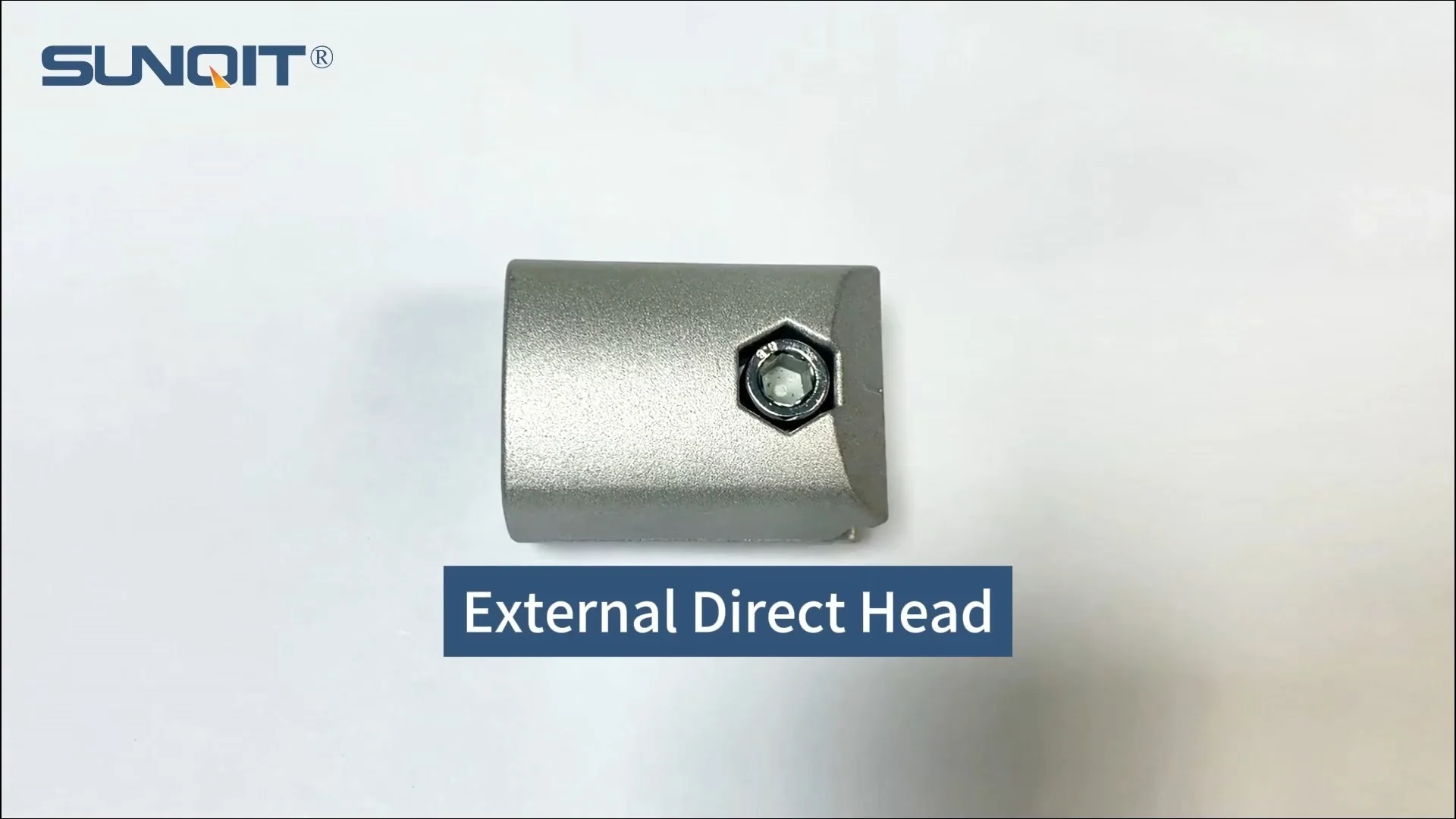
External Straight Aluminum Joint
Aluminum pipe joint outside connection used for two pcs 28pcs aluminum pipe connection in straight angle,it connects two pcs pipe from outside.
In the fast-paced world of manufacturing and production, every minute counts. Production managers, assembly line supervisors, and frontline workers alike know the pressure of meeting tight deadlines, scaling operations, and maintaining consistent quality—all while keeping costs in check. One of the most persistent challenges in this environment is the time it takes to assemble, modify, and reconfigure the tools and structures that keep production running: workbenches, material racks, conveyor systems, and trolleys. Traditional assembly methods, reliant on welding, drilling, or complex bolting, often become bottlenecks, eating into valuable time and limiting flexibility. But what if there was a component that could streamline these processes, cut assembly time significantly, and adapt to evolving production needs? Enter the external straight aluminum joint—a small but mighty innovation that's quietly revolutionizing how production floors operate.
In this article, we'll dive deep into how external straight aluminum joints address the critical pain points of production assembly. We'll explore their design, functionality, and real-world impact, showing how they integrate seamlessly with other essential components like aluminum profiles, roller tracks, and caster wheels to create efficient, adaptable workspaces. Whether you're managing a lean manufacturing facility, an electronics assembly line, or a logistics warehouse, understanding the role of these joints could be the key to unlocking faster assembly, lower costs, and greater operational agility.
The Hidden Cost of Traditional Assembly Methods
Before we examine the solution, let's first understand the problem. Traditional production assembly relies heavily on methods that, while tried-and-true, come with significant drawbacks. Welding, for example, requires skilled labor, specialized equipment, and time for cooling and finishing. A single welded joint might take 10–15 minutes to complete, not counting setup or cleanup. If a workbench requires 10 such joints, that's 2–3 hours just on welding—time that could be spent on actual production.
Bolting and drilling present their own challenges. Precise measurements are critical; a misaligned hole can derail an entire assembly, leading to rework or scrap. Even with pre-drilled components, securing bolts with nuts and washers is labor-intensive, especially when working with heavy materials like steel. And once assembled, these structures are often rigid—reconfiguring a workbench or adjusting a material rack to accommodate a new product line means disassembling, drilling new holes, or even building from scratch. In a manufacturing landscape where change is constant, this inflexibility is a major liability.
Then there's the issue of material waste. Welding produces fumes and slag, requiring ventilation and cleanup. Drilling can result in metal shavings that damage equipment or pose safety risks. And if a design change is needed, welded or bolted structures are hard to repurpose, leading to discarded components and higher material costs. For lean manufacturing systems, which prioritize minimizing waste, these inefficiencies are antithetical to core principles.
The cumulative effect? Longer lead times for new workstations, slower response to production demands, and higher labor costs. It's no wonder that production managers are constantly seeking ways to simplify assembly without sacrificing strength or reliability. This is where modular components like external straight aluminum joints step in—offering a faster, cleaner, and more flexible alternative.
What Are External Straight Aluminum Joints?
At first glance, an external straight aluminum joint might seem unassuming—a small, lightweight component made from high-grade aluminum alloy. But its design is engineered for precision and practicality. These joints are specifically crafted to connect aluminum profiles or pipes in a straight line, providing a secure, tool-friendly connection that eliminates the need for welding or drilling. Let's break down their key features:
Material: Constructed from aluminum, these joints are lightweight yet strong. Aluminum's natural corrosion resistance makes them ideal for factory environments, where exposure to oils, coolants, or humidity is common. Unlike steel, they won't rust, ensuring longevity even in demanding conditions.
Design: The "external" in their name refers to their mounting style—they clamp around the outside of aluminum profiles or pipes, rather than requiring internal threading or inserts. This external clamping mechanism allows for quick installation: simply position the joint over the ends of two profiles, tighten the integrated screws (often with a standard hex key), and the connection is secure. The "straight" design ensures alignment, so profiles stay true to form, critical for stability in structures like workbenches or racks.
Tool Compatibility: Most external straight aluminum joints require only basic hand tools, such as an Allen wrench, to install. This eliminates the need for power tools or welding equipment, making assembly accessible to workers with minimal training. In fact, many joints are designed for tool-free installation in some cases, though a light tightening ensures maximum stability.
Reusability: Unlike welded joints, which are permanent, external straight aluminum joints are removable and reusable. Loosen the screws, disconnect the profiles, and reconfigure as needed—no damage to the components, no waste. This reusability is a game-changer for dynamic production floors where layouts evolve with product lines.
But what truly sets these joints apart is their compatibility with aluminum profiles. Aluminum profiles, with their T-slot design, are the backbone of modular manufacturing systems. They come in various sizes (like 2020, 3030, or 4040 series) and can be cut to length, making them highly adaptable. When paired with external straight aluminum joints, they form a modular building system where components snap together like a high-strength puzzle. This synergy is where the time savings really add up.

Speeding Up Assembly: How External Straight Aluminum Joints Work in Practice
To understand the impact of external straight aluminum joints, let's walk through a common scenario: assembling a lean pipe workbench, a staple in electronics and automotive manufacturing. A typical lean pipe workbench requires a frame, a work surface, and often additional features like tool rails or material shelves. Using traditional methods, this assembly might take 3–4 hours. With external straight aluminum joints, the process is transformed.
Step 1: Cutting Profiles First, aluminum profiles are cut to the required length (e.g., 1200mm for the workbench frame). With pre-cut profiles (a standard offering from suppliers), this step takes minutes.
Step 2: Connecting the Frame Using external straight aluminum joints, the vertical and horizontal profiles are connected. The joint slides over the ends of two profiles, and a hex key is used to tighten the clamping screws. Each joint takes 30–60 seconds to secure. For a basic frame with 8 joints, that's just 4–8 minutes—compared to 1–2 hours of welding for a steel frame.
Step 3: Adding the Work Surface The work surface (often a plywood or aluminum panel) is mounted to the frame using T-slot nuts and bolts, which slide into the aluminum profiles' slots. No drilling required—simply position, tighten, and done. This takes another 10–15 minutes.
Step 4: Adding Accessories Tool hooks, shelves, or LED light bars can be attached using the same T-slot system. External straight aluminum joints can also be used to extend the frame for additional shelves, ensuring alignment and stability. Even with accessories, the total assembly time is 1–1.5 hours—less than half the time of traditional methods.
The difference is stark. What once took a skilled welder half a day can now be done by a general laborer in under two hours. And if the workbench needs to be modified—say, extended to accommodate a larger product—the joints are simply loosened, profiles adjusted, and resecured. No cutting, no welding, no waste.
But the time savings don't stop at workbenches. External straight aluminum joints excel in assembling other critical production tools, such as roller tracks. Roller tracks are essential for material flow, allowing products or components to glide smoothly from one workstation to the next. Traditional roller track assembly involves aligning metal rails, securing them with bolts, and ensuring level alignment—tasks that demand precision and time. With external straight aluminum joints, roller track sections can be connected in minutes. The joints ensure the tracks are straight and level, and their modular design allows for easy length adjustments. For example, assembling a 3-meter roller track might take 45 minutes with bolts; with aluminum joints, it's done in 15.
Caster wheels are another area where these joints shine. Adding mobility to workbenches or turnover trolleys is critical for flexible production layouts. External straight aluminum joints provide a stable mounting point for caster install bases, eliminating the need to drill holes in profiles. Simply attach the joint, secure the caster base, and add the caster wheel—all in under 5 minutes per caster. This speed is a boon for assembling turnover trolleys, which are often needed in bulk for material transport.

Comparing Traditional vs. Modular Assembly: A Time Breakdown
To quantify the time savings, let's compare the assembly of a standard material rack (similar to "material rack B (3 row and 3 floor)" from common production setups) using traditional welded steel vs. aluminum profiles with external straight aluminum joints. The rack measures 1800mm (height) x 1200mm (width) x 450mm (depth) and requires 12 vertical and horizontal supports, 3 shelves, and 4 caster wheels for mobility.
| Assembly Step | Traditional Welded Steel (Time) | Aluminum Profiles + External Straight Aluminum Joints (Time) | Time Saved |
|---|---|---|---|
| Cutting and preparing materials | 1.5 hours (steel cutting, deburring) | 0.5 hours (aluminum profile cutting, pre-cut options available) | 1 hour |
| Assembling frame (vertical/horizontal supports) | 3 hours (welding 12 joints, cooling time) | 0.5 hours (12 external straight aluminum joints, hex key tightening) | 2.5 hours |
| Installing shelves | 1 hour (welding shelf supports, attaching plywood) | 0.3 hours (sliding shelf brackets into T-slots, securing with joints) | 0.7 hours |
| Adding caster wheels | 0.75 hours (drilling holes, welding caster mounts) | 0.2 hours (attaching caster bases via aluminum joints) | 0.55 hours |
| Finishing (sanding, painting) | 2 hours (sanding welds, applying primer/paint) | 0 hours (aluminum profiles come anodized; no finishing needed) | 2 hours |
| Total Assembly Time | 8.25 hours | 1.5 hours | 6.75 hours (82% time saved) |
The results are striking: an 82% reduction in assembly time. What took a full workday with traditional methods is completed in under 2 hours with modular components. This isn't just a time saver—it's a productivity multiplier. A team that once assembled 2 material racks per day can now build 10, freeing up labor for other critical tasks. For a facility scaling production or launching a new product line, this acceleration is invaluable.

Beyond Time Savings: Additional Benefits of External Straight Aluminum Joints
While reducing assembly time is the most obvious advantage, external straight aluminum joints offer a host of other benefits that enhance production efficiency and sustainability:
Cost Reduction: Labor is often the largest expense in manufacturing. By cutting assembly time by 70–80%, these joints directly lower labor costs. Additionally, their reusability means components can be repurposed for new projects, reducing material waste and procurement costs. Anodized aluminum profiles also eliminate the need for painting, saving on finishing materials.
Flexibility and Adaptability: Production needs change—product sizes evolve, demand fluctuates, and new processes are introduced. External straight aluminum joints make reconfiguration effortless. A workbench used for small electronics can be quickly modified into a larger station for automotive parts by adding or removing profiles. This adaptability is key for agile manufacturing, where responding to change is a competitive advantage.
Strength and Durability: Despite their lightweight design, aluminum joints are surprisingly strong. High-grade aluminum alloys and precision engineering ensure they can withstand the rigors of production environments, including heavy loads (up to 200kg per joint in some cases). Their corrosion resistance also means they last longer than steel in humid or chemical-exposed settings, reducing replacement costs.
Safety: Welding poses risks of burns, fumes, and fire. Drilling creates metal shavings that can cause cuts or damage machinery. External straight aluminum joints eliminate these hazards, making assembly safer for workers. Their smooth, anodized surfaces also reduce the risk of scrapes or snags, a critical consideration in high-traffic production areas.
Ease of Training: Welding requires certification; drilling demands precision. External straight aluminum joints, however, are intuitive to use. A new employee can be trained to assemble a workbench in under an hour, reducing reliance on specialized labor and increasing workforce flexibility.
Real-World Impact: Case Studies from the Field
To put these benefits into context, let's look at how two different industries have leveraged external straight aluminum joints to transform their production processes.
Case Study 1: Automotive Component Manufacturer A mid-sized automotive parts supplier was struggling to keep up with demand for a new line of electric vehicle (EV) components. Their existing workstations, built with welded steel, took 2 days to assemble per unit, and reconfiguring them for new component sizes required disassembly and rewelding. The company switched to aluminum profiles and external straight aluminum joints, reducing workstation assembly time to 4 hours. They also repurposed 30% of their old steel components by adding aluminum joints, saving $15,000 in material costs. Within 3 months, they increased workstation output by 40%, meeting EV production deadlines ahead of schedule.
Case Study 2: Electronics Assembly Plant An electronics manufacturer producing smartphones needed to adapt its assembly lines for a new model with a larger screen. Traditional workbenches with bolted frames took 8 hours to reconfigure, leading to production downtime. By switching to aluminum profiles and external straight aluminum joints, they reduced reconfiguration time to 1 hour per line. The modular design also allowed them to add roller tracks for component flow, cutting material handling time by 25%. As a result, the plant avoided 16 hours of downtime and increased daily production by 1,200 units.
These examples highlight a common theme: external straight aluminum joints aren't just about faster assembly—they enable businesses to be more responsive, innovative, and competitive. In industries where time-to-market and scalability are critical, this can be the difference between leading the market and falling behind.
Choosing the Right External Straight Aluminum Joints: Key Considerations
Not all aluminum joints are created equal. To maximize the benefits, it's important to select joints that align with your specific production needs. Here are key factors to consider:
Profile Compatibility: Ensure the joint fits your aluminum profile size (e.g., 20mm, 30mm, or 40mm). Most suppliers offer joints tailored to standard profile series, so check dimensions before purchasing.
Load Capacity: Evaluate the weight your structure will bear. Heavier loads (e.g., material racks for automotive parts) require joints with higher load ratings. Suppliers typically provide load capacity data, so verify this against your needs.
Environmental Resistance: If your production environment involves moisture, chemicals, or high temperatures, opt for joints with enhanced corrosion resistance (e.g., anodized or coated aluminum).
Tool Requirements: Some joints use standard hex keys, while others may require specialized tools. Choose joints that align with your team's existing tooling to avoid additional costs.
Supplier Support: Look for suppliers that offer technical guidance, sample kits, or custom solutions. A reliable supplier can help optimize your design for maximum efficiency and cost savings.
Conclusion: Building the Future of Production Assembly
In a world where manufacturing is increasingly driven by speed, flexibility, and lean principles, external straight aluminum joints have emerged as a critical enabler of efficiency. By eliminating the need for welding, drilling, and complex assembly, they cut production time, reduce costs, and empower teams to adapt quickly to changing demands. Whether used in lean pipe workbenches, roller tracks, material racks, or turnover trolleys, these unassuming components deliver outsized impact—turning hours of labor into minutes, and rigid structures into adaptable systems.
For production managers and business owners, the message is clear: modular assembly isn't just a trend—it's a necessity. External straight aluminum joints, paired with aluminum profiles and compatible components like caster wheels and roller tracks, offer a path to faster, smarter, and more sustainable production. As the case studies show, the return on investment is rapid, with time savings translating directly to increased output and profitability.
So, the next time you're faced with a production bottleneck or planning a new workstation, consider the humble external straight aluminum joint. It may just be the small change that transforms your entire operation—one joint at a time.