- Company Articles
- Products and Technology
- Solution
- How External Straight Aluminum Joints Support Continuous Improvement in Lean Setups

How External Straight Aluminum Joints Support Continuous Improvement in Lean Setups
Related Product
External Straight Aluminum Joint
Aluminum pipe joint outside connection used for two pcs 28pcs aluminum pipe connection in straight angle,it connects two pcs pipe from outside.
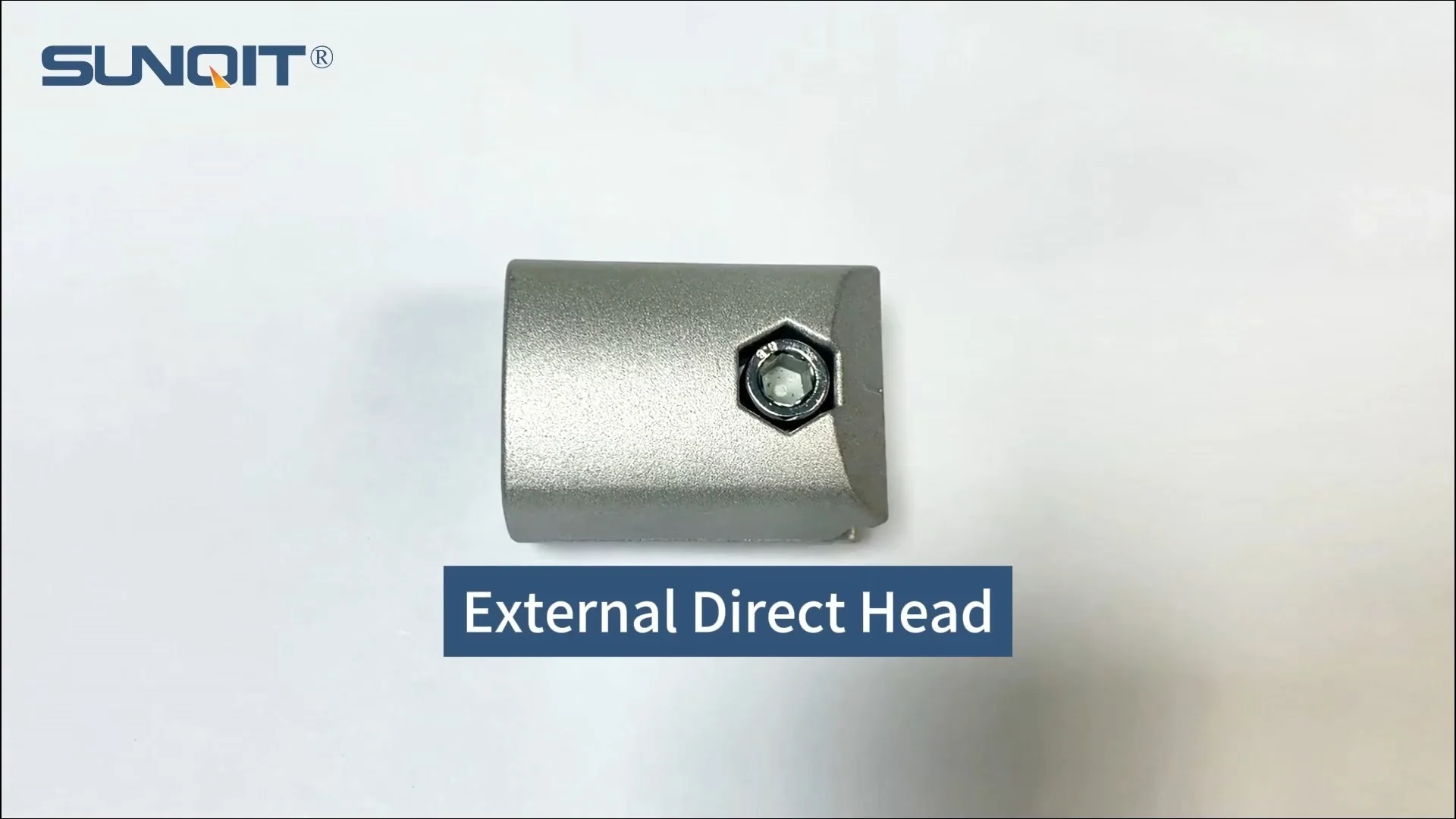
In the fast-paced world of manufacturing, where every second counts and waste is the enemy, lean systems have become the backbone of efficient operations. At the heart of lean lies continuous improvement —the relentless pursuit of better, faster, smarter ways to work. But here's the truth: even the best lean strategies falter if the tools and setups supporting them are rigid, outdated, or hard to adapt. That's where modular solutions, and specifically external straight aluminum joints , step in. These unassuming components might not grab headlines, but they're quietly revolutionizing how factories, warehouses, and assembly lines stay agile, reduce waste, and keep pace with evolving demands. Let's dive into how these small but mighty joints, paired with aluminum lean pipe and other modular elements, are becoming the unsung heroes of lean success.
The Lean Imperative: Why Flexibility Can't Be an Afterthought
Lean manufacturing isn't just a buzzword—it's a mindset. Born from the Toyota Production System, its core principles revolve around eliminating waste ( muda ), optimizing flow, and empowering teams to drive improvement. But here's the catch: waste isn't just about excess inventory or idle time. Rigid, inflexible production setups are a silent killer of lean goals. Imagine a factory floor where a workbench is welded into place, or a material rack can't be adjusted to fit a new product size. When demand shifts, or a team identifies a better workflow, reconfiguring these setups means halting production, hiring welders, or buying entirely new equipment. That's downtime, cost, and missed opportunities—all forms of waste that directly contradict lean's promise.
Continuous improvement, or kaizen , thrives on iteration. The Plan-Do-Check-Act (PDCA) cycle demands that teams can test new ideas quickly, learn from them, and adjust. If your tools take weeks to reconfigure, you're stuck in a cycle of "plan, wait, maybe do, forget to check." That's where modular systems come in. By design, they're built for change. And at the center of that modularity? Components like external straight aluminum joints that turn static structures into dynamic, adaptable assets.
Modular Systems 101: Beyond "One-Size-Fits-All"
Traditional manufacturing setups often rely on fixed, heavy materials like steel or wood. Welded steel frames, bolted-down workbenches, and custom-built racks might work for a single product line, but they crumble when faced with variability. A new product, a seasonal spike, or a process improvement suggestion can turn these "permanent" structures into liabilities. Modular systems, by contrast, are built on the idea of interchangeable parts . Think of them like industrial Legos: aluminum lean pipe as the bricks, and joints (like our external straight aluminum joints) as the connectors that hold everything together—without welding, drilling, or specialized tools.
Aluminum lean pipe, in particular, has emerged as a favorite for modular setups. Lightweight yet surprisingly strong, it resists corrosion, won't splinter like wood, and avoids the rust issues of uncoated steel. But even the best pipe is useless without a way to connect it reliably and flexibly. That's where lean pipe joints shine. They're the glue that turns individual pipes into workbenches, roller tracks, material racks, and more—all while keeping the system adaptable.

Meet the External Straight Aluminum Joint: A Closer Look
Let's get specific. What exactly is an external straight aluminum joint, and why does it matter for lean setups? At its core, it's a connector designed to join two aluminum lean pipes in a straight line—no angles, no curves, just a seamless extension. But don't let its simplicity fool you. Its design is a masterclass in practical engineering.
Most external straight aluminum joints are made from high-grade aluminum alloy, chosen for its strength-to-weight ratio and resistance to wear. They typically feature a clamp-style design: two halves that wrap around the ends of two aluminum pipes, secured by a bolt or lever. The magic is in the precision: the joint grips the pipe tightly enough to support heavy loads (think toolboxes, product bins, or even small machinery) but can be loosened in minutes when it's time to reconfigure. No welding, no cutting, no calling in a maintenance crew. A single operator with a basic wrench (or sometimes just their hands) can disconnect, adjust, and reconnect the joint in under five minutes.
But why "external"? Unlike internal joints, which fit inside the pipe, external straight joints wrap around the outside. This design offers two key benefits for lean setups: first, it distributes stress evenly across the pipe's surface, reducing the risk of bending or cracking under load. Second, it allows for quick visual inspection—you can immediately see if the joint is secure, which is critical for safety in fast-paced environments. For teams practicing jidoka (automation with a human touch), this visibility is a game-changer: no more guessing if a connection is stable before starting a shift.

From Rigid to Responsive: How External Straight Aluminum Joints Enable Continuous Improvement
Let's move beyond the specs and into the real world. How do these joints actually support continuous improvement on the factory floor? Let's break it down into three key areas: speed of change, reduction of waste, and empowerment of frontline teams.
1. Speed of Change: Turning "Maybe Someday" into "Done by Lunch"
Continuous improvement dies when change takes too long. Suppose a team on the assembly line notices that their workbench is too low, causing operators to hunch over and slow down. With a traditional wooden or welded steel workbench, fixing this might involve: submitting a request, waiting for maintenance, scheduling downtime, and paying for custom modifications. By the time it's done, the team might have forgotten why the change was needed—or the product mix has shifted, making the adjustment irrelevant.
With a modular workbench built from aluminum lean pipe and external straight aluminum joints? The process is night and day. The team lead grabs a few extra pipes and joints, loosens the existing connections, adjusts the height, and tightens everything back up. Total time? Maybe 30 minutes, and no production downtime. That's PDCA in action: Plan (adjust height), Do (reconfigure the workbench), Check (see if operator speed improves), Act (make the change permanent or tweak further). No waiting, no red tape—just immediate action.
External straight joints are especially valuable here because they simplify "length adjustments." Need a longer workbench to accommodate a new tool? Add two pipes and an external straight joint. Need to shorten it to free up floor space? Remove a section by disconnecting the joint. This kind of flexibility turns "we can't" into "we can try"—the first step toward every improvement.
2. Reduction of Waste: Less Downtime, More Reusability
Waste in lean terms comes in many forms: overproduction, waiting, defects, and one often-overlooked category: waste of resources . Traditional fixed setups are resource hogs. When a product line is retired, that custom steel workbench becomes scrap metal. When a new product requires a wider material rack, the old wooden shelves end up in the dumpster. Modular systems with external straight aluminum joints flip this script.
Because the joints allow for disassembly and reassembly, components can be repurposed. A workbench that's no longer needed for assembly can be taken apart, and its aluminum lean pipes and joints can be used to build a roller track for shipping. A material rack that's too short can have sections added (via external straight joints) to extend its length. This reusability slashes waste in two ways: first, it reduces the need to buy new equipment, cutting costs. Second, it minimizes landfill waste, aligning with lean's growing focus on sustainability (often called "green lean").
Consider this: a mid-sized electronics manufacturer we worked with recently reported that after switching to modular systems, they reduced their equipment waste by 40% in the first year. Instead of scrapping old racks, they repurposed 70% of their aluminum lean pipe and joints into new setups for a product launch. That's not just good for the planet—it's good for the bottom line.
3. Empowering Frontline Teams: The Human Side of Modularity
Lean isn't just about tools and processes—it's about people. The most successful lean programs empower frontline operators to identify and solve problems, because they're the ones closest to the work. But empowerment requires agency: if a team can't make changes without asking for permission (and waiting weeks for it), they'll stop suggesting improvements.
External straight aluminum joints put power back in the hands of operators. Imagine a line worker notices that the roller track feeding parts to their station is slightly too long, causing parts to pile up and creating a bottleneck. With a modular roller track built using aluminum lean pipe and external straight joints, they can: loosen the joints, remove a section of pipe, reattach the track, and test the new length—all in 15 minutes, without interrupting the line. No need to fill out a work order or wait for maintenance. They see a problem, fix it, and move on. That's kaizen in its purest form: small, daily improvements driven by the people doing the work.
We've seen this play out time and again. A food packaging plant in Ohio reported a 25% increase in improvement suggestions after rolling out modular workbenches. Why? Because operators finally felt like their ideas could lead to real, immediate change. When you remove the barrier between "I have an idea" and "I can test it," innovation flourishes.

Beyond the Basics: Real-World Applications
External straight aluminum joints might seem simple, but their impact ripples across entire lean systems. Let's look at two common applications where they shine: workbenches and roller tracks.
Workbenches: The Heart of the Production Line
Workbenches are where the magic happens—assembly, inspection, packaging, and more. A well-designed workbench reduces motion waste (operators reaching, bending, or twisting), improves ergonomics, and keeps tools and materials within arm's reach. A poorly designed one? It's a source of frustration, fatigue, and errors.
Modular workbenches built with aluminum lean pipe and external straight aluminum joints solve this by being infinitely adjustable. Need a longer surface to accommodate a new tool? Add a section of pipe with an external straight joint. Want to lower the height for a shorter operator? Swap out the legs (connected, of course, with joints) for shorter pipes. Even accessories like tool hooks, bin holders, or monitor mounts can be attached using the same joint system, ensuring everything stays within reach.
One automotive parts supplier we worked with used this flexibility to great effect. They had a team of operators with varying heights, and traditional fixed workbenches meant some were constantly straining. By switching to modular workbenches, they let each operator adjust their station's height in minutes. The result? A 30% reduction in reported fatigue and a 15% drop in errors related to misaligned parts—all because the workbench could adapt to the people, not the other way around.
Roller Tracks: Keeping Materials Flowing
Material flow is the lifeblood of lean manufacturing. When parts, components, or finished goods move smoothly from one station to the next, you eliminate waiting waste and keep production flowing. Roller tracks—conveyor-like systems with wheels that let items glide along—are a staple for this. But traditional roller tracks are often fixed in length and angle, making them hard to adapt when workflows change.
Modular roller tracks, built with aluminum lean pipe and external straight aluminum joints, fix this. The joints connect sections of roller track, allowing teams to extend, shorten, or even reangle the track as needed. For example, if a new machine is added downstream, the track can be extended with a few extra pipes and joints to reach it. If a bottleneck forms, a section can be removed to speed up flow. Even the rollers themselves can be swapped out (using compatible joints) to handle heavier or lighter items—no need for a custom track.
A furniture manufacturer in North Carolina used this to solve a persistent problem: their roller track from the cutting station to assembly was too long, causing wood panels to scratch as they sat idle. By shortening the track with external straight joints, they reduced idle time by 45% and cut down on damaged materials. The best part? They reused the removed pipe and joints to build a new track for their packaging area. No waste, no extra cost—just better flow.
Traditional vs. Modular: A Comparative Look
Still not convinced that external straight aluminum joints and modular systems are worth the investment? Let's put them head-to-head with traditional setups in a quick comparison:
| Feature | Traditional Fixed Setups (Steel/Wood) | Modular Systems (Aluminum Lean Pipe + Joints) |
|---|---|---|
| Assembly Time | Days to weeks (requires welding, cutting, or custom fabrication) | Hours to days (tool-free or minimal tools; no specialized labor) |
| Reconfigurability | Limited (often requires rebuilding from scratch) | High (disassemble and reassemble in minutes/hours) |
| Durability | High (but prone to rust, rot, or warping over time) | High (aluminum resists corrosion; joints wear slowly with reuse) |
| Cost (Short-Term) | Lower (cheaper materials upfront) | Higher (aluminum and precision joints cost more initially) |
| Cost (Long-Term) | Higher (frequent replacement; custom fabrication for changes) | Lower (reusable components; no need for new equipment) |
| Waste Generation | High (scrapped when obsolete) | Low (components repurposed for new setups) |
The data speaks for itself: while modular systems have a higher upfront cost, their long-term value—driven by reusability, speed of change, and waste reduction—makes them a smarter investment for any lean-focused operation.
Conclusion: Small Joints, Big Impact on Continuous Improvement
Continuous improvement isn't about grand gestures—it's about the small, consistent changes that add up over time. External straight aluminum joints might seem like humble components, but they play a outsized role in making those changes possible. By turning rigid, fixed setups into flexible, adaptable systems, they let manufacturers respond quickly to new ideas, shifting demands, and evolving team needs. They reduce waste, empower frontline workers, and turn the theoretical promise of lean into tangible results.
At the end of the day, lean manufacturing is about people and progress. It's about creating environments where teams can do their best work, learn from mistakes, and keep getting better. External straight aluminum joints, paired with aluminum lean pipe and other modular components, don't just build workbenches or roller tracks—they build cultures of continuous improvement. And in today's competitive manufacturing landscape, that's the ultimate advantage.
So the next time you walk through a factory, warehouse, or assembly line, take a closer look at the structures around you. Chances are, the ones that are keeping up with change—the ones that look simple, adaptable, and built for people—are held together by components like external straight aluminum joints. Small parts, yes. But when it comes to lean success, they're anything but minor players.