- Company Articles
- Products and Technology
- Solution
- How External Straight Aluminum Joints Support Lean Principles of Waste Reduction

How External Straight Aluminum Joints Support Lean Principles of Waste Reduction
Related Product
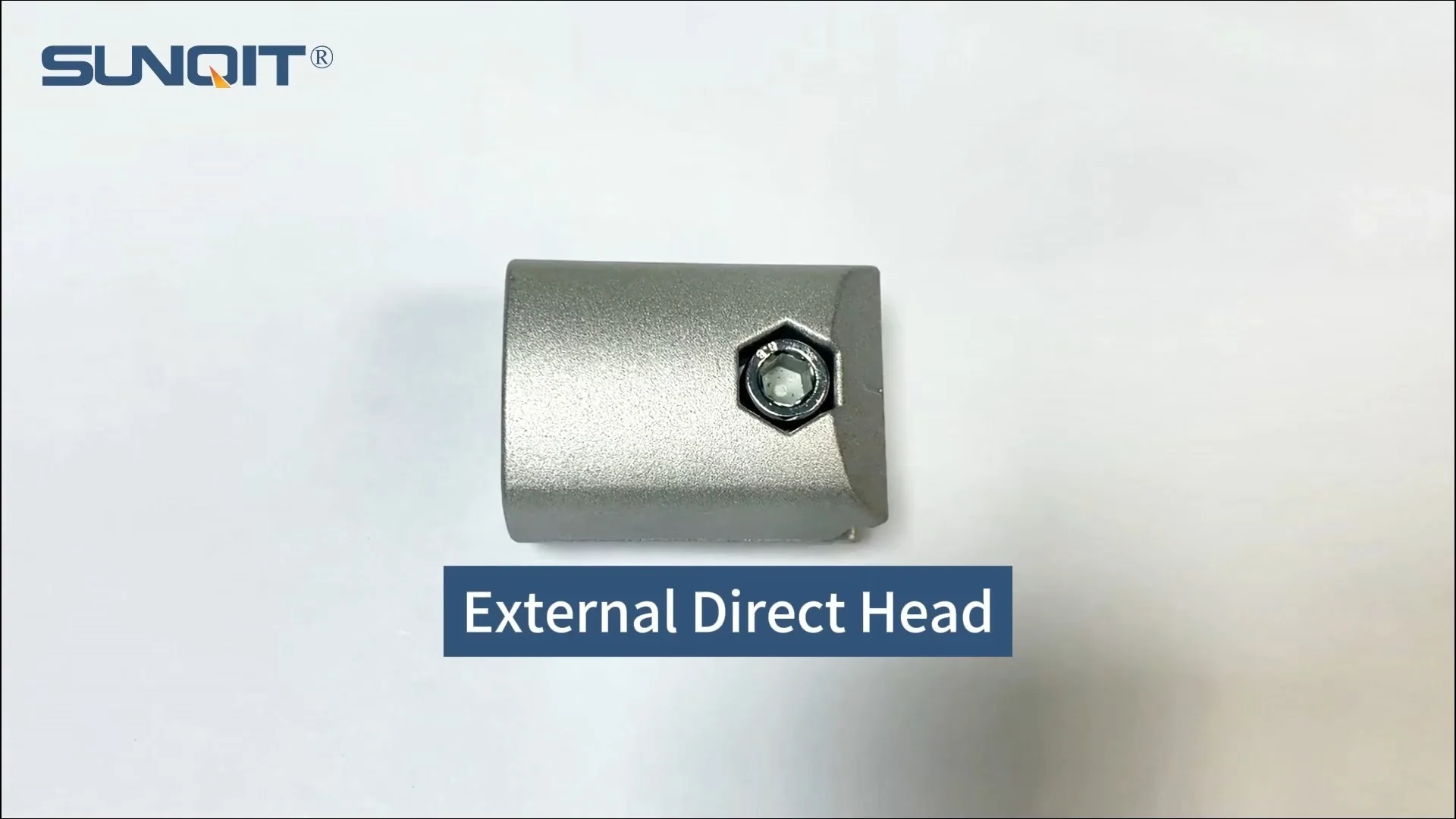
External Straight Aluminum Joint
Aluminum pipe joint outside connection used for two pcs 28pcs aluminum pipe connection in straight angle,it connects two pcs pipe from outside.
In the fast-paced world of manufacturing, where every second and every resource counts, the pursuit of efficiency isn't just a goal—it's a necessity. At the heart of this pursuit lies the philosophy of lean manufacturing, a methodology built on the relentless elimination of waste, or
muda
, to create more value with fewer resources. From the factory floor to the supply chain, lean principles guide teams to rethink processes, strip away inefficiencies, and focus on what truly matters: delivering quality products to customers while maximizing productivity. But lean isn't just about big-picture strategies; it often hinges on the smallest components—the unsung heroes that quietly transform how work gets done. One such component, often overlooked yet indispensable, is the
external straight aluminum joint
.
These unassuming connectors, designed to link
aluminum profiles
into structures like workbenches, flow racks, and assembly lines, play a critical role in turning lean ideals into tangible results. In this article, we'll explore how external straight aluminum joints act as a cornerstone of lean systems, directly addressing key waste types and empowering teams to build more adaptable, efficient, and sustainable workspaces. Whether you're a plant manager looking to optimize your production line, a lean coordinator tasked with reducing waste, or simply curious about the mechanics of efficient manufacturing, understanding the impact of these small but mighty components can shift how you approach workplace design and process improvement.
The Foundation of Lean: Why Waste Reduction Matters
Before diving into the specifics of external straight aluminum joints, let's ground ourselves in why lean and waste reduction are so vital. Lean manufacturing, born from the Toyota Production System (TPS) in the mid-20th century, identifies seven core types of waste—often called the "Seven Wastes"—that drain resources, slow down processes, and erode profitability. These include:
- Motion Waste: Unnecessary movement of people or equipment (e.g., workers walking long distances to retrieve tools).
- Inventory Waste: Excess raw materials, work-in-progress (WIP), or finished goods that tie up capital and space.
- Waiting Waste: Downtime caused by delays in production, such as machines idling or workers waiting for materials.
- Transportation Waste: Unnecessary movement of materials (e.g., moving parts from one floor to another when they could be stored nearby).
- Defects: Products that don't meet quality standards, requiring rework, scrap, or customer returns.
- Overprocessing: Adding more value to a product than the customer requires (e.g., using precision tools for non-critical components).
- Overproduction: Producing more than needed, leading to excess inventory and wasted resources.
Each of these wastes represents a missed opportunity to create value. The goal of lean is to minimize or eliminate them, not through drastic overhauls, but through incremental, continuous improvement. And that's where tools like external straight aluminum joints come into play: they provide the flexibility and reliability needed to design workspaces that naturally reduce these inefficiencies.
What Are External Straight Aluminum Joints?
At first glance, an external straight aluminum joint might seem like little more than a metal connector. But its design and functionality are purpose-built for adaptability—a trait that aligns perfectly with lean's demand for flexibility. These joints are engineered to connect
aluminum profiles
(hollow, T-slot extrusions) in straight-line configurations, forming the backbone of structures like workbenches, flow racks, shelving units, and even entire assembly lines.
Unlike traditional welded steel joints or bulky plastic connectors, external straight aluminum joints offer several key advantages:
- Tool-Free Assembly: Most models feature a clamping mechanism that tightens by hand or with a simple hex key, eliminating the need for welding, drilling, or specialized tools. This makes setup and reconfiguration fast and accessible to anyone on the team.
- Lightweight yet Durable: Aluminum's high strength-to-weight ratio means joints are easy to handle (reducing motion waste) while still supporting heavy loads—critical for industrial settings.
- Corrosion Resistance: Aluminum naturally resists rust and corrosion, ensuring longevity even in humid or dusty factory environments, which reduces the need for frequent replacements (defect waste).
- Modularity: Joints and profiles are standardized, so components can be mixed, matched, and reused across different structures. A joint from an old workbench can be repurposed to build a new flow rack, minimizing inventory waste from unused parts.
These features might seem straightforward, but their impact on lean waste reduction is profound. Let's break down how external straight aluminum joints directly address each of the Seven Wastes, starting with one of the most common in manufacturing: motion waste.

Reducing Motion Waste: Workspaces That Adapt to Your Team
Imagine a typical workbench in a traditional factory. It's likely a fixed, heavy wooden or steel structure, built to last decades without modification. But what happens when your production needs change? Maybe you introduce a new product line that requires a longer bench, or your team adopts a new ergonomic standard that calls for a lower working height. With a fixed bench, adapting means either purchasing a brand-new one (inventory waste) or hiring a welder to cut and rework the old one (motion and waiting waste).
Now picture a
workbench
built with external straight aluminum joints and aluminum profiles. When needs change, a single worker can loosen the joints, adjust the profiles to the new dimensions, and retighten—all in under an hour, with no special tools. No waiting for a maintenance crew, no excess movement to fetch equipment, and no downtime for the team. This is the power of adaptability, and it directly cuts down on motion waste.
Motion waste isn't just about physical movement, either. It includes the time and mental effort spent navigating inefficient workspaces. A study by the Occupational Safety and Health Administration (OSHA) found that workers in poorly designed environments spend up to 25% of their day on non-value-added tasks, like searching for tools or adjusting awkwardly placed equipment. External straight aluminum joints mitigate this by allowing teams to design workbenches and stations around
their
needs, not the other way around. For example:
- A assembly line worker can adjust the height of their workbench to reduce bending, cutting down on fatigue and unnecessary motion.
- A team lead can add shelves or tool holders to a bench in minutes, ensuring frequently used items are within arm's reach.
- A quality control inspector can reconfigure their workspace to accommodate larger products during a temporary production run, then revert back just as easily.
In each case, the external straight aluminum joint acts as the enabler, turning rigid workspaces into dynamic, people-centric environments. The result? Less time moving, more time creating value.

Minimizing Inventory Waste: From "One-Size-Fits-All" to "Right-Size-for-Now"
Inventory waste isn't just about excess raw materials or finished goods—it also includes the "just-in-case" mindset that leads companies to stockpile tools, equipment, and spare parts. Traditional manufacturing setups often require this: if your workbenches, racks, and trolleys are custom-built or welded, you need backups for every scenario. A broken shelf means ordering a new one, which could take weeks to arrive, so you keep extras in storage "just in case."
External straight aluminum joints flip this script by promoting a "just-in-time" approach to workspace components. Because aluminum profiles and joints are standardized, you don't need to stockpile custom parts. Instead, you can keep a small inventory of basic profiles (e.g., 2-meter and 3-meter lengths) and a variety of joints, then cut and assemble exactly what you need when you need it. For example:
A furniture manufacturer experiences a sudden surge in demand for a new chair model. To meet the deadline, they need an additional flow rack to hold upholstery materials. Instead of ordering a pre-built rack (which would take a week to deliver), they use existing aluminum profiles and external straight aluminum joints to assemble the rack in-house in a morning. No excess inventory, no waiting, and no wasted space storing unused equipment.
This modularity also reduces waste from obsolete equipment. In traditional setups, a change in product size or production method can render entire workstations useless, forcing companies to discard them (defect waste) or let them collect dust (inventory waste). With aluminum joint systems, components are reusable. A flow rack that once held small electronics can be disassembled and rebuilt into a turnover trolley for automotive parts, or a workbench for packaging. The external straight aluminum joints, being durable and corrosion-resistant, maintain their functionality across multiple reconfigurations, ensuring every component gets maximum use.

Eliminating Waiting Waste: Keeping Production Flowing with Reliable Systems
Waiting waste is the silent productivity killer. It happens when a machine sits idle because a part hasn't arrived, when a worker pauses because their tools are out of reach, or when a conveyor belt jams because of a faulty component. In many cases, these delays stem from unreliable equipment—and traditional rigid structures are often the culprit. Welded steel racks, for example, can warp over time, causing materials to get stuck. Wooden workbenches might splinter, creating uneven surfaces that slow down assembly.
External straight aluminum joints, paired with aluminum profiles, address this through their inherent reliability. Aluminum is resistant to warping, rust, and wear, even in high-traffic industrial environments. The joints themselves are precision-engineered to create tight, stable connections that don't loosen over time, ensuring structures like flow racks and conveyors operate smoothly.
Consider a
flow rack
used to transport components from a warehouse to an assembly line. In a traditional setup, the rack might use steel rollers attached with bolts that loosen over time, causing jams. Workers have to stop production to fix the jam, leading to waiting waste. A flow rack built with external straight aluminum joints, however, uses standardized roller tracks and connectors that stay secure. The aluminum profiles are lightweight but rigid, so the rack doesn't sag under heavy loads, and the joints maintain their grip even after thousands of cycles. The result? Fewer jams, less downtime, and a production line that keeps moving.
Reliability also extends to maintenance. When a component
does
need repair—say, a roller track wears out—external straight aluminum joints make replacement fast. Instead of disassembling the entire rack, a worker can loosen a few joints, swap out the damaged track, and retighten. The process takes minutes, not hours, minimizing waiting waste and keeping the line running.
Comparing Traditional vs. Aluminum Joint Systems: A Closer Look at Waste Reduction
To truly grasp the impact of external straight aluminum joints on lean waste reduction, let's compare them side-by-side with traditional systems (e.g., welded steel, wooden workbenches, or plastic shelving) across key lean metrics. The table below highlights how aluminum joint systems outperform traditional setups in reducing waste:
| Metric | Traditional Systems (Welded Steel/Wood) | Aluminum Joint Systems (External Straight Aluminum Joints + Profiles) | Waste Type Reduced |
|---|---|---|---|
| Assembly Time | 8–12 hours (requires welding, drilling, specialized labor) | 1–2 hours (tool-free, modular assembly) | Waiting, Motion |
| Reconfigurability | Limited (requires cutting/welding; often impossible without damage) | High (loosen joints, adjust profiles, retighten) | Motion, Inventory (no need for new equipment) |
| Durability | High, but prone to rust/warping over time | High, with corrosion resistance and no warping | Defects (fewer repairs/replacements) |
| Weight | Heavy (difficult to move; requires equipment) | Lightweight (easily movable by hand) | Transportation, Motion |
| Component Reusability | Low (custom-built; parts can't be repurposed) | High (standardized profiles/joints; reusable across structures) | Inventory (less need for spares) |
| Maintenance Time | High (requires welding, painting, or replacement of entire structures) | Low (replace individual parts; no specialized tools) | Waiting, Motion |
As the table shows, external straight aluminum joints and aluminum profiles consistently reduce waste across multiple categories. They're not just a "better" alternative to traditional systems—they're a
leaner
one, designed to align with the core principle of maximizing value while minimizing resource use.
Real-World Impact: How Companies Are Using Aluminum Joints to Drive Lean Success
Let's turn to real-world examples to see how external straight aluminum joints are making a difference in lean manufacturing.
Case Study 1: Automotive Parts Manufacturer Reduces Motion Waste by 30%
A mid-sized automotive parts manufacturer was struggling with high motion waste on their assembly line. Workers were spending 20 minutes per shift adjusting fixed steel workbenches to accommodate different part sizes, and another 15 minutes retrieving tools stored on separate racks. The company switched to aluminum profile workbenches with external straight aluminum joints, allowing workers to adjust bench height and add tool holders in minutes. Within three months, motion waste dropped by 30%, and worker satisfaction scores increased, as teams felt more in control of their workspace. Case Study 2: Electronics Plant Cuts Inventory Waste by $50,000 Annually
An electronics plant producing circuit boards relied on custom plastic shelving for component storage. When product lines changed, old shelving became obsolete, and the company was spending $50,000 annually on new racks. After transitioning to aluminum profile flow racks with external straight aluminum joints, they repurposed 80% of old components, eliminating the need for new shelving purchases. The modular design also allowed them to reduce spare parts inventory by 60%, freeing up warehouse space for value-added operations. Case Study 3: Food Packaging Facility Minimizes Waiting Waste with Reliable Flow Systems
A food packaging facility was plagued by conveyor jams, causing daily downtime of 1–2 hours (waiting waste). Their traditional steel conveyors used bolted connections that loosened under the vibration of heavy use. Switching to aluminum roller tracks with external straight aluminum joints solved the issue: the joints maintained tight connections, and the lightweight aluminum reduced vibration. Downtime dropped to less than 15 minutes per day, increasing production output by 12%.
A mid-sized automotive parts manufacturer was struggling with high motion waste on their assembly line. Workers were spending 20 minutes per shift adjusting fixed steel workbenches to accommodate different part sizes, and another 15 minutes retrieving tools stored on separate racks. The company switched to aluminum profile workbenches with external straight aluminum joints, allowing workers to adjust bench height and add tool holders in minutes. Within three months, motion waste dropped by 30%, and worker satisfaction scores increased, as teams felt more in control of their workspace. Case Study 2: Electronics Plant Cuts Inventory Waste by $50,000 Annually
An electronics plant producing circuit boards relied on custom plastic shelving for component storage. When product lines changed, old shelving became obsolete, and the company was spending $50,000 annually on new racks. After transitioning to aluminum profile flow racks with external straight aluminum joints, they repurposed 80% of old components, eliminating the need for new shelving purchases. The modular design also allowed them to reduce spare parts inventory by 60%, freeing up warehouse space for value-added operations. Case Study 3: Food Packaging Facility Minimizes Waiting Waste with Reliable Flow Systems
A food packaging facility was plagued by conveyor jams, causing daily downtime of 1–2 hours (waiting waste). Their traditional steel conveyors used bolted connections that loosened under the vibration of heavy use. Switching to aluminum roller tracks with external straight aluminum joints solved the issue: the joints maintained tight connections, and the lightweight aluminum reduced vibration. Downtime dropped to less than 15 minutes per day, increasing production output by 12%.
Beyond the Factory Floor: Sustainability and the Lean-Aluminum Connection
While lean focuses on waste reduction, it's increasingly overlapping with sustainability—a focus on reducing environmental impact. External straight aluminum joints align with this overlap, as aluminum is one of the most recyclable materials on the planet. Over 75% of all aluminum ever produced is still in use today, thanks to its infinite recyclability with no loss of quality. When an aluminum profile or joint reaches the end of its useful life, it can be melted down and reused, reducing waste sent to landfills (defect waste) and minimizing the need for raw material extraction (overprocessing waste).
Additionally, aluminum's lightweight nature reduces transportation emissions. A truckload of aluminum profiles can carry 3x more components than a truckload of steel, cutting down on fuel use and carbon footprint (transportation waste). For companies aiming to combine lean and green initiatives, external straight aluminum joints offer a powerful tool to achieve both goals.
Conclusion: The Small Component with a Big Lean Impact
In the world of lean manufacturing, success often lies in the details—the small, intentional choices that add up to significant waste reduction. External straight aluminum joints may not grab headlines, but their impact is undeniable. By enabling adaptable, reliable, and modular workspaces, they directly address motion, inventory, waiting, and transportation waste, among others. They turn rigid, one-size-fits-all environments into dynamic, people-centric spaces that evolve with your team's needs.
As lean manufacturing continues to evolve, tools like external straight aluminum joints will only grow in importance. They're not just connectors—they're enablers of continuous improvement, empowering teams to take ownership of their processes and drive waste reduction from the ground up. So the next time you walk through a factory, take a closer look at the workbenches, flow racks, and assembly lines. Chances are, you'll spot the unassuming external straight aluminum joint, quietly supporting the lean journey one connection at a time.