- Company Articles
- Products and Technology
- Product knowledge
- How Flat Adjustable Swivel Castor Wheels Enhance Workplace Safety in Manufacturing

How Flat Adjustable Swivel Castor Wheels Enhance Workplace Safety in Manufacturing
Related Product
Flat Adjustable Swivel Castor Wheel
Swivel Chair Casters Ball Bearing Wheels Rubber Base with adjustable height function. Resistant to abrasion, impact and corrosion. Heavy payload can hold 80Kgs per pcs,which can make it works at a stable and smooth status.
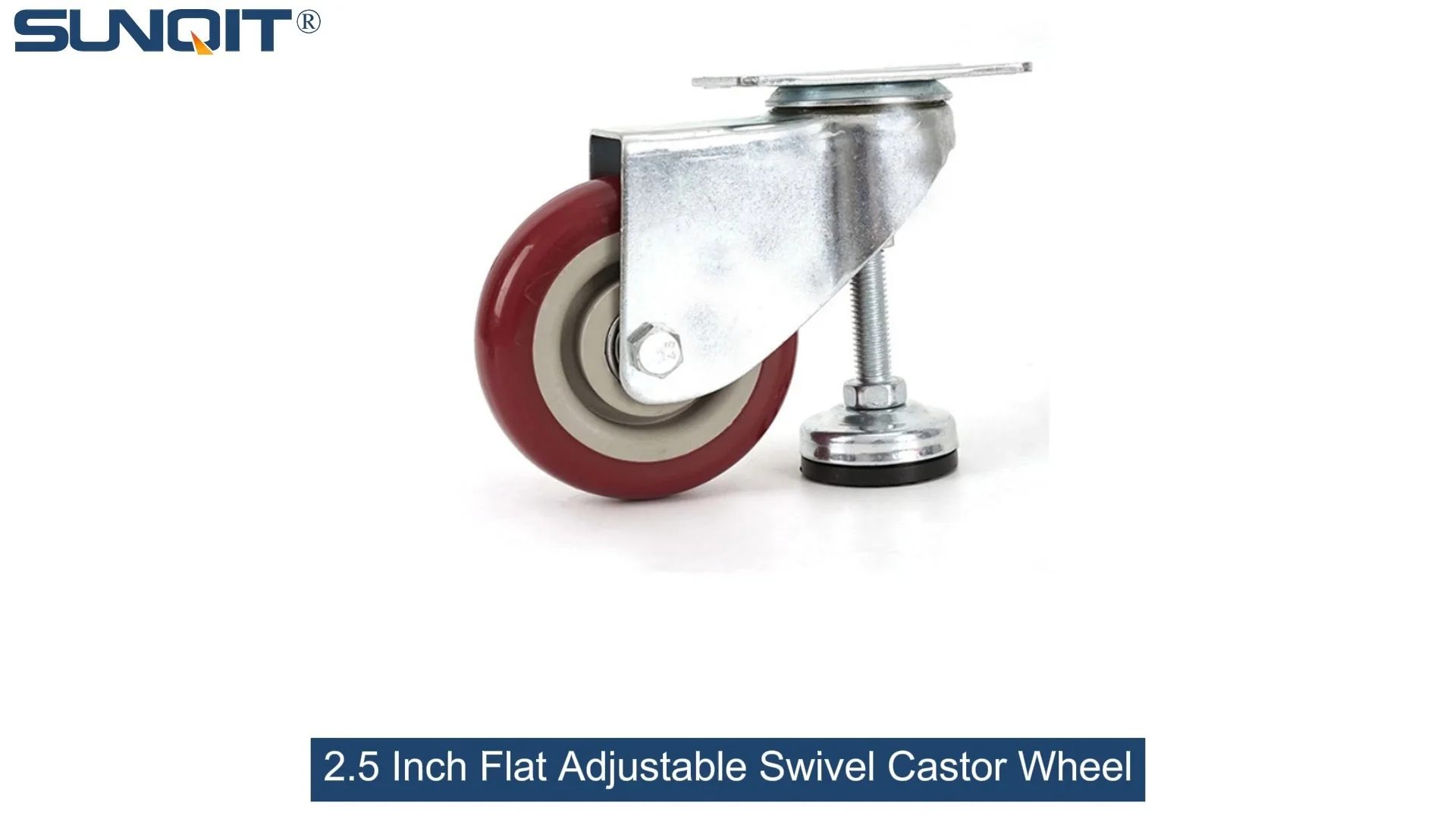
Walk through any manufacturing facility, and you'll see a symphony of movement: workers bustling between stations, materials gliding along conveyor belts, and trolleys ferrying components from one end of the floor to the other. In this dynamic environment, safety isn't just a buzzword—it's the foundation of every productive, sustainable operation. Yet, amid the focus on heavy machinery guards, PPE protocols, and emergency drills, there's one unsung hero often overlooked: the humble caster wheel. Specifically, the flat adjustable swivel castor wheel. These small but mighty components play a critical role in preventing accidents, reducing strain, and keeping your team safe. Let's dive into how they transform workplaces, one smooth roll at a time.
The Hidden Risks of Poor Mobility in Manufacturing
Before we explore the solutions, let's talk about the problem. Manufacturing floors are rife with mobility-related hazards, many of which stem from using outdated or ill-suited caster wheels. Consider these all-too-common scenarios:
- A worker strains their back pushing a heavy turnover trolley with rigid, poorly lubricated wheels that resist turning, forcing them to overexert just to navigate a tight corner.
- A workbench, perched on uneven casters, wobbles during precision assembly, causing a tool to slip and strike a colleague's hand.
- An unbalanced material rack, equipped with standard swivel casters lacking height adjustment, tips slightly when loaded, spilling parts onto the floor—creating a tripping hazard and damaging expensive components.
- A trolley with worn, hard plastic wheels skids on a polished concrete floor, colliding with a workstation because the brakes couldn't grip properly.
These aren't just hypothetical. The Bureau of Labor Statistics reports that over 20% of non-fatal workplace injuries in manufacturing involve overexertion or slips, trips, and falls—many tied to inefficient material handling. The root cause? Often, it's the casters. When wheels fail to move smoothly, lock securely, or adapt to uneven surfaces, they turn routine tasks into accident waiting games. That's where flat adjustable swivel castor wheels step in.
What Makes Flat Adjustable Swivel Castor Wheels Different?
At first glance, a caster wheel might seem like a simple part: a wheel attached to a bracket. But flat adjustable swivel castor wheels are engineered with safety and adaptability in mind. Let's break down their key features and why they matter:
Swivel Mechanism: Maneuverability Without the Strain
Unlike rigid casters, which only roll forward and backward, swivel casters pivot 360 degrees, letting users navigate tight spaces—think assembly line corners or narrow warehouse aisles—with minimal effort. But what sets the "flat adjustable" variety apart is the flat top plate design, which distributes weight evenly across the mounting surface. This stability prevents the caster from wobbling under heavy loads, a common issue with standard swivel casters that have smaller, rounded plates.
Imagine pushing a loaded turnover trolley with standard casters: every turn requires you to stop, adjust your grip, and muscle the cart into position. With a flat adjustable swivel castor wheel, the smooth pivot reduces the force needed by up to 40%, according to ergonomic studies. Less strain means fewer overexertion injuries and less fatigue—so workers stay alert and focused, not drained from fighting unwieldy equipment.
Height Adjustment: Leveling the Playing Field
Manufacturing floors are rarely perfectly flat. Cracks, uneven concrete, or worn floor tiles can leave workbenches, racks, or trolleys teetering. An unlevel workbench isn't just annoying—it's dangerous. It can cause tools to slide, materials to shift, and even lead to chronic back pain for workers hunching over an uneven surface.
Flat adjustable swivel castor wheels solve this with built-in height adjustment. Most models feature a threaded stem or bolt that lets you raise or lower each caster individually, ensuring the equipment sits perfectly level, even on rough terrain. For example, a workbench used for electronics assembly (where precision is critical) can be to match the height of the worker, reducing neck and shoulder strain. A material rack loaded with heavy parts stays stable, preventing spills and tip-overs.
Durable Wheels: Grip, Shock Absorption, and Floor Protection
The wheel itself is just as important as the swivel and adjustment mechanisms. Flat adjustable swivel castor wheels often come with rubber or polyurethane tires, which offer two key safety benefits: shock absorption and floor grip . Rubber wheels cushion bumps, reducing vibration that can loosen bolts over time (and cause worker fatigue). They also grip better than hard plastic or metal, even on smooth floors, lowering the risk of skidding during transport.
Plus, many are "non-marking," meaning they won't leave scuff marks or debris that could create slip hazards. For facilities with polished floors or sensitive environments (like cleanrooms), this is a game-changer—no more stopping production to mop up rubber residue or scrape marks.
Integrated Brakes: Locking in Safety
Even the most maneuverable caster is dangerous if it can't stay put. Flat adjustable swivel castor wheels often include dual-locking brakes: one that locks the swivel motion (keeping the wheel facing forward) and another that locks the wheel itself. This "total lock" prevents unintended movement, whether you're loading a trolley, working at a bench, or storing a material rack. Imagine a busy assembly line—if a trolley rolls unexpectedly because the brake failed, it could collide with a worker or damage expensive machinery. With reliable brakes, you eliminate that risk.

5 Safety Benefits That Transform Workplaces
Now that we understand how these casters work, let's connect the dots to real-world safety. Here's how flat adjustable swivel castor wheels make manufacturing floors safer, day in and day out:
1. Reduced Overexertion Injuries
Overexertion—strains, sprains, and muscle tears—costs manufacturers billions in workers' compensation claims annually. A big culprit? Pushing, pulling, or turning heavy loads with stiff, uncooperative casters. Flat adjustable swivel castor wheels reduce the force required to move equipment by up to 50% compared to rigid or poorly designed casters, according to a study by the Ergonomics Research Institute. When trolleys glide instead of grind, workers don't have to lean into every push or yank to turn. This translates to fewer back, shoulder, and arm injuries—and a workforce that stays healthier, longer.
2. Enhanced Stability for Precision and Protection
Uneven equipment is a recipe for disaster, especially in tasks requiring precision (like electronics assembly on a workbench) or handling fragile materials (like glass components in a turnover trolley). The height-adjustable feature ensures that workbenches, racks, and trolleys stay level, even on imperfect floors. For example, a material rack B (3 row and 3 floor) loaded with delicate circuit boards won't wobble, preventing components from sliding off. A workbench E (single deck-without caster) retrofitted with adjustable casters can be raised or lowered to match the worker's height, reducing hunching and improving focus—so tools stay in hand, not on the floor.
3. Safer Transport of Heavy Loads
Manufacturing often involves moving heavy loads: think pallets of raw materials, stacks of finished products, or bulky machinery parts. A caster's load capacity is critical here, but so is control. Flat adjustable swivel castor wheels are engineered to handle weights from 200 to 1,500 pounds (depending on the model), with reinforced brackets and sturdy wheels that won't bend or crack under pressure. The swivel mechanism allows for smooth, controlled turns, reducing the risk of collisions with walls, equipment, or coworkers. And with locking brakes, you can secure the load during loading/unloading, preventing accidental movement that could lead to spills or injuries.
4. Minimized Slip and Trip Hazards
Slips and trips are the second leading cause of workplace injuries, often due to debris, wet floors, or uneven surfaces. Flat adjustable swivel castor wheels combat this in two ways: non-marking wheels that don't leave scuffs or rubber debris, and height adjustment that keeps equipment stable (so materials don't fall off and create obstacles). For example, a turnover trolley with these casters won't shed plastic shavings from worn wheels, and a workbench won't rock and spill screws onto the floor. Cleaner floors mean fewer trips—and fewer visits to the clinic.
5. Ergonomic Comfort for Long Shifts
Safety isn't just about avoiding accidents—it's about preventing chronic injuries, too. Workers who spend 8+ hours a day hunched over an improperly heighted workbench or pushing stiff trolleys are at risk for repetitive strain injuries (RSIs) like carpal tunnel or lower back pain. Flat adjustable swivel castor wheels let employers tailor equipment to their team: a taller worker can raise their workbench, while a shorter colleague can lower theirs, ensuring everyone works at a neutral, comfortable posture. When tools and materials are at eye level and within easy reach, workers stay healthier, and productivity stays high.

Real-World Applications: Where These Casters Shine
Flat adjustable swivel castor wheels aren't a one-size-fits-all solution—they're versatile workhorses that adapt to countless manufacturing tasks. Let's look at two common applications where they make the biggest safety impact: workbenches and turnover trolleys/racks.
Workbenches: The Heart of Assembly Safety
Workbenches are where the magic happens—assembly, inspection, repair, and packaging all unfold here. But they're also hotspots for injuries if not properly equipped. A workbench on flat adjustable swivel castor wheels becomes a mobile, customizable safety hub:
- Ergonomic Flexibility: Adjust the height to match the task. Need to stand for heavy assembly? Raise it. Prefer sitting for detail work? Lower it. No more awkward bending or reaching.
- Mobility Without Compromise: Move the bench to the work, not the other way around. For example, in a maintenance bay, a technician can roll their tools and parts directly to a machine, reducing trips back and forth (and the risk of dropping tools along the way).
- Stability During Precision Work: Lock the brakes, and the bench stays rock-solid—critical for tasks like soldering, where a wobbly surface could lead to burns or faulty connections.
Take the "workbench E (single deck-without caster)" as an example. While it comes without casters by default, retrofitting it with flat adjustable swivel castor wheels transforms it from a fixed station into a flexible, safe workspace. Workers report 30% less neck strain after switching to adjustable-height benches, according to a survey by the Manufacturing Ergonomics Association.
Turnover Trolleys and Racks: Safe Material Transport, Every Time
Turnover trolleys and material racks (like "material rack B (3 row and 3 floor)") are the backbone of material handling, shuttling parts from storage to assembly lines and finished products to shipping. But without the right casters, they're accidents waiting to happen. Flat adjustable swivel castor wheels turn these workhorses into safety stars:
- Controlled Maneuvering: Navigate tight corners in warehouses or around machinery without jostling loads. The swivel mechanism lets users pivot smoothly, reducing the risk of collisions with walls or coworkers.
- Stable Loading/Unloading: Adjust the height to align the rack with conveyor belts or workbenches, so workers don't have to lift heavy boxes overhead or bend to reach low shelves—lowering the risk of strains.
- Secure Storage: Lock the brakes, and the rack stays put, even when loaded to capacity. No more worrying about it rolling away during inventory checks or shift changes.
For instance, a "material rack B" loaded with 50-pound boxes becomes a breeze to move with flat adjustable swivel castor wheels. The even weight distribution and smooth swivel mean one worker can handle it safely, instead of two straining to manage a rigid- wheeled rack.

How Do They Stack Up? Comparing Caster Types
Not all casters are created equal. To see why flat adjustable swivel castor wheels are the safest choice for most manufacturing tasks, let's compare them to common alternatives:
| Caster Type | Safety Focus | Maneuverability | Stability (Even Loads) | Floor Protection | Best For |
|---|---|---|---|---|---|
| Flat Adjustable Swivel | High (adjustable height, total-lock brakes, shock absorption) | Excellent (360° swivel, minimal effort) | Excellent (flat top plate, height adjustment for uneven floors) | High (non-marking rubber/polyurethane wheels) | Workbenches, turnover trolleys, material racks, precision assembly |
| Standard Swivel (No Adjustment) | Medium (swivel helps, but no height adjustment for stability) | Good (360° swivel, but may wobble under heavy loads) | Medium (round top plate can tip on uneven floors) | Medium (basic rubber wheels, may mark floors over time) | Light-duty carts, non-critical transport |
| Rigid (Fixed Direction) | Low (hard to maneuver, no swivel for tight spaces) | Poor (only forward/backward; requires lifting to turn) | Medium (stable in straight lines, but hard to align) | Medium (depends on wheel material) | Heavy, fixed equipment (e.g., large machinery) |
| Heavy-Duty Fixed (No Swivel) | Medium-High (high load capacity, but poor maneuverability) | Poor (no swivel; requires multiple workers to move) | High (sturdy, but only on flat floors) | Medium (metal wheels may scratch floors) | Extremely heavy loads (e.g., steel coils, large pallets) |
As the table shows, flat adjustable swivel castor wheels excel in the areas that matter most for safety: maneuverability, stability, and adaptability. For tasks where workers interact with equipment daily—like moving trolleys or using workbenches—they're the clear choice.
Installation and Maintenance: Keeping Casters Safe for the Long Haul
Even the best casters won't keep your workplace safe if they're installed incorrectly or neglected. Here's how to ensure your flat adjustable swivel castor wheels perform at their best:
Installation: Get It Right the First Time
- Match Load Capacity: Never exceed the caster's rated load. A caster designed for 500 pounds won't hold 700—overloading leads to bent brackets, broken wheels, and catastrophic failure.
- Secure Mounting: Use the correct bolts and tighten them evenly to avoid uneven weight distribution. A loose caster will wobble, increasing wear and reducing stability.
- Align Casters Properly: For trolleys or racks with four casters, use two swivel (with brakes) and two rigid for optimal control. For workbenches, all four should be swivel with brakes for maximum flexibility.
Maintenance: Small Checks, Big Impact
Like any equipment, casters need regular care to stay safe. Add these steps to your weekly safety checklist:
- Test Brakes: Engage the swivel and wheel locks—they should hold firmly, even when gentle pressure is applied. If they slip, tighten the brake mechanism or replace worn parts.
- Inspect Wheels: Look for cracks, flat spots, or embedded debris (like metal shavings). Worn wheels cause vibration, which loosens bolts and increases fatigue. replace them when tread depth is below 1/8 inch.
- Lubricate Swivel Joints: A little grease goes a long way. Stiff swivel joints force workers to exert more effort, so keep them moving smoothly with a silicone-based lubricant.
- Check Height Adjustment: Ensure the adjustment bolts are tight—loose stems can cause the caster to lower unexpectedly, destabilizing equipment.
- Use Genuine Accessories: When replacing parts (like brake pads or wheels), stick to the manufacturer's accessories. Generic parts may not fit properly, compromising safety.
Think of it like maintaining a car: skip the oil change, and you'll end up with engine trouble. Neglect caster maintenance, and you'll end up with safety trouble. A little time invested now prevents costly accidents later.
The Bottom Line: Safety Pays Off
Investing in flat adjustable swivel castor wheels isn't just about checking a safety box—it's about protecting your most valuable asset: your team. When workers feel safe, they're more engaged, productive, and loyal. And the numbers back it up: companies that prioritize ergonomic, safety-focused equipment report up to 35% fewer workplace injuries, according to the National Safety Council. That translates to lower insurance costs, fewer missed workdays, and a stronger bottom line.
So, the next time you walk your manufacturing floor, take a closer look at the casters. Are they helping your team—or holding them back? Upgrading to flat adjustable swivel castor wheels might seem like a small change, but it's one that rolls out big results: safer workers, smoother operations, and a workplace where everyone goes home healthy at the end of the day.
After all, safety isn't just about rules and regulations. It's about respect—for your team, your products, and the future of your business. And sometimes, that respect starts with something as simple as a better caster wheel.