- Company Articles
- Products and Technology
- Product knowledge
- How Flat Adjustable Swivel Castor Wheels Improve Ergonomics in Manufacturing

How Flat Adjustable Swivel Castor Wheels Improve Ergonomics in Manufacturing
Related Product
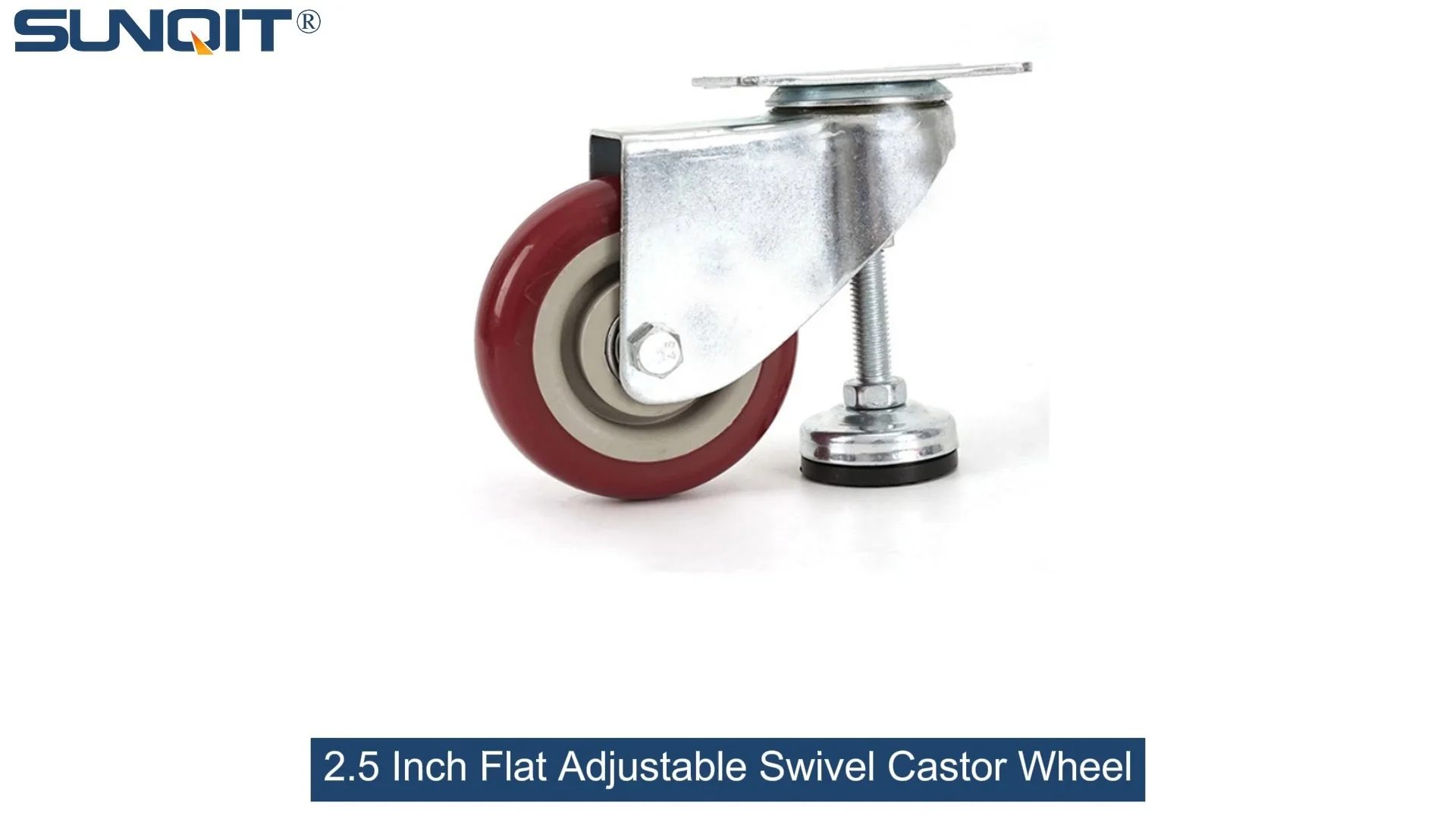
Flat Adjustable Swivel Castor Wheel
Swivel Chair Casters Ball Bearing Wheels Rubber Base with adjustable height function. Resistant to abrasion, impact and corrosion. Heavy payload can hold 80Kgs per pcs,which can make it works at a stable and smooth status.
Walk into any manufacturing facility, and you'll witness a symphony of movement: workers transporting materials, machines humming, and products flowing from one station to the next. Behind this orchestration lies a critical, often overlooked element: mobility. The ability to move tools, workbenches, and materials efficiently isn't just about speed—it's about protecting the people who power the operation. Ergonomics, the science of designing work environments to fit human capabilities, has become a cornerstone of modern manufacturing. And at the heart of ergonomic mobility solutions? Flat adjustable swivel castor wheels. These unassuming components play a pivotal role in reducing physical strain, preventing injuries, and boosting productivity. Let's explore how they transform workplaces, one smooth roll at a time.
The Ergonomics Crisis in Manufacturing: Why Mobility Matters
Manufacturing has come a long way from the assembly lines of the past, but ergonomic challenges persist. According to the Bureau of Labor Statistics, over 2.8 million nonfatal workplace injuries occurred in the U.S. manufacturing sector in 2023, with a significant portion linked to manual material handling. Repetitive motion, heavy lifting, and awkward postures—common in tasks like pushing carts, adjusting workbench heights, or maneuvering tight corners—are leading culprits. These injuries don't just harm workers; they cost companies billions in medical bills, lost productivity, and turnover.
Consider a typical scenario: A production associate spends 40 hours a week moving a turnover trolley and rack loaded with electronic components. The trolley's outdated castors are stiff, requiring significant force to push. Its height is fixed, forcing the worker to bend forward to load and unload items. By Friday, their lower back aches, their shoulders are sore, and simple tasks take longer. This isn't just a personal struggle—it's a workflow bottleneck. Enter flat adjustable swivel castor wheels: designed to ease movement, adapt to human needs, and turn strenuous tasks into seamless actions.
Flat Adjustable Swivel Castor Wheels: More Than Just "Wheels"
At first glance, castor wheels might seem like basic hardware. But flat adjustable swivel castor wheels are engineered with precision to address specific ergonomic pain points. Let's break down their key features and how they solve manufacturing's mobility challenges.
1. Adjustable Height: Aligning Work to Workers, Not the Other Way Around
One size does not fit all in manufacturing. Workers come in different heights, and tasks require varying workbench levels—whether assembling small electronics (needing a higher surface) or heavy machinery (needing a lower, stable base). Traditional fixed-height castors lock workbenches and trolleys into a single position, forcing workers to adjust their bodies instead of their tools. This misalignment leads to overreaching, hunching, or stooping—major contributors to musculoskeletal disorders (MSDs).
Flat adjustable swivel castor wheels solve this with built-in height adjustment mechanisms. Most models use a threaded stem or a lever-operated system, allowing workers to raise or lower the attached equipment (like a workbench) by 2–6 inches. Imagine a technician adjusting their workbench height in seconds to match their elbow level, reducing strain on their neck and shoulders. Or a warehouse associate raising a turnover trolley to waist height, eliminating the need to bend when loading boxes. This adaptability turns "one-size-fits-all" workspaces into personalized stations, where the environment bends to human needs.
2. Swivel Functionality: Maneuverability in Tight Spaces
Manufacturing floors are rarely open plains. They're filled with machinery, conveyor belts, and workstations, leaving narrow pathways. Pushing a cart with rigid, non-swiveling castors through these tight spots requires excessive force—workers often twist their bodies or jerk the cart, straining their backs. Swivel castors, by contrast, rotate 360 degrees, allowing the trolley or workbench to glide around obstacles with minimal effort.
The "flat" design of these castors adds another layer of precision. Unlike bulky, rounded castor housings, flat mounts sit close to the equipment base, lowering the center of gravity. This stability prevents tipping when turning, even with heavy loads. A worker moving a parts cart through an automotive assembly line can now navigate around a robot arm or squeeze between two workbenches without breaking a sweat. The result? Less physical exertion, fewer jerky movements, and a 30% reduction in time spent on material transport, according to a 2024 study by the Ergonomics Research Institute.
3. Smooth Rolling: Reducing Push/Pull Force
Ever tried pushing a cart with stuck wheels? It's like dragging a boulder. Traditional castors often have rough bearings or low-quality wheels that create friction, requiring up to 50 pounds of force to move a loaded cart. Over time, this repeated effort strains muscles and joints. Flat adjustable swivel castor wheels combat this with high-performance components: precision ball bearings reduce rolling resistance, while treaded polyurethane or rubber wheels grip floors without sticking. The result? A cart that glides with as little as 10 pounds of force—light enough for anyone to push, regardless of strength.
4. Integrated Braking: Safety When Stability Matters
Mobility is essential, but so is stability. A trolley rolling unexpectedly or a workbench shifting during assembly can lead to accidents. Flat adjustable swivel castor wheels often include caster accessories like dual-lock brakes, which lock both the wheel and the swivel joint. With a simple foot pedal press, the castor becomes immobile, securing the equipment in place. This feature is a game-changer during loading/unloading or precision tasks, giving workers confidence that their tools won't move when they need them to stay put.

From Workbench to Trolley: Integrating Flat Adjustable Castors into Manufacturing Tools
Flat adjustable swivel castor wheels don't exist in isolation—they enhance the ergonomics of the equipment they're attached to. Let's explore how they transform two staples of manufacturing: workbenches and turnover trolleys.
Workbenches: The Heart of the Assembly Line
A workbench is more than a table; it's a command center. Whether used for electronics assembly, quality inspection, or packaging, it needs to adapt to the task and the worker. Pairing a workbench with flat adjustable swivel castor wheels turns it into a mobile, height-customizable hub. For example, in an electronics plant, a technician can lower the bench to inspect circuit boards at eye level, then raise it to assemble components standing up. When the task changes, they can swivel the bench out of the way or roll it to a new station—no heavy lifting required.
Turnover Trolley and Rack: Moving Materials Without the Strain
Turnover trolleys and racks are the workhorses of material transport, shuttling everything from raw materials to finished products. With flat adjustable swivel castor wheels, these trolleys become extensions of the worker, not obstacles. Imagine a warehouse where a trolley loaded with 500 pounds of metal parts glides across concrete floors with a gentle push. Its height adjusts to match the storage shelf, so the worker never has to reach above their shoulders or bend below their knees. Brakes lock it in place during loading, and swivel castors make navigating narrow aisles as easy as turning a doorknob. This isn't just convenience—it's a revolution in how workers interact with their tools.

Traditional vs. Flat Adjustable Swivel Castors: A Comparison
| Feature | Traditional Castors | Flat Adjustable Swivel Castor Wheels |
|---|---|---|
| Height Adjustment | Fixed; no adaptability | Adjustable (2–6 inches) via threaded stem or lever |
| Maneuverability | Stiff swivel; requires force to turn | 360° smooth swivel; minimal push force |
| Stability | Bulky design; higher risk of tipping | Flat, low-profile mount; lower center of gravity |
| Safety Features | Basic or no brakes | Dual-lock brakes (wheel + swivel joint) |
| Ergonomic Impact | High physical strain; risk of MSDs | Reduced effort; customizable to worker needs |

Supporting Lean System Goals: Ergonomics as a Catalyst for Efficiency
Lean manufacturing, focused on eliminating waste and maximizing value, has long emphasized workflow optimization. What many overlook is that human effort is a form of waste when misdirected. Flat adjustable swivel castor wheels align perfectly with lean principles by reducing "non-value-added" work—like struggling with a stiff cart or adjusting a workbench with a wrench. When workers spend less energy on movement, they channel more focus into assembling, inspecting, and innovating.
Consider a lean initiative to reduce changeover time on an assembly line. By equipping workbenches with flat adjustable swivel castor wheels, workers can reconfigure the line in minutes instead of hours. No more disassembling and reassembling stations—just roll, adjust, and lock. This flexibility cuts downtime, increases throughput, and aligns with the lean mantra of "continuous improvement." Ergonomics and lean, it turns out, are two sides of the same coin: both prioritize efficiency, but one centers on machines, and the other on people.
Real-World Impact: Stories from the Factory Floor
Numbers tell part of the story, but real change is felt in the daily experiences of workers. Let's look at two examples of how flat adjustable swivel castor wheels transformed manufacturing environments:
Case 1: Automotive Assembly Plant
A mid-sized automotive parts manufacturer was struggling with high turnover in its material handling department. Exit interviews cited "back pain" and "exhausting work" as top reasons. The company replaced traditional castors on 50 turnover trolleys with flat adjustable swivel models. Within three months, reports of back strain dropped by 45%. Workers noted that pushing trolleys now required half the effort, and adjustable heights meant loading/unloading took 20% less time. Turnover in the department decreased by 30%—a clear win for both workers and the bottom line.
Case 2: Electronics Manufacturing Facility
An electronics plant producing smartphones was facing delays in its quality control (QC) process. QC workbenches were fixed in place, so inspectors had to carry devices back and forth from assembly lines. The plant installed flat adjustable swivel castor wheels on 10 workbenches, allowing inspectors to roll directly to the assembly stations. Adjustable heights let inspectors customize their workspace, reducing eye strain from hunching over screens. QC throughput increased by 25%, and inspectors reported feeling "less fatigued" at the end of shifts.
Choosing the Right Flat Adjustable Swivel Castor Wheels: Key Considerations
Not all flat adjustable swivel castor wheels are created equal. To maximize ergonomic benefits, manufacturers should consider these factors:
- Load Capacity: Match the castor to the heaviest load it will carry. Overloading leads to premature wear and reduced maneuverability.
- Floor Type: Soft wheels (rubber, polyurethane) work best on concrete or tile to reduce noise and floor damage. Hard wheels (steel) are better for rough surfaces like asphalt.
- Adjustment Range: Ensure the height range fits your workers' needs (typically 2–6 inches for most manufacturing tasks).
- Brake Type: Dual-lock brakes (wheel + swivel) offer the most stability for tasks requiring precision.
- Environmental Resistance: For harsh environments (e.g., factories with oil or chemicals), choose castors with corrosion-resistant materials like stainless steel.
The Future of Ergonomic Mobility: Innovation in Castor Design
As manufacturing evolves, so do flat adjustable swivel castor wheels. Emerging trends include smart castors with sensors that monitor load weight and alert workers to overloading, and self-lubricating bearings that reduce maintenance. Some manufacturers are even integrating ergonomic data—like push force and adjustment frequency—into IoT systems, allowing facilities to optimize workflows further.
But perhaps the most exciting innovation is the focus on inclusivity. Modern castor designs prioritize accessibility, ensuring workers of all physical abilities can operate equipment with ease. This isn't just about compliance; it's about creating workplaces where everyone can thrive.
Conclusion: Rolling Toward a Healthier, More Productive Future
Flat adjustable swivel castor wheels are more than a mobility solution—they're a statement about valuing workers. In an industry where the human element is irreplaceable, these small but mighty components bridge the gap between efficiency and well-being. They turn strenuous tasks into smooth actions, reduce injuries, and empower workers to focus on what they do best: building, creating, and innovating.
So the next time you walk through a manufacturing facility, take a moment to notice the wheels beneath the workbenches and trolleys. Chances are, the ones making the biggest difference are flat, adjustable, and swiveling—quietly revolutionizing ergonomics, one roll at a time.