- Company Articles
- Products and Technology
- Application Cases
- How Flat Adjustable Swivel Castor Wheels Support Quick Changeovers in Lean Production

How Flat Adjustable Swivel Castor Wheels Support Quick Changeovers in Lean Production
Related Product
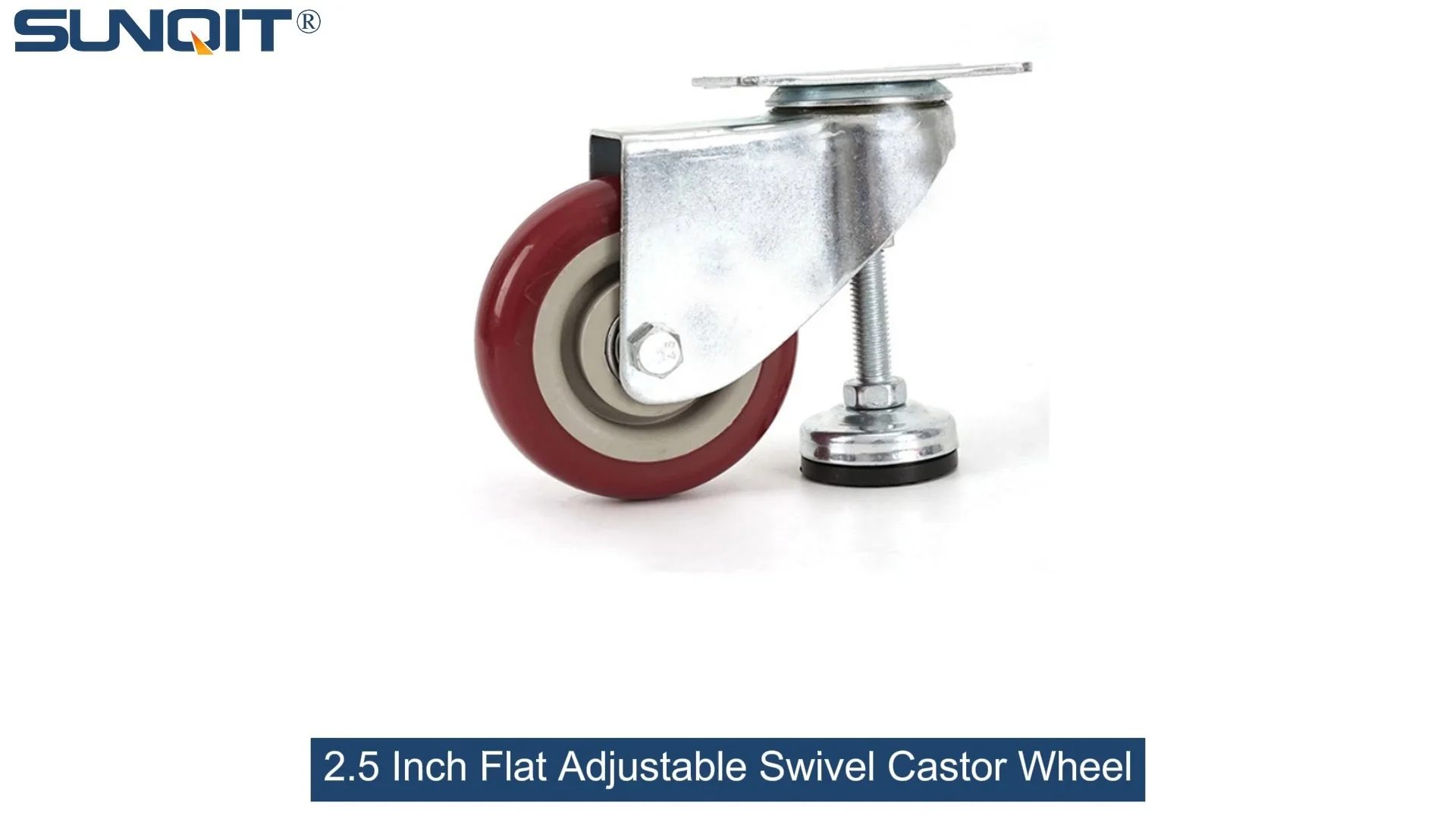
Flat Adjustable Swivel Castor Wheel
Swivel Chair Casters Ball Bearing Wheels Rubber Base with adjustable height function. Resistant to abrasion, impact and corrosion. Heavy payload can hold 80Kgs per pcs,which can make it works at a stable and smooth status.
In the fast-paced world of manufacturing, where every second counts and waste is the enemy, lean production has become more than just a methodology—it's a mindset. At its core, lean is about creating more value with less effort, and one of its most critical battlegrounds is the "quick changeover." Whether you're switching a production line from assembling smartphones to tablets, reconfiguring a warehouse for a new product launch, or adapting a workstation to a different task, the time spent on these transitions directly impacts productivity, costs, and customer satisfaction. Enter the unsung hero of this process: flat adjustable swivel castor wheels. These small but mighty components are quietly revolutionizing how teams achieve seamless, rapid changeovers, turning once-frustrating delays into opportunities for efficiency. Let's dive into how these unassuming wheels are becoming a cornerstone of modern lean systems.
1. Lean Production and the Race Against Changeover Time
To understand why flat adjustable swivel castor wheels matter, we first need to grasp the stakes of quick changeovers in lean production. Lean, born from the Toyota Production System, thrives on eliminating "muda" (waste)—and one of the most glaring forms of waste is downtime . When a production line stops to retool, rearrange workstations, or shift materials, every minute of inactivity eats into profits. This is where SMED (Single-Minute Exchange of Die), a lean technique focused on reducing changeover time to under 10 minutes, comes into play. SMED isn't just about speed; it's about predictability and flexibility . A line that can switch between products in 5 minutes instead of 30 isn't just faster—it's more adaptable to customer demands, smaller batch sizes, and market fluctuations.
But here's the catch: SMED and other lean strategies rely heavily on the tools and equipment that teams use daily. If your workbench is bolted to the floor, if your material racks are too heavy to move, or if your turnover trolleys get stuck on uneven concrete, even the best SMED training won't save you. This is where mobility and adjustability become make-or-break factors. Equipment that can be easily repositioned, leveled, and secured isn't just "convenient"—it's a strategic asset. And that's exactly what flat adjustable swivel castor wheels deliver.
2. What Are Flat Adjustable Swivel Castor Wheels, Anyway?
Before we explore their impact, let's get clear on what makes these castors unique. At first glance, they might look like any other wheeled component, but their design is purpose-built for the demands of lean environments. Let's break down their key features:
Swivel Capability: 360-Degree Freedom
Unlike fixed castors (which only roll forward and backward) or rigid wheels, swivel castors rotate 360 degrees, allowing equipment to move in any direction. This isn't just about maneuverability—it's about precision. In tight production spaces, where every inch counts, being able to pivot a heavy workbench or nudge a turnover trolley into exactly the right spot without backtracking saves precious time during changeovers.
Flat Design: Stability Meets Low Profile
The "flat" in their name refers to their mounting plate, which sits close to the ground. This low profile lowers the center of gravity of the equipment they're attached to, reducing the risk of tipping—critical when moving heavy loads like tool cabinets or fully stocked material racks. A lower center of gravity also means less strain on employees pushing or pulling equipment, cutting down on fatigue and injury risks.
Adjustable Height: Leveling the Playing Field (Literally)
Factories and warehouses aren't known for perfectly smooth floors. Cracks, uneven concrete, or worn tiles can turn a "stable" workstation into a wobbly hazard. Flat adjustable castors solve this with built-in height adjustment—usually a threaded stem or a screw mechanism that lets users raise or lower the wheel by a few centimeters. This ensures that even on rough terrain, a workbench stays level, a conveyor aligns perfectly with a production line, and a material rack doesn't shift during use. No more shimming with scraps of wood or metal; just a quick twist, and the job is done.
Locking Mechanisms: From Mobility to Security
Mobility is useless if equipment moves when it shouldn't. That's why most flat adjustable swivel castors come with dual-locking brakes: one to lock the wheel (preventing rolling) and another to lock the swivel (preventing rotation). This "double lock" turns a mobile workstation into a rock-solid platform in seconds, crucial for tasks that require precision—like assembling delicate electronics or packing fragile goods.

3. How These Wheels Transform Quick Changeovers: Real-World Impact
Now, let's connect the dots: how do these features directly support faster, smoother changeovers in lean systems? Let's walk through three common scenarios where flat adjustable swivel castor wheels make all the difference.
Scenario 1: Reconfiguring a Lean Pipe Workbench for a New Product
Imagine a team on an electronics assembly line that needs to switch from assembling smartwatches to fitness trackers. The lean pipe workbench they use is equipped with tool holders, bins for small parts, and a static dissipative (ESD) top to protect sensitive components. In the "old days," this workbench might have been bolted to the floor, requiring a maintenance crew with wrenches to move it. Even if it had basic casters, they might not swivel smoothly, or the workbench might wobble on the factory's uneven floor, risking damage to parts.
With flat adjustable swivel castors? The process is night and day. First, the team unlocks the brakes—no tools needed. The swivel wheels let two people easily pivot the workbench out of the way, making space for a new fixture. Once the new fixture is in place, they roll the workbench back, adjust the height to align with the fixture (thanks to the adjustable stem), and lock the brakes. Total time? Under 5 minutes. Compare that to 30 minutes with fixed equipment, and the impact on daily production becomes clear. What's more, the ESD top stays level, so sensitive parts aren't damaged by static or wobbling—a small detail that prevents costly rework.
Scenario 2: Adapting Turnover Trolley and Rack Systems for Seasonal Demand
Warehouses and distribution centers face their own changeover challenges, especially with seasonal spikes. A toy manufacturer, for example, might need to shift from storing summer outdoor toys to winter holiday gifts. This often means rearranging turnover trolley and rack systems to accommodate different box sizes, weights, and picking routes. Without the right casters, these trolleys and racks can be a nightmare: heavy steel racks might scratch floors, lightweight plastic trolleys might tip over with uneven loads, and both could get stuck on floor seams or cracks.
Flat adjustable swivel castors solve these issues in three ways. First, their swivel design lets operators navigate tight aisles and around corners without having to "shuffle" the trolley back and forth. Second, the adjustable height ensures that racks sit level, even if the warehouse floor slopes slightly, preventing boxes from sliding off. Third, the locking brakes keep trolleys stationary during loading/unloading, reducing the risk of accidents. One warehouse manager I spoke with recently shared that after upgrading to these castors, their seasonal rack reconfiguration time dropped by 40%—and employee complaints about back pain from pushing heavy trolleys decreased significantly.
Scenario 3: Balancing Workstations Across Shifts
In many lean facilities, workstations are shared across shifts. The morning shift might use a workstation for kitting (gathering parts for assembly), while the afternoon shift uses it for quality inspection. This requires quick, daily changeovers. Without adjustable casters, this could mean spending 15 minutes each shift leveling the workstation, securing tools, or fixing wobbles caused by the previous shift's adjustments. With flat adjustable swivel castors, the afternoon shift lead can simply unlock the brakes, roll the workstation to the inspection area, adjust the height to match their team's ergonomic needs (e.g., raising it by 2 inches for taller inspectors), and lock it down. No tools, no hassle, no wasted time.

4. Traditional vs. Flat Adjustable Swivel Castors: A Comparison
To really see the difference, let's compare flat adjustable swivel castors with two common alternatives: fixed casters and basic non-adjustable swivel casters. The table below breaks down their impact on changeover time, safety, and efficiency.
| Feature | Fixed Casters | Basic Swivel Casters (Non-Adjustable) | Flat Adjustable Swivel Castors |
|---|---|---|---|
| Mobility | Only rolls forward/backward; hard to maneuver in tight spaces. | Swivels, but may get stuck on uneven floors; limited precision. | 360° swivel + smooth rolling; easy to pivot and position in tight areas. |
| Adjustability | No height adjustment; requires shims for leveling. | No height adjustment; wobbles on uneven floors. | Threaded stem for easy height adjustment; levels in seconds. |
| Stability | Stable when fixed, but immobile; no flexibility. | Stable only on flat floors; risk of tipping with heavy loads. | Low center of gravity + double locking brakes; stable even with uneven loads. |
| Impact on Changeover Time | High: Requires tools/crew to move; 30–60 minutes per changeover. | Moderate: Maneuverable but time lost to leveling/wobbles; 15–20 minutes. | Low: Moved in minutes; no leveling delays; 5–10 minutes. |
| Safety Risk | High: Heavy lifting/tool use increases injury risk. | Moderate: Wobbling equipment can cause spills/strains. | Low: Easy to move; stable; locking brakes prevent accidents. |

5. Choosing the Right Castors: Key Considerations for Lean Teams
Not all flat adjustable swivel castor wheels are created equal. To maximize their impact on changeovers, lean teams need to choose the right ones for their specific needs. Here are the top factors to consider:
Load Capacity: Match the Wheel to the Work
Every castor has a maximum load capacity, usually listed per wheel. A workbench loaded with tools, parts, and a monitor might weigh 500 lbs, so you'll need castors rated for at least 150 lbs each (since most workbenches have 4 castors). Overloading castors leads to premature wear, wobbly equipment, and even accidents. When in doubt, overestimate —it's better to have a castor that can handle 200 lbs than one that's maxed out at 150.
Floor Type: Protect Your Floors (and Your Wheels)
Concrete floors in factories, polished tile in warehouses, and epoxy coatings in cleanrooms all demand different wheel materials. Rubber wheels are great for concrete (they absorb shock and reduce noise), while polyurethane wheels work well on tile (they're non-marking and glide smoothly). Avoid hard plastic wheels on rough concrete—they'll wear quickly and scratch the floor.
Environmental Factors: Don't Overlook the Details
If your facility deals with oils, chemicals, or extreme temperatures (like a food processing plant with washdowns), look for castors with corrosion-resistant materials (stainless steel frames, chemical-resistant wheels). For cold storage areas, ensure the wheel material won't harden or crack in low temps. These details might seem small, but they prevent costly replacements and downtime.
Locking Mechanisms: Safety First
As mentioned earlier, double-locking brakes (wheel and swivel locks) are non-negotiable for most lean applications. But not all locks are created equal. Some use foot pedals that are easy to engage even with heavy boots; others require a hand lever. Test the locks in your facility—if operators struggle to engage them quickly, they'll skip locking altogether, increasing risk.
6. Beyond Changeovers: The Ripple Effects on Lean Systems
The benefits of flat adjustable swivel castor wheels extend far beyond faster changeovers. They create a ripple effect across the entire lean system:
- Improved 5S Compliance: 5S (Sort, Set in Order, Shine, Standardize, Sustain) relies on a clean, organized workspace. When equipment is easy to move, teams are more likely to "set in order" at the end of shifts—no more leaving tools on the floor because the workbench was too heavy to push aside for cleaning.
- Reduced Waste of Motion: In lean, "motion" waste refers to unnecessary movement by employees. Heavy, hard-to-move equipment forces operators to walk farther, bend awkwardly, or strain to push trolleys. Flat adjustable castors cut this waste by making movement effortless.
- Empowered Teams: When operators can reposition their own workbenches or adjust their material racks without waiting for maintenance, they feel more in control of their workspace. This boosts engagement and ownership—key drivers of continuous improvement in lean systems.
7. Conclusion: Small Wheels, Big Leaps in Lean Excellence
In the grand scheme of lean production, flat adjustable swivel castor wheels might seem like a minor detail. But as any lean practitioner knows, excellence lies in the details. A wheel that swivels smoothly, adjusts easily, and locks securely isn't just a "nice-to-have"—it's a catalyst for faster changeovers, safer workspaces, and more adaptable operations. It's the difference between a team that dreads changeovers and one that embraces them as opportunities to shine.
As lean systems evolve to meet the demands of shorter product lifecycles and more personalized customer needs, the ability to adapt quickly will only grow in importance. And in that journey, flat adjustable swivel castor wheels will continue to play a quiet but critical role—proving that sometimes, the smallest components drive the biggest leaps forward.
So, the next time you walk through a lean facility and see a workbench glide into place, a turnover trolley navigate a tight corner, or a material rack lock down with a satisfying "click," take a moment to look down. Chances are, you'll find the unsung heroes: flat adjustable swivel castor wheels, quietly powering the future of lean production.