- Company Articles
- Products and Technology
- Solution
- How Flat Adjustable Swivel Castor Wheels Support Sustainable Lean Manufacturing

How Flat Adjustable Swivel Castor Wheels Support Sustainable Lean Manufacturing
Related Product
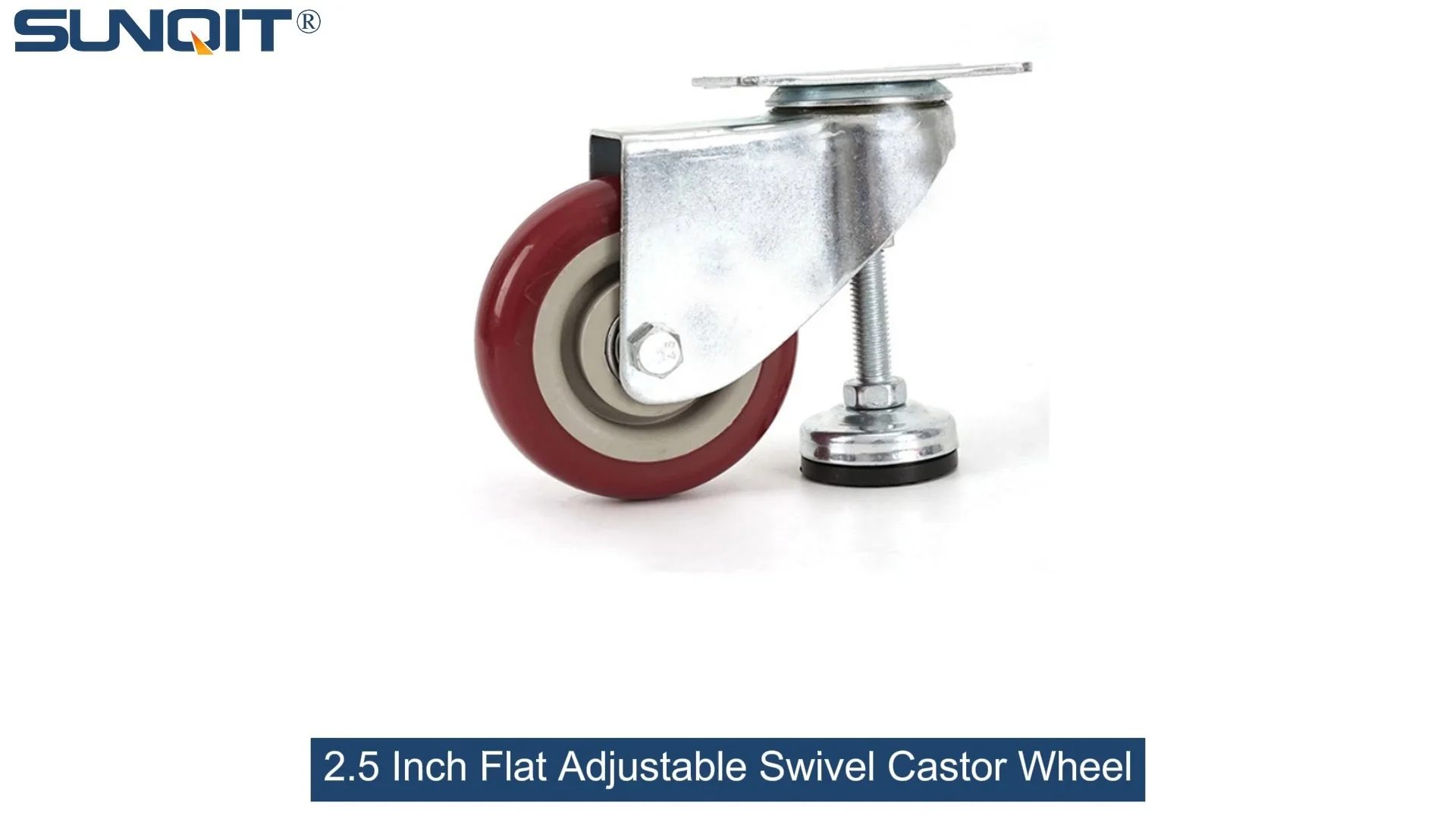
Flat Adjustable Swivel Castor Wheel
Swivel Chair Casters Ball Bearing Wheels Rubber Base with adjustable height function. Resistant to abrasion, impact and corrosion. Heavy payload can hold 80Kgs per pcs,which can make it works at a stable and smooth status.
The unsung heroes of mobility, flexibility, and waste reduction in modern production lines
1. The Lean Manufacturing Revolution: Why Mobility Matters
Lean manufacturing isn't just a buzzword—it's a mindset that has transformed factory floors, warehouses, and production facilities worldwide. At its core, lean is about creating more value with less waste: less time, less effort, less resources, and less environmental impact. Yet, for all the talk of "value streams" and "continuous improvement," one critical element often flies under the radar: mobility . How easily can your equipment adapt to changing demands? How smoothly can materials flow from one station to the next? How quickly can your team reconfigure a workspace when a new order comes in?
These questions get to the heart of lean success. Rigid, stationary workbenches, fixed material racks, and immovable assembly lines create bottlenecks, increase labor fatigue, and trap teams in outdated workflows. The solution? Smart mobility tools that turn rigidity into flexibility. And among these tools, few are as quietly powerful as flat adjustable swivel castor wheels .
These small but mighty components aren't just "wheels on a stick." They're precision-engineered mobility solutions designed to align with lean principles—reducing waste, enhancing adaptability, and supporting sustainable operations. In this article, we'll explore how flat adjustable swivel castor wheels act as a cornerstone of lean system excellence, from the factory floor to the bottom line.
2. Lean Manufacturing Principles: The Foundation of Efficiency
Before diving into castors, let's ground ourselves in what lean manufacturing truly demands. Developed by Toyota in the mid-20th century, the Toyota Production System (TPS)—the blueprint for modern lean—revolves around five core principles: Value (defining what customers truly need), Value Stream (mapping the steps to deliver that value), Flow (ensuring smooth, uninterrupted movement of materials and processes), Pull (producing only what's needed, when it's needed), and Perfection (constantly improving to eliminate waste).
The enemy here is "muda"—the Japanese term for waste. There are eight types of muda, including transportation waste (unnecessary movement of materials), motion waste (excess movement by workers), and waiting waste (idle time due to bottlenecks). These wastes don't just drain profits; they also increase energy use, material consumption, and worker burnout—all antithetical to sustainability.
Consider a typical scenario without proper mobility: A worker spends 15 minutes pushing a heavy, unbalanced trolley across the factory floor. A workbench is bolted to the ground, so when a new machine is added, the team must disassemble and rebuild the entire station. A material rack sits inches too low, forcing employees to bend awkwardly to retrieve parts. Each of these issues violates lean principles, creating waste that erodes efficiency and sustainability.

3. The Science of Flat Adjustable Swivel Castor Wheels: Beyond Basic Mobility
To understand why these castors are game-changers, let's break down their design. Unlike standard fixed wheels or basic swivel castors, flat adjustable swivel castor wheels combine three critical features: smooth swivel movement , height adjustability , and stable flat mounting . Here's how each component contributes to lean success:
Swivel Mechanism: The castor's ability to rotate 360 degrees allows equipment to maneuver tight corners, navigate narrow aisles, and reposition with minimal effort. This eliminates the need for "shuffling" heavy objects or making multiple trips—directly reducing motion and transportation waste.
Adjustable Height: A key differentiator. Many models feature a threaded stem or lever that lets users raise or lower the castor by up to 50mm. This isn't just about convenience; it ensures workbenches, racks, or trolleys sit level on uneven floors, preventing material slippage and reducing strain on workers' backs. It also lets teams align equipment heights with other tools (e.g., conveyor belts, assembly lines), creating seamless workflows.
Flat Mounting Base: Unlike stem-mounted castors that attach via a single rod, flat adjustable castors use a wide, flat plate with multiple bolt holes. This distributes weight evenly, increasing stability and reducing wear on both the castor and the equipment it supports. For heavy-duty applications—like a loaded lean pipe workbench —this stability is non-negotiable.
Durable Materials: High-quality castors use wheel materials like polyurethane (PU), rubber, or nylon. PU wheels, for example, offer a balance of grip, floor protection, and noise reduction—critical for maintaining a quiet, safe workspace. Stainless steel components resist corrosion, making them ideal for cleanrooms or food-processing environments.
Caster Accessories: Features like brake levers, locking pins, or floor-friendly treads enhance functionality. A reliable brake, for instance, keeps equipment stationary during use, then releases easily when repositioning is needed—no more fumbling with separate chocks or clamps.

4. How Flat Adjustable Swivel Castors Drive Lean System Goals
Now, let's connect the dots: How do these design features translate to tangible lean benefits? Let's map them to key lean principles and sustainability goals.
Reducing Waste (Muda)
Waste reduction is the cornerstone of lean, and flat adjustable castors attack multiple waste types:
Transportation Waste: A flow rack equipped with these castors can glide from the warehouse to the assembly line, eliminating the need for forklifts or manual carrying. A study by the Lean Enterprise Institute found that mobility solutions reduce material transportation time by up to 35% in manufacturing settings.
Motion Waste: Adjustable height ensures workers don't bend, reach, or stoop excessively. OSHA estimates that ergonomic improvements (like proper workstation height) reduce musculoskeletal injuries by 25-45%, cutting downtime and workers' compensation costs.
Waiting Waste: Quick reconfiguration means teams spend less time waiting for equipment to be moved or adjusted. A lean pipe workbench with castors can shift from one production run to another in minutes, not hours.
Enhancing Flexibility (Heijunka)
Lean thrives on "heijunka"—or production leveling—where workflows adapt to demand fluctuations. Flat adjustable castors make adaptability possible. For example:
A electronics manufacturer experiences a sudden surge in demand for a new smartphone model. With standard fixed workbenches, reconfiguring the assembly line would take days. But with workbenches mounted on flat adjustable swivel castors, the team can rearrange stations, add extra flow rack units, and realign conveyor paths in hours. This agility reduces lead times and ensures the manufacturer meets customer deadlines without overproducing (another form of waste).
Supporting Sustainability
Sustainability and lean go hand-in-hand—both aim to maximize value while minimizing resource use. Flat adjustable castors contribute to sustainability in three ways:
Energy Efficiency: Easier mobility means less energy spent moving equipment. A single worker can push a 500kg trolley with minimal effort, reducing reliance on electric forklifts or pallet jacks.
Longevity: Durable materials and replaceable parts (e.g., wheels, brakes) extend the castor's lifespan. Many suppliers offer warranties of 5+ years, reducing the need for frequent replacements and lowering waste from discarded equipment.
Material Optimization: By enabling multi-purpose use (e.g., a trolley that serves as both a transport tool and a temporary workbench), these castors reduce the need for excess equipment, cutting down on raw material consumption.

5. Real-World Applications: From Workbenches to Warehouses
Let's look at how these castors perform in common lean environments:
Lean Pipe Workbenches
A lean pipe workbench —built with modular aluminum or steel pipes and joints—is a staple of lean setups. When paired with flat adjustable swivel castors, it becomes a mobile command center. For example, in an automotive parts plant, workers use these workbenches to assemble brake components. The castors allow the bench to move to the parts storage area, then to the testing station, eliminating back-and-forth trips. The adjustable height ensures the bench aligns with both the storage bins and the testing machine, creating a continuous flow.
Flow Racks and Material Handling
Flow racks use gravity or rollers to feed materials to workers. Adding flat adjustable castors turns them into "mobile supermarkets"—stocked with parts and positioned directly at the point of use. In a pharmaceutical facility, a flow rack with these castors might hold vials during packaging, then move to the labeling station, reducing the risk of contamination from excessive handling.
Turnover Trolleys and Assembly Lines
Turnover trolleys transport finished goods or raw materials between stations. Without proper castors, they're cumbersome and unstable. Flat adjustable castors solve this: A trolley loaded with circuit boards can glide smoothly from SMT (surface-mount technology) machines to inspection areas, with the adjustable height ensuring workers don't have to lift heavy trays. The swivel function allows it to navigate around conveyor belts and other obstacles with ease.
6. Comparing Castor Types: Why Flat Adjustable Swivel Castors Lead the Pack
Not all castors are created equal. To highlight the advantages of flat adjustable swivel models, let's compare them to common alternatives:
| Castor Type | Maneuverability | Stability | Height Adjustment | Best For | Lean Compatibility |
|---|---|---|---|---|---|
| Fixed Castors | Low (only moves forward/backward) | High (rigid direction) | None | Heavy, straight-path transport | Low (creates motion waste) |
| Basic Swivel Castors | High (360° rotation) | Medium (single stem mount) | None | Light trolleys, carts | Medium (lacks adjustability) |
| Flat Adjustable Swivel Castors | High (360° rotation + smooth glide) | High (flat plate mount + weight distribution) | Yes (up to 50mm) | Workbenches, flow racks, heavy trolleys | High (reduces waste, enhances flexibility) |
The table tells a clear story: flat adjustable swivel castors balance maneuverability, stability, and adaptability—three traits critical for lean success. Basic swivel castors might offer mobility, but they lack the stability for heavy loads or the adjustability to align with lean workflows. Fixed castors, meanwhile, are too rigid to support reconfigurable environments.
7. Choosing the Right Castor: A Guide for Lean System Suppliers
Selecting the right flat adjustable swivel castor requires considering your specific needs. Here's what to prioritize:
Load Capacity: Calculate the maximum weight the equipment will carry (including the equipment itself). Most suppliers list capacities from 100kg to 1500kg per castor. For a lean pipe workbench with tools and materials, aim for 300-500kg per castor.
Floor Type: Smooth concrete floors work well with polyurethane wheels, while rough surfaces may require rubber or nylon for better grip. Avoid hard plastic wheels on delicate floors (e.g., vinyl) to prevent scratches.
Environmental Conditions: In wet or corrosive environments (e.g., food processing), choose stainless steel frames and sealed bearings. For cleanrooms, opt for non-marking, low-particulate wheels.
Brake Type: select between total-lock (locks both wheel and swivel) or wheel-only brakes. Total-lock is ideal for workbenches that need to stay stationary during use.
Supplier Support: Partner with a lean system supplier that offers technical guidance, replacement parts, and warranties. A reliable supplier will help you customize castors to your equipment (e.g., matching hole patterns for lean pipe workbenches).
8. The Future of Lean Mobility: Innovation in Castor Design
As lean manufacturing evolves, so too do the tools that support it. Emerging trends in castor design include:
Smart Castors: Embedded sensors that track movement, monitor wheel wear, or alert teams to maintenance needs. Imagine a castor that sends a notification when its brake pad is worn—preventing unexpected downtime.
Eco-Friendly Materials: Suppliers are developing wheels made from recycled rubber or plant-based plastics, aligning with circular economy goals.
Ergonomic Upgrades: Soft-touch brake levers, anti-vibration mounts, and noise-reducing bearings to further enhance worker comfort.
9. Conclusion: Small Wheels, Big Impact on Lean Sustainability
Flat adjustable swivel castor wheels may not grab headlines, but they are the unsung heroes of lean manufacturing. By combining maneuverability, stability, and adjustability, they address core lean challenges—reducing waste, enhancing flexibility, and supporting sustainable operations. From the lean pipe workbench on the assembly line to the flow rack in the warehouse, these castors turn static workspaces into dynamic, efficient ecosystems.
As manufacturers strive to do more with less, the choice of mobility tools becomes critical. Investing in high-quality flat adjustable swivel castors isn't just about buying "wheels"—it's about investing in a lean system that adapts, endures, and delivers value for years to come. After all, in lean manufacturing, even the smallest components can drive the biggest results.