- Company Articles
- Products and Technology
- Product knowledge
- How Flat Rigid Castor Wheels Contribute to Sustainable Manufacturing Practices

How Flat Rigid Castor Wheels Contribute to Sustainable Manufacturing Practices
Related Product
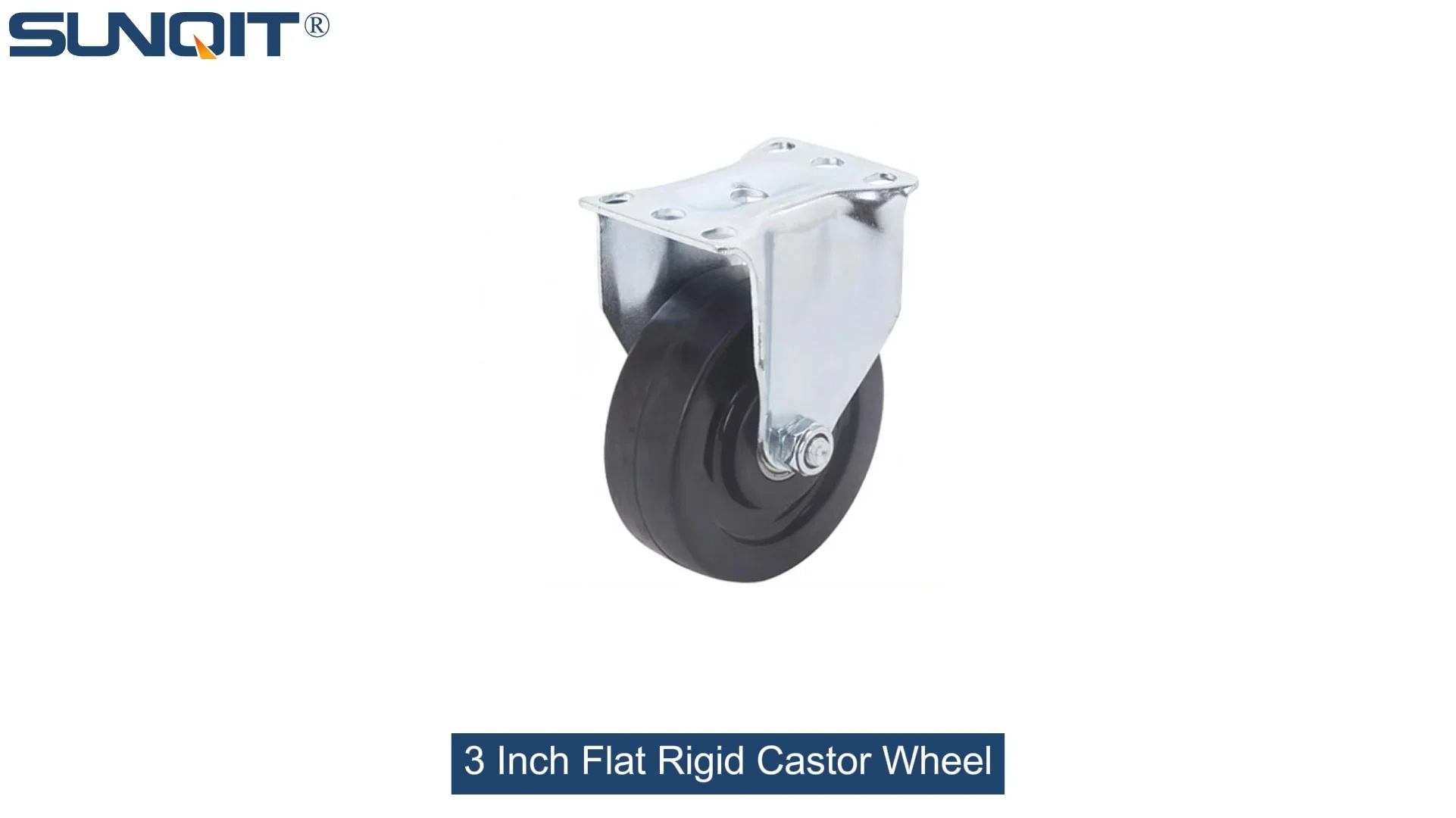
Flat Rigid Castor Wheel
Chair Casters Ball Bearing Wheels Rubber Base. Resistant to abrasion, impact and corrosion. Heavy payload can hold 70Kgs per pcs,which can make it works at a stable and smooth status.
In an era where industries worldwide are racing to reduce their environmental footprint, sustainable manufacturing has evolved from a buzzword to a core business imperative. From optimizing energy use to minimizing waste and embracing circular economy principles, manufacturers are reimagining every aspect of their operations—including the often-overlooked components that keep production lines moving. Among these unsung heroes are flat rigid castor wheels: simple, sturdy, and surprisingly impactful tools that play a quiet yet critical role in driving sustainability forward. In this article, we'll explore how these unassuming wheels are transforming material handling, reducing environmental impact, and supporting the broader goals of lean manufacturing systems.
1. The Rise of Sustainable Manufacturing: A Call for Smarter Solutions
Sustainable manufacturing isn't just about "going green"—it's about building resilient, efficient operations that balance profitability with planetary health. Today's manufacturers face mounting pressure from regulators, consumers, and investors to cut carbon emissions, reduce waste, and conserve resources. According to the United Nations Industrial Development Organization (UNIDO), the manufacturing sector accounts for approximately 30% of global energy consumption and 20% of greenhouse gas emissions. These statistics underscore the urgent need for innovations that make production processes more eco-friendly.
At the heart of this shift is the recognition that sustainability and efficiency go hand in hand. By minimizing waste, optimizing energy use, and extending the lifespan of equipment, manufacturers can lower costs while reducing their environmental impact. This is where tools like flat rigid castor wheels enter the picture. Though small in size, they are integral to material handling—an area ripe for sustainability gains. From moving raw materials across factory floors to transporting finished goods, the way we handle materials directly affects energy use, waste generation, and operational efficiency.
2. Understanding Flat Rigid Castor Wheels: More Than Just "Wheels on a Cart"
Before diving into their sustainability benefits, let's clarify what flat rigid castor wheels are—and how they differ from other casters. Unlike swivel casters, which rotate 360 degrees for maneuverability, rigid casters are fixed in a straight line, designed to move forward and backward along a predictable path. The "flat" designation refers to their low-profile, stable base, which distributes weight evenly and reduces the risk of tipping. Typically made from durable materials like steel, aluminum, or reinforced plastics, these wheels are built to withstand heavy loads, frequent use, and harsh industrial environments.
What sets flat rigid castor wheels apart is their simplicity. Without the complex swivel mechanisms or ball bearings of their swivel counterparts, they have fewer moving parts, which translates to lower maintenance needs and longer lifespans. This simplicity is key to their sustainability credentials. But to fully appreciate their impact, we need to look at how they integrate with broader manufacturing systems—particularly lean systems, which prioritize waste reduction and continuous improvement.

3. The Sustainability Impact: 5 Ways Flat Rigid Castor Wheels Drive Change
3.1 Energy Efficiency in Material Handling
One of the most direct ways flat rigid castor wheels contribute to sustainability is by reducing energy consumption in material handling. In traditional setups, swivel casters often require more force to move, especially when loaded with heavy materials. Their rotating mechanisms create friction, and operators may waste energy maneuvering around obstacles or correcting misaligned paths. Flat rigid casters, by contrast, are designed for straight-line movement, which minimizes friction and requires less effort to push or pull. This translates to lower energy use—whether the movement is powered by human labor, electric forklifts, or automated guided vehicles (AGVs).
Consider a typical scenario: a turnover trolley and rack loaded with 500 kg of components. With swivel casters, an operator might need to exert 30% more force to move the trolley, leading to fatigue and higher energy expenditure over time. Flat rigid casters, with their fixed direction and stable base, reduce this force by up to 25%, according to industry studies. Multiply this by hundreds of daily movements across a factory, and the energy savings add up significantly—cutting both electricity costs and carbon emissions.
3.2 Durability and Reduced Replacement Cycles
Sustainability isn't just about reducing energy use—it's also about minimizing waste. Every time a caster fails and needs replacement, it creates waste in the form of discarded parts, packaging, and the resources used to manufacture a new one. Flat rigid castor wheels excel here thanks to their robust design. With fewer moving parts, there's less to break: no swivel bearings to wear out, no springs to rust, and no complex joints to loosen. This durability extends their lifespan by 2–3 times compared to standard swivel casters, which often need replacement every 6–12 months in high-use environments. A flat rigid caster, by contrast, can last 2–3 years or more with minimal maintenance.
This longevity reduces the frequency of replacements, which in turn cuts down on waste. For example, a factory using 100 trolleys equipped with swivel casters might replace 200 casters annually (assuming two per trolley). Switching to flat rigid casters could reduce that number to 60–70 replacements per year, saving hundreds of kilograms of metal, plastic, and packaging waste over a decade. Additionally, many flat rigid casters are made from recyclable materials like steel or aluminum, ensuring that even at the end of their lifespan, they can be repurposed rather than ending up in landfills.
3.3 Material Innovation: Eco-Friendly Construction
Modern flat rigid castor wheels are increasingly made with sustainable materials, further boosting their environmental credentials. Manufacturers are moving away from virgin plastics and towards recycled or biodegradable alternatives, while still maintaining strength and durability. For example, some casters use recycled steel for the frame and rubber made from plant-based oils instead of petroleum-based compounds. Others incorporate aluminum—a highly recyclable material with a low carbon footprint in production—for the wheel hubs and brackets.
Aluminum, in particular, is a standout material here. It is 100% recyclable, and recycling it uses just 5% of the energy required to produce new aluminum. This makes aluminum flat rigid casters a greener choice than those made from non-recyclable plastics or hard-to-recycle alloys. Additionally, aluminum's lightweight nature reduces the overall weight of trolleys and racks, which further lowers energy use during movement. When combined with caster accessories like recycled rubber tires or corrosion-resistant coatings, these wheels become even more sustainable.
3.4 Integration with Lean Systems: Waste Reduction by Design
Lean systems are all about eliminating waste—whether it's excess inventory, unnecessary movement, or defective products. Flat rigid castor wheels align perfectly with this philosophy by enabling more efficient material flows. In a lean manufacturing setup, every step is optimized to minimize waste, and predictable material movement is critical. Flat rigid casters, with their straight-line movement, ensure that trolleys, workbenches, and racks follow consistent paths, reducing the risk of detours, collisions, or delays. This predictability cuts down on "motion waste"—a key category in lean's "7 Wastes"—where operators spend time and energy moving materials inefficiently.
Take a workbench, for example. In an assembly line, a workbench equipped with flat rigid casters can be positioned precisely along a production line, ensuring that components are delivered exactly where they're needed, when they're needed. There's no wasted time adjusting swivel casters or realigning the bench after movement. Similarly, in a warehouse, turnover trolleys with flat rigid casters can glide smoothly along designated tracks, reducing the time spent navigating tight spaces or correcting paths. This efficiency not only boosts productivity but also reduces energy use and operator fatigue—all while supporting lean principles.
3.5 Waste Reduction in Production and Operations
Beyond their direct use, flat rigid castor wheels also contribute to waste reduction in production and maintenance. Their simple design means they require fewer raw materials to manufacture. For instance, a rigid caster might use 30% less steel than a swivel caster with a similar load capacity, thanks to the absence of a swivel housing and ball bearings. This reduction in material use lowers the environmental impact of production, from mining raw materials to manufacturing and shipping.
Maintenance is another area where waste is minimized. With fewer moving parts, flat rigid casters need less frequent lubrication, cleaning, and repairs. This reduces the use of maintenance supplies like lubricants (which can be toxic) and cleaning chemicals. It also cuts down on downtime, as there are fewer breakdowns to address. For a manufacturer, less downtime means higher productivity—and for the planet, it means fewer resources wasted on repairs and replacements.

4. Real-World Applications: From Workbenches to Turnover Trolleys
To put these benefits into context, let's look at real-world applications where flat rigid castor wheels are making a difference. In automotive manufacturing, where precision and efficiency are paramount, these wheels are used on assembly line trolleys carrying heavy engine parts. Their straight-line movement ensures that parts are delivered to workers without deviation, reducing the risk of damage (and thus waste) and cutting down on the energy needed to move them. Similarly, in electronics manufacturing, ESD workstations (which require static control) often use flat rigid casters to maintain stable positions, preventing costly static-related defects.
In warehouses, turnover trolley and rack systems equipped with flat rigid casters are revolutionizing order fulfillment. These trolleys can be loaded with goods and pushed along fixed paths to packing stations, ensuring that items are moved quickly and efficiently. The stability of flat rigid casters also reduces the risk of items falling off during transport, which minimizes product waste. Even in food and beverage production, where hygiene is critical, stainless steel flat rigid casters are used on cleaning carts and ingredient trolleys, as their simple design is easier to sanitize—reducing the need for harsh chemicals and water.

5. Comparing Traditional Casters vs. Flat Rigid Casters: A Sustainability Table
| Aspect | Traditional Swivel Casters | Flat Rigid Castor Wheels | Sustainability Benefit |
|---|---|---|---|
| Energy Use (Material Handling) | Higher (friction from swivel mechanisms) | 20–30% lower (straight-line movement, less friction) | Reduced electricity/carbon emissions |
| Lifespan | 6–12 months (high-use environments) | 2–3 years (high-use environments) | Fewer replacements, less waste |
| Material Waste (Production) | More materials (complex swivel parts) | 30% fewer materials (simpler design) | Lower resource extraction and manufacturing impact |
| Maintenance Requirements | Frequent (lubrication, swivel joint repairs) | Minimal (no swivel parts to service) | Less use of lubricants/chemicals, lower downtime |
| Recyclability | Limited (mixed materials, hard-to-recycle plastics) | High (steel, aluminum, and recycled materials) | Reduced landfill waste, circular economy support |
6. Beyond Sustainability: Additional Benefits for Manufacturers
While sustainability is a key driver, flat rigid castor wheels offer additional benefits that make them a smart investment for manufacturers. Their stability reduces the risk of workplace accidents, as there's less chance of trolleys tipping over or swiveling unexpectedly. This improves safety and lowers workers' compensation costs. Their durability also means fewer disruptions to production, as there are fewer breakdowns to address. And their compatibility with a wide range of equipment—from workbenches to heavy-duty racks—makes them a versatile solution for diverse manufacturing needs.
Cost savings are another perk. While flat rigid casters may have a slightly higher upfront cost than basic swivel casters, their longer lifespan and lower maintenance needs result in lower total cost of ownership (TCO) over time. For example, a $50 flat rigid caster that lasts 3 years costs less annually than a $30 swivel caster that needs replacement every 6 months. When multiplied across an entire factory, these savings can be substantial—funds that can be reinvested in other sustainability initiatives, like renewable energy or waste reduction programs.
7. Overcoming Challenges: When Flat Rigid Casters Are the Right Fit
It's important to note that flat rigid castor wheels aren't a one-size-fits-all solution. Their fixed direction makes them ideal for straight-line movement but less suitable for environments requiring frequent turns or tight maneuvering. In such cases, a hybrid approach—using rigid casters on straight paths and swivel casters on corners—may be optimal. However, many manufacturing facilities have predictable, linear workflows where rigid casters are the clear choice. By analyzing material flow patterns and identifying straight-line routes, manufacturers can maximize the sustainability benefits of these wheels.
Another consideration is load capacity. Flat rigid casters are designed for heavy loads, but it's crucial to select the right weight rating for the application. Overloading can shorten their lifespan and negate their sustainability benefits. Working with a reputable supplier to assess needs and choose the appropriate caster—whether steel, aluminum, or plastic—is key to ensuring long-term performance.
8. Conclusion: Small Wheels, Big Impact on Sustainability
In the grand scheme of sustainable manufacturing, flat rigid castor wheels may seem like a minor detail. But as we've explored, their impact is far-reaching. From reducing energy use and material waste to supporting lean systems and circular economy principles, these unassuming wheels are quietly driving progress toward greener, more efficient factories. They remind us that sustainability often lies in the details—in the choices we make about even the smallest components of our operations.
As manufacturers continue to prioritize sustainability, flat rigid castor wheels will likely play an increasingly important role. Their simplicity, durability, and eco-friendly design align with the core goals of modern manufacturing: to produce more with less, minimize environmental impact, and build resilient, future-ready operations. So the next time you see a trolley gliding smoothly across a factory floor, take a moment to appreciate the wheels beneath it—they might just be helping to build a more sustainable world, one straight line at a time.