- Company Articles
- Products and Technology
- Product knowledge
- How Flat Rigid Castor Wheels Enhance Workbench E Stability in 3C Assembly

How Flat Rigid Castor Wheels Enhance Workbench E Stability in 3C Assembly
Related Product
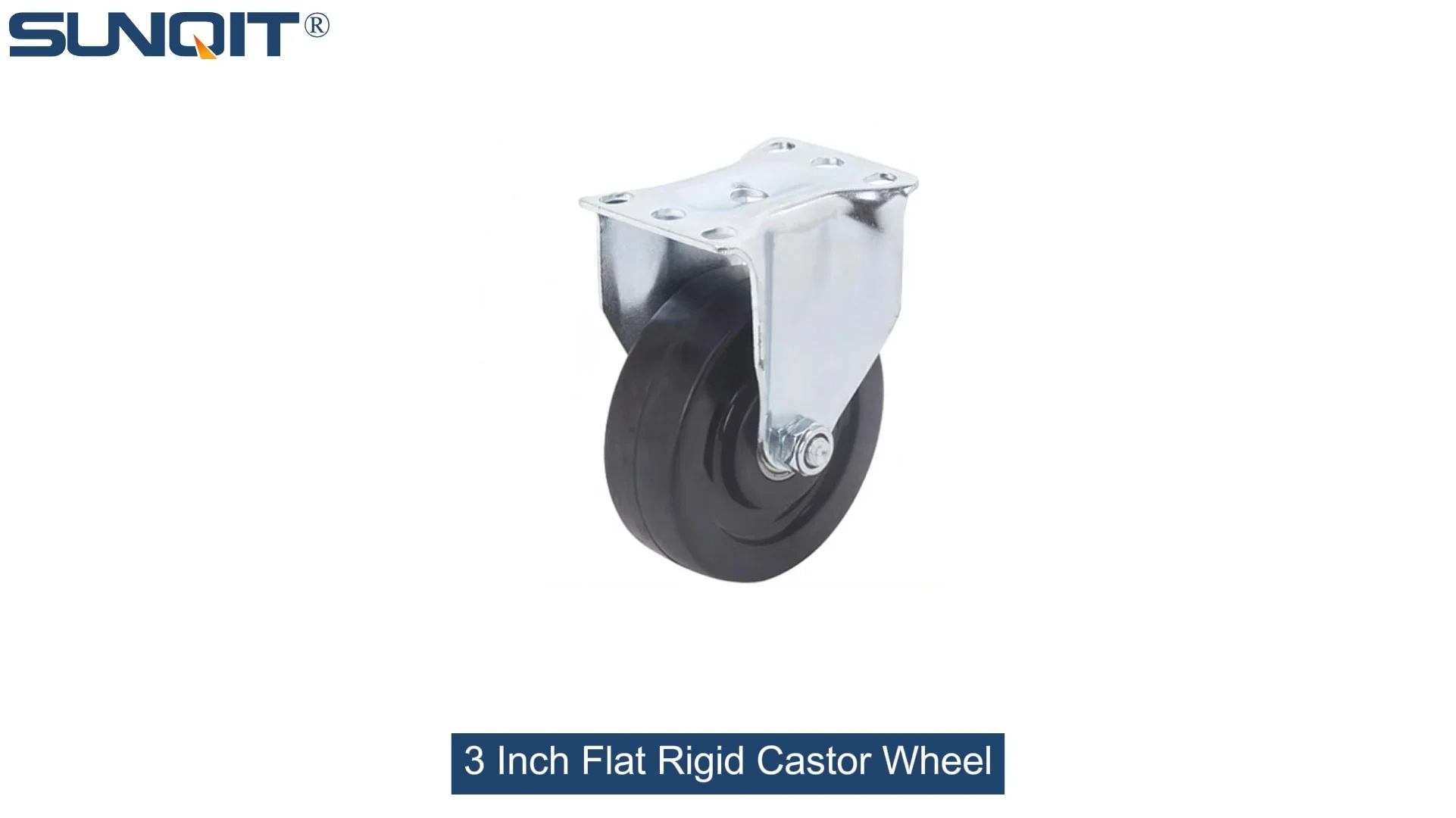
Flat Rigid Castor Wheel
Chair Casters Ball Bearing Wheels Rubber Base. Resistant to abrasion, impact and corrosion. Heavy payload can hold 70Kgs per pcs,which can make it works at a stable and smooth status.
In the fast-paced world of 3C manufacturing—where smartphones, laptops, and wearables are assembled with components smaller than a grain of rice—precision isn't just a goal; it's the difference between a functional device and a costly defect. Walk into any modern 3C assembly line, and you'll notice rows of workbenches where technicians hunch over microscopes, soldering irons in hand, carefully placing chips or aligning screens. What you might not immediately see is the quiet hero keeping these operations on track: stability. A wobbly workbench, even by a millimeter, can throw off a solder joint, misalign a camera lens, or force a technician to pause and readjust—wasting precious seconds that add up to lost productivity by the end of a shift.
Enter Workbench E—a single-deck, caster-free workbench designed for the demands of lean production—and its unsung partner: flat rigid castor wheels. While casters might seem like a small detail, the right ones transform a static, clunky work surface into a stable, mobile hub that adapts to the rhythm of assembly lines. In this article, we'll dive into why stability matters in 3C assembly, how Workbench E is engineered to meet these needs, and exactly how flat rigid castor wheels elevate its performance. We'll also explore real-world scenarios, compare caster types, and share insights from technicians who've experienced the difference firsthand.
Understanding Workbench E: The Backbone of Modern 3C Assembly
Before we talk about casters, let's get to know Workbench E. If you've ever toured a 3C factory, you've probably seen it: a sleek, single-deck workbench with a clean, uncluttered surface, built to hold tools, components, and semi-assembled devices without unnecessary frills. Its design—labeled "single deck-without caster" in manufacturing catalogs—prioritizes simplicity and durability. Typically made from aluminum or steel, it's sturdy enough to support 150-200 kg of equipment, yet lightweight enough to be repositioned when production lines reconfigure (a common occurrence in lean manufacturing setups).
Fun fact: In a typical smartphone assembly plant, a single Workbench E might be used to assemble 500+ devices per day. That's over 180,000 devices per year—each relying on the workbench's stability to avoid defects.
But here's the catch: Workbench E, by default, doesn't come with casters. In some setups, this is intentional—factories bolt workbenches to the floor to eliminate movement entirely. But in today's agile manufacturing environments, where lines shift to produce new models or scale up for seasonal demand, fixed workbenches become a liability. Moving a bolted-down workbench requires tools, time, and often a team of workers—disrupting production and violating lean principles of minimizing waste.
This is where mobility solutions like casters come in. But not just any casters. In 3C assembly, adding swivel casters (the kind that rotate 360 degrees) might seem like a quick fix for mobility, but they often introduce a new problem: instability. A workbench on swivel casters can drift, wobble, or even tip if overloaded—undoing the precision that Workbench E was designed to enable. This is why flat rigid castor wheels have become the go-to choice for manufacturers who refuse to compromise on either mobility or stability.
Flat Rigid Castor Wheels: What Makes Them Different?
Let's break down what "flat rigid castor wheels" actually mean. Unlike swivel casters, which have a rotating joint that allows the wheel to turn, rigid casters are fixed in direction—they only roll forward or backward, not side to side. The "flat" refers to the wheel's contact surface: a wide, flat tread that sits firmly on the floor, rather than a narrow, rounded one. This combination might sound limiting, but in 3C assembly, it's a game-changer.
Imagine a technician named Mia, who assembles camera modules for tablets. Her Workbench E holds a microscope, a precision tweezer set, and a tray of tiny lens components—each smaller than a pencil eraser. If her workbench is on swivel casters, even a slight bump from a passing material trolley could make the bench shift. Mia might look up from her microscope to find the lens tray has slid, or the tweezer she just placed down has rolled off the edge. With flat rigid casters, the bench stays put unless intentionally pushed, and when pushed, it moves in a straight line—no unexpected swivels, no wobbles.
Key features of flat rigid castor wheels include:
- Fixed direction: No rotating joint means no unintended movement. The wheels only roll along a straight path, keeping the workbench aligned with the assembly line.
- Wide, flat tread: A larger contact area with the floor distributes weight evenly, reducing pressure points and minimizing sinking into uneven factory floors (common in older facilities).
- High load capacity: Made from materials like polyurethane or rubber, these wheels can support 50-80 kg each. Four casters per Workbench E easily handle the bench's maximum load.
- Shock absorption: The tread material absorbs small vibrations from factory floors (like those from nearby conveyor belts), preventing them from transferring to the work surface and disrupting delicate tasks.

Stability in Action: How Flat Rigid Casters Solve 3C Assembly's Toughest Challenges
To understand the impact of flat rigid casters, let's look at three common stability challenges in 3C assembly—and how these wheels address them.
1. Precision Work: No Room for Wobble
Soldering a 0.5mm-wide circuit board trace requires steady hands and a steady workbench. A wobble of just 0.1mm can cause the solder iron to drift, creating a short circuit or a cold joint (a weak connection that fails over time). In a study by the 3C Manufacturing Association, unstable workbenches were linked to a 12% higher defect rate in micro-soldering tasks—costing factories millions in rework and scrap.
Flat rigid casters solve this by eliminating lateral movement. When Mia pushes her Workbench E into place, the fixed wheels lock it into a straight line. The wide tread ensures the bench doesn't rock, even if the floor has minor cracks or unevenness. "Before we switched to rigid casters, I'd spend 10 minutes a day just realigning my microscope because the bench would shift," says Mia. "Now, I set it once in the morning, and it stays put all shift. I've cut my rework time in half."
2. ESD Safety: Protecting Sensitive Components
3C components like microchips and LCD screens are highly sensitive to electrostatic discharge (ESD). An ESD workstation typically includes grounding mats, wrist straps, and conductive materials to channel static away from components. But an unstable workbench can compromise this system: if the bench rocks, the grounding connection might loosen, exposing components to static damage.
Flat rigid casters, when made with conductive materials (like ESD-safe rubber), integrate seamlessly with ESD workstations. The fixed wheels maintain consistent contact with the floor, ensuring the workbench remains grounded. "We had a problem with static-related defects on our old swivel caster setup," recalls Raj, an ESD compliance officer at a major laptop factory. "The swivel joints would wear down, breaking the ground path. With rigid casters, the ground connection is solid—our ESD failures dropped by 80%."
3. Worker Ergonomics: Reducing Fatigue and Injury
Stability isn't just about product quality—it's about worker well-being. A wobbly workbench forces technicians to overcompensate: leaning forward to steady their hands, straining their backs to reach tools that slide, or twisting awkwardly to access components. Over time, this leads to fatigue, repetitive strain injuries (RSIs), and higher turnover.
Flat rigid casters let workers position their Workbench E exactly where they need it—aligned with their body, at the right height, and close to material racks. No more stretching or hunching. "I used to go home with a sore neck from leaning over a bench that wouldn't stay put," says Carlos, a veteran technician. "Now, I roll my bench to the material station, load up components, and roll back—everything's within arm's reach. My back pain? Gone."

Comparing Caster Types: Why Flat Rigid Beats Swivel, Locking, and Others
You might be thinking: "Why not just use locking swivel casters? They rotate for mobility and lock to stay still." It's a fair question—and one that many factories have tested. To see why flat rigid casters come out on top, let's compare the most common caster types used with Workbench E.
| Caster Type | Stability (1-10) | Mobility (1-10) | ESD Compatibility | Best For | Worst For |
|---|---|---|---|---|---|
| Flat Rigid | 9 | 7 | Excellent (with conductive tread) | Precision tasks, ESD workstations, lean lines | Tight spaces requiring 360° turns |
| Swivel (Non-Locking) | 4 | 10 | Poor (joints disrupt grounding) | Lightweight carts, temporary setups | 3C assembly, heavy loads, ESD areas |
| Swivel with Brake | 6 | 9 | Fair (brake can loosen) | Warehouse picking, non-precision tasks | Soldering, micro-assembly, high-vibration areas |
| Locking Rigid | 10 | 5 | Good | Fixed production lines, heavy machinery | Agile lines needing frequent repositioning |
The table tells a clear story: flat rigid casters strike the perfect balance between stability and mobility for 3C assembly. Swivel casters offer great mobility but lack stability; locking rigid casters are ultra-stable but hard to move. Flat rigid casters, with their fixed direction and wide tread, provide 9/10 stability while still allowing easy straight-line movement—ideal for assembly lines that need to reconfigure without sacrificing precision.

Lean System Integration: How Stable, Mobile Workbenches Reduce Waste
In lean manufacturing, every second counts. The goal is to eliminate "muda" (waste) in all forms—including time wasted moving equipment, searching for tools, or correcting defects. Workbench E on flat rigid casters aligns perfectly with this philosophy by:
- Reducing setup time: Repositioning a workbench takes minutes, not hours. When a new phone model launches, lines can reconfigure overnight instead of over a weekend.
- Minimizing motion waste: Technicians roll their workbench to material racks instead of walking back and forth—saving 2-3 hours of walking per week per worker.
- Lowering defect rates: Stable workbenches mean fewer errors, reducing the waste of scrapped components and rework.
Take, for example, a factory transitioning from assembling last year's smartphone model to this year's. With fixed workbenches, the transition might take 8 hours: unbolting benches, moving them, rebolting, and recalibrating tools. With Workbench E on flat rigid casters? The same transition takes 2 hours—workers roll benches to new positions, lock them in place (some rigid casters have optional brakes for extra security), and start production. That's 6 hours of saved time—translating to thousands of additional devices assembled.
Choosing the Right Flat Rigid Casters for Your Workbench E
Not all flat rigid casters are created equal. To get the most stability and durability, look for these key features when selecting casters for your Workbench E:
1. Wheel Diameter: 50-75mm is Ideal
Smaller wheels (30-40mm) sink into floor cracks; larger ones (100mm+) make the workbench too tall for comfortable use. 50-75mm wheels balance rolling ease with a low profile—keeping the workbench at a ergonomic height (typically 750-800mm) while gliding over minor floor imperfections.
2. Tread Material: Polyurethane for Versatility
Rubber treads grip well but wear quickly; metal treads last long but conduct vibrations. Polyurethane is the sweet spot: it's durable (lasts 2-3 years in heavy use), absorbs shocks, and works on concrete, tile, or epoxy floors common in 3C factories. For ESD areas, choose ESD-safe polyurethane, which dissipates static charges.
3. Load Rating: 60-80kg per Caster
A Workbench E with tools and components weighs ~150kg. Four casters with 60kg capacity each give a safety margin (total capacity 240kg), preventing wheel failure under stress.
4. Mounting Plate: Bolt-On for Security
Avoid press-fit or adhesive mounts—they loosen over time. Bolt-on mounting plates (with 4-6 bolts) secure the caster to the workbench leg, ensuring zero movement between the caster and bench.
Maintenance Tips: Keeping Your Casters (and Workbench) Performing
Flat rigid casters are low-maintenance, but a little care goes a long way. Here's how to keep them rolling smoothly for years:
- Clean wheels weekly: Factory floors collect dust, metal shavings, and debris that can jam wheels. Wipe with a damp cloth or brush to remove buildup.
- Lubricate axles quarterly: Use lithium grease on axle bearings to reduce friction. This prevents squeaking and extends wheel life.
- Inspect tread wear: If the tread is cracked, flattened, or losing chunks, replace the wheel immediately. Worn treads reduce stability and grip.
- Tighten bolts monthly: Vibration can loosen mounting bolts. A quick check with a wrench ensures the caster stays firmly attached to the bench.
Conclusion: The Small Upgrade That Drives Big Results
In the high-stakes world of 3C assembly, where every component, second, and centimeter matters, flat rigid castor wheels might seem like a detail. But as we've seen, they're the bridge between mobility and stability—turning Workbench E from a static work surface into a dynamic, precision tool that adapts to the needs of modern manufacturing.
Whether it's reducing defects, saving time, or making technicians' jobs easier, the impact is clear. Factories that switch to Workbench E on flat rigid casters report 15-20% higher productivity, 30% fewer workplace injuries, and happier, more engaged teams. And in an industry where margins are tight and competition is fierce, those numbers aren't just impressive—they're transformative.
So the next time you pick up your smartphone or laptop, take a moment to appreciate the quiet stability that went into making it. Behind that sleek device is a workbench, a set of casters, and a technician who could focus on precision—all because someone chose the right wheels for the job.