- Company Articles
- Products and Technology
- Product knowledge
- How Flat Rigid Castor Wheels Improve Workplace Safety in Mechanical Manufacturing

How Flat Rigid Castor Wheels Improve Workplace Safety in Mechanical Manufacturing
Related Product
Flat Rigid Castor Wheel
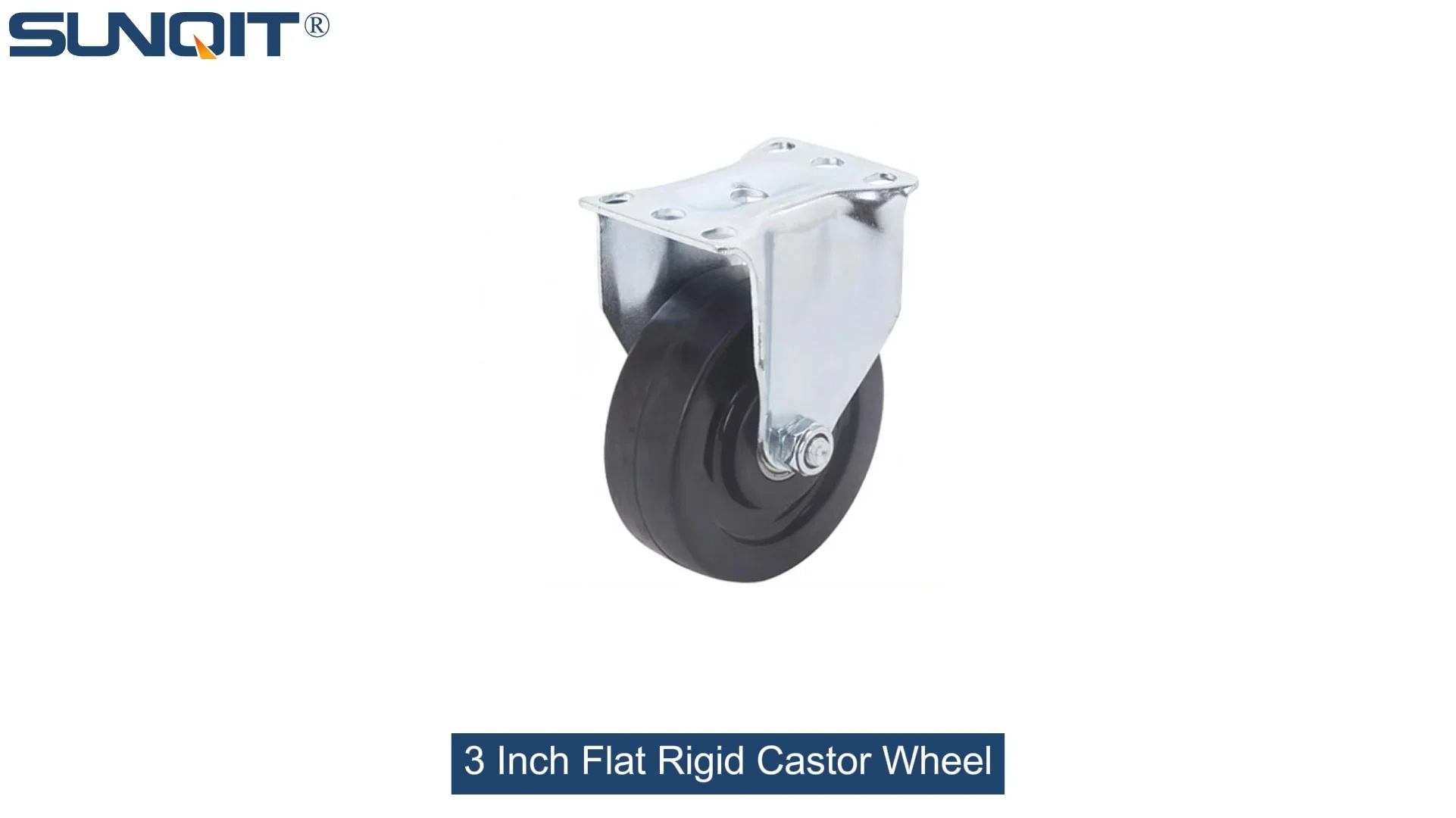
Chair Casters Ball Bearing Wheels Rubber Base. Resistant to abrasion, impact and corrosion. Heavy payload can hold 70Kgs per pcs,which can make it works at a stable and smooth status.
In mechanical manufacturing, every detail counts when it comes to keeping workers safe. From the tools on the bench to the wheels on the carts, each component plays a role in preventing accidents and ensuring smooth operations. One often-overlooked but critical part is the flat rigid castor wheel. These simple yet effective wheels are more than just a way to move things around—they're a key player in reducing workplace hazards and improving overall safety. Let's dive into how these castors make a difference, especially when integrated with lean systems and other manufacturing equipment.
What Are Flat Rigid Castor Wheels?
Flat rigid castor wheels are a type of caster that doesn't swivel. Unlike their swivel counterparts, which can turn 360 degrees, these castors move only in a straight line. They're designed for stability and strength, making them ideal for heavy loads and applications where precise movement is needed. Typically made from durable materials like steel or polyurethane, flat rigid castors are built to withstand the harsh conditions of mechanical manufacturing floors—think oil spills, heavy impacts, and constant use. Their flat design ensures that weight is distributed evenly, reducing the risk of sinking into soft surfaces or tipping over when carrying bulky items.
Key Safety Benefits of Flat Rigid Castor Wheels in Mechanical Manufacturing
Stability in Heavy Load Handling
Mechanical manufacturing often involves moving heavy parts—engine blocks, metal sheets, large components for machinery. When these loads are transported on carts with swivel castors, there's a higher risk of tipping if the load shifts or the cart is turned abruptly. Flat rigid castor wheels eliminate this risk by providing a stable base that moves only forward or backward. For example, a cart carrying a 500kg engine part on flat rigid castors will stay balanced even if the floor is slightly uneven, because the wheels don't swivel and the weight is spread evenly across all four castors. This stability prevents accidents like dropped loads, which can cause serious injuries to workers and damage to equipment.
Reduced Risk of Accidental Movement
In busy manufacturing plants, there are often multiple carts, conveyors, and workers moving around at the same time. Swivel castors can sometimes turn unexpectedly, leading to collisions with other equipment or workers. Flat rigid castors, however, move in a straight path, so workers can predict their movement more easily. This predictability is crucial in high-traffic areas. A cart being pushed down an aisle between two conveyor lines—with flat rigid castors—stays on course, avoiding accidental bumps into the conveyors or nearby workers. This reduces the chance of slips, trips, and falls caused by unexpected cart movements.
Enhanced Load Distribution
Flat rigid castor wheels have a larger contact area with the floor compared to some swivel castors. This means the weight of the load is distributed over a wider surface, reducing the pressure on each individual castor and the floor itself. For manufacturing floors made of concrete, this prevents cracks and unevenness that could lead to tripping hazards. Additionally, even load distribution reduces the strain on the castor's bearings, making them less likely to break or wear out prematurely. A broken castor can cause a cart to tip, so this durability directly contributes to a safer workplace.
Compatibility with Lean Systems
Many manufacturing facilities adopt lean systems to optimize workflows and reduce waste. Flat rigid castor wheels fit perfectly into these systems because they support the reconfiguration of workspaces without sacrificing safety. For instance, lean pipe workstations are often mobile to allow for flexible layouts. Adding flat rigid castors to these workstations ensures that when they're moved, they stay stable and don't swivel into other areas. This flexibility allows workers to adjust their setup quickly, but the rigid castors keep everything secure. Similarly, conveyors integrated with flat rigid castors can be repositioned to create more efficient lines, with the castors providing a stable base that doesn't shift during operation. This integration of flat rigid castors into lean systems creates a safer, more efficient work environment.
Durability and Low Maintenance
Flat rigid castor wheels are built to last. Made from robust materials like hardened steel or high-quality polyurethane, they resist wear and tear from constant use.
Unlike swivel castors, which have more moving parts (like ball bearings for swiveling), flat rigid castors have fewer components that can fail. This means less maintenance is required, and there are fewer instances of castors breaking down during use. A broken castor can lead to a cart getting stuck, which might cause workers to overexert themselves trying to move it, leading to back injuries or other strains. By choosing flat rigid castors, manufacturers reduce the risk of such incidents, keeping their workers safe and their operations running smoothly.

Real-World Applications in Mechanical Manufacturing
Material Handling Carts
In automotive manufacturing, material handling carts are used to transport heavy parts like transmission boxes or chassis components. These carts often use flat rigid castor wheels to ensure stability. For example, a cart carrying a transmission box (weighing around 300kg) needs to move from the assembly line to the testing area without any issues. Flat rigid castors allow the cart to be pushed straight, even over slightly rough floors, without tipping. This prevents the transmission box from falling off and injuring workers or damaging the part. Similarly, in machinery manufacturing, carts with flat rigid castors are used to move large metal sheets, which are prone to bending or breaking if dropped. The stability of these castors ensures that the sheets remain secure during transport.
Lean Pipe Workstations
Lean pipe workstations are a staple in many manufacturing facilities because they're flexible and easy to reconfigure. When these workstations need to be moved to a different part of the plant, flat rigid castor wheels make the process safe. For instance, a lean pipe workstation used for assembling electronic components might need to be relocated to be closer to a conveyor line. With flat rigid castors, the workstation can be pushed straight to its new position without swiveling into nearby equipment. This not only saves time but also reduces the risk of collisions with other workstations or workers. Additionally, the stable base provided by the castors ensures that the workstation remains level, which is important for precision assembly tasks.
Conveyor Systems
Conveyor systems are essential for moving parts along the assembly line. Flat rigid castor wheels are often used to support the conveyor frames, ensuring that they stay in place during operation. For example, a belt conveyor used to move small mechanical parts needs to be stable to prevent the parts from falling off. The flat rigid castors under the conveyor frame keep it level and prevent it from shifting when the belt is running. This stability is crucial for maintaining a smooth flow of parts and reducing the risk of accidents caused by conveyor movement. In addition, when conveyors need to be adjusted or repositioned, flat rigid castors allow for easy movement without the risk of the conveyor tipping over.
ESD Workbenches
ESD workbenches are used in manufacturing facilities that handle sensitive electronic components, like those in the 3C (computers, communications, consumer electronics) industry. These workbenches need to be stable to prevent static discharge, which can damage the components. Flat rigid castor wheels provide a stable base for ESD workbenches, ensuring that they don't move unexpectedly. For example, when a worker is assembling a circuit board on an ESD workstation, the last thing they want is the bench to shift, causing them to drop the board. Flat rigid castors keep the bench in place, reducing the risk of component damage and static-related issues. This stability also helps workers maintain focus, leading to fewer mistakes and a safer work environment.

Choosing the Right Flat Rigid Castor Wheels
When selecting flat rigid castor wheels for your manufacturing facility, there are several factors to consider:
- Load Capacity : Calculate the maximum weight the castor will need to support. Choose a castor with a load capacity that exceeds this weight to ensure safety.
- Floor Type : Different floor materials require different castor materials. For concrete floors, steel castors are durable, while polyurethane castors are better for sensitive floors like epoxy.
- Material : Steel castors are strong but can scratch floors; polyurethane is non-marking and provides good traction.
- Size : Larger castors are better for heavy loads and rough floors, as they distribute weight more evenly.
- Locking Mechanism : Some flat rigid castors come with brakes to keep carts or workstations stationary when needed. This is useful in areas where equipment needs to stay in place during operation.
To help you choose, here's a quick comparison table:
| Factor | Steel Flat Rigid Castors | Polyurethane Flat Rigid Castors |
|---|---|---|
| Load Capacity | High (up to 2000kg per castor) | Medium to High (up to 1500kg per castor) |
| Floor Compatibility | Concrete, asphalt | Epoxy, tile, concrete |
| Durability | Excellent | Very Good |
| Marking | May scratch floors | Non-marking |
| Traction | Good | Excellent |
By considering these factors, you can select the right flat rigid castor wheels to enhance safety in your manufacturing facility.

Conclusion
Flat rigid castor wheels are a small but powerful component that plays a significant role in improving workplace safety in mechanical manufacturing. Their stability, durability, and compatibility with lean systems make them an essential choice for any facility looking to reduce hazards and create a safer work environment. From material handling carts to lean pipe workstations and conveyors, these castors provide the reliability needed to keep operations running smoothly and workers safe. By choosing the right flat rigid castor wheels and integrating them into your workflows, you can not only enhance safety but also boost efficiency and productivity. So next time you're evaluating your manufacturing equipment, don't overlook the impact that flat rigid castor wheels can have on your workplace safety.